
Picking the right ultrasonic cleaning system comes down to matching equipment capabilities with what your production line actually needs. The wrong frequency damages parts. The wrong tank size creates bottlenecks. The wrong automation level either wastes money or leaves operators doing work machines should handle. After working through hundreds of installations across different industries, the patterns become clear: successful systems share certain characteristics, and failed implementations usually trace back to overlooked basics during selection.
How Industrial Ultrasonic Cleaning Actually Works
Industrial ultrasonic cleaning operates through cavitation, a process that sounds simple but involves precise physics. High-frequency sound waves travel through cleaning liquid, creating alternating high and low pressure zones. During low pressure phases, microscopic vacuum bubbles form. During high pressure phases, those bubbles collapse violently.
The collapse happens fast, generating localized temperatures exceeding 5,000°C and pressures above 1,000 atmospheres. These micro-implosions create tiny jets that blast contaminants off surfaces. The effect reaches into blind holes, threaded sections, and complex internal passages where brushes and sprays cannot go.
Transducer selection determines how this energy transfers into the cleaning tank. Piezoelectric ceramic transducers convert electrical signals into mechanical vibrations. The transducer's resonant frequency, mounting configuration, and power density all affect how uniformly cavitation distributes across the tank volume. Systems using frequencies like 28kHz or 40kHz produce different bubble sizes and collapse intensities, which matters enormously when cleaning varies from heavy machining oils to submicron particles.
What Drives System Selection and Customization
Choosing an industrial ultrasonic cleaning system requires working through several interconnected variables. Part material determines what frequencies and chemistries are safe. Part geometry dictates tank dimensions and fixturing requirements. Contaminant type influences both frequency selection and cleaning solution formulation. Production volume shapes decisions about automation level and cycle time optimization.
Cleaning solution chemistry interacts with ultrasonic action in ways that matter. Aqueous solutions work differently than solvents. Surfactants lower surface tension, allowing cavitation bubbles to form more readily. Temperature affects both cavitation intensity and chemical activity. Getting these parameters aligned takes systematic evaluation rather than guesswork.
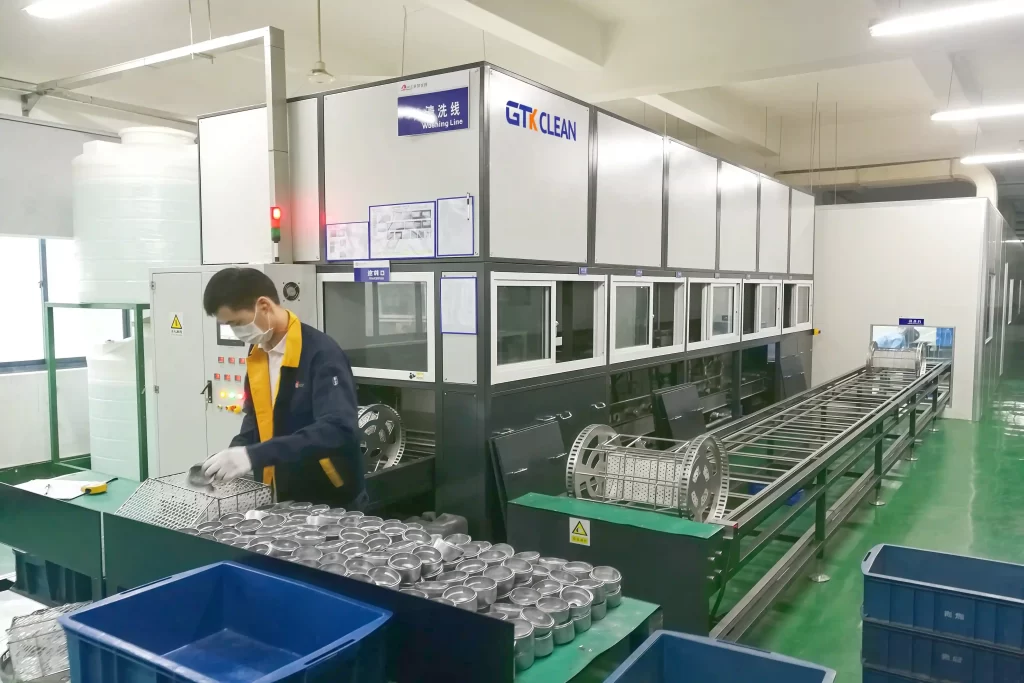
Automated cleaning equipment integrates into production lines when throughput demands consistency that manual loading cannot provide. Conveyor systems, robotic handling, and programmable cycle controls reduce variability while freeing operators for other tasks. The decision between semi-automatic and fully automatic configurations depends on production volumes, labor costs, and how critical process repeatability is for your quality requirements.
Matching Ultrasonic Frequency to Material and Contamination
Frequency selection represents one of the most consequential decisions in system specification. The physics are straightforward: lower frequencies produce larger cavitation bubbles with more aggressive collapse energy, while higher frequencies generate smaller bubbles with gentler action.
For heavy contamination on robust metal parts, frequencies in the 20-40 kHz range deliver the scrubbing power needed. Machining oils, buffing compounds, and heavy grease respond well to this aggressive cavitation. The larger bubbles penetrate thick contamination layers effectively.
Delicate components require different treatment. Frequencies from 68-200 kHz produce fine cavitation that cleans without damaging sensitive surfaces. Precision electronics, optical components, and parts with thin coatings benefit from this gentler approach. The smaller bubbles also reach into tighter spaces, making high frequencies preferable for intricate geometries even when parts are robust enough to handle lower frequencies.
| Frequency Range | Bubble Size | Cleaning Action | Typical Applications |
|---|---|---|---|
| 20-40 kHz | Large | Aggressive | Heavy oils, robust metals |
| 40-68 kHz | Medium | Moderate | General parts, medium contamination |
| 68-100 kHz | Small | Gentle | Delicate electronics, intricate parts |
| 100-200 kHz | Very Small | Precision | Fine particles, optical components |
Material compatibility extends beyond frequency. Some alloys react with certain cleaning chemistries. Surface finishes can be altered by overly aggressive cavitation. Testing with actual production parts, rather than relying solely on specifications, prevents expensive surprises after installation.
For more detailed information on how ultrasonic technology works, consider reading 《What Is the Principle of an Ultrasonic Cleaning Machine?》.
Cleaning Solutions and Process Automation Working Together
Effective industrial cleaning requires the ultrasonic unit, cleaning chemistry, and process controls to function as an integrated system. The cleaning solution must complement ultrasonic action rather than work against it. Solvent cleaning systemssolvent cleaning systems handle different contamination types than aqueous solutions, and each requires appropriate tank materials, temperature controls, and vapor management.
Water treatment systemswater treatment systems become critical when rinse water quality affects final cleanliness. Deionized water prevents mineral deposits. Ultrapure water with conductivity below 0.1 μS/cm eliminates water spots on precision surfaces. Multi-stage rinsing cascades optimize water consumption while achieving target cleanliness levels.
Automated cleaning equipmentautomated cleaning equipment reduces process variability that comes with manual operation. Programmable logic controllers manage cycle timing, temperature, and solution replenishment. Sensors monitor critical parameters and flag deviations before they affect cleaning quality. These controls matter most in regulated industries where process validation documentation is required.
Multi-stage cleaning processes address complex contamination scenarios. Pre PVD coating applications might require hydrojet spray for gross contamination removal, followed by ultrasonic cleaning, then multi-stage ultrapure water rinsing, and finally air knife or vacuum drying. Each stage serves a specific purpose, and skipping steps usually shows up as coating adhesion failures or contamination-related defects.
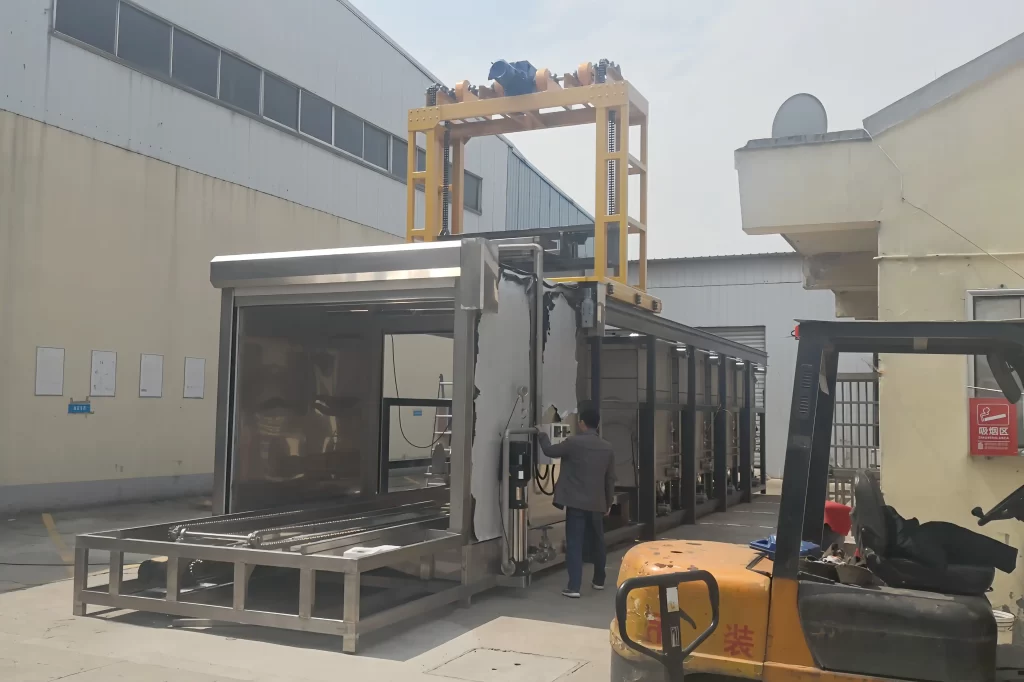
CNC aluminum shell cleaning presents different challenges. Continuous conveyor systems move parts through multi-directional spray zones, ultrasonic tanks, and DI water rinse stages. Preventing watermarks and oxidation requires careful attention to drying and the time parts spend between wet and dry states.
Design Features That Determine Performance and Longevity
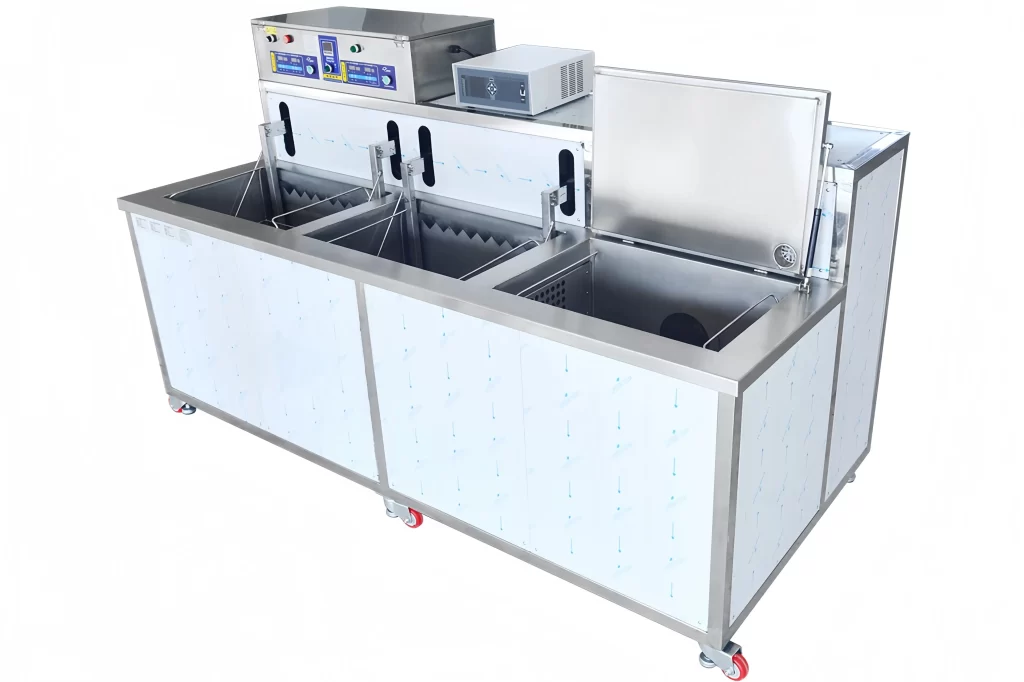
The mechanical and electrical design of an ultrasonic cleaning system determines how well it performs over years of production use. Transducer technologytransducer technology forms the foundation. Piezoelectric ceramic transducers bonded to tank surfaces convert electrical energy into mechanical vibration. Bond quality, ceramic formulation, and mounting configuration all affect power transfer efficiency and service life.
Tank construction materials must resist both cleaning chemistries and cavitation erosion. SUS304 stainless steel handles most aqueous applications. SUS316 provides better corrosion resistance for aggressive chemistries or chloride-containing solutions. Wall thickness and reinforcement affect how tanks hold up under continuous operation and heavy loads.
System durabilitysystem durability depends on component quality throughout the design. Generator electronics, heating elements, pump seals, and control systems all contribute to overall reliability. Cutting corners on any component creates maintenance headaches and unplanned downtime.
Energy efficiencyenergy efficiency matters for operating costs. Circulation filtration extends cleaning solution life, reducing both chemical consumption and disposal costs. Heat recovery systems capture energy that would otherwise be lost. Insulated tanks reduce heating energy requirements. These features add to initial cost but pay back over the system's operating life.
Heavy-duty applications require specialized construction. Systems handling workpieces up to 2000 kg need reinforced tanks, robust lifting mechanisms, and custom load-bearing baskets. Standard equipment cannot handle these loads safely, and attempting to use undersized systems creates safety hazards and premature failures.
Understanding Costs and Calculating Return on Investment
Industrial decision-makers evaluating industrial cleaner costindustrial cleaner cost need to look beyond purchase price. The total cost of ownership includes energy consumption, cleaning solution usage, maintenance labor, spare parts, and the cost of quality problems that result from inadequate cleaning. Initial savings on equipment often translate to higher operating costs or quality issues that cost far more than the price difference.
Breaking Down Total Cost of Ownership
Ultrasonic cleaner costultrasonic cleaner cost analysis starts with understanding what drives ongoing expenses. Energy consumptionenergy consumption varies significantly between system designs. Efficient generators, properly sized heaters, and insulated tanks reduce electrical costs over thousands of operating hours.
Cleaning solution consumption depends on system design and process controls. Circulation filtration removes particles that would otherwise contaminate the bath. Oil skimmers and coalescers extend aqueous solution life. Solvent recycling systems recover and purify solvents for reuse. These features reduce chemical purchasing and waste disposal costs.
Labor costs often represent the largest operating expenseoperating expenses. Automated systems like rotary basket ultrasonic cleaners minimize manual handling. Programmable cycles reduce operator attention requirements. Consistent automation eliminates the variability that comes with different operators running the same process differently.
Maintenance requirementsmaintenance requirements affect both direct costs and production availability. Systems designed for easy maintenance reduce service time. Quality components fail less frequently. Accessible designs allow faster repairs when failures do occur. Factoring maintenance into total cost calculations reveals the true economics of different equipment options.
Working with the Right Equipment Partner
Selecting an industrial cleaning equipment manufacturerindustrial cleaning equipment manufacturer with relevant experience reduces implementation risk. Manufacturers who have solved problems similar to yours can anticipate issues and design around them. Those without relevant experience learn on your project, often at your expense.
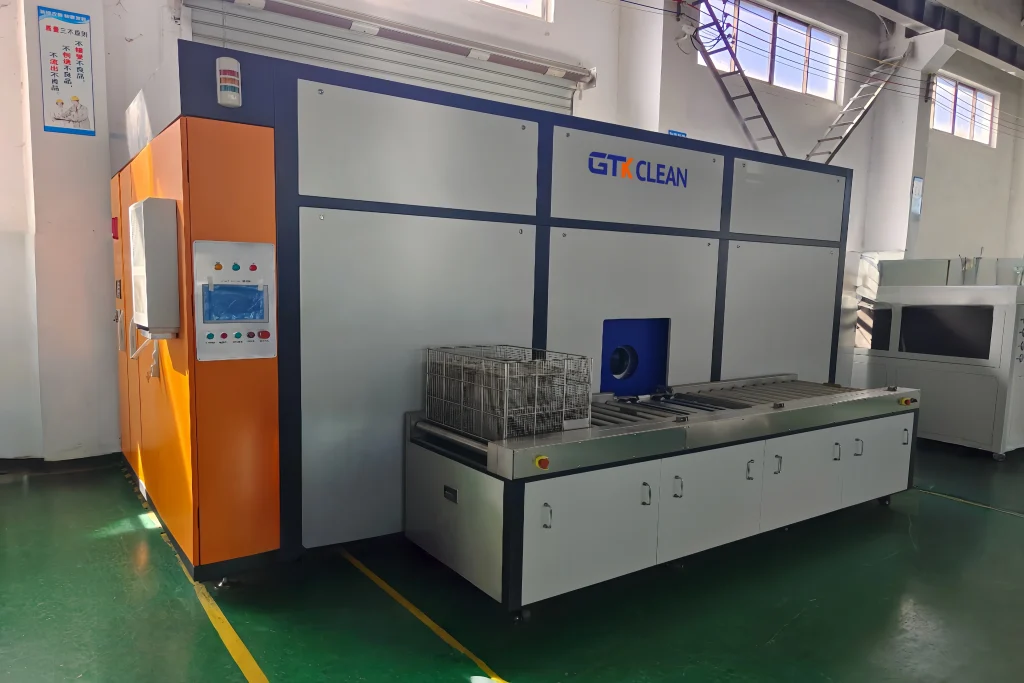
Technical supporttechnical support capabilities matter throughout the equipment lifecycle. Initial installation and commissioning require hands-on expertise. Ongoing optimization often reveals opportunities to improve cleaning quality or reduce costs. Troubleshooting problems quickly minimizes production disruption. Manufacturers with global presence can provide consistent support regardless of where equipment operates.
Global cleaning solutionsglobal cleaning solutions span multiple technologies. Ultrasonic cleaning handles many applications, but some situations call for solvent vapor degreasing, high-pressure spray washing, or conveyor belt cleaning systems. Manufacturers offering multiple technologies can recommend the best approach for each application rather than forcing every problem into their single solution.
Frequently Asked Questions
What factors influence the cost of an industrial ultrasonic cleaner?
The cost of an industrial ultrasonic cleaning system reflects several interrelated factors. Tank size and construction materials set the baseline. Ultrasonic frequency, power density, and transducer configuration affect generator and transducer costs. Automation features like conveyors, robotic handling, and programmable controls add capability and cost. Filtration, heating, and solution management systems contribute to both initial price and operating efficiency. Customization for specific applications requires engineering time and specialized components. Evaluating total cost of ownership rather than purchase price alone provides a more accurate picture of long-term value.
How do I determine the right ultrasonic frequency for my application?
Determining the right ultrasonic frequency requires understanding both your parts and your contamination. Lower frequencies in the 20-40 kHz range generate aggressive cavitation suitable for heavy contamination on robust metal parts. Higher frequencies from 68-200 kHz produce gentler action appropriate for delicate components, thin coatings, or fine particle removal. Part geometry also matters since smaller bubbles from higher frequencies penetrate tighter spaces more effectively. Material sensitivity, surface finish requirements, and contamination type all influence the optimal choice. Testing with actual production parts often reveals the best frequency when specifications alone leave uncertainty.
What are the maintenance requirements for an industrial ultrasonic cleaning system?
Maintaining an industrial ultrasonic cleaning system involves several regular activities. Cleaning solution requires periodic testing and replacement based on contamination loading and chemical depletion. Tank surfaces need cleaning to prevent residue buildup that affects cavitation uniformity. Transducers should be inspected for bond integrity and ceramic condition. Filtration elements require replacement on schedule. Heating elements, pumps, and valves need periodic inspection and service. Automation components including sensors, actuators, and control systems require verification and calibration. Following manufacturer maintenance schedules prevents unexpected failures and maintains consistent cleaning performance throughout the equipment's service life.
Optimize Your Cleaning Processes Today
Elevate your industrial cleaning processes with unparalleled precision and efficiency. Contact Suzhou Grintek Environmental Technology Co.,Ltd. today for a tailored consultation. Discover how our 20+ years of R&D expertise and 28 technical patents can optimize your operations. Reach out to [email protected] or call +86 17768507147 to discuss your specific ultrasonic cleaning system requirements.
 English
  German
  Spanish
  French
  Russian
  Portuguese