

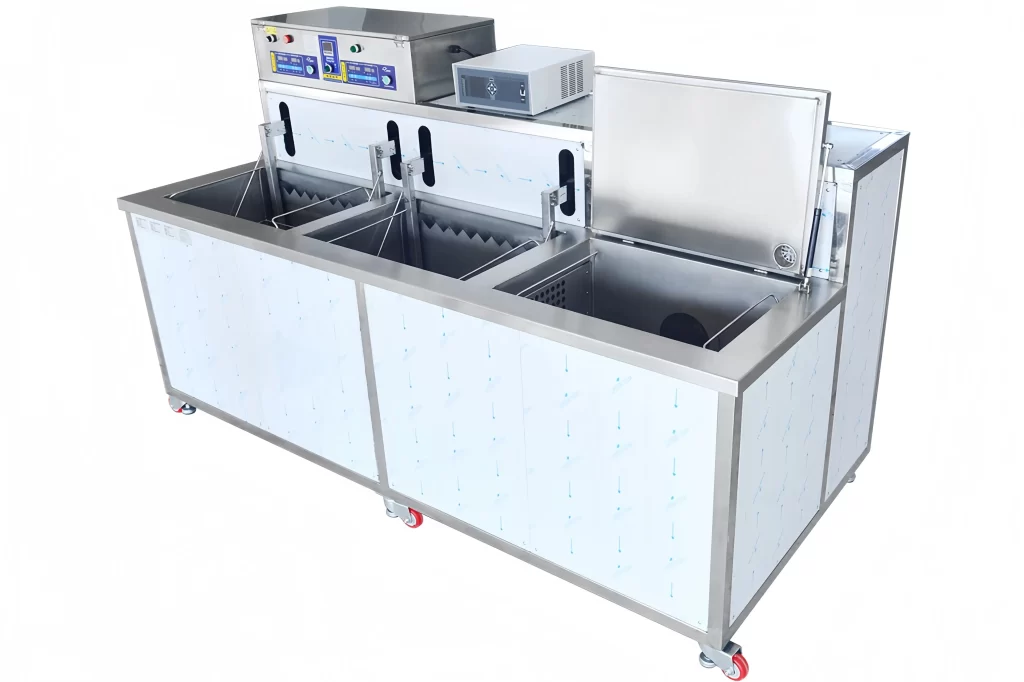
Cleaning electronics components in a production environment introduces a persistent risk: electrostatic discharge (ESD). A single unsuppressed discharge can cause immediate or latent failures in sensitive semiconductors, sensors, and PCBs, yet many manufacturing lines treat ESD as an afterthought once the parts leave the workbench. I have visited assembly floors where operators strictly follow wrist-strap and mat protocols but then load components into an ungrounded ultrasonic tank that builds up a charge with every cycle. The parts come out visually clean, pass functional test, and fail in the field weeks later. This article explains how to integrate ESD-safe practices into industrial cleaning systems so that contamination removal does not undermine component reliability.
ESD Risks When Cleaning Electronics
Every cleaning action can generate charge. Fluid flowing through hoses and nozzles creates triboelectric charging. Spray impingement of cleaning solution against component surfaces strips electrons and leaves net potentials. Even ultrasonic cavitation, where microscopic bubbles collapse asymmetrically near a PCB surface, can produce localized charge separation. None of these events needs to be perceptible to do damage. A discharge of 100 V, well below human perception, is enough to destroy a MOSFET gate or degrade a Schottky barrier. Worse, partial damage that weakens a junction without immediate failure is almost impossible to detect in end-of-line test.
The industry standard that governs ESD control, ANSI/ESD S20.20, requires that all conductors in an ESD protected area (EPA) are grounded and that insulators are managed through neutralization or shielding. A cleaning system integrated into an EPA must meet the same grounding and charge-generation limits as the production bench. When the cleaning machine draws parts out of the EPA to an adjacent area, operators need to know the machine itself is an EPA extension, not a gap in the static control architecture.
Cleaning Method Comparison for ESD-Sensitive Parts
Every cleaning method carries its own ESD risk profile. Selecting the correct approach for a component's device sensitivity is the difference between a reliable process and a source of latent field returns.
| Cleaning Method | Primary ESD Risk | Mitigator |
|---|---|---|
| Manual brush cleaning | Operator body charge via direct handling | Ionized air at the workstation, continuous wrist strap monitoring |
| High-pressure spray wash | Triboelectric charging from fluid friction | Conductive plumbing, grounded work piece carrier, ionized drying |
| Aqueous ultrasonic cleaning | Charge build-up on insulating plastic baskets or ungrounded metal | Full stainless steel tank and basket ground path, conductivity-controlled DI water |
| Solvent ultrasonic (hydrocarbon, modified alcohol) | Solvent is an insulator; accumulated charge on parts can reach kV levels | Grounded basket, immersion-type monitoring, carbon dioxide snow or ionized vapor drying |
| Vapor degreasing | High-speed vapor condensation can generate charges on isolated conductors | Conductive hangers, immersion grounding before vapor zone, ionized post-cooling |
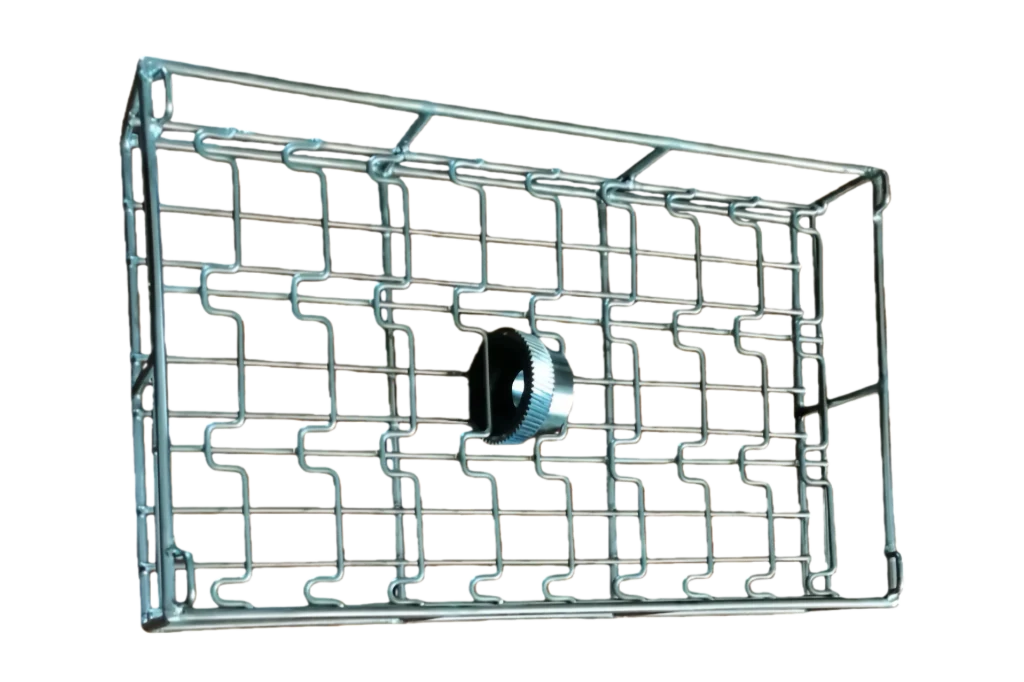
Automated aqueous ultrasonic cleaning with grounded stainless steel construction and ionized drying has become the most repeatable choice for volume production. The water's inherent conductivity, when kept in a controlled resistivity range (commonly 0.1 to 1.0 MΩ·cm for cleaning, not ultrapure), provides a continuous discharge path. In contrast, solvent systems offer faster drying and better penetration of tight standoffs, but they demand more aggressive grounding because the liquid itself is insulating.
Design Features That Prevent ESD Damage
An ESD-safe cleaning system is not a standard machine with an added ground wire. The design must eliminate isolated conductors and manage insulating surfaces from the start.
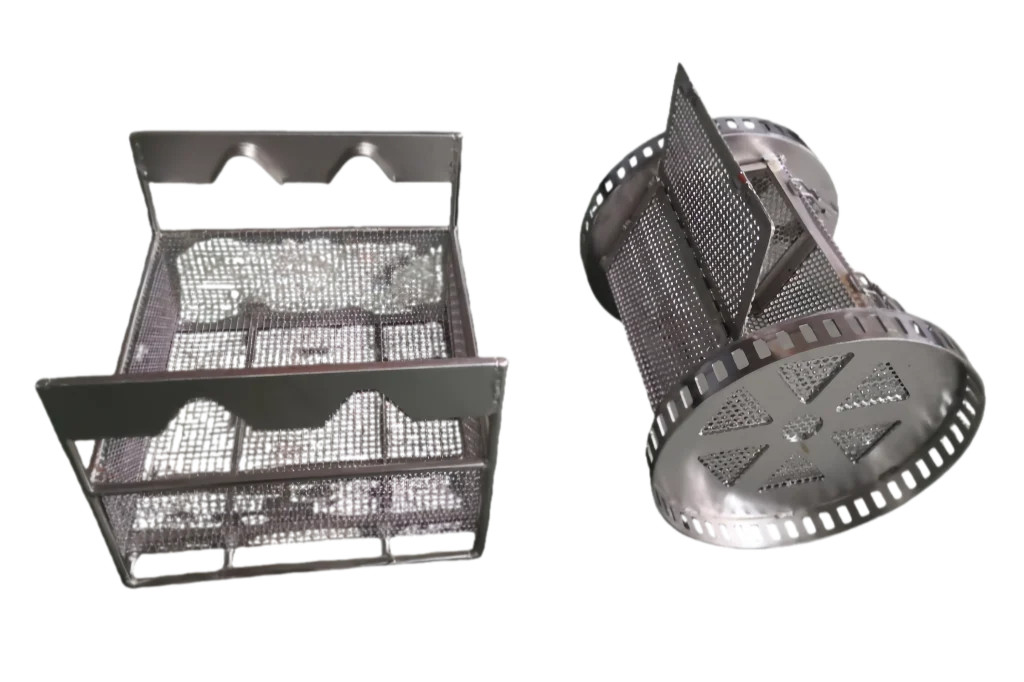
The cleaning tank, whether for ultrasonic immersion or spray, should be fabricated from 304 or 316 stainless steel and bonded to a common ground point with a ground-path resistance of less than 1 ohm. More than the tank itself, the basket or fixture that holds the components must be grounded. I have measured charging on a stainless steel basket that was isolated by dried-on O-ring seals at the lift points. The basket looked grounded because it rested on the tank frame, but when the lift mechanism separated it during transfer, the charge jumped to 600 V in under two seconds. The fix was a dedicated ground strap that followed the basket through every transport step.
Ionization is the second layer. Compressed air knives used for drying after rinse generate high-velocity flow that can separate charge on even grounded parts. Ionizing bars positioned across the air knife outlet neutralize this before it accumulates. For solvent processes, vacuum drying with nitrogen bleed and ionized discharge reduces both charge and oxidation. In our own system designs, we specify an in-line resistivity meter on the DI water loop with an alarm set at 2.0 MΩ·cm; if the water drifts into ultrapure territory, the risk of static buildup increases sharply.
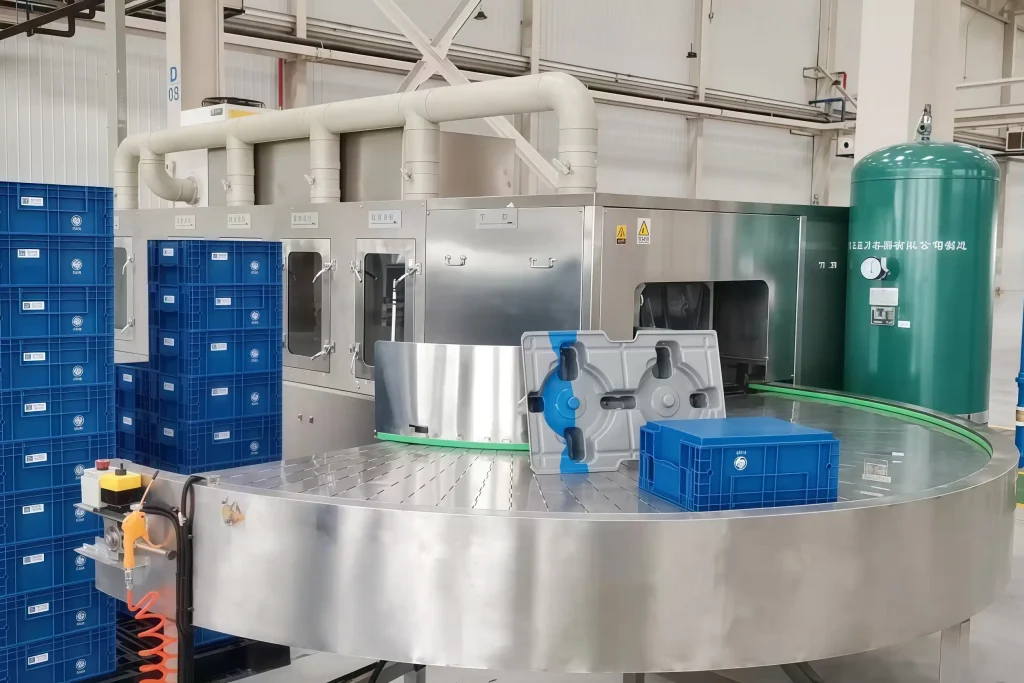
Material selection matters. Conveyor belts in inline cleaners should be static-dissipative, with surface resistance between 10⁶ and 10⁹ ohms per ANSI/ESD STM11.11. Avoid nylon and PTFE in moving parts that come close to the component path, unless faced with a hanging ionizer directly adjacent.
If your program involves cleaning components with sub-100 V device sensitivity, it is worth confirming your cleaning system's ground path design and ionization coverage before finalizing your BOM. Reach out at [email protected] to review your current layout against ESD control requirements.
Implementing an ESD-Controlled Cleaning Process
Building the process requires more than equipment specs; it demands a workflow that maintains the EPA condition from loading to unload.
Start by documenting the component's ESD withstand voltage per the Human Body Model (HBM) and Charged Device Model (CDM). This sets the maximum permissible charge at any point in the cleaning line. Then map every material and movement in the cleaning sequence and identify where charge can be generated or transferred. The mapping often reveals that the greatest risk is not the wash stage but the drying and transport between stations.
Next, select the cleaning system and validate the ground path. Use a ground continuity meter to verify that every metal component the part contacts, including tank walls, basket grids, and dryer air knives, reads below 1 ohm to the common grounding bus. Place charged plate monitors at the exit of the drying module and confirm that the ionizer reduces charge to below ±50 V within five seconds at the operating line speed.
Operator training must include the fact that ESD-safe cleaning does not end when the basket exits the machine. A saturated-wool glove touching a clean, dry PCB during unload can reintroduce a damaging discharge. Ionized workstation fans above the unload bench and continuous wrist-strap monitoring are not optional.
Regular audits complete the loop. A surface resistance meter should check work surfaces monthly, and an electrostatic field meter should sweep the cleaning line during production, not just during commissioning. Record the numbers. If the same station drifts upward over three consecutive audits, the root cause is often a grounding connection compromised by detergent film or vibration.
Avoiding Common ESD Failures in Production Cleaning
Identifying failure modes before they happen is cheaper than field returns.
The most pervasive mistake is treating the cleaning system as a standalone appliance rather than an extension of the EPA. A grounded tank does nothing if the operator uses an insulating polypropylene basket because it is lighter. The workload floats, charge accumulates during cavitation, and the first grounded tool it touches after cleaning draws an arc that destroys sensitive inputs. Replace insulating baskets with stainless steel or static-dissipative composite fixtures, and verify continuity at every setup change.
A second failure mode is neglecting the fluid loop. DI water systems that regenerate to ultrapure levels (above 15 MΩ·cm) are excellent insulators. The high-purity water itself becomes a charge separator. Adding a small post-polishing conductivity adjustment or specifying a rinse that maintains a resistivity ceiling of roughly 1.0 MΩ·cm keeps the rinse flow self-discharging without leaving residue.
The third pattern I see repeatedly is that engineers validate ESD control at day one commissioning but never after the first maintenance cycle. When a pump is replaced, a ground wire is often forgotten. When a filter housing is cleaned, the conductive gasket gets swapped for a standard rubber one. The machine "looks the same" but the ground path is broken. A high-frequency ground-check procedure, part of the scheduled maintenance work order, solves this.
Addressing these three errors eliminates the majority of production ESD failures that originate in the cleaning stage. For organizations that need to qualify a cleaning line for components below 50 V HBM, a full system audit with a static event detector may be warranted.
Ensuring Long-Term ESD Control in Your Cleaning Line
The cost of a field failure traced to a cleaning-induced latent ESD event easily exceeds the cost of a properly designed cleaning system. Yet many manufacturers continue to treat cleaning equipment as a commodity purchase and ESD control as a bench-level activity. The two must be designed together.
If your engineering team is dealing with repeated unexplained failures on cleaned electronic assemblies, or if you are upgrading to components with tighter ESD thresholds, the cleaning system needs to be part of the ESD control plan, not an exception to it. Send your component specifications and current cleaning line layout to [email protected] or call +86 17768507147. We will evaluate whether your existing setup can be hardened or if a purpose-built ESD-safe cleaning system is the more cost-effective path.
Common Questions About ESD-Safe Electronics Cleaning
Can ultrasonic cleaning actually cause ESD events?
Yes. Ultrasonic cavitation can induce voltage differences across a component if the part or the basket is electrically isolated. I have measured potential differences exceeding 300 V on ungrounded stainless steel fixtures during normal 40 kHz operation. The solution is a low-impedance ground path on every conductive surface the parts touch, verified with a continuity meter at regular intervals.
Why does ultrapure DI water increase static risk?
High-purity water with resistivity above 15 MΩ·cm is essentially an insulator. As the water drains from a component surface, the separation of the liquid from the solid generates triboelectric charge that cannot dissipate. Controlling rinse water resistivity to the 0.1–1.0 MΩ·cm range allows the residual water film to discharge to ground during the transition to drying. The slight ion content in this range is well below levels that would leave conductive residue on most SMT assemblies.
Is a grounded metal cleaning tank enough to protect all components?
No. The tank ground protects the immersion bath, but the path from the component to ground includes the basket, the hoist, and any intermediate support. A broken circuit on any link leaves the component floating. Each connection must be independently verified, especially after maintenance or a cleaning solution change. Components with sub-100 V CDM sensitivity need an ionizer at the unload station even with a verified ground path, because charge can be generated by the movement of the part through the air after drying.
How can I tell if my current cleaning line has an ESD problem?
Start by running an audit cycle with a handheld electrostatic field meter while the line processes representative parts at full speed. Measure at the exit of each stage and the unload point. If you see readings above ±100 V, you likely have a ground path issue or an ionization deficit. Follow up with a logging static event detector placed inside the cleaning chamber during a complete cycle to capture transient spikes that may not appear during a manual sweep.
Do all solvent cleaning systems need full ionization?
Most do, because hydrocarbon and modified alcohol solvents are insulators. The high-speed air flow in vapor degreasing and solvent spray processes generates significant charge, and the solvent film does not dissipate it. Vacuum-based solvent systems that pull the solvent from the parts before atmosphere exposure can reduce the charge generation rate, but they still benefit from ionized nitrogen injection during the drying phase to neutralize residual potentials. If you are unsure how your solvent cleaning system performs under your component's ESD thresholds, share your part number and required cleanliness spec and we can run a risk assessment based on the system configuration.
If you're interested, check out these related articles:
Ultrasonic Pre-Cleaning Machine for Flawless PVD/DLC Coating Pre-Treatment
Inline Ultrasonic Washing Systems for Enhanced Process Control
Optimizing Industrial Cleaning to Reduce Solution Expenses
 English
  German
  Spanish
  French
  Russian
  Portuguese