
In two decades of designing industrial cleaning systems, I’ve watched emerging industrial parts cleaning technologies break through practical barriers that once limited cleanliness and throughput. From intelligent multi‑tank platforms to advanced vacuum ultrasonic methods, these innovations promise better results, but their payoff depends entirely on matching the technology to your specific part geometry, contamination type, and production volume. This article examines which new developments consistently solve real cleaning problems and how to evaluate them for your operation.
Key Innovations Transforming Industrial Parts Cleaning Today
Several technology shifts are making a measurable difference in cleaning quality and efficiency on modern shop floors. The table below compares the capabilities that matter most for high‑precision manufacturing.
| Technology | Typical Application | Performance Differentiator |
|---|---|---|
| Multi‑frequency ultrasonic with rod transducers | Deep blind holes, complex castings | Even cavitation distribution; 20–80 kHz adjustable for delicate or heavy contamination |
| Vacuum solvent systems with integrated recovery | Stamped parts, battery housings | Flawless drying without water spots; hydrocarbon consumption under 200 L/month |
| Conveyor‑based inline automation | Aluminum shells, fasteners | Continuous high‑throughput cleaning integrated directly into the production line |
| Smart PLC control with remote diagnostics | Any automated cleaning line | Real‑time process monitoring and remote program upgrades reduce downtime |
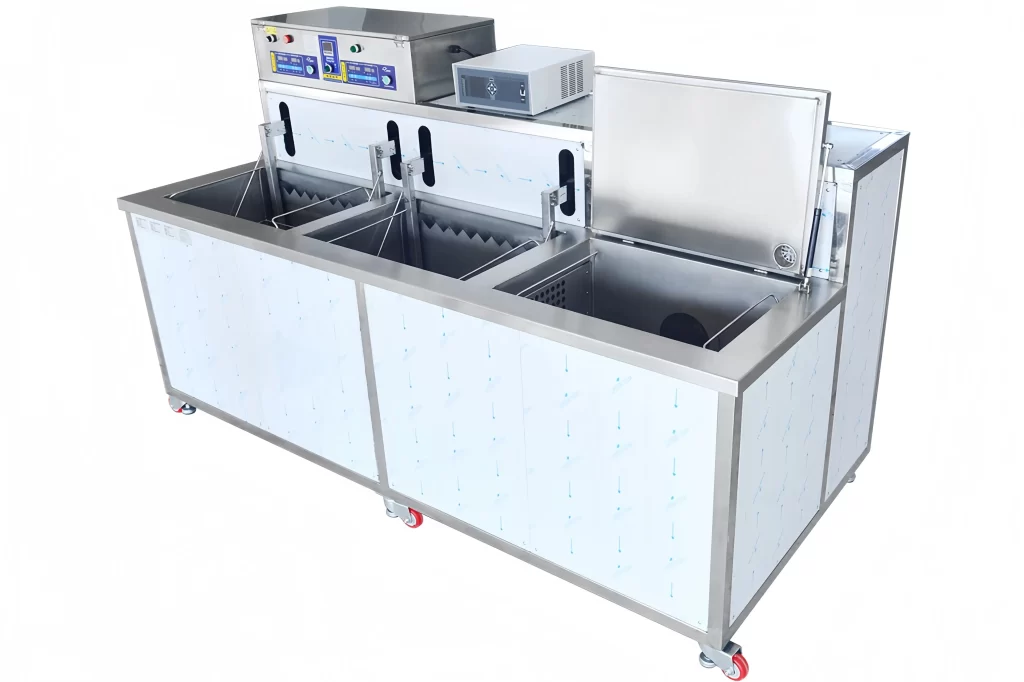
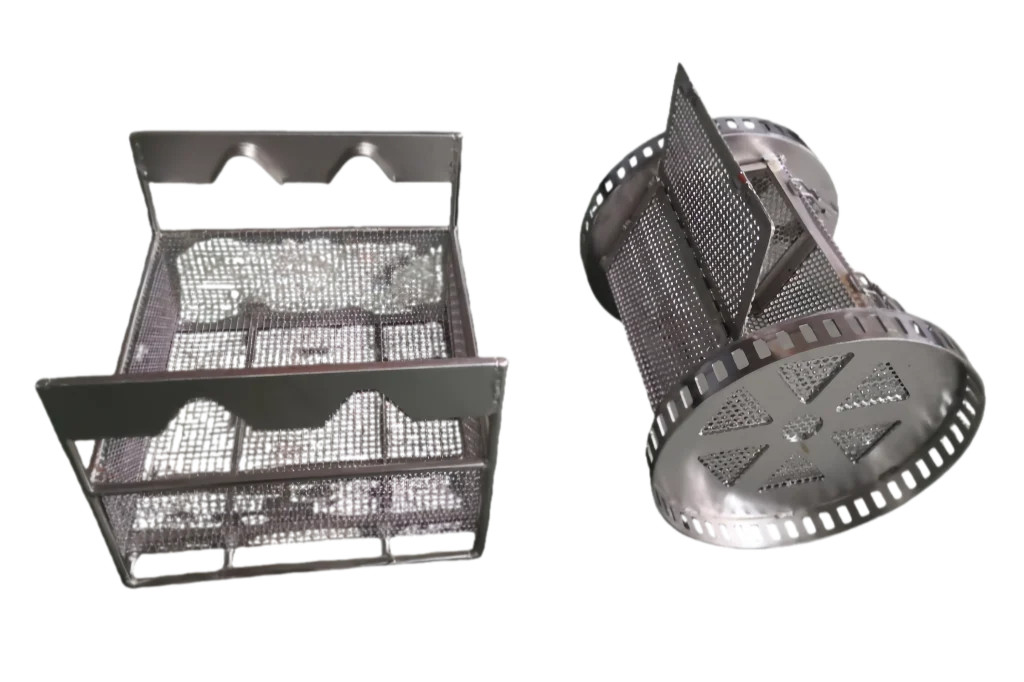
These advances are not theoretical. The GTKCLEAN multi‑tank hydrocarbon ultrasonic line, for example, pairs rotary basket motion with vacuum drying to clean recessed and blind‑hole stamped parts that manual or spray‑only methods consistently miss. The key is that technology selection must be driven by part geometry first, not simply by what is new.
Matching New Cleaning Technology to Your Parts
A promising technology means nothing if it cannot handle your most difficult feature. I have designed systems for parts with deep blind holes where a 360° rotary basket combined with ultrasonic was essential to achieve zero‑residue results. For delicate optical components, a multi‑stage ultrapure water rinse with conductivity at or below 0.06 μS/cm prevents water spots without chemical attack.
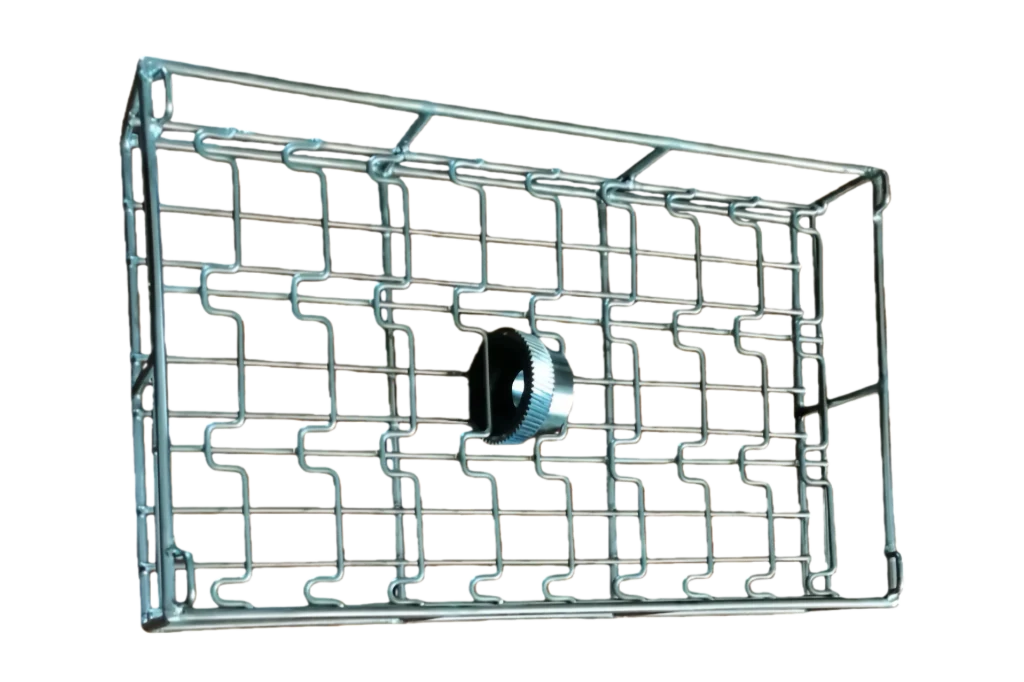
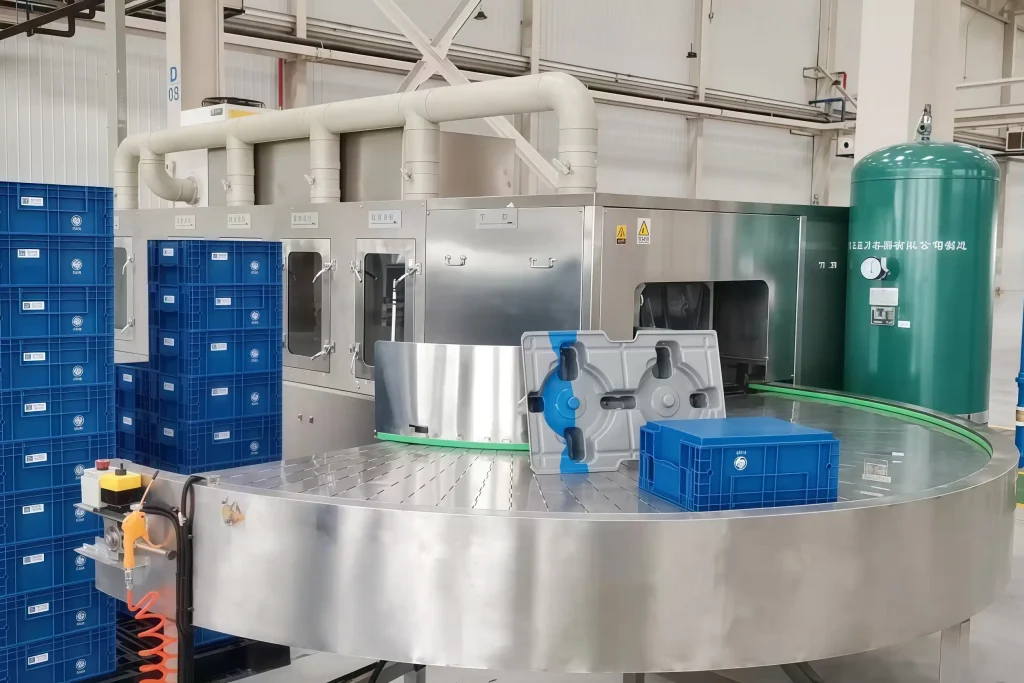
Start by identifying the worst‑case cleaning challenge on your part—threaded holes, internal galleries, or surface oxides—and then evaluate whether the technology can address it directly. Modern benchtop rotary systems now handle small production batches across diverse part families, while fully automatic tunnel washers provide continuous processing for high‑volume lines. The deciding factor is not the technology label but whether the process flow—degreasing, rinsing, passivation, drying—can be configured to the exact cleanliness specification your part requires.
The Real Economics of Advanced Cleaning Technologies
Upfront cost often drives the conversation, but the operational savings from well‑chosen new equipment can dwarf the initial expense. In one system design we completed, integrating a distillation‑based solvent recovery unit cut the customer’s monthly hydrocarbon solvent consumption by over 80 %, consistent with our product‑library data where consumption stays below 200 L per month.
The more important metric is total cost of ownership. Automated multi‑tank systems reduce manual labor by two to three operators per shift while delivering consistent cleanliness, eliminating rework and scrap from residual contamination. Energy consumption has also fallen: modern high‑efficiency ultrasonic generators and heat‑recovery blowers now run at 40–65 kW·h for a full‑sized CNC aluminum shell inline line, a figure that would have been double a decade ago. When calculating ROI, include not only the equipment price but also the solvent, energy, and labor savings over five years—that is where the financial case solidifies for most manufacturers.
If your parts involve intricate internal cavities, confirming that a rotary basket and vacuum drying combination can eliminate residual contamination before finalizing your specification is worth the upfront conversation. Reach out at [email protected].
Integrating New Systems and Preparing for the Future
Retrofitting an existing line with advanced cleaning equipment is rarely a simple swap. In my implementation experience, the critical integration points are material handling, drying, and data connectivity. A conveyor‑based cleaner must match upstream and downstream speeds exactly; our CNC aluminum shell inline cleaners, for example, run with adjustable conveyor speeds up to 0.8 m/min and automatic loading‑unloading to maintain a smooth flow.
Equally important is the drying stage. For parts that will be immediately coated or assembled, vacuum drying eliminates water spots and prevents flash rusting—a feature that once seemed exotic but is now standard in high‑end systems. On the controls side, Siemens or Mitsubishi PLCs with Ethernet connectivity allow production managers to pull cycle‑time data directly into their MES, and remote program upgrades mean process adjustments can be made without a service visit. When you plan an upgrade, treat cleaning as a process cell, not an island, and design the interface points accordingly.
Looking ahead, I am cautious about predictions that sound like science fiction. The most valuable near‑term advances will be incremental but meaningful. Wider adoption of closed‑loop solvent recovery with zero‑discharge water treatment is already technically feasible and will become the baseline expectation in regions with strict environmental enforcement. On the transducer side, rod‑type designs are pushing cavitation uniformity further, allowing effective cleaning of parts that previously required hazardous solvents. I expect AI will play a role in real‑time ultrasonic power adjustment within the next few years, but the fundamental cleaning mechanisms—cavitation, solvency, mechanical action—will remain unchanged. The engineers who succeed will invest in flexible, automation‑ready platforms that can accept future upgrades rather than chasing any single breakthrough.
Moving Forward with Your Cleaning Technology Evaluation
Selecting the right emerging technology begins with a thorough analysis of your parts, not a scan of headlines. From my perspective, the equipment that works is the one that has been designed around your worst‑case cleaning geometry and validated against your target cleanliness specification. GTKCLEAN offers application‑specific system design backed by more than 28 process‑engineering patents and installations in over 20 countries. To get a system tailored to your parts, send your part drawings and required cleanliness standard to [email protected] or call +86 17768507147 for a confidential technical consultation.
Common Questions When Upgrading to New Cleaning Technologies
Does ultrasonic cleaning always deliver better results than spray methods?
Ultrasonic cleaning provides superior performance for parts with intricate geometries, blind holes, or delicate surfaces because cavitation reaches areas that spray cannot. But for large flat surfaces without recesses, a well‑designed high‑pressure spray system can be faster and more cost‑effective. The best choice depends on your part geometry, not a universal ranking of technologies.
Is a solvent recovery system worth the investment for a mid‑sized operation?
It depends on your current solvent consumption and disposal costs. If you are spending more than 2,000 USD per month on virgin solvent and regulated waste disposal, a recovery system typically pays for itself in 12–18 months. One system we equipped with a distillation recovery unit brought monthly hydrocarbon usage under 200 L from an initial fill of 1 800 L, a savings that quickly covered the additional capital.
We have a mix of part sizes and materials—can one system handle them all?
In many programs we have supported, a single platform with interchangeable baskets and programmable recipes has successfully processed families of parts ranging from small fasteners to large engine components. The key is designing the system with sufficient tank volume, adjustable ultrasonic power, and a flexible material‑handling setup that allows quick changeover. Specify the platform for your largest and most contamination‑challenging part; smaller parts rarely suffer in that configuration.
If I purchase a system today, will it become obsolete within a few years?
Obsolescence is rarely about the cleaning technology itself; it is about the controls and flexibility. Systems built with open‑architecture PLCs and modular tank configurations can accept program updates, new baskets, and even additional stations as your needs evolve. We structure our designs so that a customer can add a passivation stage or switch from aqueous to solvent cleaning years later with minimal rework. Share your long‑term production roadmap with your equipment supplier; a supplier that cannot articulate a growth path is not the right partner. To discuss how your cleaning system can be designed for future adaptability, send your requirements to [email protected].
If you're interested, check out these related articles:
Aerospace Part Cleaning Solutions - GTK
How to Integrate Automated Cleaning into Production Lines
 English
  German
  Spanish
  French
  Russian
  Portuguese