
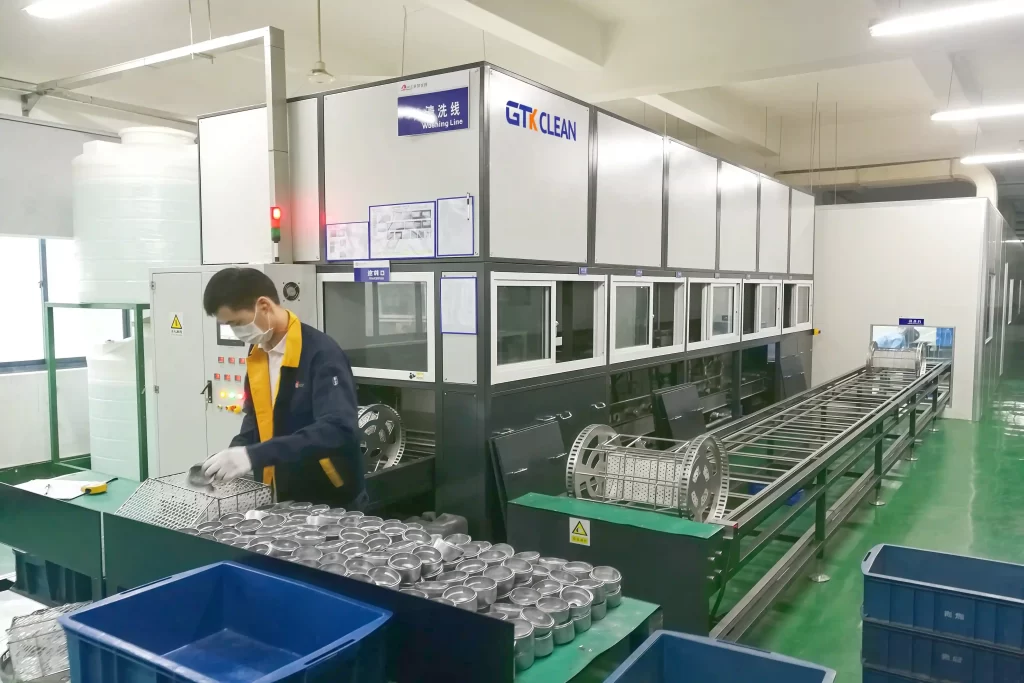
Getting a cleaning line right means understanding what actually happens on your factory floor. The oils clinging to machined parts, the chips lodged in blind holes, the residues that show up only after coating fails—these problems don't solve themselves with generic equipment. GTKCLEAN has spent over twenty years developing automated cleaning systems, accumulating 28 technical patents along the way. That experience shapes how we approach integration: not as a simple equipment swap, but as a process that touches production flow, quality outcomes, and long-term operating costs.
Why Modern Manufacturing Requires Integrated Cleaning Systems
Production complexity keeps climbing. Component geometries grow more intricate. Tolerances tighten. Surface preparation requirements for downstream processes like coating or assembly become more demanding. Manual cleaning methods struggle to keep pace. They introduce variability, consume labor hours, and often miss contamination hidden in recesses or internal channels.
Automated cleaning systems address these realities directly. They deliver repeatable results across thousands of parts. They reduce the human error factor. They generate documentation that satisfies auditors. For factories scaling production or handling precision components, integrated cleaning has shifted from a nice-to-have to a baseline requirement.
The payoff shows up in multiple places: fewer rejected parts, smoother downstream processes, reduced rework, and compliance records that hold up under scrutiny. These aren't theoretical benefits. They're measurable outcomes that affect your bottom line.
Mapping Your Cleaning Requirements Before Equipment Selection
Rushing into equipment selection without proper groundwork creates problems that persist for years. A systematic assessment prevents costly mismatches between what you buy and what you actually need.
Start with your contamination profile. What substances are you removing? Cutting fluids behave differently than stamping oils. Particulate matter requires different approaches than dissolved residues. The answer shapes technology selection.
Next, examine your parts. Dimensions, materials, geometries, and production volumes all influence system design. A part with deep blind holes needs different cleaning action than a flat stamped component. Aluminum responds differently to certain chemistries than steel.
Define your cleanliness targets in measurable terms. "Clean enough" isn't a specification. Conductivity limits, particle counts, surface tension measurements—these give you something to verify and document.
Finally, map your constraints. Available floor space, utility connections, integration points with existing conveyors or handling systems, and budget boundaries all shape what's feasible. This assessment work takes time upfront but prevents expensive corrections later.
Matching Cleaning Technologies to Specific Manufacturing Challenges
Different contamination problems call for different solutions. GTKCLEAN's product range reflects this reality, offering systems built around distinct cleaning principles.
Ultrasonic cleaning excels at reaching contamination that spray systems miss. The cavitation effect—microscopic bubbles forming and collapsing—generates cleaning action in blind holes, threads, and complex internal passages. Our Pre PVD Parts Ultrasonic Cleaners use multi-stage processing: hydrojet spray, ultrasonic cleaning, ultrapure water rinsing, and controlled drying. The ultrapure water system maintains conductivity at or below 0.06 μS/cm, preventing water spots and secondary contamination on optical and electronic components.
For CNC machined parts carrying cutting fluids, chips, and fingerprints, our dedicated ultrasonic systems handle the specific contamination mix these parts present. Rotary or square basket configurations ensure thorough cleaning of blind holes and deep features that would otherwise trap residues.
Stamping operations generate their own contamination profile: oils, metal fines, dust, and anti-rust compounds. Our stamping parts cleaners use cavitation to penetrate the gaps and recesses typical of stamped geometries, preparing surfaces for electroplating, painting, or assembly.
Heavy components present handling challenges alongside cleaning requirements. Our heavy-duty systems accommodate workpieces up to 2000 kg, with reinforced tanks and custom load-bearing baskets. The multi-stage process covers degreasing, rinsing, rust prevention, and drying in an automated sequence.
High-volume continuous operations need different architectures. Our Fastener Tunnel Cleaners process industrial quantities with integrated oil-water separation achieving over 98% oil removal. For die-cast aluminum shells, inline cleaners with multi-directional spray nozzles eliminate dead angles that would otherwise harbor contamination.
| Cleaning Technology | Primary Application | Key Feature | Contaminants Removed |
|---|---|---|---|
| Ultrasonic Cleaning | Precision Parts | Cavitation Effect | Oils, Particulates |
| Solvent Cleaning | Delicate Components | Vacuum Drying | Greases, Waxes |
| Conveyor Belt Systems | High-Volume Parts | Continuous Flow | Chips, Coolants |
| Water Treatment | Rinse Water Quality | Ultrapure Water | Ions, Dissolved Solids |
Understanding how ultrasonic technology generates its cleaning action helps with system selection and process optimization. For technical background, see 《What Is the Principle of an Ultrasonic Cleaning Machine?》.
Building the Financial Case for Automated Cleaning Equipment
Capital equipment decisions require solid financial justification. The numbers need to work, and they need to be defensible when reviewed by finance teams or senior management.
Labor cost reduction provides the most straightforward calculation. Manual cleaning consumes hours that automated systems eliminate. Track current labor allocation to cleaning tasks, apply loaded labor rates, and project the reduction.
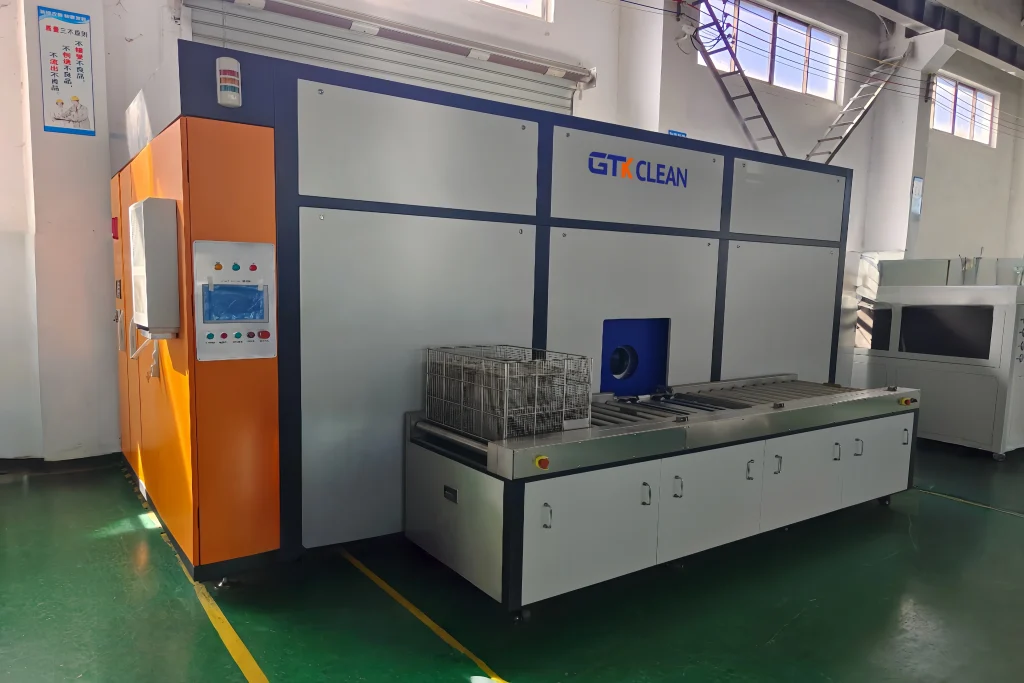
Consumable savings add up faster than many expect. Automated systems dose chemicals precisely, reducing waste. Closed-loop water treatment extends bath life. Solvent recovery systems reclaim cleaning agents for reuse. These efficiencies compound over operating years.
Quality improvements translate to financial gains through reduced scrap, fewer customer returns, and lower rework costs. If contamination-related defects currently run at measurable rates, cleaning system upgrades can cut those rates substantially.
Production throughput often increases when cleaning no longer creates bottlenecks. Parts move through faster. Downstream processes run without cleaning-related delays. The capacity gain has real value.
Energy consumption varies significantly between system types and configurations. Modern systems incorporate efficiency features that reduce operating costs compared to older equipment or manual methods.
Assemble these factors into a payback calculation. Most automated cleaning systems show payback periods measured in months rather than years when the full cost picture is captured.
Navigating Integration Challenges Without Derailing Production
New equipment integration rarely goes perfectly. Anticipating common problems helps you avoid them or respond quickly when they arise.
Physical integration with existing production flow requires careful planning. Where does the cleaning system fit in your layout? How do parts move in and out? Does the system's footprint work with available space? Utility requirements—power, water, compressed air, drainage—need verification before equipment arrives.
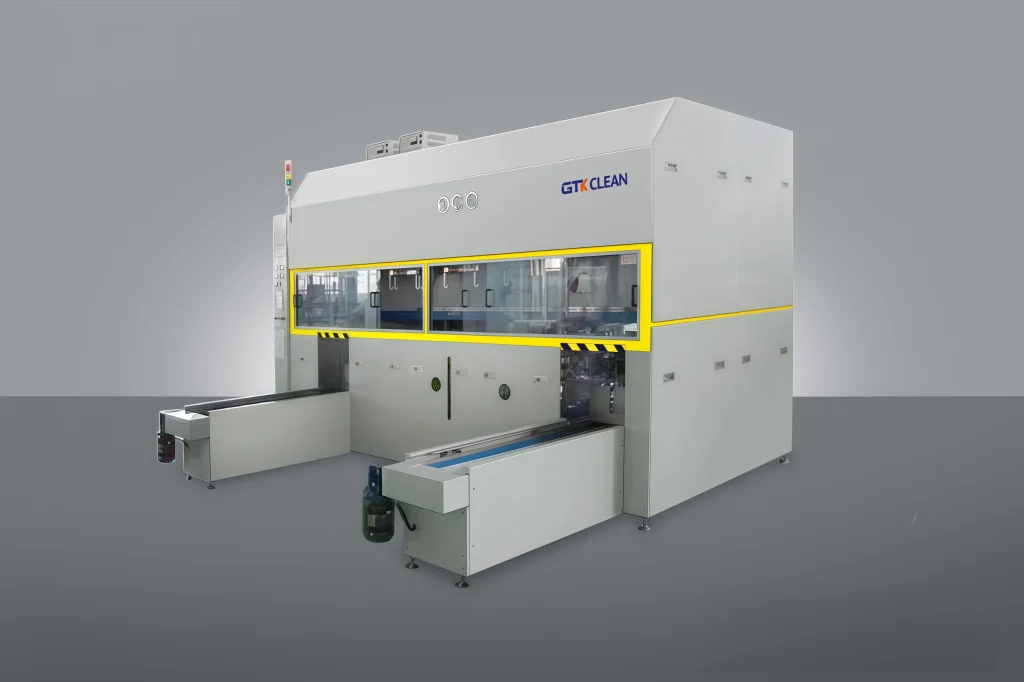
Compatibility with your specific parts and contamination requires validation. Sample testing before final system specification catches mismatches early. GTKCLEAN's approach includes process development work to confirm cleaning performance meets your requirements.
Operator training determines whether sophisticated equipment delivers its potential. Systems with advanced features produce mediocre results when operators don't understand proper loading, cycle selection, or maintenance procedures. Budget time and attention for thorough training.
Maintenance planning prevents the gradual performance degradation that undermines cleaning quality. Establish schedules for filter changes, bath monitoring, transducer inspection, and other routine tasks. Stock critical spare parts to minimize downtime when components need replacement.
Documentation systems need setup from day one. Cleaning process records, maintenance logs, and quality verification data support both operational improvement and compliance requirements.
Working with GTKCLEAN on Your Cleaning Line Project
Two decades of development work and 28 technical patents represent accumulated problem-solving across diverse industries and applications. That experience translates into practical advantages for your project: faster identification of the right approach, fewer surprises during integration, and systems that perform as expected.
Our range covers ultrasonic, solvent, conveyor, and water treatment technologies. We design and manufacture independently, which means customization happens without the delays and communication gaps that plague projects involving multiple vendors.
The conversation starts with your specific situation. What are you cleaning? What contamination are you fighting? What cleanliness levels do you need? What constraints shape your options? From there, we develop recommendations that fit your reality rather than forcing your situation into a standard product.
Reach out to discuss your cleaning line integration project.
Email: [email protected]
Phone: +86 17768507147
Frequently Asked Questions About Cleaning Line Integration
How do automated cleaning systems improve factory floor safety?
Automated cleaning systems reduce direct human contact with cleaning chemicals and mechanical hazards. Enclosed processing chambers contain solvent vapors and prevent splash exposure. Automated chemical dosing eliminates manual handling of concentrated substances. Reduced manual labor around moving parts and hot surfaces lowers injury risk. These factors combine to improve safety metrics and simplify compliance with occupational health regulations.
Can GTKCLEAN's industrial cleaning equipment be customized for specific production lines?
Customization is standard practice rather than an exception. Tank dimensions, basket configurations, cycle parameters, material handling interfaces, and control system integration all adapt to specific requirements. Our independent design and manufacturing capability means modifications don't require coordination across multiple suppliers. The result is equipment that fits your production line rather than forcing your process to accommodate generic equipment limitations.
What kind of ongoing support does GTKCLEAN offer after cleaning line integration?
Support continues well past installation. Technical assistance addresses operational questions and process optimization. Spare parts availability keeps systems running without extended downtime. Preventive maintenance programs catch developing issues before they cause failures. Operator training updates help your team get full value from system capabilities. This support structure reflects our understanding that cleaning equipment represents a long-term operational asset, not a one-time purchase.
 English
  German
  Spanish
  French
  Russian
  Portuguese