
Getting cleaning equipment right in medical device manufacturing isn't just about checking boxes for regulators. It shapes how effectively you reduce bioburden, whether your products actually perform as intended, and how smoothly your production runs day to day. Material compatibility matters. So does understanding what kinds of contamination you're actually dealing with. The equipment you choose needs to deliver consistent, high-purity results without creating operational headaches.
Medical Device Cleaning Standards Shape Equipment Decisions
Medical device cleaning goes far beyond making things look clean. It directly affects patient safety and whether devices function properly after sterilization. Regulatory bodies worldwide enforce strict guidelines because contaminants can trigger adverse reactions or undermine sterilization effectiveness. ISO 13485, FDA 21 CFR Part 820, and various cGMP guidelines all dictate how cleaning processes must be designed, validated, and documented. Meeting these requirements isn't optional if you want market access.
ISO 13485 requires manufacturers to demonstrate control over cleaning processes. That means specifying your cleaning equipment, validating its performance, and keeping detailed records. FDA 21 CFR Part 820 mandates that cleaning processes be established and maintained specifically to prevent contamination. cGMP guidelines push for reproducible, controlled operations. Together, these frameworks ensure cleaning equipment and processes consistently hit required cleanliness levels.
Process validation sits at the heart of regulatory compliance. You need to prove your cleaning process consistently produces devices meeting predetermined specifications. This involves rigorous testing and thorough documentation. Equipment with robust data logging and precise control systems makes this validation work far more manageable. Manufacturers need equipment capable of meeting these stringent requirements, which often means advanced features for monitoring and control.
What are the critical regulatory standards for medical device cleaning equipment?
ISO 13485, FDA 21 CFR Part 820, and cGMP guidelines form the regulatory foundation for medical device cleaning equipment. These standards require specific equipment design parameters, defined operational settings, and comprehensive process validation. Compliance demonstrates that devices consistently meet cleanliness specifications, preventing contamination and protecting patients. Equipment selection must prioritize consistent, repeatable performance to satisfy quality management system requirements.
| Regulatory Standard | Primary Focus | Impact on Cleaning Equipment Selection |
|---|---|---|
| ISO 13485 | Quality Management Systems for Medical Devices | Requires validated cleaning processes and documented control |
| FDA 21 CFR Part 820 | Quality System Regulation (USA) | Mandates process controls to prevent contamination |
| cGMP Guidelines | Good Manufacturing Practice | Emphasizes consistent, reproducible cleaning operations |
Material Composition Drives Cleaning Technology Choices
Cleaning technology selection depends heavily on what your medical devices are made of and how they're shaped. Different materials respond differently to cleaning agents and methods. Delicate polymers need gentler treatment than robust stainless steel implants. Understanding these interactions prevents material degradation, surface damage, or residue buildup. GTKCLEAN's two decades of R&D work and 28 technical patents reflect deep expertise in developing solutions that work across diverse materials.
Ultrasonic cleaning systems work exceptionally well for intricate geometries, blind holes, and complex internal structures. High-frequency sound waves create cavitation bubbles that implode and knock contaminants loose from surfaces. This approach removes particulate matter, oils, and residues effectively from metals, ceramics, and certain plastics. Our Pre PVD (Coating) Parts Ultrasonic Cleaners use multi-stage cleaning with ultrapure water to achieve conductivity at or below 0.06 μS/cm. This prevents water spots and secondary contamination on sensitive components.
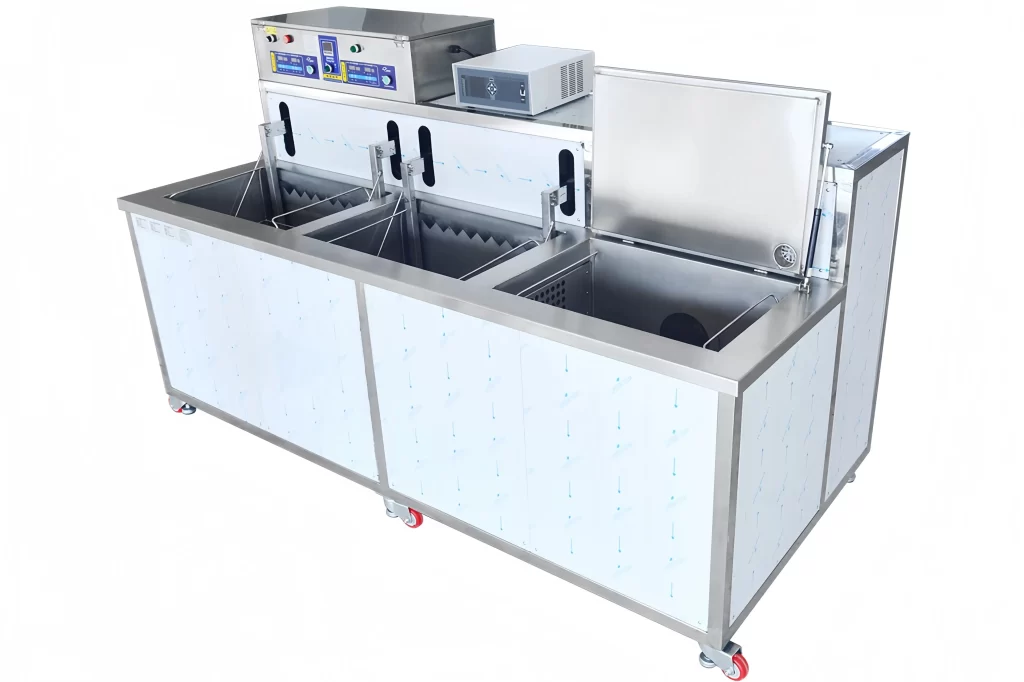
Solvent cleaning systems using high-purity hydrocarbon solvents excel at removing organic contaminants like oils, greases, and waxes. These systems often make sense for sensitive materials or situations where water-based cleaning creates problems. Our Multi-Tank Hydrocarbon Ultrasonic Cleaners feature rotary baskets and vacuum ultrasonic cleaning for precision 360° coverage of recessed and blind-hole parts. Aqueous cleaning with water-based detergents offers versatility and environmental benefits when combined with appropriate chemistries and rinsing protocols. Precision cleaning often requires combining these technologies based on specific device requirements. Bioburden reduction remains the primary goal regardless of which method you choose.
GTKCLEAN's Hydrocarbon Solvent Ultrasonic Vacuum Cleaners integrate ultrasonic cleaning, vacuum vapor cleaning, and drying in a single station. This maintains high cleanliness standards for precision hardware while allowing flexible switching between hydrocarbon or modified alcohol solvents.
If you're interested in learning more about how sound waves contribute to cleaning, check out 《What Is Ultrasonic Wave?》.
Equipment Design Features Determine Cleaning Effectiveness
How cleaning equipment is designed significantly impacts both effectiveness and efficiency in medical device manufacturing. Multi-stage processes, intelligent controls, and robust filtration systems all matter. Automated cleaning solutions reduce human error and ensure consistent, repeatable results. This consistency proves vital for regulatory compliance.
GTKCLEAN's independently designed automated cleaning equipment, including conveyor belt systems, streamlines operations considerably. Our CNC Aluminum Shell Inline Cleaners feature continuous conveyor systems for spray degreasing, rinsing, and drying. Multi-directional spray nozzles ensure complete coverage for complex aluminum parts without dead angles. This matters for maintaining cleanroom protocols. Automation minimizes manual handling, reducing recontamination risk while improving throughput.
Advanced features like ultrapure water systems ensure final rinse water conductivity stays exceptionally low, preventing water spots and secondary contamination. Integrated circulation filtration systems extend cleaning solution life and reduce resource consumption. Post-cleaning inspection methods are often built into automated lines, using visual or analytical techniques to verify cleanliness before subsequent manufacturing steps. Comprehensive design ensures surface finish requirements are consistently met.
For a deeper understanding of the underlying principles of ultrasonic cleaning, consider reading 《What Is the Principle of an Ultrasonic Cleaning Machine?》.
Total Cost of Ownership Extends Beyond Purchase Price
Choosing cleaning equipment requires thorough cost-benefit analysis that goes well beyond initial purchase price. Total cost of ownership encompasses operational costs, maintenance, and environmental impact. Strategic decisions here significantly affect long-term profitability and sustainability.
Evaluating cost-effective cleaning solutions means assessing energy consumption, water usage, and chemical expenditure. Equipment with efficient drying technologies reduces energy use and noise. Our Turnover Box Inline Cleaners use two rotary air nozzles per compressor to achieve this. Water treatment systems for recycling and purifying cleaning water minimize discharge and operational expenses. GTKCLEAN's systems often feature circulation and filtration to extend fluid life, reducing the need for frequent replenishment.
Maintenance costs contribute meaningfully to total cost of ownership. Robustly built equipment with durable components offers greater longevity and lower maintenance requirements. Our Multi-Tank Ultrasonic Cleaners use SUS304/SUS316 stainless steel for this reason. Process validation and ongoing quality control costs must also be factored in. Equipment that simplifies these processes through automation and precise data logging can deliver significant savings over time.
What factors influence the total cost of ownership for medical device cleaning systems?
Total cost of ownership for medical device cleaning systems depends on initial capital investment, ongoing operational costs for energy, water, and cleaning agents, maintenance and spare parts, labor expenses, and costs associated with regulatory compliance and validation. Environmental impact and waste disposal costs also contribute. Optimizing these factors drives strong return on investment for cleaning operations.
| TCO Factor | Description | Impact on Overall Cost |
|---|---|---|
| Initial Investment | Purchase price of equipment, installation, and setup | One-time capital outlay |
| Operational Costs | Energy consumption, water usage, cleaning agents, and waste disposal | Recurring expenses, influenced by efficiency and recycling |
| Maintenance & Repairs | Scheduled servicing, spare parts, and unexpected repairs | Ongoing costs, affected by equipment quality and design |
| Labor Costs | Staffing for operation, monitoring, and quality control | Influenced by automation levels |
| Validation Costs | Expenses for process qualification, testing, and documentation | Critical for regulatory compliance |
| Environmental Impact | Costs associated with wastewater treatment and compliance with regulations | Can be significant if not managed effectively |
Process Validation Requires Equipment That Supports Reproducibility
Process validation demonstrates that cleaning consistently achieves predetermined specifications. Quality control measures ensure ongoing adherence to validated parameters. Both prove critical for regulatory approval and maintaining product integrity throughout production.
Establishing robust validation protocols involves defining acceptance criteria, conducting rigorous testing, and documenting every step. This includes verifying contaminant removal to acceptable levels and ensuring the cleaning process doesn't negatively impact device material or function. Equipment designed for precise control over parameters like temperature, cycle time, and chemical concentration ensures the reproducibility necessary for successful validation.
Traceability is maintained through comprehensive record-keeping that allows manufacturers to track every device through its cleaning cycle. Risk assessment identifies potential failure points and implements mitigation strategies. Sterilization compatibility must also be confirmed. Cleaning agents and processes cannot interfere with subsequent sterilization methods. GTKCLEAN provides guidance on establishing validation protocols and integrating quality control measures into your operations.
For a comprehensive understanding of the physical phenomenon behind ultrasonic cleaning, explore 《What Is Ultrasonic Cavitation Effect?》.
Manufacturer Partnership Matters Beyond Equipment Specifications
Choosing a cleaning equipment manufacturer is a strategic decision that extends beyond product specifications. A reliable partner offers advanced technology along with comprehensive support, expertise, and commitment to innovation. This partnership proves crucial for navigating complex regulatory landscapes and optimizing manufacturing processes.
GTKCLEAN serves clients across more than 20 countries, including Fortune 500 companies. Our 20+ years of R&D experience and 28 technical patents in industrial cleaning demonstrate capability to deliver superior cleaning performance. We specialize in independently designing comprehensive ranges of automated cleaning equipment, including ultrasonic systems, solvent systems, and conveyor belt systems. This expertise ensures we provide custom solutions tailored to unique production needs.
When selecting a cleaning solutions provider, consider their track record, technological capabilities, and ability to offer ongoing support. An expert technology partner provides invaluable insights into process optimization, regulatory compliance, and future-proofing your operations. GTKCLEAN's commitment to innovation and customer satisfaction makes us a trusted partner for achieving uncompromising cleanliness in medical device manufacturing.
Achieve Uncompromising Cleanliness with GTKCLEAN's Advanced Solutions
For over two decades, Suzhou Grintek Environmental Technology Co.,Ltd. (GTKCLEAN) has been at the forefront of industrial cleaning innovation, holding 28 technical patents and serving Fortune 500 companies worldwide. Our expertise in ultrasonic, solvent, and conveyor belt cleaning systems ensures your medical devices meet the most stringent cleanliness and regulatory standards. Contact our specialists at +86 17768507147 or [email protected] for a personalized consultation and discover how GTKCLEAN can optimize your medical device cleaning operations.
Frequently Asked Questions About Medical Device Cleaning Equipment
How do different cleaning technologies compare for specific medical device materials?
The optimal cleaning technology depends heavily on material type and device geometry. Ultrasonic cleaning works well for complex geometries and particulate removal. Solvent cleaning systems handle organic contaminants effectively and suit sensitive materials. Aqueous cleaning offers versatility but requires careful drying. GTKCLEAN offers specialized solutions tailored to specific material and cleanliness requirements, drawing on 20+ years of R&D expertise to ensure material compatibility and superior cleaning performance.
What are the common challenges in validating medical device cleaning processes?
Validation involves demonstrating consistent contaminant removal to predetermined levels while ensuring device functionality and meeting regulatory requirements like ISO 13485. Common challenges include selecting appropriate analytical methods for residue detection, establishing robust acceptance criteria, managing variations in device design or materials, and ensuring cleaning cycle reproducibility. GTKCLEAN's equipment is designed for precise control and repeatability, simplifying validation efforts and supporting traceable, compliant cleaning processes.
Can cleaning equipment be customized for unique medical device production lines?
Medical device manufacturing often involves unique geometries, production volumes, and cleanliness specifications that standard solutions cannot address. Customization optimizes efficiency and compliance. GTKCLEAN specializes in independently designing comprehensive ranges of automated cleaning equipment, including bespoke ultrasonic, solvent, and conveyor belt systems. Our engineering team works closely with clients to develop tailored solutions that integrate into existing production lines, ensuring optimal cleaning performance and adherence to specific manufacturing requirements.
 English
  German
  Spanish
  French
  Russian
  Portuguese