
Choosing the right multi-tank ultrasonic system for high-volume cleaning isn't something you figure out from a spec sheet alone. I've seen facilities invest in equipment that looked perfect on paper but struggled with their actual parts mix. The geometry of what you're cleaning, how dirty it gets, and how fast you need it done all pull the decision in different directions. Getting this wrong means either overspending on capacity you don't need or bottlenecking production because the system can't keep pace.
Why Multi-Tank Configurations Beat Single-Tank Setups for Industrial Throughput
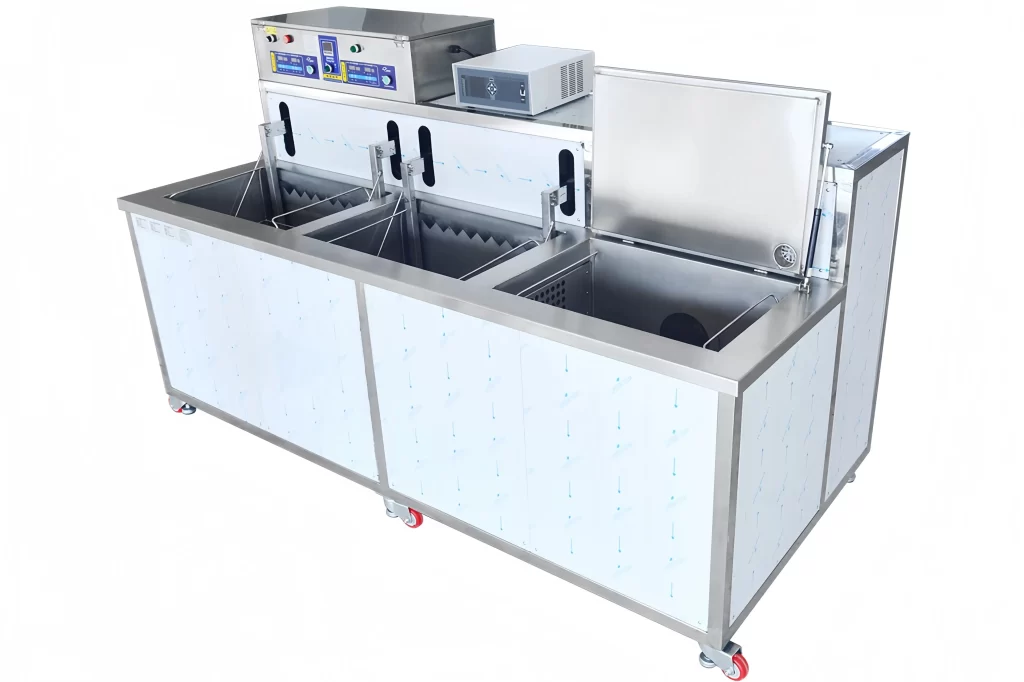
Multi-tank ultrasonic systems handle industrial parts cleaning through a staged process that single-tank units simply can't match. Instead of running everything through one bath, these configurations separate pre-cleaning, ultrasonic cleaning, rinsing, and drying into dedicated stations. Parts move through each stage sequentially, which prevents cleaned surfaces from picking up contaminants again. That re-deposition problem kills cleaning quality faster than most people realize.
The modular design also means you're not waiting for one batch to finish before starting the next. While parts dry in the final station, fresh parts enter the first tank. This overlap is where the throughput gains come from. You can also adjust the system footprint to fit your floor space, adding or removing stages based on what your process actually requires.
A Pre PVD (Coating) Parts Ultrasonic Cleaner shows how this staging works in practice. The sequence runs hydrojet spray, ultrasonic cleaning, multi-stage ultrapure water rinsing, then air knife, hot air, or vacuum drying. Each step targets a specific contamination type or prepares the surface for what comes next. For PVD coating prep, where any residue causes adhesion failures, this structured approach isn't optional.
Sizing Your System Based on Contamination, Parts, and Production Demands
Getting the tank sizes, ultrasonic power, and frequency right determines whether your multi-tank ultrasonic system actually performs. The type of contamination matters as much as the amount. Cutting oils behave differently than buffing compounds or carbon deposits. Part geometry creates its own challenges. Blind holes trap contaminants that flat surfaces release easily. Material compatibility limits your chemistry options.
| Frequency Range | Cleaning Application | Cavitation Intensity |
|---|---|---|
| 20-40 kHz | Heavy contamination, robust parts | High |
| 40-68 kHz | General industrial cleaning, medium contamination | Medium |
| 68-100 kHz | Precision cleaning, delicate parts | Low-Medium |
| 100-200 kHz | Ultra-precision, very delicate parts | Very Low |
Lower frequencies generate larger cavitation bubbles that collapse with more force. That aggressive action strips stubborn contamination from robust parts but can damage softer materials or polished surfaces. Higher frequencies create finer cavitation. The bubbles are smaller and gentler, reaching into tight spaces without the mechanical stress. Precision cleaning on delicate components needs that controlled approach.
Handling Complex Geometries and Sensitive Materials
Part geometry drives more design decisions than people expect. Complex shapes with recesses, blind holes, and intricate features need specific ultrasonic configurations to ensure the cleaning action reaches everywhere. Rotary Basket Ultrasonic Cleaners address this by rotating parts through the cavitation field, achieving 360° coverage. The rotation also prevents parts from sitting against each other, eliminating scratches and collision damage.
Material compatibility requires matching both the cleaning chemistry and ultrasonic frequency to what you're cleaning. Aluminum reacts differently than stainless steel. Plastics have temperature and chemical limits that metals don't share. Delicate parts cleaning often combines higher frequencies with milder solutions to avoid surface damage while still removing contamination.
For background on how ultrasonic cleaning actually works, the physics behind cavitation and how frequency affects bubble behavior, check 《What Is the Principle of an Ultrasonic Cleaning Machine?》.
Automation Features That Actually Improve Throughput
Automation in multi-tank systems does more than reduce labor. It eliminates the variability that manual handling introduces. When operators move parts between stages, timing varies. Dwell times in each tank become inconsistent. Automated systems maintain precise control over every step, which shows up in cleaning quality.
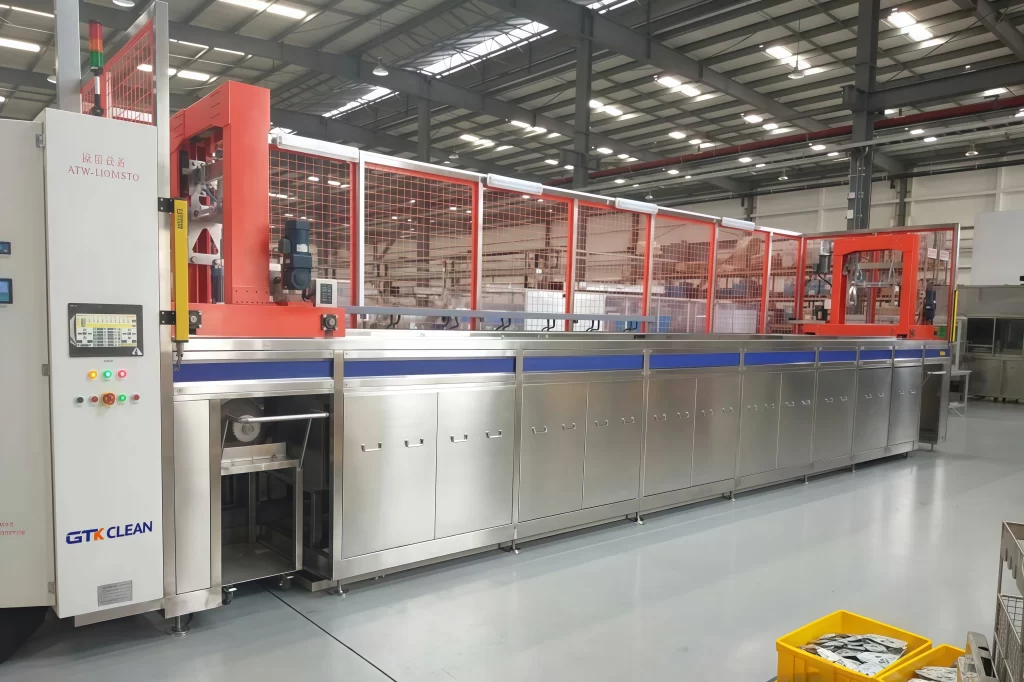
Fully automatic operation covers loading through drying without intervention. This consistency matters for processes where cleanliness specifications are tight. Ultrasonic Cleaners for CNC Machined Parts run automated multi-stage sequences including high-pressure spray, ultrasonic degreasing, RO/DI water rinsing, and hot air or vacuum drying. Cutting fluids, chips, and machining residues come off reliably because the process doesn't depend on operator attention.
Conveyor belt cleaning systems take this further for continuous production. Parts feed through without batching, integrating directly into manufacturing lines. These systems also incorporate overflow, filtration, and circulation to extend cleaning fluid life. Fresh solution costs money, and contaminated fluid degrades cleaning performance. Keeping the bath clean longer reduces both expenses and quality drift. Operator safety improves too. Automated process control means less direct contact with chemicals and hot solutions.
Calculating Real Costs Beyond the Purchase Price
The upfront cost of a multi-tank ultrasonic system runs higher than single-tank units. That's obvious. What's less obvious is how the operating economics shift over time. Energy consumption, maintenance requirements, chemical usage, and labor all factor into the actual cost of ownership.
| Feature | Single-Tank System | Multi-Tank System |
|---|---|---|
| Initial Cost | Lower | Higher |
| Throughput | Low | High |
| Cleaning Quality | Basic | Superior |
| Labor Requirements | Moderate | Low (automated) |
| Chemical Consumption | Moderate | Lower (recycling) |
| Energy Efficiency | Moderate | High |
| ROI | Longer | Shorter |
Energy efficiency features like integrated heat recovery on CNC Aluminum Shell Inline Cleaners reduce utility costs over thousands of operating hours. Waste treatment systems cut disposal expenses and simplify environmental compliance. Reduced labor from automation compounds over time. Improved cleaning consistency means fewer rejects and rework cycles. Parts that last longer because they're actually clean reduce replacement costs downstream.
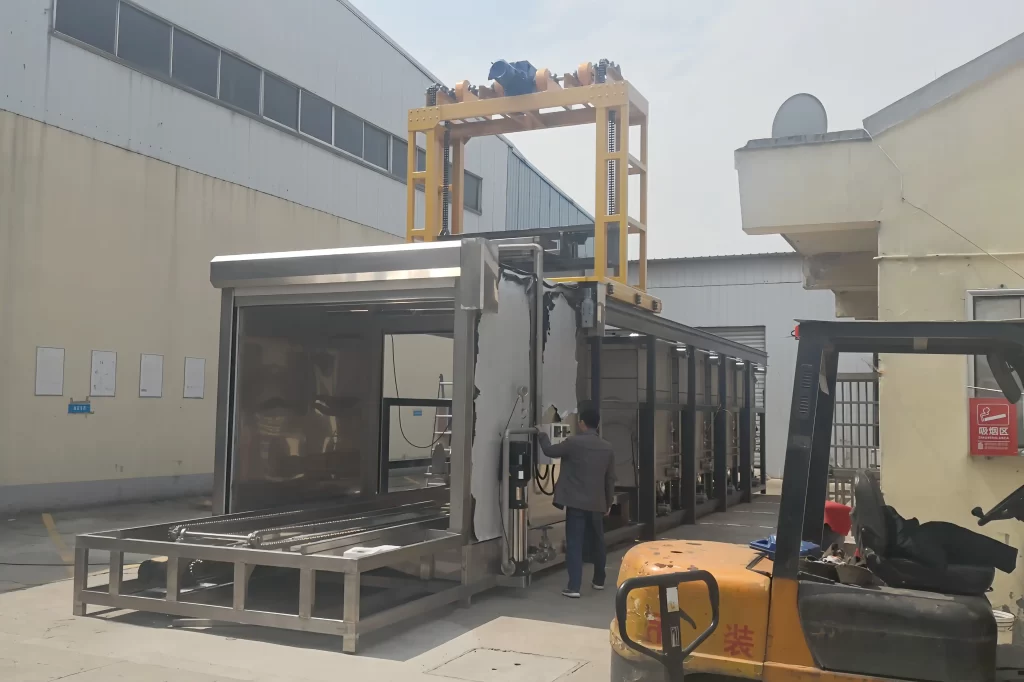
The ROI calculation depends heavily on your production volume and cleanliness requirements. High-volume operations with tight specifications see payback faster because the efficiency gains multiply across more parts.
Matching System Design to Your Specific Application
Standard configurations work for common applications, but many industrial cleaning challenges need customization. Part dimensions vary. Production capacities differ. Cleanliness standards range from "visually clean" to "particle count verified." A system designed for automotive transmission components won't necessarily handle aerospace turbine blades or medical implants.
Custom multi-tank ultrasonic systems address these variations. Tank sizing matches your largest parts. Ultrasonic frequency and power match your contamination profile. Automation level matches your labor availability and quality requirements. The engineering behind these decisions draws on application experience. Knowing what works for similar parts and similar contamination types shortcuts the trial-and-error that wastes time and money.
Technical support extends past installation. Remote software upgrades keep automated systems current. Maintenance guidance prevents problems before they cause downtime. That ongoing relationship matters more than most equipment purchases because cleaning systems interact with your production process daily.
Partner with GTKCLEAN for Your Industrial Cleaning Needs
Suzhou Grintek Environmental Technology Co.,Ltd. (GTKCLEAN) brings over 20 years of R&D experience and 28 technical patents to industrial cleaning equipment design. Our automated cleaning solutions cover ultrasonic systems through water treatment, engineered for demanding high-volume applications. Contact us at +86 17768507147 or [email protected] to discuss your requirements and see how multi-tank ultrasonic systems can improve your cleaning processes.
Frequently Asked Questions About Multi-Tank Ultrasonic Systems
What makes multi-tank systems worth the higher cost for high-volume production?
The staged process is the key difference. Multi-tank ultrasonic systems separate pre-cleaning, ultrasonic cleaning, rinsing, and drying into dedicated tanks. Parts move through each stage without sitting in contaminated solution or waiting for the previous batch to finish. This prevents re-deposition, where contaminants settle back onto cleaned surfaces, and allows continuous processing. Single-tank systems force you to complete one step before starting the next, limiting throughput and mixing clean parts with dirty solution. For high-volume production, the efficiency gains from parallel processing typically offset the higher initial investment within months.
How do I figure out the right frequency and power for my parts?
Start with your contamination type and part characteristics. Heavy contamination on robust metal parts responds well to lower frequencies in the 20-40 kHz range. The larger cavitation bubbles at these frequencies deliver more mechanical force. Delicate parts, precision surfaces, or intricate geometries need higher frequencies, typically 68-200 kHz, where smaller bubbles clean gently without surface damage. Power requirements scale with tank volume and how fast you need parts cleaned. Undersized power extends cycle times. Oversized power wastes energy without improving results. The best approach is discussing your specific parts, contamination, and production rate with an experienced manufacturer who can recommend configurations based on similar applications.
What maintenance keeps these systems running reliably?
Regular attention to tanks, transducers, and filtration prevents most problems. Contamination builds up in tanks over time, reducing cleaning effectiveness. Transducers can develop issues that affect cavitation uniformity. Filtration systems need cleaning or replacement to maintain flow rates. Beyond the mechanical components, monitoring cleaning solution concentration and temperature ensures consistent results. Calibrating controls periodically catches drift before it affects quality. GTKCLEAN provides maintenance guidelines specific to each system configuration and offers technical support for troubleshooting. Preventive maintenance costs less than emergency repairs and keeps production running.
 English
  German
  Spanish
  French
  Russian
  Portuguese