
Medical device manufacturers face a cleaning challenge that general industrial standards don't fully address. Contaminants that would pass visual inspection in automotive or general manufacturing can cause biocompatibility failures, endotoxin reactions, or particulate embolization in a finished device. Cleaning validation standards bridge this gap by requiring documented evidence that the cleaning process consistently removes manufacturing residues to predetermined limits. After twenty years designing automated cleaning systems for regulated industries, I've seen too many validation delays traced not to the cleaning chemistry but to equipment that cannot deliver repeatable, verifiable process parameters. Getting the validation right starts with understanding what the standards actually demand of your cleaning system.
What Medical Device Cleaning Validation Standards Require
Medical device cleaning validation sits at the intersection of several regulatory frameworks. ISO 19227, the most directly applicable standard, specifies requirements for the validation of cleaning processes for medical devices. It mandates that manufacturers establish acceptance criteria for cleanliness before validation begins—not after results come in. The standard requires identification of all contaminants from prior manufacturing steps, selection of appropriate sampling methods, and demonstration that the cleaning process can reduce residues below predetermined limits with statistical confidence.
FDA 21 CFR Part 820, the Quality System Regulation, approaches cleaning validation through the broader lens of process validation. Under 21 CFR 820.75, any process where results cannot be fully verified by subsequent inspection and testing must be validated. Since cleaning verification on every device is impractical, validation becomes mandatory for most manufacturing cleaning operations. ISO 13485 adds the requirement that cleaning processes be documented, controlled, and subject to change management. Any modification to the cleaning system, detergent, or cycle parameters may trigger revalidation.
The practical implication for manufacturers is that cleaning validation is not a one-time study but a documented system of controls. The equipment must generate evidence that each cycle operates within validated parameters. Manual cleaning stations, where the operator controls duration, temperature, and agitation by feel, struggle to meet this evidentiary standard. Automated systems with PLC-controlled parameters and data logging capabilities align more naturally with what auditors expect to see.
Cleaning Parameters That Determine Validation Success
When a validation auditor reviews a cleaning process, they look at specific, measurable parameters, not general assurances of cleanliness. The parameters that most directly influence cleaning effectiveness must be defined, controlled, and recorded for every validated cycle. Here are the parameters that consistently receive the most scrutiny:
| Parameter | Validation Significance | Common Failure Mode |
|---|---|---|
| Ultrasonic frequency and power density | Cavitation intensity determines particle removal from blind holes and threads | Power degradation over time with no monitoring |
| Cleaning temperature | Affects detergent activity and contaminant solubility | Temperature overshoot or dead zones within the tank |
| Cycle duration and sequencing | Each stage must be timed to achieve its function | Manual timing with no verification record |
| Rinse water quality (conductivity) | Final rinse purity directly affects residue levels | Rinse water not monitored or changed on schedule |
| Detergent concentration and life | Depleted detergent redeposits contaminants | Concentration checked only at batch start |
Temperature control deserves particular attention because it affects both cleaning chemistry and cavitation physics. In ultrasonic systems, the optimal cleaning temperature for aqueous detergents typically falls between 45°C and 65°C. Below that range, detergent activity drops; above it, cavitation intensity decreases because the vapor pressure of the liquid rises and bubbles collapse less violently. A well-designed system maintains temperature within a narrow band and logs the actual temperature throughout the cycle, not just the setpoint.
Rinse water quality is equally critical. The final rinse before drying determines what residues remain on the device surface. Deionized water rinse systems with inline conductivity monitoring, typically holding ≤0.06 μS/cm for critical devices, deliver verifiable rinse quality. Without this monitoring, the rinse step becomes a blind operation that no amount of post-cleaning sampling can fully compensate for.
Ultrasonic frequency selection also factors into validation. Lower frequencies in the 20–28 kHz range generate larger, more energetic cavitation bubbles suited for removing heavy machining oils and particulate from robust metal components. Higher frequencies of 40–80 kHz produce smaller, gentler cavitation better suited for precision surfaces, polished finishes, and delicate device features. The frequency must match both the contaminant and the substrate. A mismatch yields inadequate cleaning on one extreme or surface damage on the other.
How Automated Ultrasonic Systems Support Validation Compliance
This is where equipment design moves from being a procurement decision to a validation strategy. A cleaning system built with validation in mind differs fundamentally from one designed solely for throughput. The difference shows up in three areas: parameter control, data integrity, and process segregation.
Parameter control means the system enforces validated setpoints rather than depending on operator judgment. In a properly designed automated system, the PLC controls and records ultrasonic power, temperature, cycle timing, and rinse water conductivity for every batch. If a parameter drifts outside the validated range, the system either compensates automatically or halts the cycle and alerts the operator. This closed-loop control transforms a cleaning recipe into a validated process.
Data integrity follows from parameter control. Modern cleaning systems log cycle data in formats suitable for audit review and trend analysis. When an auditor asks for evidence that the cleaning process operated within validated parameters for lot 2473, the data is available, not reconstructed from operator logsheets. At GTKCLEAN, our automated ultrasonic systems use Siemens or Mitsubishi PLCs with color touchscreen HMI, automatic alarms, and fault diagnostics. Each cycle generates a complete record that identifies exactly when and how the process deviated, if at all.
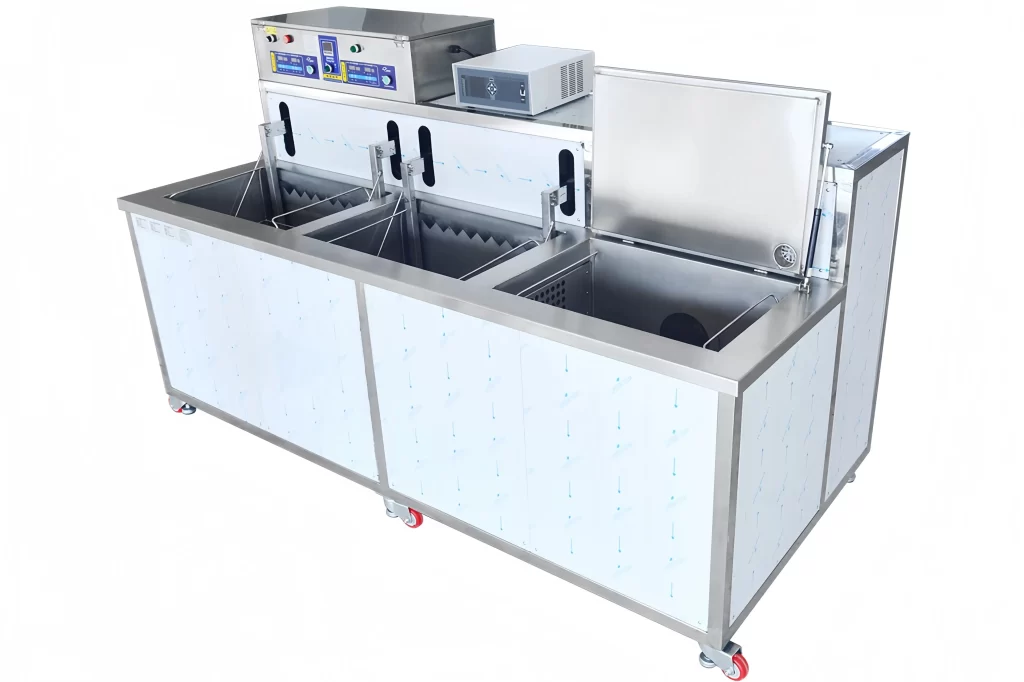
Process segregation matters for multi-stage cleaning. Medical device cleaning often requires sequential stages: pre-wash, ultrasonic degreasing, multiple rinse steps, and drying. If these stages share tanks or transfer contamination between them, the final rinse may carry residues from earlier stages. Multi-tank systems with dedicated stations for each process step eliminate cross-contamination risk and make each stage independently validatable. Our multi-tank configurations separate these functions into individual stations with their own filtration and circulation systems.
If your medical device program involves complex geometries with blind holes, threaded features, or internal cavities, it is worth confirming that your cleaning system design addresses these features before finalizing your BOM. Gravity alone cannot clear liquid from blind holes during rinsing, and residual rinse water carries whatever contaminants it dissolved. Contact us at [email protected] to discuss your part geometry and we can confirm whether your proposed system configuration will address these challenges.
Equipment Qualification Steps for Medical Device Cleaning
Equipment qualification for medical device manufacturing follows the familiar IQ/OQ/PQ framework, but the application to cleaning equipment requires specific attention to cleaning-relevant parameters. Skipping or abbreviating any qualification phase creates exposure during audits.
Installation Qualification verifies that the cleaning system is installed correctly and matches the purchase specification. For ultrasonic systems, this includes confirming the electrical supply matches the generator requirements, the plumbing connections comply with the facility's water quality specifications, the tank material is the specified grade of stainless steel, and all safety interlocks function as designed. IQ also verifies that calibration certificates exist for temperature sensors, conductivity meters, and any other instruments that will generate validation data.
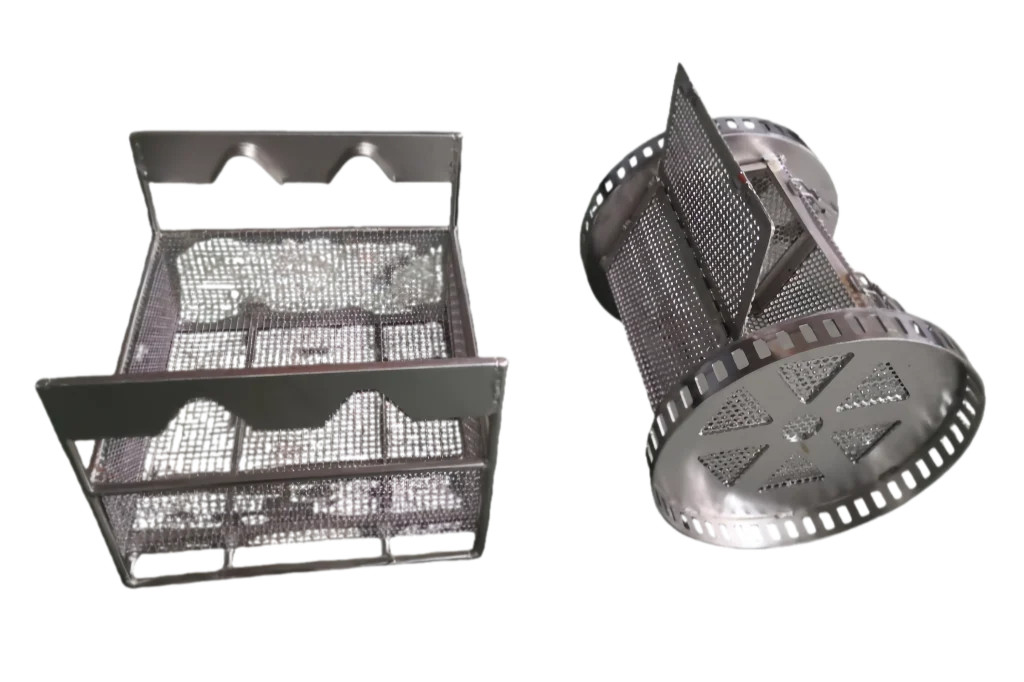
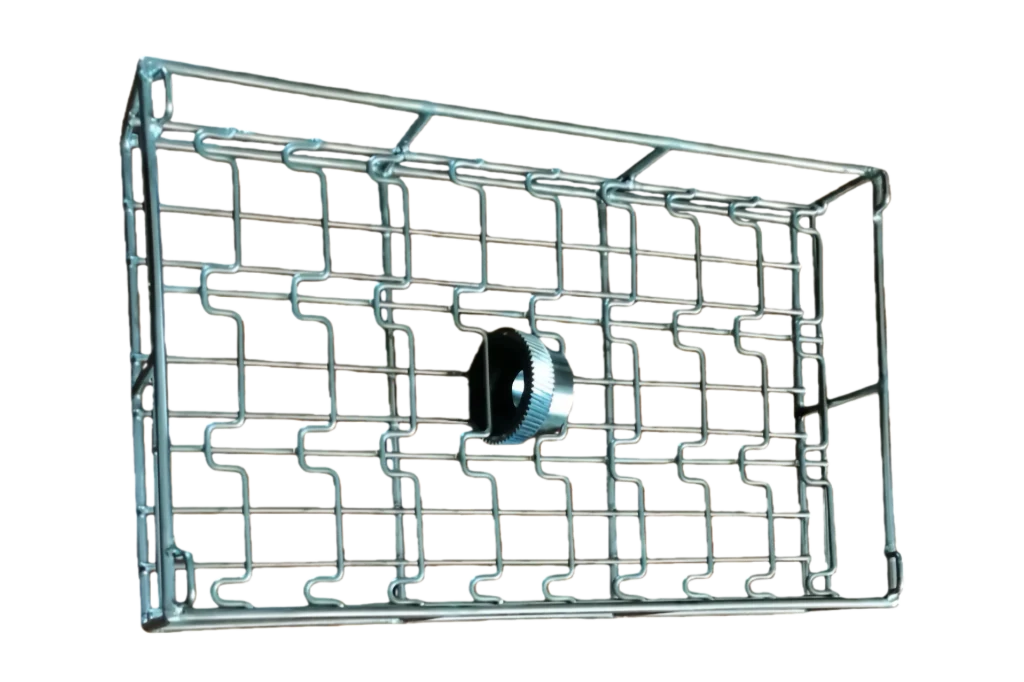
Operational Qualification demonstrates that the system performs according to its operational specifications across the full range of expected operating conditions. For a cleaning system, OQ verifies that the ultrasonic output meets the specified power density across the entire tank volume, the heating system achieves and maintains target temperatures within tolerance, the filtration system produces the specified flow rate, and the drying system reaches the required temperature or vacuum level. OQ should include challenging conditions: partial loads, maximum loads, and different basket configurations, to establish the operating envelope.
Performance Qualification ties the equipment to the specific cleaning process. Using actual production parts or worst-case challenge parts, PQ demonstrates that the system consistently produces cleanliness levels within acceptance criteria. PQ runs should use production-representative contamination levels, and the sampling plan should reflect the most difficult-to-clean features of the device. I recommend a minimum of three consecutive successful PQ runs, though some regulatory reviewers expect more depending on process risk.
The trap many manufacturers fall into is treating equipment qualification as a paperwork exercise rather than a genuine verification activity. I've seen OQ protocols that verify temperature at one point in the tank rather than mapping the full volume. That single-point measurement cannot detect cold zones where cleaning effectiveness drops. A defensible qualification maps temperature distribution across the entire working volume at multiple load conditions.
Building a Defensible Cleaning Validation Protocol
The validation protocol is where the standards, the equipment, and the specific device come together. A protocol that survives regulatory review has several characteristics worth understanding upfront.
Acceptance criteria must be quantitative and scientifically justified. "Visibly clean" is not a validation acceptance criterion. It is a subjective observation that may precede quantitative testing but cannot replace it. Common quantitative criteria include gravimetric residue limits, typically expressed as μg/cm² or mg per device, total organic carbon in final rinse water, particulate counts by size range, and specific analytical methods for known contaminants such as cutting fluids or mold release agents. The limits should derive from the device's intended use: implantable devices require more stringent limits than external devices with brief patient contact.
The sampling strategy must address worst-case locations. Blind holes, internal threads, and crevices trap contaminants that flat surfaces release easily. If the sampling plan only tests accessible external surfaces, it may miss residual contamination in the features that matter most. For devices with internal lumens or complex geometries, the protocol should include extraction sampling or rinse sampling from internal volumes, not just surface swabs from easy-to-reach areas.
Revalidation triggers need to be defined in the protocol itself, not decided reactively when a change occurs. Any modification to the cleaning equipment, detergent formulation, cycle parameters, or device design that could affect cleanliness should trigger a documented revalidation assessment. Minor changes may require only a justification memo; major changes demand full or partial revalidation. The protocol should list specific examples of changes that trigger each level of response, reducing ambiguity when changes inevitably occur during production.
The protocol also needs a plan for ongoing monitoring. Initial validation demonstrates capability; ongoing monitoring demonstrates control. A practical monitoring plan includes periodic sampling of production lots, trending of process parameters from the equipment data logs, and scheduled review of the data to detect drift before it produces a nonconformance. The frequency and scope of monitoring should reflect the device risk classification: more frequent and more extensive monitoring for higher-risk devices.
Getting the Validation Support Your Program Needs
Cleaning validation for medical devices requires more than a compliant process on paper. It demands cleaning equipment that generates the parameter control, data integrity, and repeatability evidence that regulatory reviewers expect. The standards are clear about what must be demonstrated; the equipment is what makes that demonstration possible.
After two decades of designing automated cleaning systems for regulated manufacturing environments, I've learned that validation outcomes are largely determined by decisions made during equipment specification and qualification, long before the first protocol run. If you are building or upgrading a cleaning process for medical device manufacturing, the equipment platform you select will either constrain or enable your validation effort.
Send your part specifications and production requirements to [email protected] or call +86 17768507147. We'll review your cleaning challenges and confirm what equipment configuration and qualification approach will give you the strongest validation package.
Common Questions About Medical Device Cleaning Validation
Does every medical device cleaning process require full validation?
If the device contacts the patient directly or indirectly and the cleaning results cannot be 100% verified by inspection of each unit, validation is required under 21 CFR 820.75. For devices where residual contamination could affect biocompatibility or performance, regulatory expectations consistently call for validated cleaning. Lower-risk devices or those cleaned by methods where each unit can be individually verified may operate under controlled processes without full validation, but the justification must be documented and risk-based.
What is the most common reason cleaning validations fail during audits?
In my experience supporting manufacturers through validation, the most frequent finding is inadequate parameter control documentation. The process may clean effectively, but if the equipment cannot produce cycle records showing that temperature, time, and ultrasonic power stayed within validated limits throughout the cycle, the auditor cannot confirm the process operated as validated. Manual processes that depend on operator technique produce this gap repeatedly. Automated systems with integrated data logging prevent it entirely.
How often should cleaning validation be repeated?
Initial validation establishes the process, but revalidation is triggered by changes, not by a calendar. Equipment modifications, detergent changes, new device designs, or relocation of the cleaning system all warrant revalidation assessment. Additionally, trending data from ongoing monitoring that shows a drift in cleanliness results, even if still within limits, should trigger an investigation and possible revalidation. For high-risk devices, some manufacturers perform a full revalidation on a periodic schedule, typically every one to two years, as a proactive measure. Share your device risk classification and current cleaning process details with us at [email protected], and we can help you determine an appropriate revalidation strategy.
If you're interested, check out these related articles:
Semi-Automated Ultrasonic Cleaning for Medium-Volume Production
Precision Mold Cleaning Solutions
Ultrasonic Cleaning Process: A Step by Step Technical Guide
 English
  German
  Spanish
  French
  Russian
  Portuguese