
When I review cleaning line specifications with production managers today, the conversation has shifted. Three years ago, most buyers wanted to match existing equipment specifications. Now they ask about integration readiness, solvent recovery payback periods, and whether a system can feed cleanliness data into their MES. Industrial cleaning equipment trends in 2026 are not about incremental improvement — they reflect a structural shift toward cleaning systems that function as production assets rather than standalone utilities. The equipment decisions you make this year will determine whether your cleaning process becomes a bottleneck or a competitive advantage.
What's Driving Industrial Cleaning Equipment Changes in 2026
Three forces are converging. Production lines are more tightly integrated than ever — a cleaning station that cannot communicate throughput data or adapt to part changeovers creates a data blind spot that cascading planning systems cannot tolerate. Environmental compliance in major manufacturing regions has moved from periodic reporting to continuous monitoring, which changes the economics of solvent-based systems. And labor availability for manual cleaning operations continues to tighten across most industrial markets, making automated systems a capacity constraint rather than a cost-reduction option.
These are not separate trends. A facility running a manual degreasing station faces all three at once: the process generates no usable data, the solvent emissions require documentation, and the labor hours are increasingly difficult to staff. The shift toward automated, data-connected, solvent-managed systems is a response to all three pressures simultaneously, not a technology preference.
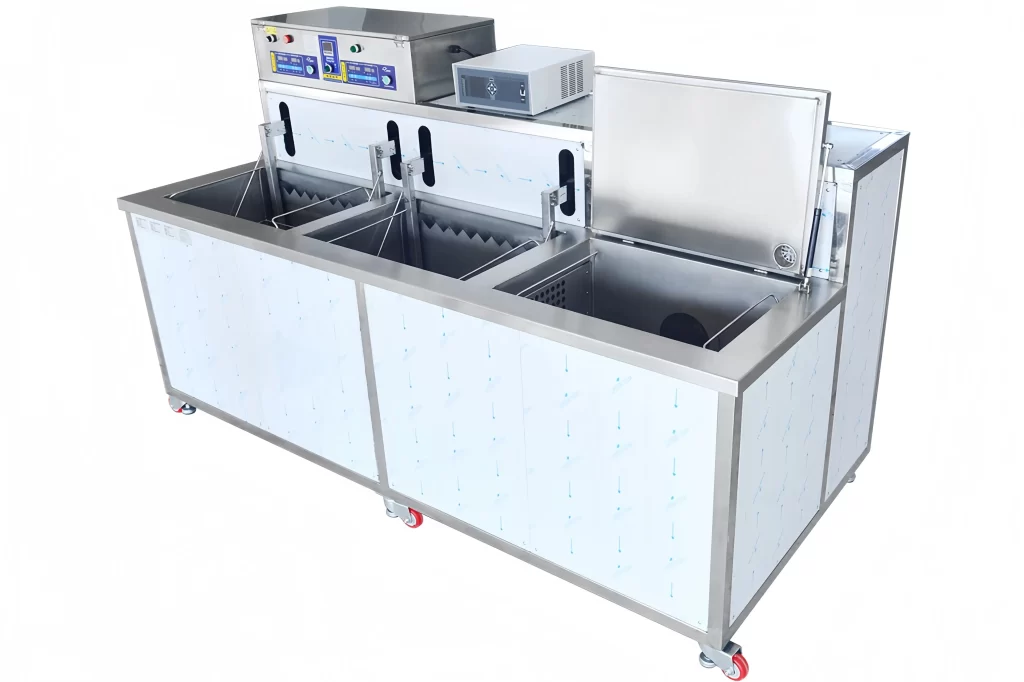
A multi-tank ultrasonic system running aqueous chemistry addresses the labor and data problems together. Automated handling eliminates manual transfer steps, while PLC-controlled cycles generate process records that feed directly into quality documentation systems. The integration question — can this machine talk to the line controller — has replaced tank volume as the first specification buyers ask about.
How Automation Is Redefining Cleaning System Expectations
Automation in industrial cleaning used to mean a basket hoist and a timer. In 2026, buyers specify systems that handle part loading and unloading, adjust cycle parameters by part number, and report cleaning results to centralized production systems. If a cleaning system cannot accept a recipe change from the line controller, it is already behind what competing facilities are installing.
This does not mean every operation needs a fully lights-out inline system. I have specified semi-automated multi-tank systems for medium-volume precision machining shops where the operator still loads baskets but the cleaning, rinsing, and drying sequence runs automatically with barcode-triggered recipe selection. The labor saving comes from eliminating manual transfer between tanks and standardizing cycle times, not from removing the operator entirely. For high-volume production, inline conveyor systems with automated loading and unloading have become the benchmark, particularly in automotive and consumer electronics supply chains where throughput consistency directly affects downstream assembly.
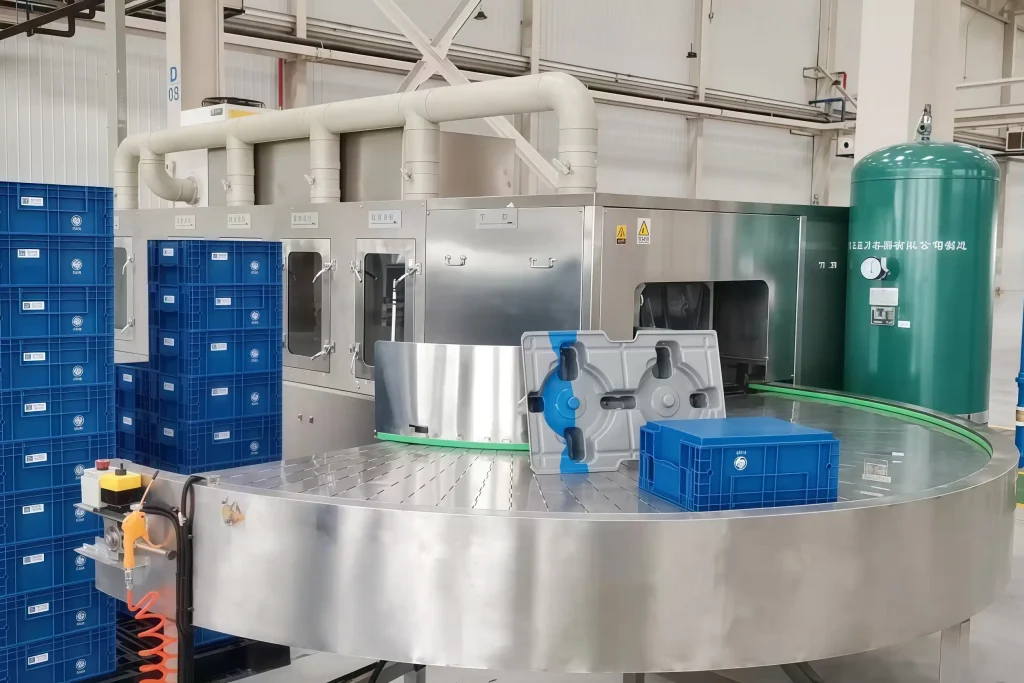
The practical question is not whether to automate but which stages benefit most given the part mix and volume. A rotary basket system may handle 80% of a shop's parts automatically while the remaining 20% — oversized or complex-geometry components — run on a separate manual or semi-automated station. This mixed approach often delivers better ROI than forcing every part through a single automated line. The key is matching the automation level to the actual part portfolio rather than buying capability that sits idle.
Solvent Management and Environmental Compliance Are No Longer Optional
Regulatory pressure on industrial solvents has accelerated faster than most equipment buyers anticipated. VOC emission standards in China, the EU, and North America now require continuous monitoring and reporting for many solvent cleaning operations. The administrative burden of operating an open-top vapor degreaser has become a genuine operational cost that appears on the same spreadsheet as solvent purchases.
The response has been two-fold. Vacuum-based solvent systems — hydrocarbon and modified alcohol — have matured to the point where they match or exceed the cleaning performance of traditional vapor degreasing while operating in a closed loop with integrated distillation recovery. Meanwhile, aqueous cleaning systems with high-efficiency filtration and DI water recirculation have closed the operating cost gap that historically favored solvents.
From an equipment specification standpoint, the trend is toward systems that treat solvent as a managed asset rather than a consumable. A hydrocarbon vacuum system with integrated distillation recovery can reduce solvent consumption to under 200 L per month for a production-scale operation. When I calculate TCO for a buyer comparing aqueous versus solvent options, the solvent recovery system cost is not optional — it is a compliance requirement that also improves the five-year operating economics. If your program involves parts with complex internal geometries that trap cleaning fluid, the solvent-versus-aqueous decision has less to do with trend preference and more to do with whether aqueous drying can consistently clear those features. Reach out at [email protected] with your part drawings and we will confirm which approach fits.
Energy Efficiency and Operating Cost as Buying Criteria
Energy consumption has become a line item in equipment evaluation that buyers can no longer treat as secondary. Ultrasonic generator efficiency, heating system design, and drying method selection collectively determine whether a cleaning system adds noticeably to a facility's energy load or operates within an acceptable band.
The two largest energy consumers in any cleaning system are the tank heaters and the drying stage. Multi-tank systems with counterflow rinsing reduce the volume of water requiring heating. Heat recovery systems on hot air dryers capture exhaust heat and preheat incoming air, cutting drying energy by 30 to 40% in continuous operations. Vacuum drying, while requiring a pump, draws substantially less total energy than thermal drying for complex parts where water traps in blind holes and internal cavities.
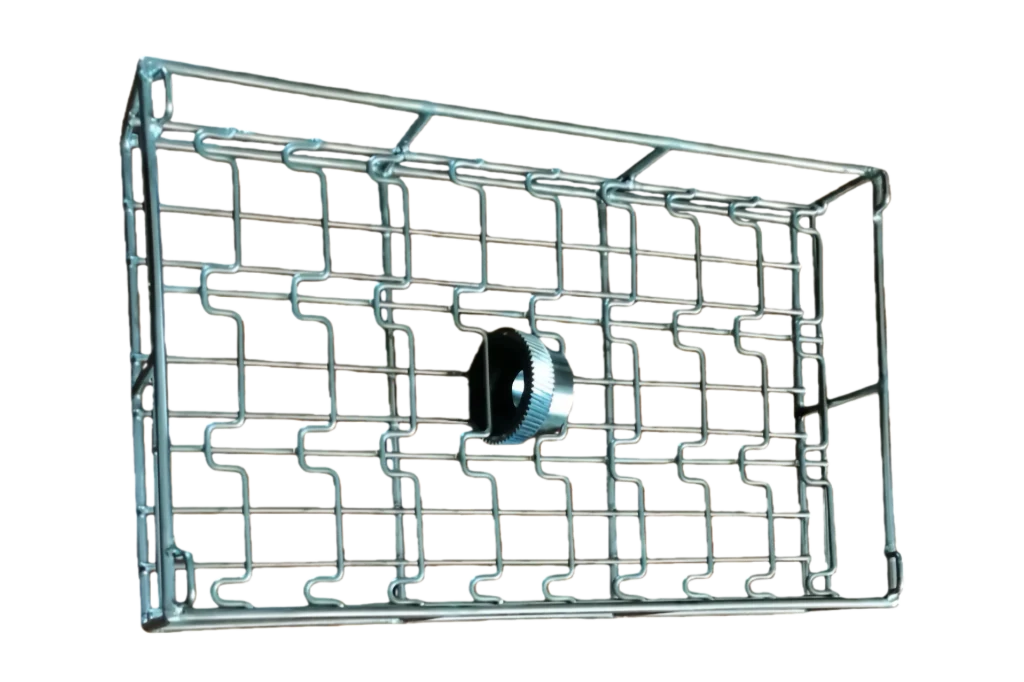
Operating cost also extends to cleaning chemistry life. Circulation filtration with bag or cartridge filters, combined with oil skimming or coalescing separation, can extend a detergent bath from weekly changes to monthly or quarterly changes. The savings are in both chemistry cost and production downtime. This kind of detail rarely appears in trend articles, but it is exactly what determines whether a system meets its five-year TCO projection or exceeds it by 30%.
How to Evaluate Cleaning Equipment Against 2026 Trends
Most trend articles stop at describing what is changing. The harder question is how to translate those trends into equipment specifications that hold up over a 7 to 10-year asset life. I recommend assessing any cleaning system purchase against four criteria.
| Evaluation Criterion | What to Ask | Why It Matters in 2026 |
|---|---|---|
| Integration readiness | Can the system accept recipe data from an MES or line controller? Does it output cycle records and fault data? | A system without data output creates a permanent blind spot in production tracking |
| Solvent pathway | If solvent-based, does it operate in a closed loop with recovery distillation? If aqueous, does it include filtration and DI recirculation? | Regulatory trajectory makes open systems increasingly costly to operate |
| Automation scalability | Can the system start semi-automated and upgrade to full automation later? Are loading and unloading interfaces standard? | Protects against labor availability risk without forcing full upfront investment |
| Energy documentation | Does the supplier provide energy consumption data per cycle or per part? Is heat recovery included or optional? | Without baseline data, energy cost cannot be managed or compared |
These criteria apply whether you are buying a benchtop system for an R&D lab or a high-volume inline tunnel washer. The difference is in scale, not in principle. Suppliers who cannot answer the integration and energy questions specifically — not with general assurances but with interface specifications and cycle data — are selling equipment built to yesterday's expectations. The gap between a system designed for 2026 requirements and one designed for 2016 assumptions is wider than the price difference suggests.
Making Cleaning Equipment Decisions That Hold Up
Choosing industrial cleaning equipment in 2026 means looking past the specification sheet to how a system will function inside your production environment three years from now. The trends driving the market — integration, automation, solvent management, and energy accountability — are structural changes in what production managers and quality engineers expect from their cleaning processes.
If you are evaluating cleaning equipment for a new line or an upgrade, the most productive next step is to define your part geometry, throughput target, and cleanliness specification and have a supplier map those requirements to a system architecture that addresses integration and operating cost from the start. At GTKCLEAN, we design around these parameters daily. Send your part drawings, required throughput, and cleanliness standard to [email protected] or call +86 17768507147, and we will confirm the system configuration that fits your production reality.
Common Questions About Cleaning Equipment Trends
Is aqueous cleaning replacing solvent cleaning across all industries?
Not uniformly. Aqueous systems dominate in high-volume metal parts cleaning, particularly automotive and general manufacturing, because they avoid VOC compliance costs and integrate easily with production lines. Solvent systems — especially hydrocarbon and modified alcohol in vacuum configurations — remain the better choice for complex-geometry parts with blind holes, precision components requiring spot-free drying, and applications where water reactivity is a concern. The trend is not replacement but specialization: aqueous for accessible surfaces at scale, vacuum solvent for precision and complexity.
How much automation does a mid-sized manufacturer actually need?
In programs we have supported, most mid-sized operations benefit most from semi-automated multi-tank systems rather than full inline automation. A system where an operator loads a basket and the machine executes cleaning, rinsing, and drying automatically provides 70 to 80% of the labor reduction of full automation at roughly half the capital cost. Full inline automation becomes the right choice when throughput exceeds roughly 200 to 300 parts per hour or when the cleaning station must synchronize with an automated assembly line.
What is the payback period for adding solvent recovery to an existing system?
It depends on your solvent type and throughput. For a hydrocarbon or modified alcohol system running at production volumes, integrated distillation recovery typically pays back within 12 to 18 months through reduced solvent purchases alone. The compliance benefit — eliminating the administrative and reporting burden of VOC emissions — adds further value that is harder to quantify but real for facilities in regulated regions. Retrofitting recovery to an existing open system is rarely practical; the recovery system and the cleaning system need to be designed as an integrated unit.
Are Chinese-manufactured cleaning systems competitive with European equipment?
The gap has narrowed substantially in the past five years. Chinese manufacturers with established R&D programs and international deployment experience now produce systems with PLC controls from Siemens or Mitsubishi, stainless steel construction, and documentation packages that meet global procurement standards. The relevant comparison is not country of origin but whether the manufacturer has the engineering depth to customize systems to part geometry and process requirements rather than selling only standard configurations. Ask for reference installations in your industry and region. A capable supplier will have them. Share your part drawings and throughput requirements at [email protected] and we will confirm the configuration and provide relevant reference cases.
If you're interested, check out these related articles:
Automated Versus Manual Cleaning Investment Comparison for Industry
Inline Ultrasonic Washing Systems for Enhanced Process Control
Ultrasonic Pre-Cleaning Machine for Flawless PVD/DLC Coating Pre-Treatment
Reduce Solvent Consumption in Industrial Cleaning: A Guide
 English
  German
  Spanish
  French
  Russian
  Portuguese