
Achieving consistent industrial cleaning quality is a challenge that every manufacturer eventually confronts. Inconsistent cleanliness affects product reliability, operational efficiency, and profitability in ways that are often underestimated until defect rates climb or customer complaints arrive. Maintaining high standards requires a methodical approach that integrates robust processes with advanced technology to control the many variables at play.
What Factors Drive Variation in Industrial Cleaning Quality?
Many elements introduce variability into industrial cleaning processes, leading to unpredictable outcomes. These factors range from human interaction to the inherent properties of the cleaning environment and equipment. Understanding these influences is the first step toward establishing reliable cleaning protocols.
Operator skill levels, adherence to procedures, and fatigue all contribute to inconsistencies. Manual processes are particularly susceptible to this variability because they depend on individual judgment and physical consistency across shifts. Equipment wear and tear on nozzles, pumps, or ultrasonic transducers degrades cleaning effectiveness over time. Uncalibrated equipment often leads to suboptimal performance that goes unnoticed until quality audits reveal the gap.
Process deviations matter more than most operators realize. Alterations in cleaning time, temperature, chemical concentration, or rinse cycles, even minor ones, can significantly affect results. Environmental factors such as fluctuations in ambient temperature, humidity, or airborne particulate levels influence drying times and re-contamination risks. The type and amount of soil on parts can vary batch to batch, requiring adjustments that are not always made consistently. Incorrect mixing ratios for cleaning agents reduce their efficacy or leave residues that cause downstream problems.
Equipment calibration is fundamental for consistent cleaning. It ensures that parameters like spray pressure, ultrasonic power, temperature, and chemical dosing are delivered accurately according to specifications. Without regular calibration, equipment drifts from its intended settings, leading to under-cleaning or over-processing. Both outcomes compromise quality and efficiency.
Here is a summary of common factors affecting industrial cleaning quality:
| Factor | Impact on Cleaning Quality | Mitigation Strategy |
|---|---|---|
| Human Error | Inconsistent application, missed steps, improper handling | Training, automation, clear SOPs |
| Equipment Malfunction | Reduced cleaning power, uneven coverage, incomplete drying | Preventative maintenance, regular inspections |
| Process Deviations | Incomplete contaminant removal, residue formation | Automated control, parameter monitoring, audit trails |
| Chemical Dilution | Ineffective cleaning, excessive chemical use | Automated dosing systems, regular solution analysis |
| Water Quality | Spots, streaks, secondary contamination | Water treatment systems, deionization |
How Do Standardized Processes Ensure Cleaning Consistency?
Clear, repeatable procedures form the bedrock of consistent industrial cleaning. Standardized operating procedures provide a detailed roadmap for every cleaning task, minimizing reliance on individual interpretation. These protocols cover everything from equipment setup and chemical mixing to cleaning cycles, rinsing, and drying sequences.
Implementing a comprehensive training program is equally important. Operators must understand not just what to do, but why each step is critical for maintaining quality. This includes training on proper handling techniques, safety protocols, and basic troubleshooting. Regular refresher courses reinforce best practices and introduce updates to procedures or equipment. One automotive industry client adopted multi-stage cleaning SOPs and provided extensive operator training. Their defect rate related to cleanliness dropped by 40% within six months. This improvement was directly attributable to the enhanced consistency in their cleaning operations.
Continuous improvement initiatives, such as regular performance reviews and feedback loops, allow for ongoing refinement of these processes. This approach ensures that cleaning protocols evolve with production needs and technological advancements rather than remaining static while conditions change around them.
What Advanced Technologies Deliver Repeatable Cleaning Standards?
Modern industrial cleaning equipment and automation offer precision and repeatability that manual processes cannot match. Automated systems reduce human intervention, minimizing the potential for human error and ensuring that each part undergoes the exact same cleaning cycle regardless of shift or operator.
Ultrasonic cleaning systems use high-frequency sound waves to create cavitation bubbles that dislodge contaminants from surfaces, including intricate geometries, blind holes, and internal cavities that spray systems cannot reach effectively. Solvent cleaning systems, particularly those using hydrocarbon solvents, provide exceptional degreasing capabilities for specific industrial applications, often with integrated vacuum drying for residue-free results. Conveyor belt cleaning systems offer continuous, high-throughput cleaning for parts in an inline production environment where batch processing would create bottlenecks.
Sensor technology monitors critical parameters like temperature, pH, conductivity, and ultrasonic power in real-time, providing data for immediate adjustments and predictive maintenance. This data-driven approach allows for proactive interventions, preventing potential quality issues before they arise rather than detecting them after the fact.
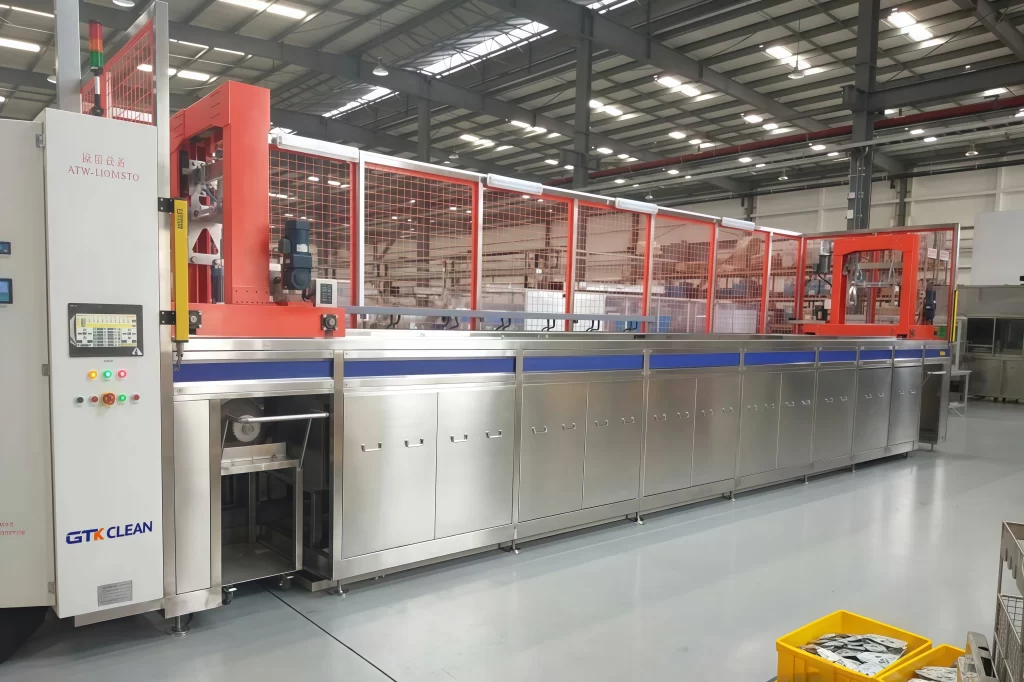
Here is a comparison of advanced cleaning technologies:
| Technology Type | Key Advantage | Typical Application | Repeatability Factor |
|---|---|---|---|
| Ultrasonic Cleaners | Deep penetration, precision cleaning | CNC machined parts, stamping parts, medical devices | High |
| Solvent Cleaning Systems | Superior degreasing, residue-free drying | New energy vehicle battery housings, precision hardware | Very High |
| Conveyor Belt Cleaners | High throughput, inline automation | Fasteners, aluminum shells, turnover boxes | High |
| Heavy-Duty Ultrasonic Cleaners | Large and heavy component cleaning | Engine blocks, gearboxes, large molds | High |
Environmental factors significantly influence industrial cleaning quality by affecting drying efficiency, re-contamination rates, and the stability of cleaning solutions. High humidity prolongs drying times and leads to water spotting or corrosion. Airborne dust and particles re-contaminate parts immediately after cleaning if the environment is not controlled. Managing temperature, humidity, and air purity within the cleaning area prevents these issues and maintains the integrity of cleaned surfaces.
Why Does Robust Quality Assurance Determine Cleaning Performance?
Robust quality assurance is not merely about inspecting finished parts. It is an integrated strategy that encompasses proactive monitoring, data analysis, and continuous improvement throughout the entire cleaning process. Effective QA prevents issues rather than just detecting them after parts have already been compromised.
Establishing performance metrics, such as cleanliness levels measured by particle counts or surface energy, and then consistently tracking these metrics provides the foundation for meaningful quality control. Data-driven cleaning involves collecting information from sensors and process controls to identify trends and anomalies. This allows for predictive maintenance and optimization. If conductivity levels in a rinse tank start to rise, for example, it signals the need for water replacement before it impacts part quality rather than after a batch has already been affected.
Audit trails provide a comprehensive record of cleaning parameters for each batch, offering traceability and accountability that becomes critical when quality issues do arise. If your cleaning process involves multiple stages or high-value parts, it is worth discussing what level of data logging and traceability makes sense for your specific requirements before committing to a system configuration.
GTKCLEAN has developed 28 technical patents in industrial cleaning, reflecting a commitment to superior cleaning performance and quality that translates directly into systems designed with integrated QA features.
Achieving absolute zero defects in any manufacturing process, including industrial cleaning, is an aspirational goal that is rarely fully realized due to inherent variables. With highly automated systems, stringent process controls, continuous monitoring, and robust quality assurance, defect rates can be driven to near-zero levels. The focus should be on continuous improvement to minimize defects as much as technically and economically feasible for your specific application and tolerance requirements.
How Does Water Management Affect Cleaning Outcomes?
Water quality directly affects cleaning effectiveness and the final cleanliness of industrial parts. Using untreated or inadequately treated water introduces minerals and contaminants, leading to water spots, streaks, or corrosion on cleaned surfaces. This secondary contamination negates the effort of the cleaning process itself and creates rework costs that accumulate quickly.
Advanced water treatment systems are an integral part of achieving optimal cleaning outcomes. These systems can include reverse osmosis, deionization, and filtration units to ensure that rinse water is free from impurities. By using ultrapure water, manufacturers prevent residues and ensure that parts meet the strictest cleanliness specifications required by their customers or downstream processes.
Beyond quality, effective water management reduces water consumption and wastewater discharge, contributing to environmental compliance and operational cost savings. Specialized water treatment systems designed to integrate with cleaning equipment ensure a consistent supply of high-quality water for all stages of the cleaning process without requiring separate infrastructure management.
Frequently Asked Questions
What is the most critical factor for ensuring consistent industrial cleaning?
The most critical factor is the implementation of standardized operating procedures combined with regular training and adherence. This minimizes process deviations and ensures repeatable cleaning performance regardless of operator. Equipment and technology matter, but they cannot compensate for inconsistent process execution.
How often should industrial cleaning equipment be maintained?
Industrial cleaning equipment should undergo preventative maintenance based on manufacturer guidelines, usage intensity, and performance metrics. Regular checks prevent equipment malfunction and uphold cleaning quality. Most facilities benefit from weekly visual inspections, monthly calibration verification, and quarterly comprehensive maintenance cycles, though high-volume operations may require more frequent attention.
Can automated cleaning systems truly eliminate human error?
Automated cleaning systems significantly reduce human error by standardizing processes and minimizing manual intervention, but they still require human oversight for programming, maintenance, and quality assurance. The goal is not to eliminate human involvement entirely but to shift human attention from repetitive execution to monitoring, optimization, and exception handling. To discuss how automation might fit your specific cleaning requirements, contact GTKCLEAN at [email protected] or +86 17768507147.
If you're interested, check out these related articles:
Parts Washer Selection: A Manufacturer’s Definitive Guide
Essential Questions for Industrial Cleaning Equipment Suppliers
 English
  German
  Spanish
  French
  Russian
  Portuguese