
Getting industrial parts cleaning right matters more than most production managers realize until something goes wrong. A contaminated surface that passes visual inspection can still cause coating failures, bonding defects, or premature wear that shows up months later in the field. The gap between "looks clean" and "actually clean" is where manufacturing quality lives or dies.
What Counts as Clean Enough for Your Application
Cleanliness standards define acceptable contamination levels on a part's surface, but these thresholds vary dramatically across industries and applications. What passes for clean in general machining would fail instantly in semiconductor manufacturing or medical device production.
The standards themselves keep shifting. As materials become more specialized and performance tolerances tighten, contamination that was acceptable five years ago now causes problems. Microscopic particles that would not have mattered on a conventional assembly line can compromise product integrity when you are dealing with precision coatings or bonded joints.
Surface preparation quality directly affects everything downstream. In pre-PVD coating applications, for instance, water purity becomes critical. An ultrapure water system maintaining conductivity at or below 0.06 μS/cm prevents water spots and secondary contamination that would otherwise degrade coating adhesion. The coating process itself cannot compensate for inadequate surface preparation.
| Standard Body | Focus Area | Example Application |
|---|---|---|
| ISO | General Quality | Aerospace components |
| ASTM | Material Testing | Medical devices |
| Industry-Specific | Process Purity | Semiconductor manufacturing |
When Ultrasonic Cleaning Makes Sense Over Solvent Systems
Choosing between ultrasonic and solvent cleaning is not a matter of which technology is better in the abstract. It depends on what you are cleaning, what you are cleaning it from, and what happens to the part afterward.
Ultrasonic systems generate high-frequency sound waves that create cavitation bubbles in the cleaning liquid. When these bubbles collapse, they produce localized scrubbing forces strong enough to dislodge contaminants from blind holes, complex geometries, and tight crevices. This makes ultrasonic cleaning particularly effective for CNC machined parts with internal passages or stamped components with intricate features.
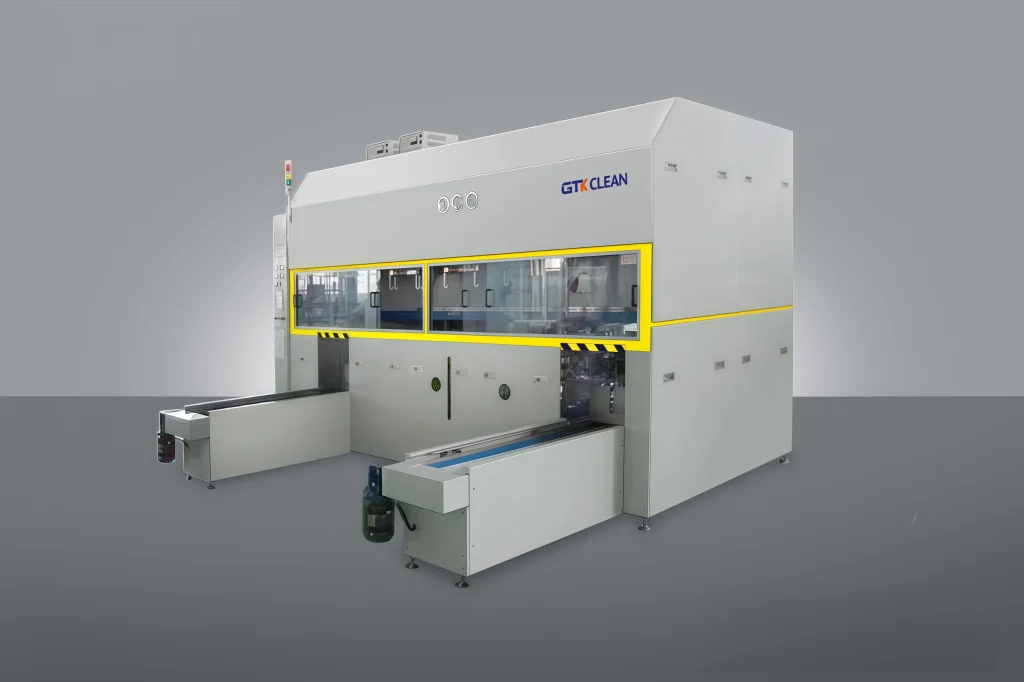
Solvent systems take a different approach, using chemical action to dissolve residues. They excel at removing oils, greases, and organic compounds that ultrasonic action alone might not fully address. Multi-tank hydrocarbon ultrasonic cleaners combine both approaches for complex stamped components where neither method alone would be sufficient.
The geometry of your parts often dictates the choice. Simple flat surfaces might clean adequately with spray systems. Complex three-dimensional parts with hidden surfaces almost always need ultrasonic treatment to reach every contaminated area.
Cutting Cleaning Costs Without Cutting Corners
Process optimization in parts cleaning follows the same lean principles that work elsewhere in manufacturing, but the specifics matter. Reducing cycle times only helps if cleanliness levels remain consistent. Lowering resource consumption only makes sense if it does not compromise results.
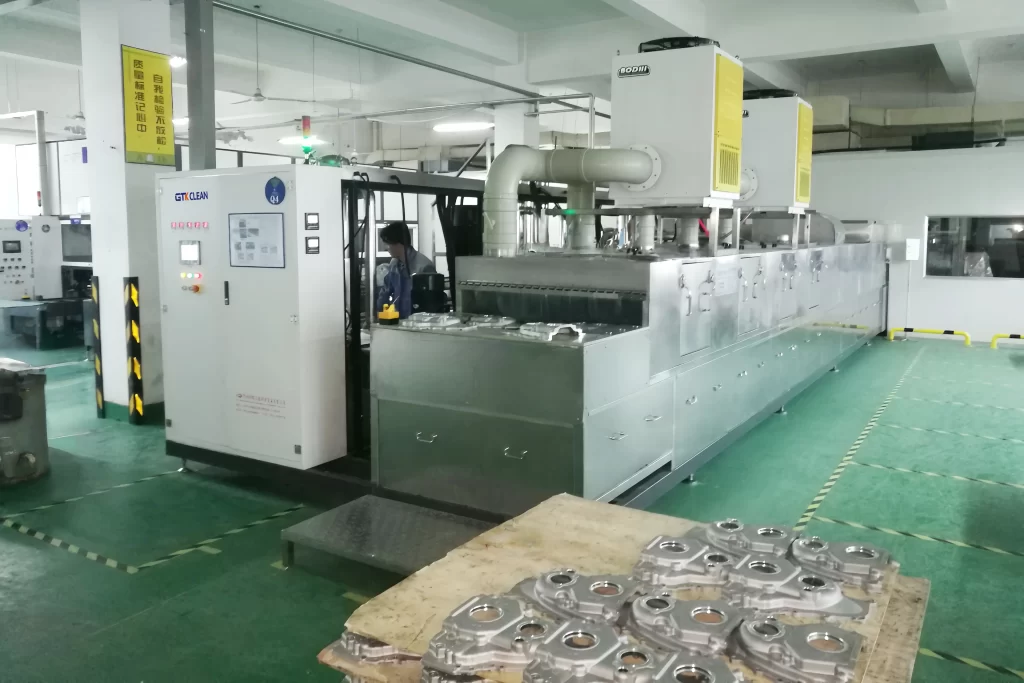
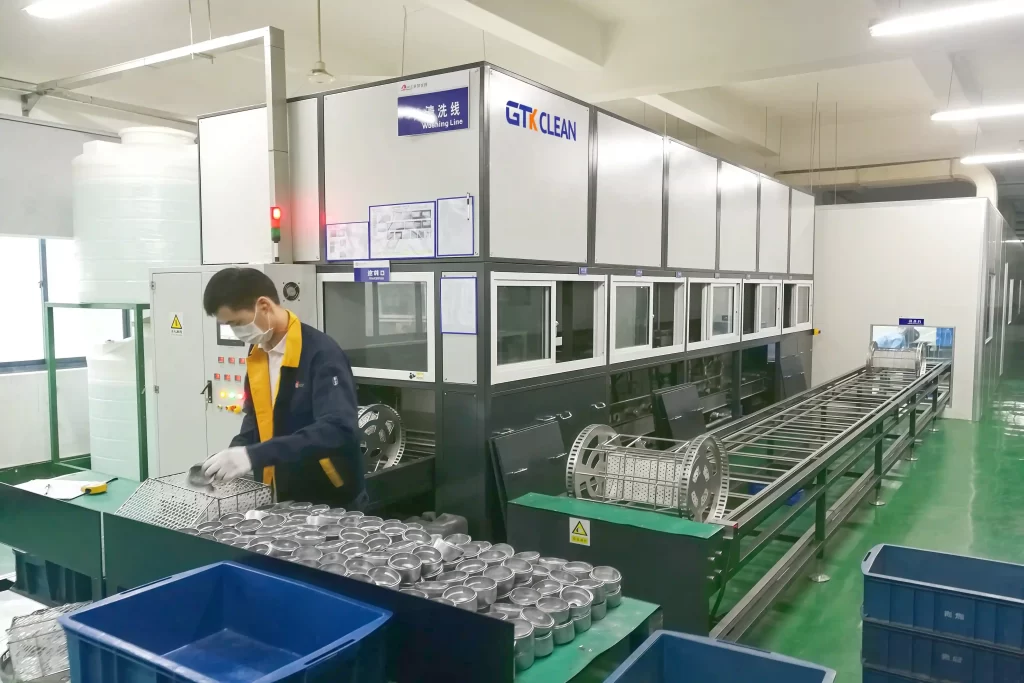
Automation changes the economics significantly. Conveyor belt cleaning systems that transport parts through spray degreasing, rinsing, air-knife drying, hot air drying, and cooling stages eliminate manual handling entirely. CNC aluminum shell inline cleaners using this approach maintain consistent cleaning quality while reducing labor costs and throughput variability.
The hidden cost driver in most cleaning operations is not labor or chemicals but inconsistency. When cleaning quality varies, downstream processes suffer. Parts that should bond do not bond properly. Coatings that should adhere fail prematurely. The rework and warranty costs from inconsistent cleaning dwarf the direct cleaning expenses.
Regular equipment maintenance and process monitoring extend fluid life and prevent unexpected downtime. A cleaning bath that degrades gradually produces parts that look acceptable but perform poorly. Monitoring bath chemistry and replacing fluids on a schedule based on actual contamination levels rather than arbitrary time intervals keeps quality consistent while minimizing waste.
Meeting Environmental Requirements Without Sacrificing Performance
Environmental regulations on industrial cleaning have tightened considerably over the past decade. Permissible discharge levels, chemical usage restrictions, and waste management requirements now shape equipment and process decisions as much as cleaning performance does.
Closed-loop water recycling systems address both regulatory compliance and operating costs. Water treatment systems that reclaim and reuse cleaning fluids reduce water consumption and wastewater discharge simultaneously. The capital investment pays back through lower water bills and reduced waste disposal costs.
Biodegradable cleaning chemistries have improved to the point where they match or exceed the performance of older formulations that are now restricted or banned. The assumption that eco-friendly means less effective no longer holds in most applications. If your current cleaning process relies on chemicals facing regulatory pressure, alternatives likely exist that will maintain your cleanliness standards.
Matching Cleaning Chemistry to Your Materials
Cleaning chemistry selection requires understanding both what you are removing and what you are cleaning. The same solvent that effectively dissolves machining oil might etch the aluminum substrate underneath. A cleaner that works perfectly on steel could cause stress cracking in certain alloys.
Material compatibility testing should happen before committing to a cleaning chemistry, not after problems appear in production. Some alloys require corrosion prevention agents in the cleaning solution. Others need pH-neutral formulations to avoid surface damage. The type of contamination matters too. Particulate soils respond to different cleaning mechanisms than organic films.
Post-cleaning surface condition requirements also influence chemistry selection. A part destined for painting needs different surface preparation than one going into a bonded assembly. The cleaning process is not complete when contamination is removed; it is complete when the surface is ready for whatever comes next.
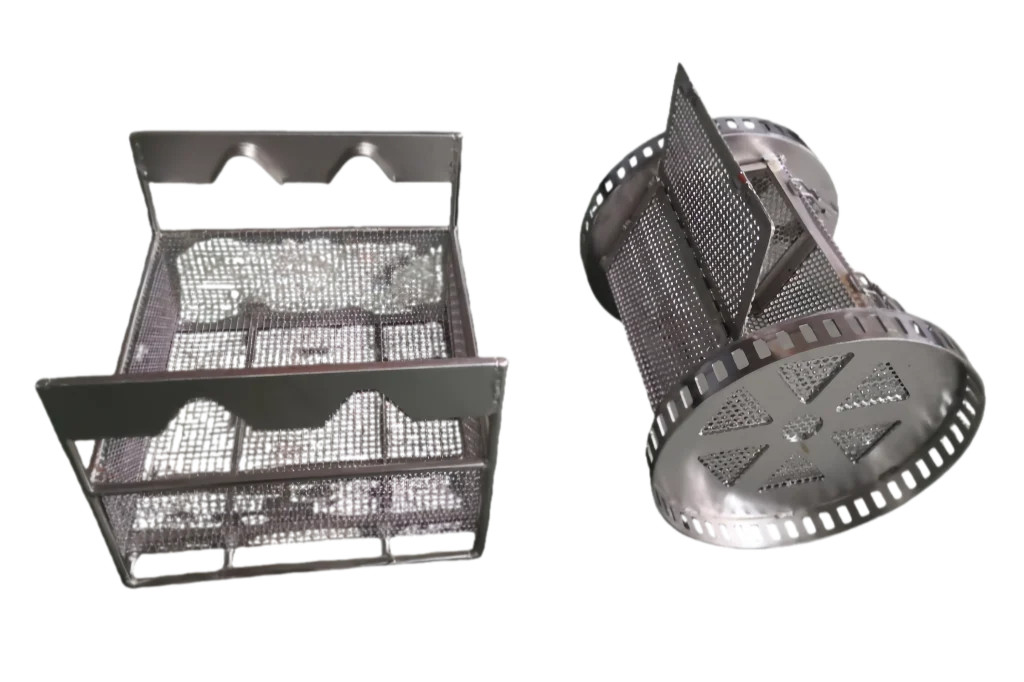
Verifying Cleanliness Before Parts Leave the Line
Post-cleaning inspection closes the loop on quality assurance. Without systematic verification, you are trusting that your process works rather than confirming it.
Inspection methods range from simple visual checks to sophisticated analytical techniques. Gravimetric analysis measures residual contamination by weight. Particle counting quantifies particulate contamination levels. Surface tension tests indicate organic contamination presence. The appropriate method depends on your cleanliness specification and the consequences of failure.
For precision cleaning applications serving cleanroom environments, inspection criteria become more stringent. Parts entering semiconductor fabrication or medical device assembly face contamination limits measured in parts per billion rather than parts per million.
If your current process lacks formal inspection protocols, starting with basic verification is better than continuing without any. Even visual inspection under controlled lighting catches problems that would otherwise reach downstream processes. More sophisticated methods can be added as your quality requirements demand.
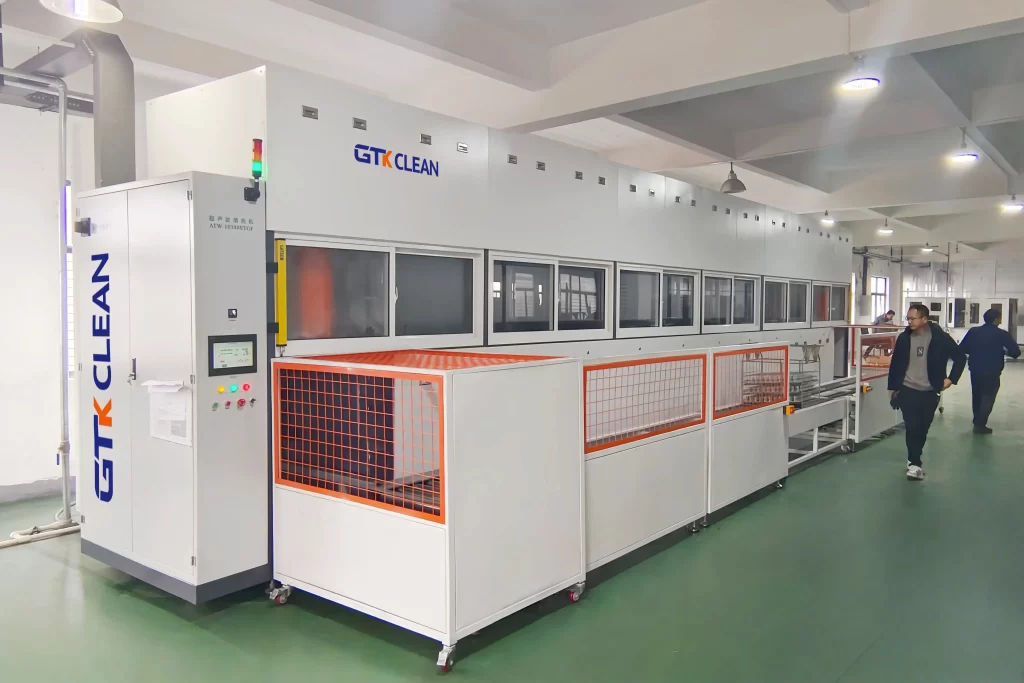
Working With a Cleaning Equipment Partner
Selecting cleaning equipment and processes involves tradeoffs that are difficult to evaluate without hands-on experience across multiple applications. If your cleaning requirements are straightforward and your current process works reliably, there may be no reason to change anything. If you are experiencing quality issues, facing new cleanliness specifications, or looking to reduce operating costs, a conversation with a cleaning equipment specialist can identify options you might not have considered.
GTKCLEAN has spent over 20 years developing ultrasonic, solvent, and automated cleaning solutions for manufacturers across industries. Our engineering team can evaluate your specific contamination challenges and recommend equipment configurations matched to your parts, materials, and throughput requirements. Contact us at [email protected] or +86 17768507147 to discuss your situation.
Frequently Asked Questions About Industrial Parts Cleaning
What problems show up most often in parts cleaning operations?
Inconsistent cleanliness tops the list, usually because the process was set up for one type of part and conditions have changed over time. High operating costs often trace back to inefficient equipment or cleaning chemistries that have not been optimized for the actual contamination present. Environmental compliance issues arise when regulations change faster than processes adapt. These problems compound each other. Inconsistent cleaning leads to rework, which increases costs, which creates pressure to cut corners, which makes compliance harder. Breaking the cycle requires addressing root causes rather than symptoms.
How much throughput improvement is realistic from automated cleaning?
Throughput gains from automation depend heavily on your current process. Operations relying on manual batch cleaning often see throughput double or triple with conveyor-based continuous systems. The consistency improvement matters as much as the speed increase. Manual processes introduce variability from operator technique, batch timing, and handling differences. Automated systems eliminate these variables, producing uniform results regardless of shift or operator.
Can a cleaning operation actually achieve zero discharge?
Near-zero discharge is achievable with current water treatment and recycling technology. Complete zero discharge is technically possible but may not be economically justified for every operation. The practical question is how close to zero you need to get. Closed-loop systems that reclaim and reuse cleaning fluids can reduce water consumption and waste disposal by 90% or more. For most manufacturers, that level of reduction satisfies both regulatory requirements and cost objectives. Reaching the final few percent of waste elimination typically requires specialized equipment that makes sense only for operations with unusually stringent requirements or very high waste disposal costs. If you are evaluating water treatment options, we can help you determine the right balance for your situation.
What happens when the wrong cleaning chemistry meets the wrong material?
Material damage from incompatible cleaning chemistry ranges from subtle surface changes to obvious destruction. Strong acids can pit or dissolve sensitive metals. Certain solvents attack plastics, causing swelling, cracking, or dissolution. Alkaline cleaners can etch aluminum if concentration or exposure time is not controlled. Even when damage is not immediately visible, inappropriate chemistry can leave residues that cause problems later. Chloride contamination from some cleaners promotes corrosion over time. Surfactant residues can interfere with coating adhesion or bonding. The safest approach is testing chemistry compatibility on sample parts before production use.
Why does cleaning chemistry selection matter so much across different materials?
Every material responds differently to cleaning agents, and the consequences of getting it wrong range from ineffective cleaning to destroyed parts. The same chemistry that safely removes oil from steel might etch aluminum, crack certain plastics, or leave residues that interfere with downstream processes. Matching the cleaning agent to both the contamination type and the substrate material ensures effective cleaning without damage. This is not a place to guess or assume that what works on one material will work on another.
If you're interested, you may want to read the following articles:
Manual vs Automated Ultrasonic Cleaning Systems A Comprehensive Guide
Pre-Coating Cleaning Solutions for PVD - GTK
 English
  German
  Spanish
  French
  Russian
  Portuguese