

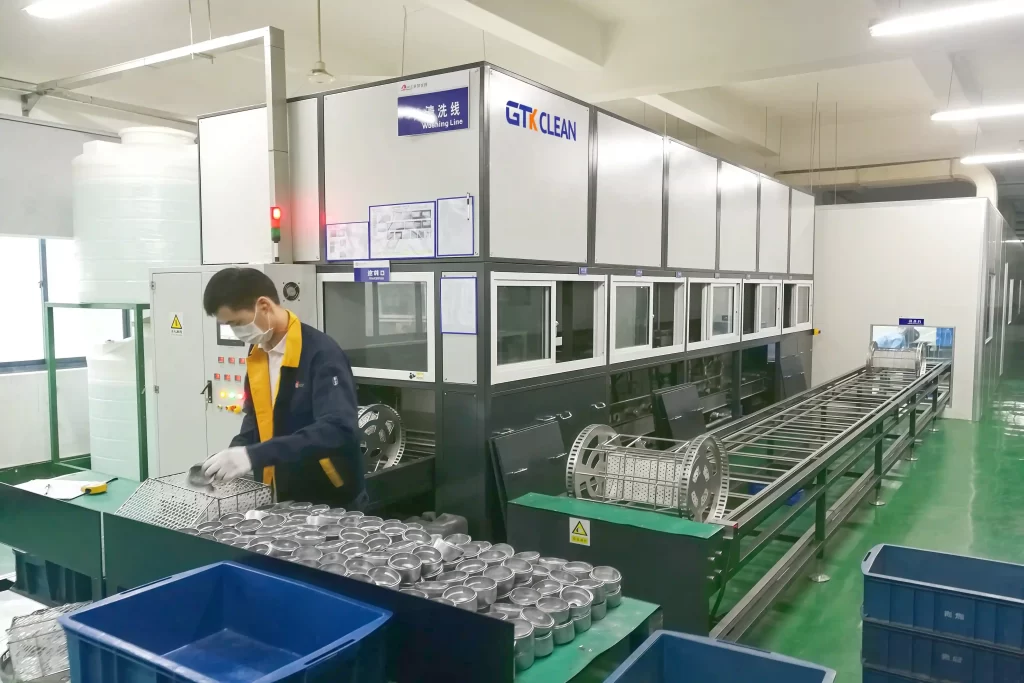
Industrial ultrasonic cleaning systems sit at the heart of precision manufacturing. They use acoustic energy to strip contaminants from complex parts, and when done right, the results speak for themselves. At GTKCLEAN, we build customized, automated solutions for demanding industrial environments. Twenty years of R&D and 28 technical patents back every system we deliver.
The Physics Behind Industrial Ultrasonic Cleaning
Industrial ultrasonic cleaning works through straightforward physics. High-frequency sound waves, usually between 20 kHz and 80 kHz, travel through a liquid medium. These waves create microscopic bubbles through cavitation cleaning. When those bubbles collapse, they release localized high-energy jets that knock contaminants loose from part surfaces. The choice of ultrasonic transducers and frequency matters. It determines how intense the acoustic streaming gets and how evenly it distributes throughout the tank. Getting these industrial cleaning principles right makes the difference between adequate and exceptional system performance.
Why Cavitation Works So Well
Cavitation drives everything in ultrasonic cleaning. As ultrasonic waves move through the cleaning solution, they generate alternating high and low-pressure cycles. Microscopic bubbles form during the low-pressure phases. Then they collapse rapidly when pressure spikes. The shockwaves from that collapse create a micro-scrubbing effect. This action removes submicron particles from intricate geometries, blind holes, and internal surfaces that other methods simply cannot reach. The energy released during bubble collapse delivers thorough contaminant removal without scratching or abrading the parts.
Core Components and Technology in Modern Systems
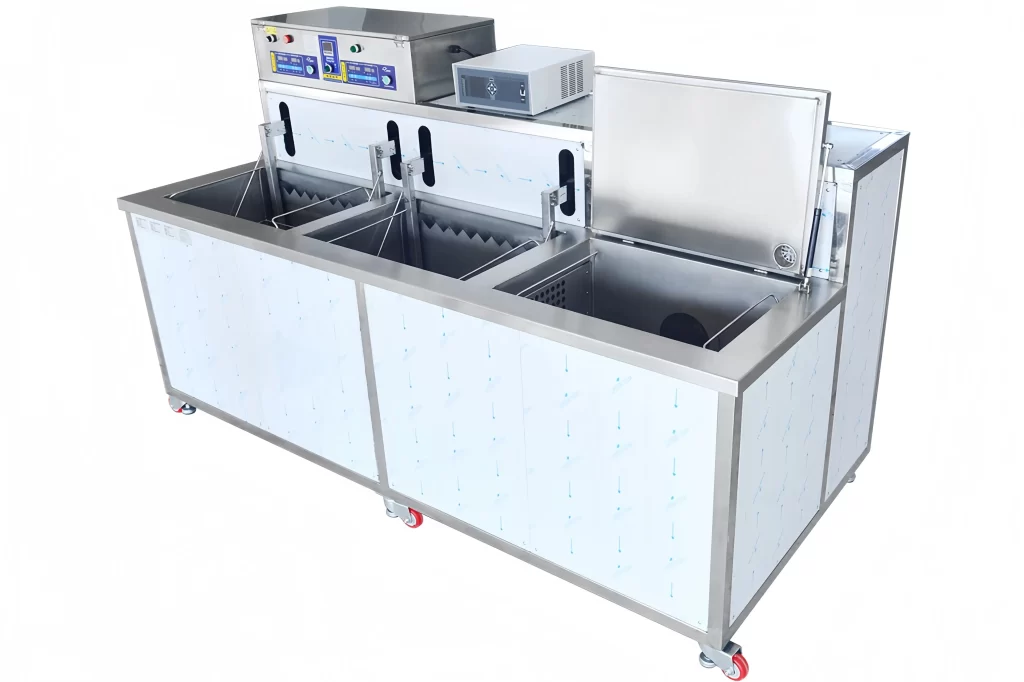
Today's industrial ultrasonic systems bring together several key components. Ultrasonic transducers convert electrical energy into high-frequency mechanical vibrations. Sophisticated ultrasonic generators control the frequency and power output with precision. Heating elements maintain optimal cleaning solution temperatures. Integrated filtration systems keep the cleaning fluid working longer and stop contaminants from settling back onto parts. Many advanced setups include automated material handling to keep everything running smoothly.
Automated Material Handling Changes the Game
Automated material handling systems push industrial ultrasonic cleaning efficiency to another level. Robotics integration delivers precise, repeatable loading and unloading. Manual labor drops. Human error drops with it. The entire cleaning process flows from initial degreasing through final drying without interruption. For demanding production environments, this consistency and high throughput matter. Process optimization through automation cuts operational costs and lifts overall productivity in measurable ways.
Where Ultrasonic Cleaning Makes the Biggest Impact
Industrial ultrasonic cleaning systems prove their worth across multiple industries. Aerospace manufacturers rely on them to remove manufacturing residues from critical components. Safety and performance depend on that cleanliness. Medical device cleaning requires the highest sterility standards, and ultrasonic technology delivers it for intricate instruments. The automotive sector uses these systems for automotive component degreasing and precision parts cleaning. Surfaces come out ready for coating, assembly, or whatever comes next. From surface preparation to final finish, ultrasonic cleaning achieves cleanliness levels that other methods cannot match.
| Industry | Common Contaminants | Ultrasonic Cleaning Benefit | GTKCLEAN Solution Example |
|---|---|---|---|
| Aerospace | Oils, metal fines | Critical component integrity | Pre PVD (Coating) Cleaners |
| Medical | Bioburden, residues | Sterilization readiness | Multi-Tank Ultrasonic Cleaners |
| Automotive | Cutting fluids, grease | Enhanced adhesion, longevity | Ultrasonic Cleaners for CNC Machined Parts |
| Electronics | Flux, dust | Prevents shorts, improves reliability | Ultrasonic Cleaners For Stamping Parts |
For a deeper look at the core principles behind this technology, see 《What Is the Principle of an Ultrasonic Cleaning Machine?》.
Choosing and Setting Up Your System
Selecting the right industrial ultrasonic cleaning system takes careful thought. System customization must match your specific part geometries, material types, and contamination levels. We build tailored solutions, including solvent cleaning systems and water treatment systems, designed around your manufacturing requirements. Cleaning process validation confirms the system hits your cleanliness standards. Calculating return on investment means looking at labor savings, reduced rework, and improved product quality. Our team walks you through every step, from initial consultation to full integration.
Keeping Your System Running at Peak Performance
Getting the most from your industrial ultrasonic cleaning equipment comes down to best practices and consistent maintenance. Regular preventative maintenance, including transducer inspection and generator calibration, extends equipment life. Effective cleaning solution management, monitoring concentration and filtration, keeps results consistent. Periodic performance monitoring catches deviations before they become problems. Proper care protects your investment and keeps efficiency high over the long run.
What is the primary cleaning mechanism of an ultrasonic system?
Cavitation does the heavy lifting. High-frequency sound waves create microscopic bubbles in the cleaning liquid. Those bubbles form and collapse rapidly. The implosion generates powerful micro-jets that knock contaminants off part surfaces, even in blind holes and tight crevices. The process cleans thoroughly without abrasion.
How do different ultrasonic frequencies impact cleaning results?
Frequency selection depends on the application. Lower frequencies around 20-28 kHz produce larger, more energetic cavitation bubbles. They work well for removing heavy contaminants from robust parts. Higher frequencies in the 40-80 kHz range generate smaller, more numerous bubbles. These provide gentler, more uniform cleaning for delicate parts and fine particle removal. Material type and contamination characteristics guide the choice.
Can ultrasonic cleaning systems be integrated into automated production lines?
Absolutely. Systems like our Rotary Basket Ultrasonic Cleaning Systems and Heavy-Duty Automated Ultrasonic Cleaning Systems are built for integration. They feature automated material handling, robotic loading and unloading, and PLC control for continuous, high-volume processing. Manual intervention drops to a minimum. Cleaning quality stays consistent. Operational efficiency goes up.
What types of contaminants can ultrasonic cleaning effectively remove?
The range is broad. Oils, greases, waxes, metal fines, chips, dust, fingerprints, and submicron particles all come off. Cavitation reaches into intricate geometries, blind holes, and internal passages. Residues that conventional cleaning methods miss get removed. This versatility makes ultrasonic cleaning suitable for diverse industrial applications.
What maintenance is required for industrial ultrasonic cleaning equipment?
Regular maintenance keeps equipment performing and lasting. Routine checks cover the ultrasonic transducers and generator. Cleaning solutions need monitoring and replacement. Filtration systems require inspection. Preventative maintenance schedules prevent unexpected downtime. Our systems, like the Hydrocarbon Solvent Ultrasonic Cleaning Systems, are designed for straightforward maintenance. Remote diagnostics and service support come standard.
Partner with GTKCLEAN for Advanced Cleaning Solutions
Optimize your manufacturing processes with GTKCLEAN's state-of-the-art industrial cleaning equipment. Our 20+ years of R&D experience and 28 technical patents ensure superior cleaning performance and customized solutions for your specific needs. Contact us today to discuss your project requirements.
Email: [email protected]
Phone: +86 17768507147
 English
  German
  Spanish
  French
  Russian
  Portuguese