
When you're running a production floor, the gap between manual and automated ultrasonic cleaning shows up in ways the spec sheets don't always capture. The initial price tag on automation looks steep until you watch your third operator of the week struggle to maintain consistent cycle times. We've seen facilities flip their entire cost structure within eighteen months of switching, though results vary depending on part complexity and volume.
How Ultrasonic Cleaning Actually Works
Ultrasonic cleaning relies on high-frequency sound waves passing through liquid to generate microscopic bubbles. This acoustic cavitation process creates rapid bubble formation and collapse, producing implosions strong enough to blast contaminants off surfaces. The method reaches places conventional cleaning can't touch, including blind holes, internal channels, and complex geometries that would otherwise trap debris.
Several variables determine how well the process performs. Frequency selection matters because lower frequencies produce larger, more aggressive bubbles while higher frequencies generate gentler action for delicate parts. Power density, tank temperature, and solution chemistry all interact in ways that require careful balancing. Getting these parameters right means the difference between pristine parts and damaged components.
If you're interested, check 《What Is Ultrasonic Cavitation Effect?》.
What Manual Ultrasonic Cleaning Looks Like Day to Day
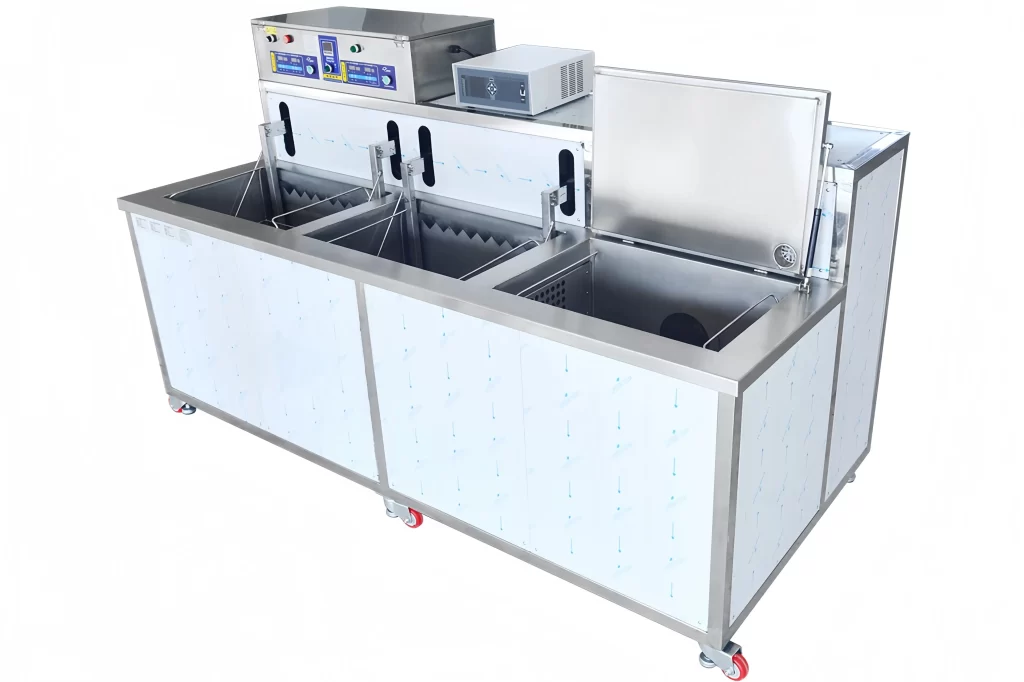
Manual ultrasonic cleaning puts human operators at the center of every step. Someone loads parts into a Benchtop Ultrasonic Cleaners or Multi-Tank Ultrasonic Cleaners unit, starts the cycle, watches the timer, then physically moves parts through rinse and dry stages. The process works, but it introduces variables that compound over shifts and across different operators.
Batch size limitations create natural throughput ceilings. An operator can only handle so many parts per hour, and fatigue affects consistency as the day progresses. We've watched skilled technicians produce excellent results in the morning only to see quality drift by mid-afternoon. High-volume environments feel this constraint most acutely.
The Real Cost of Labor Intensive Cleaning
Manual systems cost less upfront but accumulate expenses in less obvious ways. Training takes time. Turnover means retraining. Inconsistent technique leads to rework, and rework eats into margins faster than most managers realize.
The table below breaks down where labor enters each process step:
| Process Step | Description | Labor Requirement | Consistency |
|---|---|---|---|
| Loading | Manually placing parts into the ultrasonic tank | High | Variable |
| Cleaning Cycle | Monitoring and adjusting parameters | Moderate | Variable |
| Rinsing | Transferring parts to rinse tanks | High | Variable |
| Drying | Manual handling for drying | High | Variable |
| Inspection/Rework | Quality check and re-cleaning as needed | High | Variable |
Operational expenditure climbs quickly when cleanliness standards are tight or production volumes push operators to their limits.
How Automated Systems Change the Equation
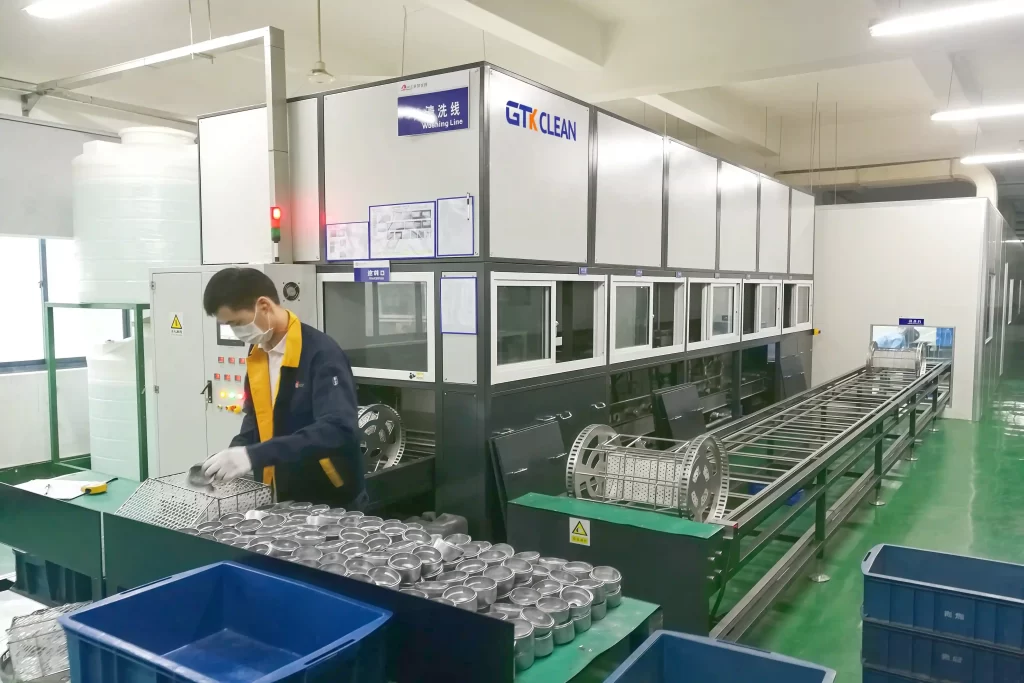
Automated ultrasonic cleaning removes most human variables from the process. These systems sequence cleaning, rinsing, and drying stages according to programmed parameters, producing repeatable results regardless of shift changes or operator experience levels. GTKCLEAN designs solutions that minimize intervention while maintaining the flexibility to handle different part types.
The benefits show up in multiple areas. Labor costs drop. Chemical usage becomes predictable. Throughput increases because machines don't take breaks or lose focus.
Throughput Gains and Quality Improvements
Automation accelerates cycle times and enables continuous operation. Systems like Automated Ultrasonic Cleaners and Rotary Basket Ultrasonic Cleaning Systems process larger part volumes without creating the bottlenecks that plague manual operations. Production lines flow more smoothly when cleaning keeps pace with upstream and downstream processes.
Consistent results come from precise parameter control. The machine runs the same cycle every time, eliminating the variation that leads to rejected parts and rework. Our Ultrasonic Cleaning machine for CNC Machined Parts demonstrates this approach, handling multi-stage cleaning for complex geometries with minimal operator involvement.
Features That Make the Difference
GTKCLEAN builds automated cleaners with capabilities that address real production challenges. Multi-frequency ultrasonics allow a single system to handle both aggressive cleaning and delicate work. Robotic part handling positions components precisely and moves them through stages without manual intervention.
Multi-stage configurations integrate cleaning, rinsing, passivation, and drying into unified systems. Our Heavy-Duty Automated Ultrasonic Cleaning Systems handle workpieces up to 2000 kg using robotic lifting and custom baskets designed for specific load requirements. These integrated approaches eliminate transfer steps and reduce total processing time.
If you're interested, check 《What Is the Principle of an Ultrasonic Cleaning Machine?》.
| Attribute | Manual Ultrasonic Cleaning | Automated Ultrasonic Cleaning |
|---|---|---|
| Throughput | Low to Moderate (batch limited) | High (continuous, faster cycles) |
| Consistency | Variable (operator dependent) | High (programmed, repeatable) |
| Labor Cost | High | Low |
| Initial Cost | Low | High |
| Operating Cost | Moderate to High | Low to Moderate |
| Quality | Inconsistent, prone to rework | Superior, minimal rework |
Running the Numbers on Automation
The financial case for automation requires looking beyond purchase price. Higher capital costs upfront often translate to lower total ownership costs over the system's lifespan. Reduced labor expenses, fewer rejected parts, and increased production capacity all factor into return calculations.
Where the Savings Actually Come From
Manual systems carry variable costs that fluctuate with production demands and operator performance. Automated systems shift the cost structure toward fixed expenses that are easier to predict and manage.
GTKCLEAN designs equipment with operating efficiency in mind. Our Hydrocarbon Ultrasonic Cleaning machine and Hydrocarbon Solvent Ultrasonic Cleaning Systems incorporate solvent recovery features that reduce ongoing chemical expenses while meeting environmental requirements.
If you're interested, check 《What Is The Technical Principle Of Hydrocarbon(Solvent) Cleaning Machines?》.
Choosing and Implementing the Right System
Selecting automated cleaning equipment requires matching system capabilities to actual production needs. Part geometries, cleanliness specifications, and volume requirements all influence which configuration makes sense.
Our Tunnel Cleaning Systems work well for high-volume fastener applications where parts move continuously through cleaning stages. Heavy-Duty Automated Ultrasonic Cleaning Systems suit operations handling large, heavy components that require specialized fixturing and handling.
Integration planning matters as much as equipment selection. GTKCLEAN provides on-site installation support and custom engineering to address the specific challenges each facility presents. Twenty years of R&D experience informs the solutions we develop for unique industrial requirements.
If you're interested, check 《What Is Ultrasonic Wave?》.
Working with GTKCLEAN
Suzhou Grintek Environmental Technology Co.,Ltd. has spent more than two decades developing industrial cleaning systems. Our 28 technical patents reflect ongoing investment in solving real production problems. We work with operations of all sizes across more than 20 countries, from smaller enterprises to Global Fortune 500 companies.
Our equipment range covers ultrasonic, solvent, and conveyor belt systems, all designed and manufactured in-house. Reach our team at +86 17768507147 or [email protected] to discuss your specific cleaning challenges.
Common Questions About Ultrasonic Cleaning Productivity
What are the key differences in operational costs between manual and automated ultrasonic cleaning?
Manual systems carry higher variable costs because they depend heavily on labor, produce inconsistent chemical usage, and generate rework. Automated systems require more capital upfront but reduce labor expenses, optimize resource consumption, and minimize errors. The result is lower long-term costs and more predictable budgeting.
How does automation in ultrasonic cleaning impact overall production throughput?
Automated systems run faster cycles, operate continuously, and process parts without waiting for human intervention. They handle larger volumes, integrate smoothly with production lines, and perform multi-stage cleaning efficiently. Bottlenecks that plague manual operations largely disappear.
What advanced features in automated ultrasonic cleaners contribute to superior cleaning performance?
Multi-frequency ultrasonics handle different cleaning requirements within a single system. Robotic handling positions parts precisely. Integrated rinsing and drying stages eliminate transfer steps. Programmable cycles ensure consistent results across production runs. GTKCLEAN incorporates these capabilities based on 28 technical patents.
Can automated ultrasonic cleaning systems be customized for specific industrial needs?
Yes. GTKCLEAN specializes in custom equipment design. We tailor tank dimensions, ultrasonic frequencies, automation levels, and production line integration to match specific part types, cleanliness standards, and volume requirements.
What is the typical return on investment for switching to automated ultrasonic cleaning?
ROI depends on your specific situation, but many operations see payback within one to three years. Savings come from reduced labor, lower chemical consumption, fewer rejected parts, and increased production capacity. A detailed analysis of your current costs and projected improvements provides accurate projections for your facility.
 English
  German
  Spanish
  French
  Russian
  Portuguese