
Industrial ultrasonic cleaning pulls its weight in manufacturing, but the energy bills can sting. After years of watching clients wrestle with operational costs, the pattern becomes clear: most systems waste power in predictable ways, and fixing those leaks pays back faster than expected. The strategies here come from real installations and GTKCLEAN's 28 patents in cleaning technology, not theoretical exercises.
Where the Power Actually Goes
Before cutting consumption, you need to know what's eating it. Three components dominate the energy budget in any industrial ultrasonic system: transducers, heaters, and pumps. The split varies by application, but heating typically claims the largest share, especially when maintaining solution temperatures in the 45–65°C range that most precision cleaning demands.
Transducer efficiency matters more than many operators realize. A transducer converting electrical input to mechanical cavitation at 90% efficiency versus 75% efficiency compounds across thousands of operating hours. Pumps for circulation, filtration, and rinsing add steady background draw. Ventilation and drying systems round out the picture. Each component offers optimization opportunities, but the returns differ dramatically.
Getting More Cavitation from Less Power
Transducer and generator tuning represents the fastest path to measurable savings. The relationship between frequency selection and energy consumption isn't linear. Higher frequencies, in the 40–80kHz range, often clean delicate parts with less total power input than lower frequencies hammering away at the same task.
| Transducer Type | Frequency Range | Typical Efficiency | Energy-Saving Feature |
|---|---|---|---|
| Piezoelectric | 20 kHz - 80 kHz | 85-95% | Precise frequency control |
| Magnetostrictive | 20 kHz - 40 kHz | 70-80% | Durable, but lower efficiency |
GTKCLEAN's Ultrasonic Vibration Plate spans 20kHz to 80kHz precisely because different contamination types respond to different frequencies. Blasting everything at maximum power wastes electricity and can damage sensitive components. Our generators incorporate power modulation that matches output to actual cleaning requirements, preventing the over-powering that plagues fixed-output systems. Calibration drift happens over time, so scheduled transducer checks and generator recalibration maintain the efficiency gains.
Heating Without Hemorrhaging Energy
Tank heating accounts for the largest single energy expense in most installations. The physics are straightforward: heat escapes through tank walls, evaporates from the solution surface, and radiates into the surrounding environment. Stopping those losses requires attention to multiple pathways.
Multi-layer insulation on tank walls and bottoms cuts conductive losses substantially. The insulation materials matter; high-performance options maintain their R-value even in industrial environments with temperature cycling and chemical exposure. Tank covers, particularly insulated ones, address evaporative losses that operators often underestimate. A uncovered tank at 60°C loses heat continuously to the air above it.
Modern immersion heaters reach target temperatures faster than older designs, reducing the energy spent during heat-up cycles. PID temperature controllers prevent the overshoot-and-coast pattern that wastes power. Some facilities capture waste heat from compressors or other processes to pre-warm cleaning solutions, though the economics depend on plant layout and heat source availability.
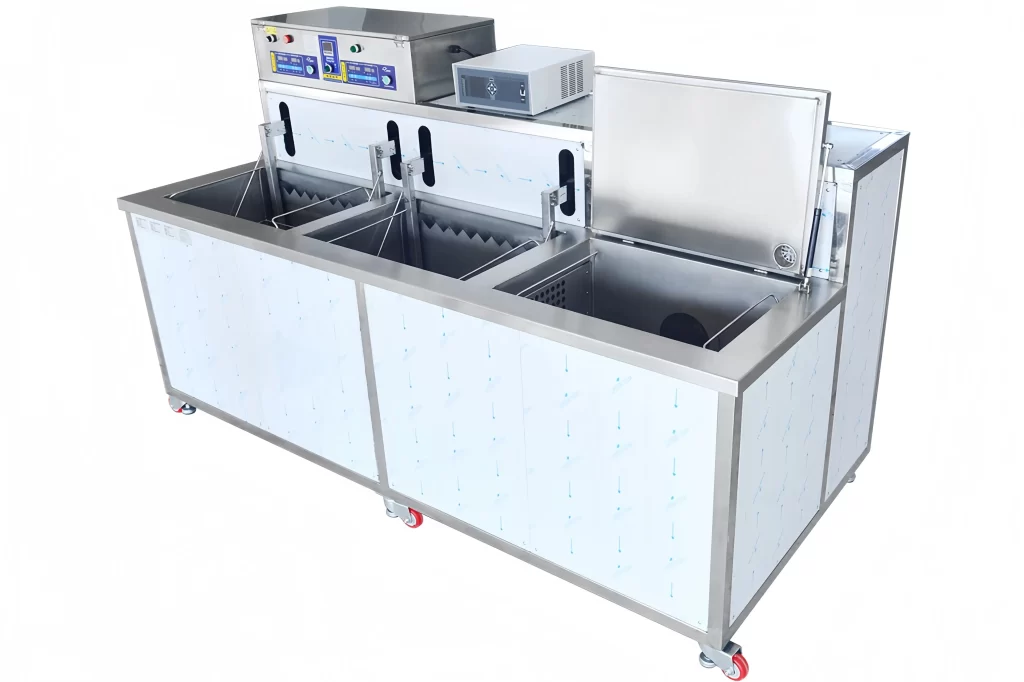
These measures collectively reduce the energy required to hold solutions at optimal cleaning temperatures. GTKCLEAN's Multi-Tank Ultrasonic Cleaners integrate these features as standard rather than afterthoughts.
Automation That Actually Saves Power
Smart controls transform energy consumption patterns in ways manual operation cannot match. The difference shows up most clearly in idle periods, batch transitions, and overnight operation.
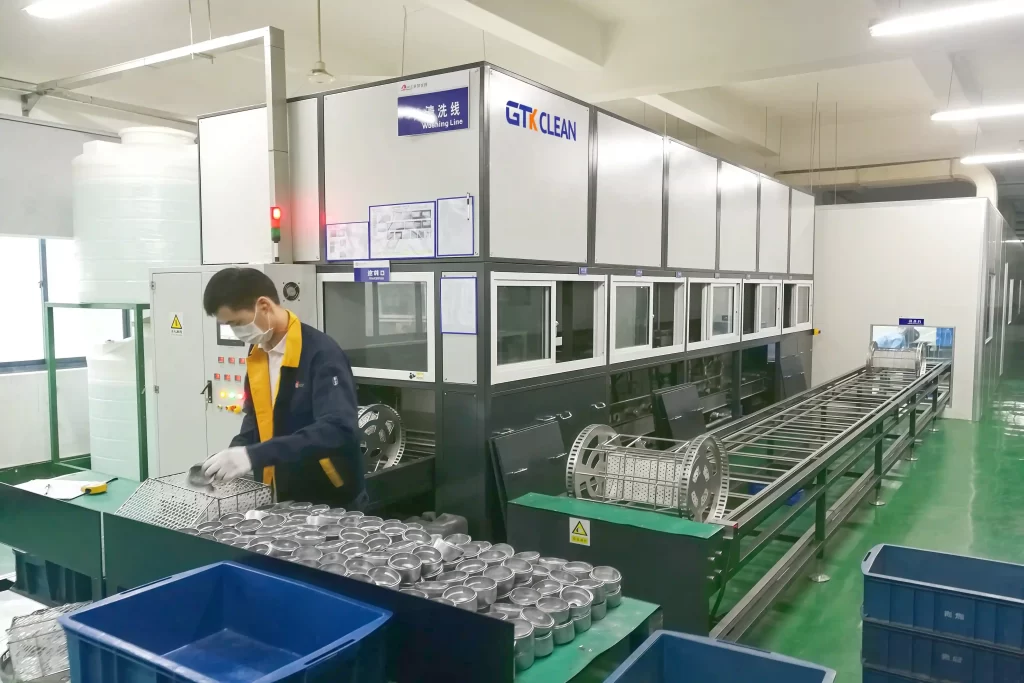
GTKCLEAN's automated systems, including the Ultrasonic Cleaners for CNC Machined Parts, run on Siemens or Mitsubishi PLCs with touchscreen interfaces. The automation delivers energy savings through several mechanisms:
Programmed cycles eliminate the guesswork that leads to over-cleaning. Sensors monitoring solution levels, temperatures, and contamination trigger actions based on actual conditions rather than worst-case assumptions. Idle mode reduces power draw between batches automatically, something operators forget to do manually. Integrated diagnostics catch developing problems before they cause efficiency-draining breakdowns.
Remote monitoring allows real-time adjustments and software updates that continuously refine energy performance. The initial investment in automation pays back through labor savings and energy reduction simultaneously. For background on the underlying technology, 《What Is the Principle of an Ultrasonic Cleaning Machine?》 covers the fundamentals.
Process Refinements Beyond the Tank
Energy optimization extends past the ultrasonic tank itself. Solution management and drying efficiency contribute meaningfully to total consumption.
Filtration systems that continuously remove contaminants extend solution life, reducing the energy cost of heating fresh batches. Clean solution also maintains cavitation effectiveness, preventing the extended cycles that contaminated baths require. GTKCLEAN's CNC Aluminum Shell Inline Cleaners incorporate circulation filtration for this reason.
Degassing procedures affect how efficiently ultrasonic energy transfers into cleaning action. Dissolved gases cushion cavitation bubble collapse, forcing longer cycles or higher power to achieve the same cleanliness. Proper degassing upfront saves energy throughout the cleaning process.
Chemistry selection influences energy requirements more than many operators expect. The right detergent formulation for a specific contamination type can reduce required temperatures or ultrasonic exposure times. GTKCLEAN's Industrial Cleaning Detergents are engineered for specific applications rather than general-purpose compromise.
Drying consumes significant energy in many cleaning lines. Air knife systems, hot air dryers, and vacuum drying each have different efficiency profiles. Our Fastener Tunnel Cleaners integrate heat recovery to reduce drying energy consumption. For certain applications, Hydrocarbon Solvent Ultrasonic Cleaning Systems operate at lower temperatures and provide efficient drying, offering energy advantages worth evaluating.
Making the Numbers Work
Energy-efficient equipment costs more upfront. Justifying that investment requires honest calculation of payback periods and total cost of ownership.
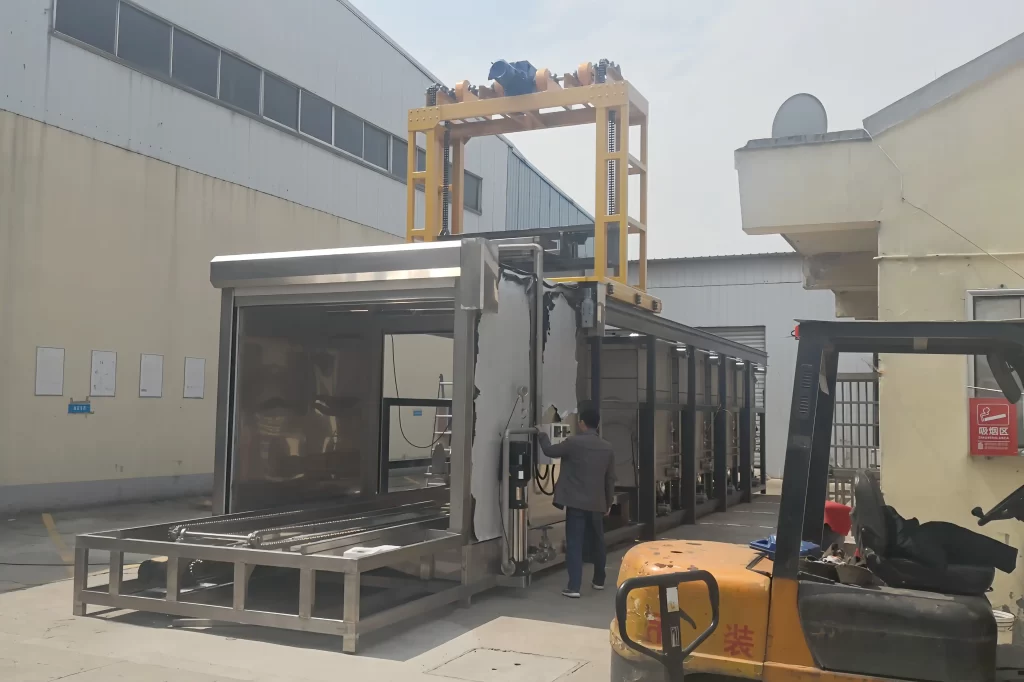
Start with current consumption data: kilowatt-hours per shift, per week, per month. Identify the largest energy consumers in your existing process. Estimate realistic reduction percentages from specific upgrades, whether insulation, controls, or process changes. Multiply projected savings by your actual electricity cost per kWh. The resulting annual savings figure, compared against upgrade costs, yields payback period.
Most facilities find that heating efficiency improvements and automation upgrades pay back within 18–36 months. The calculation becomes more favorable as energy prices rise, which they tend to do over equipment lifespans of 10–20 years.
Partner with GTKCLEAN for Measurable Efficiency Gains
Two decades of R&D and 28 technical patents have taught us where energy savings hide in industrial cleaning operations. GTKCLEAN engineers systems that deliver superior cleaning performance while minimizing power consumption. Contact Suzhou Grintek Environmental Technology Co.,Ltd. at +86 17768507147 or [email protected] for an energy audit of your current process. The numbers usually surprise people.
Common Questions About Ultrasonic Cleaning Energy Costs
Are there specific ultrasonic cleaning technologies designed for low energy consumption?
Several technologies target energy reduction directly. High-efficiency piezoelectric transducers convert more electrical input into useful cavitation. Advanced tank insulation cuts heating losses. Smart power modulation in generators matches output to cleaning requirements rather than running at fixed maximum. Automation systems optimize cycle timing and reduce idle draw. Pulse-width modulation and multi-frequency capabilities allow more targeted energy application. GTKCLEAN incorporates these features across our industrial ultrasonic cleaning systems.
How does solution chemistry impact the energy efficiency of ultrasonic cleaning?
Chemistry affects energy consumption through temperature requirements and cleaning time. A well-matched detergent formulation can achieve target cleanliness at lower temperatures or shorter ultrasonic exposure, directly reducing power draw. Poorly chosen chemistry forces compensation through higher heat or longer cycles. Concentration matters too; under-concentrated solutions clean slowly, while over-concentration wastes chemical without improving speed. GTKCLEAN recommends application-specific formulations that balance cleaning effectiveness with energy efficiency.
What is the typical lifespan of energy-efficient ultrasonic cleaning equipment, and how does maintenance affect it?
Quality industrial ultrasonic cleaning equipment typically operates for 10–20 years, depending on usage intensity and maintenance discipline. Regular preventive maintenance, including transducer inspection, generator calibration, and tank cleaning, preserves efficiency over that span. Neglected systems develop efficiency degradation that increases energy consumption gradually, often without obvious symptoms until the losses become substantial. Proper maintenance protects both the initial equipment investment and the ongoing energy savings that justified it.
 English
  German
  Spanish
  French
  Russian
  Portuguese