

How Rotary Basket and Static Ultrasonic Cleaning Actually Differ in Practice
Choosing between rotary basket and static ultrasonic cleaning comes down to what your parts look like and how clean they need to be. Both systems use the same underlying physics—cavitation generated by high-frequency sound waves—but the way parts interact with that cavitation changes everything about the results you get. After working with both configurations across aerospace, medical, and precision manufacturing applications, the practical differences become clear pretty quickly.
The core question is whether your parts have features that hide from ultrasonic waves. Blind holes, internal channels, undercuts, and complex contours create shadowed zones where cavitation struggles to reach in a stationary setup. Rotary systems solve this by continuously repositioning parts relative to the ultrasonic field. Static systems work fine when surfaces are accessible, but they hit limitations when geometry gets complicated.
Why Cavitation Distribution Matters More Than Raw Power
Industrial ultrasonic cleaning depends on cavitation—microscopic vacuum bubbles that form and collapse violently in the cleaning solution, releasing energy that strips contaminants from surfaces. Piezoelectric transducers convert electrical energy into mechanical vibrations, typically operating between 20 kHz and 200 kHz, which propagate through the liquid and create this cavitation effect.
The frequency you select determines bubble characteristics. Lower frequencies in the 20-40 kHz range produce larger, more aggressive bubbles that work well on robust parts with heavy contamination—think machined steel components with cutting oil residue. Higher frequencies from 68-200 kHz generate smaller, gentler bubbles better suited for delicate parts or fine particle removal, which matters for polished surfaces or thin-walled components.
Power density and tank geometry influence how uniformly cavitation distributes throughout the cleaning volume. Dead zones exist in every tank, areas where wave interference patterns reduce cavitation intensity. The practical challenge is ensuring your parts don't sit in those dead zones, or if they do, that they don't stay there long enough to leave contamination behind.
What Rotary Basket Systems Actually Accomplish
Rotary basket ultrasonic cleaning introduces continuous motion into the process. Parts rotate through the ultrasonic field rather than sitting stationary, which means every surface eventually faces direct cavitation exposure. This matters most for parts with features that would otherwise remain shielded.
Consider a valve body with internal passages and cross-drilled holes. In a static setup, contamination inside those passages may never see adequate cavitation energy because the surrounding material blocks wave propagation from certain angles. Rotation changes the geometry continuously, giving ultrasonic waves access from multiple directions over the cleaning cycle.
The rotation speed becomes a controllable parameter. Faster rotation increases the frequency of exposure changes but may reduce dwell time at any particular orientation. Slower rotation allows more thorough cleaning at each position but extends cycle time. Finding the right balance depends on part geometry and contamination characteristics.
Our Rotary Basket Ultrasonic Cleaners use 360° rotation specifically designed for blind holes, cracks, and recessed features. This approach proves particularly valuable for aerospace components and medical devices where cleanliness specifications leave no room for inconsistency.
Which Parts Actually Need Rotary Cleaning?
Rotary basket ultrasonic cleaning delivers measurable advantages for parts with complex geometry, blind holes, or intricate internal features. Aerospace valve bodies, medical orthopedic implants, precision gears with internal splines, and hydraulic components with cross-drilled passages all fall into this category.
The common thread is that these parts have surfaces you cannot see directly from outside the component. If contamination can hide in a feature, static cleaning may leave it there. Rotation ensures exposure regardless of how the part is initially positioned in the basket.
High-volume production of intricate parts benefits from the consistency rotary systems provide. When you need every part to meet the same cleanliness standard, eliminating the variability that comes from part orientation in static cleaning simplifies quality control.
Where Static Ultrasonic Cleaning Still Makes Sense
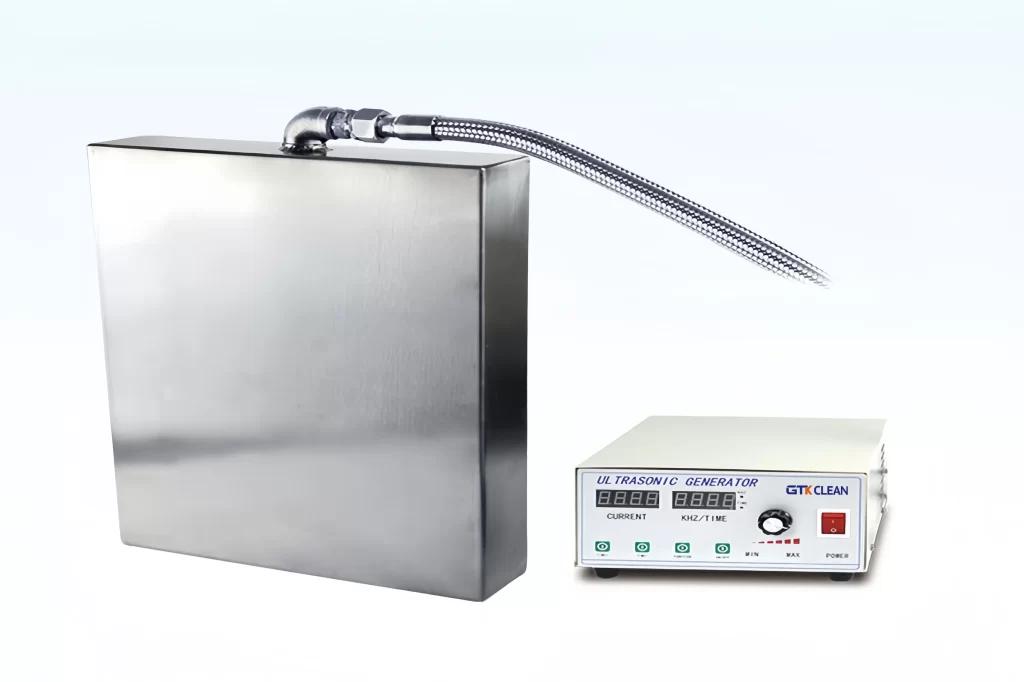
Static ultrasonic cleaning systems immerse parts in a stationary basket while transducers generate cavitation throughout the tank. The design is mechanically simpler, costs less to purchase and maintain, and works well for a significant range of applications.
Parts with accessible surfaces—flat plates, simple housings, external threads, and components without blind features—clean effectively in static systems. The cavitation reaches what it needs to reach because nothing blocks the path. Automotive engine blocks, transmission housings, and stamped brackets often fall into this category.
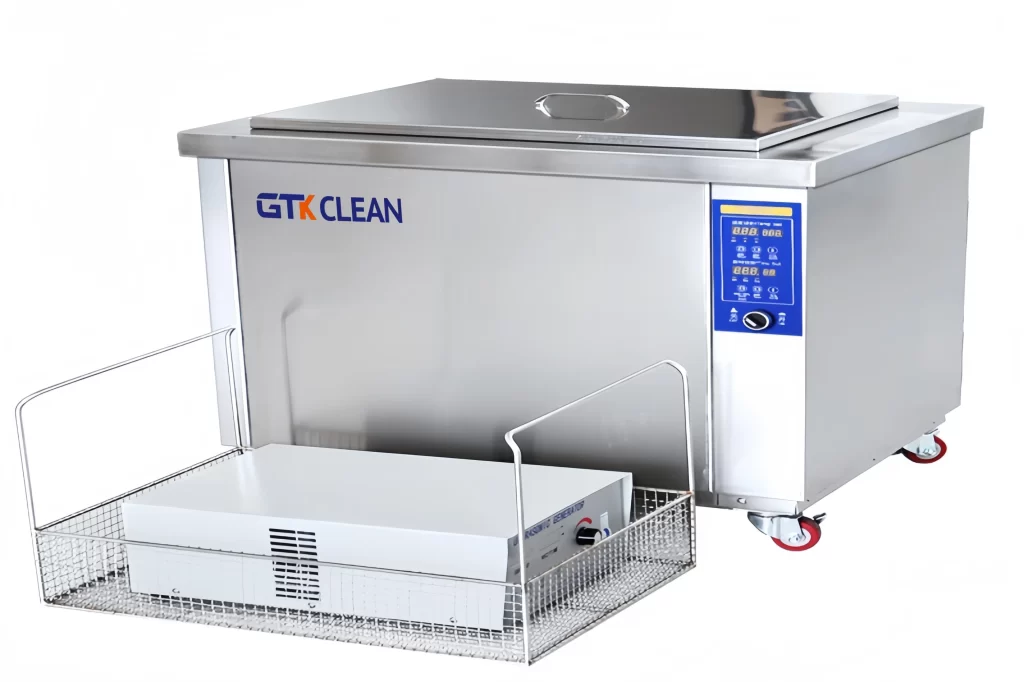
Batch processing efficiency favors static systems when part geometry cooperates. You can load more parts per cycle without worrying about rotation clearances, and the simpler mechanism means less that can break down during production runs.
The limitation shows up when you push static systems beyond their natural application range. Cleaning intricate components in a static tank often requires longer cycle times, multiple cleaning steps, or manual repositioning between cycles—all of which add cost and complexity that a rotary system handles automatically.
Can Static Cleaning Match Rotary Results on Complex Parts?
Static ultrasonic cleaning typically cannot achieve equivalent cleanliness on intricate components. The stationary basket creates consistent shadowing patterns where contamination accumulates in the same locations cycle after cycle.
Blind holes present the clearest example. Ultrasonic waves entering a blind hole from above lose energy as they travel deeper, and contamination at the bottom may never experience adequate cavitation. Rotation changes the angle of wave entry continuously, allowing energy to reach the full depth from multiple directions.
For parts where every surface must meet the same cleanliness standard, static systems require workarounds that add time and labor. If your application tolerates some variation in hard-to-reach areas, static cleaning may still be adequate.
Comparing Performance Where It Matters
Several factors distinguish rotary and static systems in practice. Cleaning cycle time, energy consumption, mechanical complexity, and capital cost all influence the total cost of ownership and the suitability for specific applications.
| Factor | Rotary Basket Systems | Static Systems |
|---|---|---|
| Complex geometry cleaning | Superior—dynamic exposure reaches blind holes and internal features | Limited—shadowed areas may retain contamination |
| Cycle time for intricate parts | Often shorter due to continuous exposure from all angles | Longer cycles or multiple steps may be required |
| Mechanical complexity | Higher—rotation mechanism requires maintenance | Lower—fewer moving parts |
| Capital cost | Higher initial investment | Lower purchase price |
| Batch capacity | Limited by rotation clearances | Higher density loading possible |
| Energy consumption | Typically higher due to rotation motor | Lower for equivalent tank size |
The right choice depends on what you're cleaning. Our Multi-Tank Hydrocarbon Ultrasonic Cleaners incorporate rotary baskets specifically for stamped parts with recessed features and blind holes, where the 360° cleaning capability directly addresses the geometry challenge.
Matching System Type to Your Production Requirements
Selecting between rotary and static ultrasonic cleaning requires honest assessment of your parts, your cleanliness specifications, and your production economics.
Start with part geometry. Examine your components for blind holes, internal passages, undercuts, and features that would shield surfaces from direct ultrasonic exposure. If these features exist and must meet cleanliness standards, rotary cleaning deserves serious consideration.
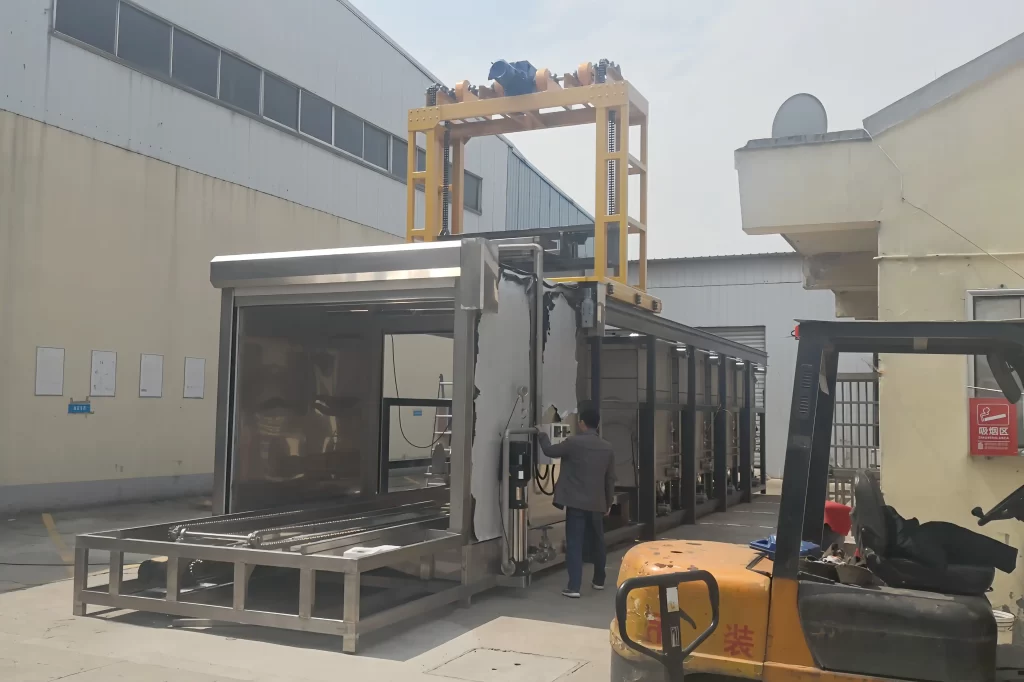
Production volume and part mix matter too. If you clean a variety of part types with different geometries, a rotary system provides flexibility to handle complex parts without process changes. If your parts are geometrically simple and consistent, static cleaning may deliver adequate results at lower cost.
Cleanliness specifications drive the decision when geometry is borderline. Medical device cleaning and aerospace components cleaning often require documented cleanliness to specific standards. The consistency rotary systems provide simplifies validation and reduces the risk of out-of-spec parts reaching downstream processes.
Our Rotary Basket Ultrasonic Cleaners handle parts up to 2000 kg with reinforced baskets and automated operation, addressing both the geometry challenge and the throughput requirements for industrial-scale production.
If your current cleaning process leaves contamination in hard-to-reach areas or requires manual intervention to achieve consistent results, discussing your specific part geometries with an equipment supplier can clarify whether rotary cleaning would eliminate those problems.
How Do Costs Compare Over the Equipment Lifecycle?
Rotary basket systems require higher capital investment due to mechanical complexity and automation features. The rotation mechanism, drive motor, and associated controls add cost that static systems avoid.
Operational costs differ in both directions. Rotary systems consume more energy and may require more frequent maintenance on moving components. However, their efficiency on complex parts can reduce labor costs for manual rework and shorten cycle times, which affects throughput economics.
Static systems cost less to purchase and maintain for applications where they deliver adequate cleaning. The simpler design means fewer failure modes and lower spare parts inventory requirements.
Return on investment depends heavily on application fit. A rotary system cleaning simple parts wastes capability and money. A static system struggling with complex parts generates rework costs and quality issues that erode any capital savings.
Developing Cleaning Solutions That Fit Your Application
GTKCLEAN has spent over 20 years developing industrial cleaning technologies, accumulating 28 technical patents in the process. Our equipment range spans ultrasonic cleaning systems, solvent cleaning systems, conveyor belt cleaning systems, and water treatment systems.
This breadth matters because cleaning challenges rarely exist in isolation. The ultrasonic cleaning step connects to upstream contamination sources and downstream cleanliness requirements. Understanding the full process allows us to design systems that integrate properly rather than creating new problems at the interfaces.
We work with clients to evaluate their specific parts, contamination types, and cleanliness requirements before recommending equipment configurations. Sometimes the answer is rotary, sometimes static, and sometimes a multi-stage process combining both approaches.
Getting Your Cleaning Process Right
Improving your industrial cleaning results starts with understanding what your current process does well and where it falls short. If you're seeing inconsistent cleanliness on complex parts or spending labor on manual cleaning steps that should be automated, those are signals that your equipment configuration may not match your application.
Contact us at [email protected] or +86 17768507147 to discuss your specific cleaning requirements and explore whether a different system configuration would deliver better results.
Frequently Asked Questions
What factors determine the optimal ultrasonic frequency for industrial cleaning applications?
Ultrasonic frequency selection depends on three variables: component material, contamination type, and required cleanliness level. Lower frequencies in the 20-40 kHz range generate larger cavitation bubbles that deliver aggressive cleaning action suitable for robust metal parts with heavy oil or grease contamination. Higher frequencies from 68-200 kHz produce smaller bubbles that clean more gently, which matters for delicate components, polished surfaces, or applications requiring fine particle removal without surface damage. The right frequency balances cleaning effectiveness against the risk of part damage for your specific application.
How do I ensure material compatibility when choosing an ultrasonic cleaning solution?
Material compatibility requires attention to both the cleaning chemistry and the ultrasonic parameters. Consult manufacturer specifications for your cleaning solution and verify compatibility with all materials in your parts, including base metals, coatings, and any elastomeric seals or inserts. Running small-scale tests on sample parts before full production implementation catches compatibility issues before they become expensive problems. This testing step is particularly important for aerospace and medical device applications where material integrity directly affects part function and safety.
What maintenance is required for rotary basket and static ultrasonic cleaning systems?
Both system types need regular tank cleaning, solution filtration monitoring, and transducer inspection to maintain cleaning performance. Rotary systems add maintenance requirements for the rotation mechanism—bearings, drive components, and basket mounting hardware need periodic inspection and lubrication according to manufacturer schedules. Establishing a preventative maintenance routine based on operating hours rather than waiting for problems to develop keeps systems running consistently and extends equipment life. Reach out to discuss maintenance scheduling if you're seeing performance degradation or unexpected downtime.
If you're interested, you may want to read the following articles:
Industrial Cleaning Baskets: Why They Matter for Your Parts Washing Efficiency
Precision Parts Cleaning Standards: An Expert Guide to Industrial Cleanliness
 English
  German
  Spanish
  French
  Russian
  Portuguese