
CNC machining leaves behind a mix of cutting fluids, metal chips, oils, and coolants that can wreck downstream processes if not properly addressed. Poor cleaning leads to coating failures, assembly problems, and parts that don't meet spec. The right industrial parts washer makes the difference between consistent quality and constant rework. Here's what actually matters when selecting cleaning equipment for CNC operations.
What CNC Machining Leaves Behind
CNC processes generate predictable contamination patterns. Cutting fluids coat surfaces and seep into crevices. Metal chips and swarf lodge in blind holes and threaded features. Lubricants from handling accumulate on contact surfaces. Coolants leave residues that cause staining or corrosion if not removed.
Each contaminant type creates specific downstream problems. Cutting fluid residue prevents proper coating adhesion. Metal chips cause mechanical interference during assembly. Oil films contaminate subsequent heat treatment processes. Coolant residues corrode surfaces over time.
| Contaminant Type | Source Process | Impact on Quality |
|---|---|---|
| Cutting Fluids | Machining, drilling, milling | Residue, corrosion, adhesion issues |
| Metal Chips/Swarf | Material removal | Surface defects, mechanical interference |
| Oils/Greases | Lubrication, handling | Poor adhesion for coatings, contamination |
| Coolants | Temperature control | Stains, residue, potential corrosion |
Aqueous or Solvent Cleaning for CNC Parts
The aqueous versus solvent decision shapes everything else about your cleaning system. Both approaches work. The right choice depends on what you're cleaning and what constraints you're operating under.
Matching Chemistry to Contaminants
CNC parts typically carry oils, greases, metal chips, coolants, and polishing compounds. Aqueous solutions handle water-soluble coolants well. Solvents cut through heavy oils and greases more effectively. Some applications need both approaches in sequence.
Making the Decision
Material compatibility matters first. Some alloys react poorly with certain chemistries. Cleanliness requirements vary by industry. Aerospace and medical applications demand validation-level cleanliness that influences chemistry selection. Regulatory compliance affects solvent choices in many regions. Drying requirements favor solvents when speed matters.
| Feature | Aqueous Cleaning | Solvent Cleaning |
|---|---|---|
| Primary Use | Water-soluble contaminants, light oils | Heavy oils, greases, non-polar residues |
| Environmental Impact | Lower VOCs, biodegradable detergents | Higher VOCs (hydrocarbons), regulated |
| Safety | Non-flammable, less hazardous fumes | Flammable (some solvents), requires ventilation |
| Drying Time | Longer (requires heat/air knives) | Faster (evaporation, vacuum drying) |
| Cost | Lower chemical cost, higher energy for drying | Higher chemical cost, efficient recycling |
For technical background on cleaning mechanisms, see 《What Is The Technical Principle Of Hydrocarbon(Solvent) Cleaning Machines?》 and 《What Is the Principle of an Ultrasonic Cleaning Machine?》.
Selection Criteria That Actually Matter
Part geometry drives equipment design more than most buyers realize. A simple external surface cleans easily with spray systems. Blind holes, internal passages, and threaded features need ultrasonic cavitation or specialized fixturing to reach contaminated areas.
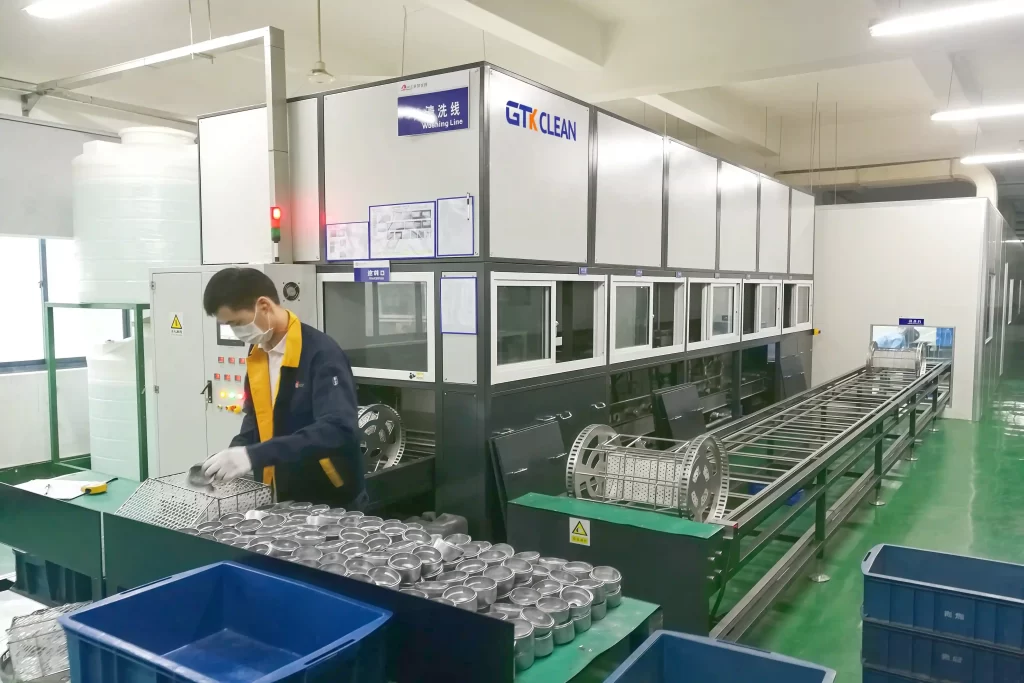
Production volume determines batch versus continuous processing. Low-volume shops often do fine with cabinet systems. High-throughput operations need conveyor systems like Conveyor Belt Ultrasonic Cleaning machine integrated into production flow.
Cleanliness specifications vary dramatically by application. General manufacturing might accept visual cleanliness. Aerospace components require particulate counts and surface energy measurements. Medical devices need bioburden validation. Know your actual requirements before specifying equipment.
Automation reduces labor costs and improves consistency. Manual cleaning varies with operator attention. Automated systems deliver repeatable results shift after shift. Energy consumption adds up over equipment lifetime. Efficient systems cost more upfront but pay back through lower operating costs.
Post-cleaning processes deserve attention during selection. Vacuum drying prevents water spots on precision surfaces. Rust prevention treatments protect ferrous parts during storage. Some systems integrate these steps. Others require separate equipment.
Rotary Basket Ultrasonic Cleaners work well for parts with blind holes and recesses. The 360° rotation ensures cleaning solution reaches all surfaces.
Equipment Types and Where They Fit
Different cleaning technologies suit different applications. Matching equipment to your specific parts and contamination patterns determines success.
Ultrasonic Systems
Ultrasonic cleaning uses cavitation to dislodge contaminants from surfaces that spray systems can't reach. The technology excels at cleaning intricate geometries, blind holes, and internal passages. Multi-stage systems combine ultrasonic cleaning with spray rinsing and drying. Heavy-Duty Automated Ultrasonic Cleaning Systems handle workpieces up to 2000 kg for large component applications.
Spray and Immersion Systems
Spray cabinets clean external surfaces quickly and effectively. High-pressure impact removes chips and loosens oils. Immersion systems work better for delicate parts or when longer contact time improves results. Some parts need both approaches.
Conveyor Systems
Continuous production demands continuous cleaning. Conveyor systems integrate into production lines, cleaning parts as they move through manufacturing. Multi-directional spray nozzles and DI water rinsing prevent watermarks on finished surfaces.
| Washer Type | Best Use Case | Key Advantage |
|---|---|---|
| Ultrasonic | Complex geometries, blind holes | Cavitation provides deep cleaning |
| Spray | External surfaces, general cleaning | High-pressure impact, fast |
| Immersion | Delicate parts, long soak times | Gentle, thorough, good for mixed loads |
| Conveyor | High-volume, continuous flow | Automated, integrated into production lines |
| Cabinet | Batch processing, diverse parts | Versatile, enclosed system |
Getting Real Value from Cleaning Equipment
Equipment ROI comes from multiple sources. Labor reduction matters when automated systems replace manual cleaning operations. Quality improvements show up as fewer rejects and less rework. Tool life extends when parts enter subsequent operations clean. Chemical and water consumption affect ongoing costs.
Advanced filtration extends bath life and reduces chemical replacement frequency. Closed-loop systems minimize waste disposal costs. Energy-efficient heating and drying reduce utility expenses over equipment lifetime.
What Drives Parts Washer ROI
Labor savings from automation often justify equipment investment alone. Reduced chemical consumption and lower waste disposal costs add to returns. Quality improvements reduce scrap rates and customer complaints. The combination typically delivers payback within reasonable timeframes for properly specified equipment.
Working with GTKCLEAN
GTKCLEAN brings 20+ years of cleaning equipment development to CNC applications. Our Ultrasonic Cleaning Systems and conveyor equipment address the full range of CNC parts cleaning challenges. Contact Suzhou Grintek Environmental Technology Co.,Ltd. for consultation on your specific requirements: [email protected] or +86 17768507147.
Common Questions About CNC Parts Washers
How often should industrial parts washers be maintained for CNC applications?
Maintenance frequency depends on usage intensity and contamination levels. Daily fluid level and filter checks catch problems early. Weekly tank and nozzle cleaning prevents buildup. Monthly or quarterly deep cleaning keeps mechanical components functioning properly. Following manufacturer guidelines prevents unexpected downtime and maintains cleaning consistency.
Can industrial parts washers handle complex geometries of CNC machined parts?
Modern equipment handles complex geometries through multiple approaches. Multi-stage spray systems with oscillating nozzles reach varied surfaces. 《What Is Ultrasonic Cavitation Effect?》 cleaning penetrates blind holes and internal passages. Custom fixturing positions parts for optimal cleaning access. Equipment selection should match specific part complexity and cleanliness requirements.
What are the environmental considerations when selecting an industrial parts washer?
Environmental factors include cleaning chemistry selection, water and energy consumption, and waste handling. Aqueous systems with biodegradable detergents reduce chemical impact. Water treatment systems enable reuse and reduce discharge. Energy-efficient designs lower operating costs and environmental footprint. Regulatory compliance requirements vary by location and should inform equipment selection.
 English
  German
  Spanish
  French
  Russian
  Portuguese