
Selecting the optimal industrial cleaning equipment is a critical decision for factory operations, directly impacting product quality, production efficiency, and overall cost. The choice between tunnel and pass-through cleaning systems often presents a significant challenge for manufacturing engineers and plant managers. Understanding their distinct operational principles and performance characteristics is key to integrating the right solution into your production line. This article explores both system types to guide your factory towards an informed decision.
How Tunnel Cleaning Systems Deliver Continuous Flow Efficiency
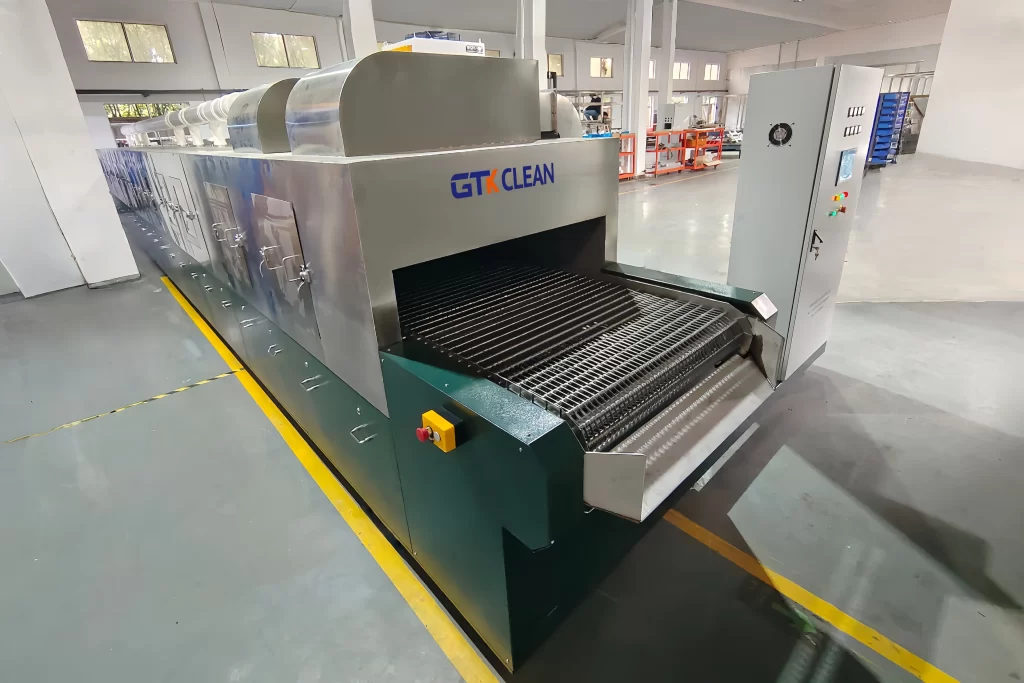
Tunnel cleaning systems are designed for high-volume, continuous processing, making them ideal for production lines that require consistent and rapid cleaning. These systems operate by moving parts through a series of cleaning, rinsing, and drying zones, typically on a conveyor belt. The continuous flow ensures a steady throughput, minimizing bottlenecks in automated manufacturing environments. Common applications include inline cleaning for automotive components, fasteners, or general industrial parts where production speed is paramount.
GTKCLEAN's conveyor belt cleaning systems are specifically engineered for these high-throughput, continuous operations. Our Fastener Tunnel Cleaners, for example, process over 2 tons of fasteners per hour, automatically removing drawing oil, cutting fluids, and metal powders in a single pass. This continuous cleaning approach ensures parts are ready for subsequent processes like electroplating or assembly without interruption.
Where Pass-Through Systems Provide Versatility and Precision
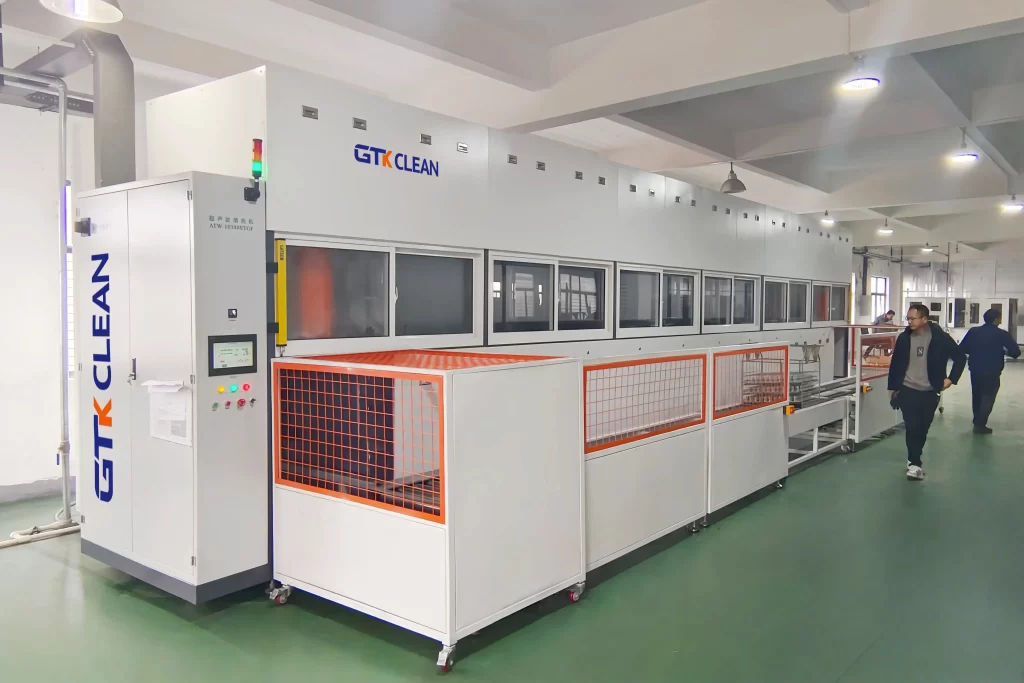
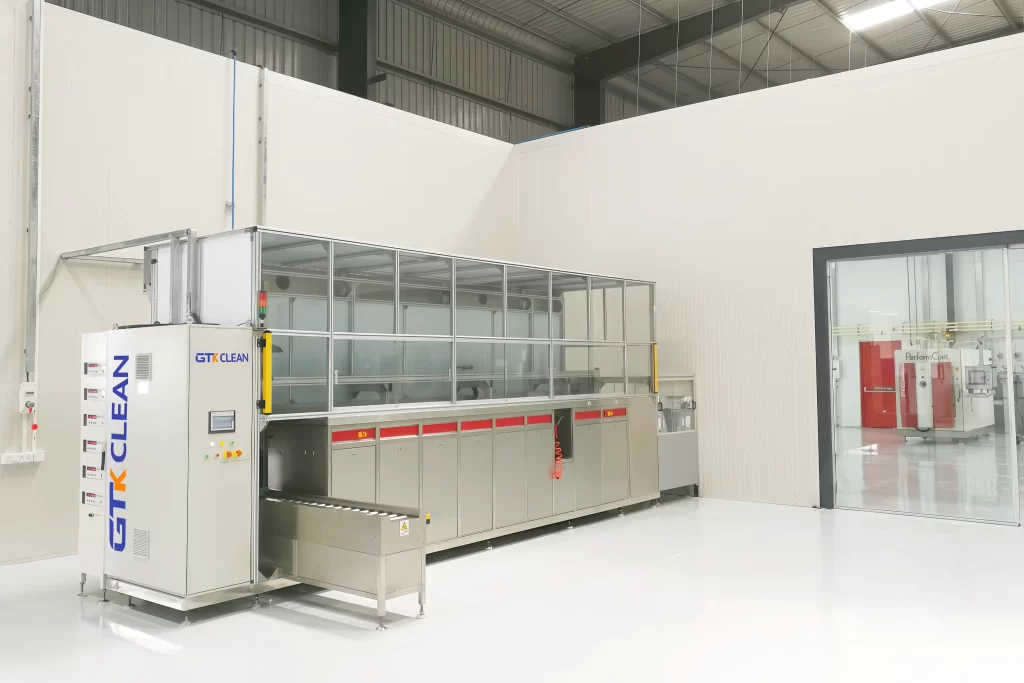
Pass-through systems offer greater versatility and precision, often incorporating advanced cleaning methods such as ultrasonic cleaning or solvent cleaning. Unlike tunnel systems, parts typically move through these units in baskets or on specialized fixtures, allowing for more intensive, multi-stage processes tailored to specific part geometries and cleanliness requirements. These systems are well-suited for varied part sizes, complex shapes, and applications demanding extremely high cleanliness levels, such as those found in medical devices or aerospace components.
GTKCLEAN's ultrasonic and solvent cleaning systems can be configured as highly versatile pass-through units. Our Hydrocarbon Solvent Ultrasonic Vacuum Cleaners, for example, handle precision hardware and CNC machined parts, providing blind-spot-free cleaning for recessed and blind-hole components. This type of system is particularly effective for removing stubborn contaminants from intricate parts.
What Separates Tunnel and Pass-Through Cleaning Systems in Daily Operation
Tunnel cleaning systems operate on a continuous, inline principle, moving parts steadily through various stages via a conveyor. This design prioritizes high throughput and integration into existing production lines. Pass-through systems, conversely, typically process parts in batches or individually, often using baskets, allowing for more intensive, multi-stage cleaning cycles and greater adaptability for diverse part geometries and cleanliness standards.
The distinction becomes clear when you watch both systems run side by side. A tunnel system never stops; parts enter one end and exit the other in a predictable rhythm. A pass-through system pauses, immerses, agitates, and releases, giving each batch the time it needs. Neither approach is inherently superior. The right choice depends entirely on what your parts require and how your line is structured.
How Throughput, Cleanliness, and Cost Compare Across Both Systems
When evaluating industrial cleaning systems, key performance metrics include throughput, achievable cleanliness standards, and overall cost. Tunnel systems generally excel in throughput, processing a large volume of similar parts quickly. Their continuous nature often results in lower labor costs per part. Achieving extremely high precision cleanliness for complex geometries can be challenging, however, due to the limited dwell time and spray-based methods.
Pass-through systems, particularly those incorporating ultrasonic or solvent cleaning, offer superior cleanliness for intricate parts, reaching blind holes and internal cavities effectively. While their throughput might be lower than a dedicated tunnel system for simple parts, the precision and consistency they provide can reduce rework and improve overall product quality. Initial capital expenditure for specialized pass-through systems might be higher, but their ability to handle diverse parts can offer long-term operational savings.
I observed this distinction clearly when working with a client in the medical device industry. They needed to clean small, complex titanium implants to a near-perfect standard. A tunnel system could not consistently achieve the required cleanliness in blind holes, leading to high rejection rates. By implementing a multi-stage ultrasonic pass-through system, we reduced their defect rate by 70%, demonstrating the critical impact of choosing the right technology for specific cleanliness demands.
How Each System Integrates with Existing Factory Automation
Integrating a cleaning system into an existing or planned manufacturing line requires careful consideration of automation levels and process flow. Tunnel systems are inherently designed for inline integration, often becoming a direct extension of the production line. Material handling is typically automated via conveyor belts, minimizing manual intervention and ensuring a smooth, continuous workflow.
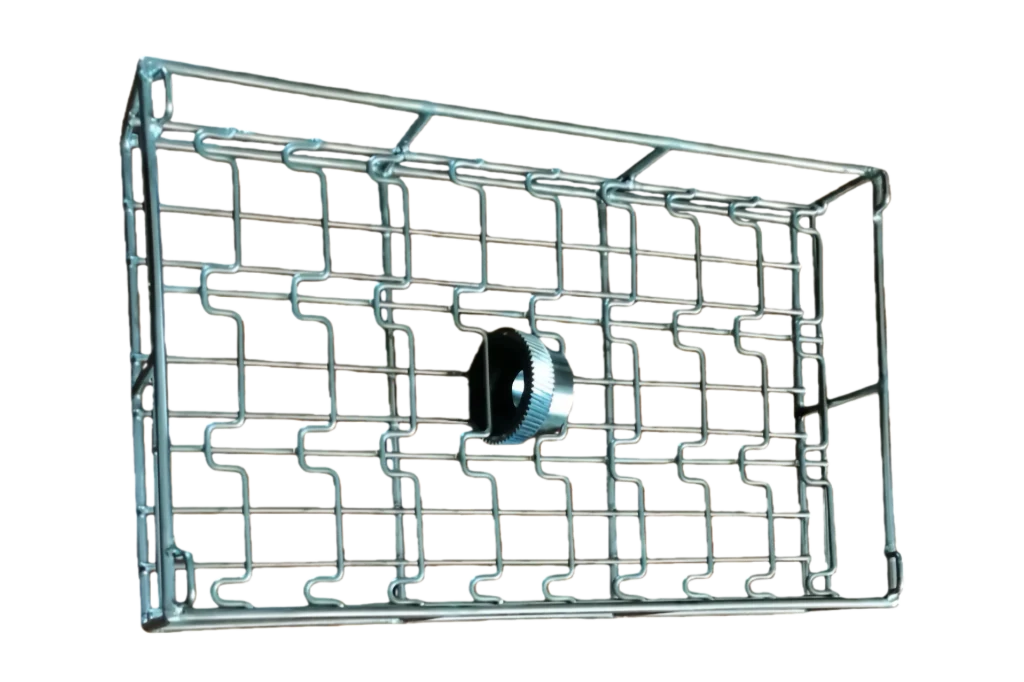
Pass-through systems offer flexibility in their integration. They can be integrated into a larger automated cell with robotic loading and unloading, or they can function as standalone units for batch processing. The choice depends on the factory's overall automation strategy and the specific requirements for part handling. Our Industry Washing Baskets are designed to be compatible with various automation systems, facilitating transfer between cleaning stages and production lines without manual repositioning.
Which System Connects More Easily to Your Existing Line
Tunnel cleaning systems generally offer more straightforward integration with existing factory automation lines due to their continuous conveyor-based design. They are built for inline processing, directly connecting to upstream and downstream manufacturing steps. Pass-through systems can also be automated, often requiring robotic loading and unloading, but their batch-oriented nature might necessitate more complex material handling interfaces.
If your line already runs on a continuous flow model, a tunnel system slots in with minimal disruption. If your production involves frequent changeovers or mixed part batches, a pass-through system's flexibility may outweigh the added integration complexity.
What Factors Should Drive Your Final Decision
Choosing between tunnel and pass-through cleaning systems requires a detailed assessment of several key factors. Consider your production volume and required throughput: high volumes of similar parts favor tunnel systems. Evaluate the complexity of your parts and the required cleanliness standards: intricate geometries and stringent cleanliness often point towards pass-through solutions. Assess your available factory footprint, as tunnel systems typically demand a longer linear space. Analyze the overall cost-effectiveness, including capital investment, operational expenses, and potential labor savings.
GTKCLEAN's 20+ years of R&D experience and comprehensive range of automated cleaning equipment enable us to provide tailored solutions for diverse factory needs. We help clients analyze their specific requirements to select the most suitable system, ensuring optimal performance and long-term value. Our Pre PVD (Coating) Parts Ultrasonic Cleaners are customizable to accommodate deep holes and blind holes, demonstrating how specialized pass-through systems address complex cleaning challenges.
If your current cleaning process is creating bottlenecks or quality issues, it may be worth reviewing whether your system type matches your actual part mix and cleanliness requirements.
Frequently Asked Questions
What is the typical footprint difference between tunnel and pass-through cleaning systems?
Tunnel systems generally require a longer, linear footprint for continuous operations, impacting factory layout. Pass-through systems, while potentially wider, can sometimes be more compact or adaptable to varied spaces, depending on their batch cleaning configuration. A tunnel system cleaning fasteners at 2 tons per hour might run 8 to 12 meters in length, while a comparable pass-through ultrasonic unit could fit in a 3-by-4-meter cell.
Can both systems effectively handle different types of cleaning agents?
Yes, both system types can be designed to accommodate various cleaning agents, including aqueous, solvent, and specialized solutions. The choice depends on the specific parts, contaminants, and required cleanliness standards, influencing the system's material compatibility and filtration systems. Solvent-based cleaning is more common in pass-through configurations where vapor recovery and vacuum drying stages are easier to integrate.
How critical is part geometry when choosing between tunnel and pass-through systems?
Part geometry is highly critical. Tunnel systems excel with consistent part shapes for automated parts washing, while pass-through systems, especially those with ultrasonic cleaning or immersion stages, offer greater versatility for complex or varied geometries, ensuring thorough cleaning. If your parts have blind holes, internal channels, or recessed features, a tunnel system's spray-based approach will likely leave residue behind. To discuss your specific part geometries and cleaning requirements, contact us at [email protected] or +86 17768507147.
If you're interested
The Indispensable Link Between Coating Technologies and Industrial Cleaning Systems
Semi Automated vs Fully Automated Ultrasonic Cleaning Systems
 English
  German
  Spanish
  French
  Russian
  Portuguese