
Choosing an industrial cleaning equipment manufacturer is one of those decisions that looks straightforward on paper but gets complicated fast once you start talking to suppliers. The equipment itself is specialized enough that most procurement teams cannot evaluate technical claims without help, and that information asymmetry creates room for problems. I have seen companies lock themselves into relationships with manufacturers who looked credible during the sales process but turned out to lack the engineering depth or service infrastructure to support the equipment over its full lifecycle.
The warning signs are usually visible early if you know where to look. What follows are the patterns I watch for when evaluating manufacturers, along with the questions that tend to surface the real answers.
When a Manufacturer Cannot Show Meaningful R&D Output
The first thing I check is whether a manufacturer has actually invested in developing their own technology or whether they are assembling commodity components and calling it a product line. Industrial cleaning equipment, particularly ultrasonic cleaning systems and solvent cleaning systems, requires continuous development to keep pace with changing cleanliness specifications and environmental regulations. Manufacturers who stopped innovating a decade ago tend to offer equipment that works but does not solve the harder problems.
The distinction matters because cleaning requirements have gotten more demanding. Parts geometries are more complex, residue tolerances are tighter, and environmental compliance adds constraints that did not exist when some of these product lines were designed. A manufacturer without active R&D will struggle to address these challenges.
Evaluating Whether Innovation Claims Are Real
Patent portfolios are one indicator, though not a perfect one. A manufacturer with dozens of technical patents in industrial cleaning has clearly invested in proprietary development. But patents alone do not tell you whether those innovations made it into production equipment or whether they solve problems relevant to your application.
More useful is looking at product development timelines. How often does the manufacturer introduce new models or significant upgrades? What specific problems did those updates address? If the answer is vague or the timeline shows nothing meaningful in the past five years, that tells you something about their engineering priorities.
Industry recognition can help, though it is worth checking whether awards came from trade associations with rigorous evaluation processes or from pay-to-play publications. The goal is to understand whether this manufacturer has the technical depth to adapt their equipment to your requirements and to keep improving it over the equipment's service life.
After-Sales Support That Exists on Paper Only
A manufacturer can have excellent equipment and still be a poor choice if their service infrastructure cannot support you after installation. Industrial cleaning equipment requires maintenance, and when something fails, the cost of downtime usually exceeds the cost of the repair by a significant margin. The question is whether the manufacturer can respond quickly enough to minimize that downtime.
This is where the difference between a global service network and a sales office with a phone number becomes obvious. Spare parts availability matters. Response time commitments matter. Whether they have technicians who can actually diagnose problems on your equipment, rather than reading from a troubleshooting script, matters.
Training programs are another indicator. Manufacturers who invest in training your operators and maintenance staff are signaling that they expect a long-term relationship. Those who skip this step are often optimizing for the initial sale rather than equipment reliability.
Manufacturers Who Avoid Questions About Quality and Compliance
Quality control processes and regulatory compliance are areas where transparency separates serious manufacturers from those cutting corners. Industrial cleaning equipment must meet specific standards depending on your industry, and the documentation requirements can be substantial. Environmental regulations, safety certifications, and cleanliness verification all require documentation that a reputable manufacturer should be able to provide without hesitation.
When a manufacturer is reluctant to share certifications, resists supplier audits, or cannot provide clear performance metrics for their automated cleaning equipment, that reluctance usually indicates something they would rather not discuss. It might be that their quality control is informal, or that their equipment does not actually meet the specifications they claim, or that they have not kept up with regulatory changes.
The cleanliness requirements in precision manufacturing have evolved significantly, and equipment designed to older standards may not achieve the results your process requires. A manufacturer who can walk you through their quality assurance process and show you how they verify performance is demonstrating the kind of transparency that makes for a reliable partnership.
Recognizing a Manufacturer Worth Trusting
Reputable industrial cleaning equipment manufacturers share certain characteristics. They hold relevant certifications and can document them. Their R&D investment shows up in their product development history. They welcome questions about quality control and can explain their processes in detail.
Customer references are useful here, particularly if you can speak with companies in similar industries. Ask about equipment performance over time, not just initial installation. Ask about service response when problems occurred. The answers will tell you more than any sales presentation.
When the Real Cost Stays Hidden Until After the Purchase
The purchase price of industrial cleaning equipment is often the smallest part of what you will actually spend. Energy consumption, maintenance costs, spare parts, consumables, and the cost of downtime when something fails all contribute to the total cost of ownership. Manufacturers who are vague about these factors are usually hoping you will not do the math until after you have committed.
Energy efficiency varies significantly between equipment designs, and the difference compounds over years of operation. Maintenance requirements depend on equipment complexity and the manufacturer's design choices. Spare parts pricing is particularly important to understand upfront, because some manufacturers use proprietary components that lock you into their pricing for the life of the equipment.
| TCO Factor | Low Transparency Manufacturer | High Transparency Manufacturer |
|---|---|---|
| Initial Cost | Appears low | Clearly stated |
| Energy Usage | Vague estimates | Specific consumption data |
| Maintenance | Unspecified | Detailed service plans |
| Spare Parts | Proprietary, expensive | Standardized, accessible |
| Consumables | Not disclosed | Itemized, estimated usage |
| Downtime Risk | High, due to poor support | Low, with robust support |
A thorough TCO analysis requires the manufacturer to provide specific data. If they cannot or will not, you are making a financial decision without the information you need to make it well.
Equipment That Cannot Adapt to Your Actual Requirements
Generic industrial cleaning equipment works for generic cleaning problems. The difficulty is that most industrial cleaning problems are not generic. Part geometries vary. Production volumes vary. Cleanliness specifications vary by industry and application. A manufacturer offering only standard configurations is essentially asking you to adapt your process to their equipment rather than the other way around.
The ability to customize matters because the alternative is inefficiency. Equipment that is oversized for your application wastes energy and floor space. Equipment that cannot handle your part geometries requires manual intervention that defeats the purpose of automation. Equipment designed for different cleanliness standards may not achieve the results your process requires.
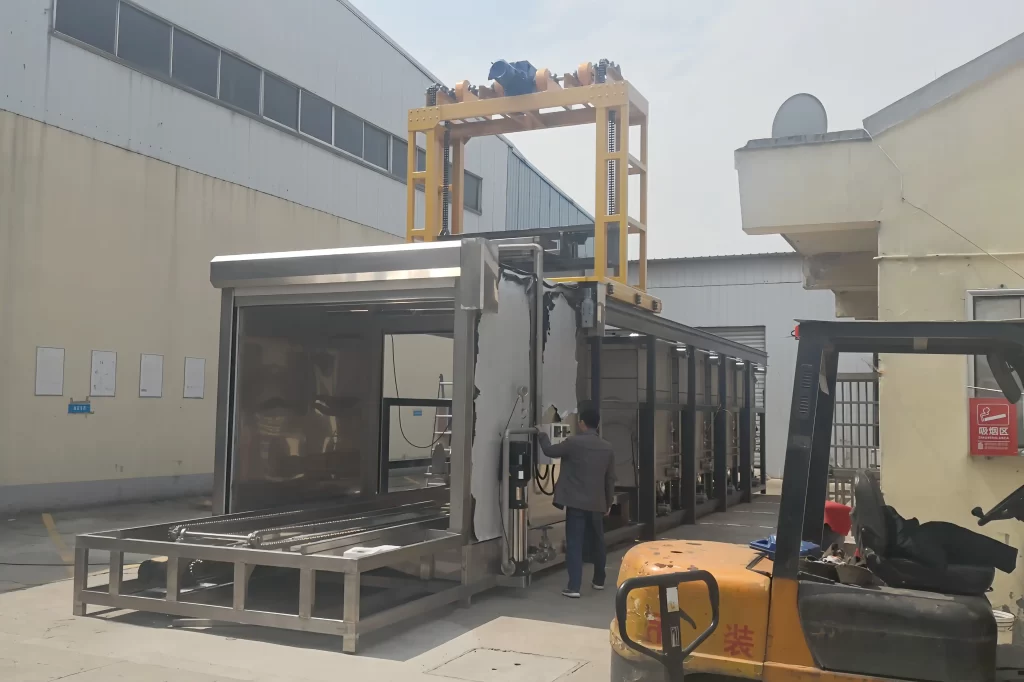
Manufacturers with strong application engineering capabilities can design systems tailored to your specific situation. This includes conveyor belt cleaning systems configured for your production line, water treatment systems sized for your throughput, and automated cleaning equipment that handles your actual parts rather than theoretical ones. If your cleaning challenges have any complexity at all, this customization capability is not optional.
What Manufacturer Selection Actually Requires
Avoiding the obvious warning signs gets you partway there, but the selection process requires more than just eliminating bad options. The goal is finding a manufacturer who will function as a technical partner rather than just a vendor.
That means looking for manufacturers who ask detailed questions about your application before proposing solutions. It means verifying their technical capabilities through customer references and, where possible, site visits. It means understanding their approach to support and their commitment to ongoing development.
If your application involves specific cleanliness requirements or unusual part geometries, discussing those details early will reveal whether a manufacturer has the engineering depth to address them. Reach out to [email protected] or +86 17768507147 to start that conversation.
How can I assess the long-term support and service quality of a cleaning equipment supplier?
Start with their service network structure. Where are their technicians located? What are their contractual response time commitments, and what happens if they miss them? Spare parts availability is critical, so ask about inventory levels and lead times for common replacement components.
Customer references provide the most useful information here. Ask specifically about service experiences, not just equipment performance. How quickly did the manufacturer respond when problems occurred? Were technicians able to diagnose and resolve issues, or did problems drag on? Training programs and warranty terms also indicate how much the manufacturer has invested in supporting equipment after the sale.
What hidden costs should I consider when evaluating cleaning equipment manufacturers?
Energy consumption is often underestimated. Get specific consumption data and calculate annual operating costs at your utility rates. Maintenance expenses depend on equipment design and the manufacturer's service pricing, so ask for a maintenance schedule and cost estimates.
Spare parts deserve particular attention. Proprietary components can be expensive and may have long lead times. Consumables add up over time, so get itemized lists and usage estimates. Finally, factor in downtime risk based on the manufacturer's service capabilities. Equipment that fails frequently or takes weeks to repair has costs that do not appear on any invoice but affect your operation significantly.
Why is a manufacturer's R&D investment crucial for industrial cleaning equipment?
R&D investment determines whether a manufacturer can solve problems that their existing product line does not address. Cleaning requirements evolve as manufacturing processes change, environmental regulations tighten, and cleanliness specifications become more demanding. A manufacturer without active R&D will eventually fall behind these changes.
More immediately, R&D capability indicates whether the manufacturer can adapt their equipment to your specific requirements. Ultrasonic cleaning systems and solvent cleaning systems both benefit from ongoing development in transducer technology, process control, and environmental compliance. Manufacturers who invest in these areas deliver equipment that performs better and remains relevant longer. If your application has any technical complexity, that development capability directly affects the results you will achieve.
If you're interested, you may want to read the following articles:
Choosing the Right Production-Line Ultrasonic Cleaning System Guide
Optimizing Industrial Cleaning to Reduce Solution Expenses
 English
  German
  Spanish
  French
  Russian
  Portuguese