
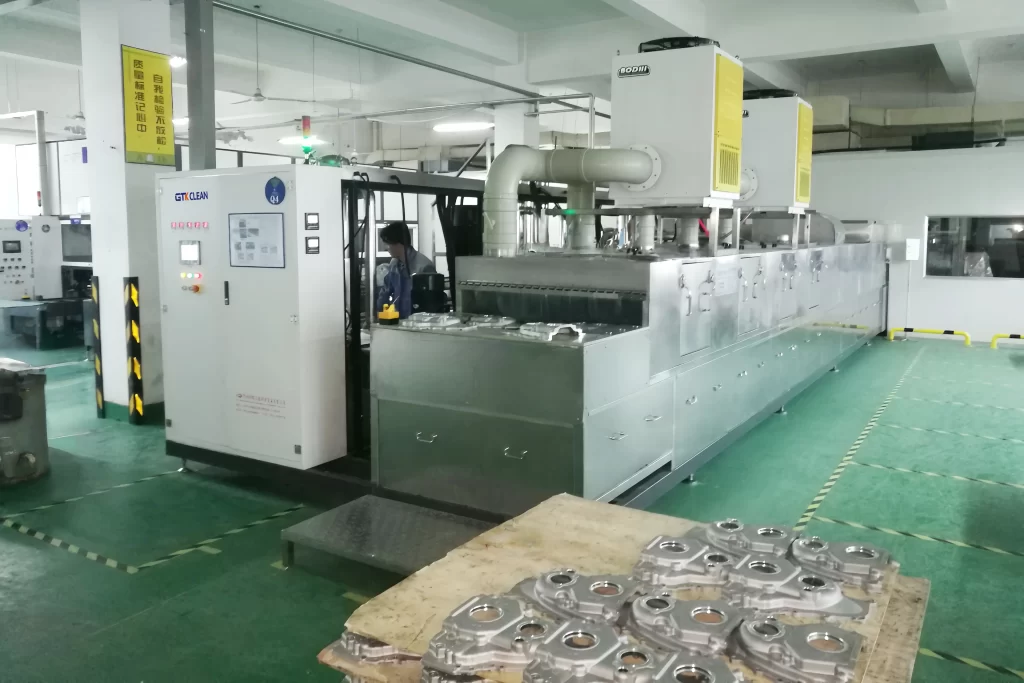
Selecting the right industrial cleaning equipment supplier determines more than equipment cost. It shapes production uptime, part quality, and whether your cleaning process becomes a bottleneck or a competitive advantage. The decision carries weight because cleaning systems sit at the intersection of chemistry, mechanical engineering, and process control, and a mismatch between system capability and production requirements creates problems that compound over years of operation.
Why the Choice of Industrial Cleaning Equipment Supplier Affects More Than Purchase Price
Industrial cleaning supports nearly every manufacturing sector where surface condition matters, from precision optics to automotive powertrain components. The industrial cleaning equipment supplier you select influences how consistently your parts meet cleanliness specifications, how much labor and consumables you spend per part, and how quickly you can adapt when production requirements change.
A supplier relationship extends beyond the initial transaction. The equipment will require calibration, maintenance, and eventually modification as your product mix evolves. Suppliers who understand this provide systems designed for serviceability and offer technical support that keeps equipment running at specification. GTKCLEAN, for example, engineers systems intended to integrate into existing production lines with minimal disruption, recognizing that installation downtime carries real cost.
The evaluation criteria for any industrial cleaning equipment supplier should include technical depth, product flexibility, quality certifications, service infrastructure, and total cost of ownership. Each of these factors deserves scrutiny before committing to a purchase.
How Technical Expertise and R&D Investment Indicate Supplier Capability
A supplier's engineering depth shows in their patent portfolio, their willingness to discuss cleaning mechanisms in detail, and their ability to propose solutions for unusual part geometries or contamination types. Suppliers who invest in research and development tend to solve problems rather than simply sell equipment.
GTKCLEAN has accumulated 28 technical patents over more than 20 years of focused R&D in industrial cleaning technology. That patent count reflects sustained investment in ultrasonic cleaning advancements and solvent cleaning system development. Patents matter because they indicate proprietary solutions, meaning the supplier has developed approaches that competitors cannot simply copy.
Technical staff depth also matters. When your process engineers need to discuss cleaning parameters, cavitation intensity, or solvent compatibility, the supplier's team should respond with specific technical guidance rather than generic recommendations.
| R&D Metric | What It Reveals | GTKCLEAN Position |
|---|---|---|
| Patents Held | Proprietary technology and innovation track record | 28 technical patents |
| R&D Investment Duration | Commitment to long-term development | 20+ years of R&D experience |
| Technical Staff | Engineering depth for custom solutions | Experienced engineers specializing in cleaning systems |
| Pilot Facilities | Ability to validate solutions before deployment | Dedicated facilities for solution development |
| Industry Recognition | External validation of performance claims | Recognized for superior cleaning performance |
What Product Range and Customization Options Should an Industrial Cleaning Solutions Supplier Offer
Cleaning requirements vary dramatically across industries and even within a single facility. A supplier with a narrow product line forces you to compromise, either accepting equipment that partially fits your needs or managing multiple vendor relationships.
A comprehensive industrial cleaning solutions supplier offers ultrasonic cleaning systems, solvent cleaning systems, conveyor belt cleaning systems, and water treatment systems. This breadth allows the supplier to recommend the technology that actually matches your contamination type and throughput requirements rather than pushing whatever they happen to manufacture.
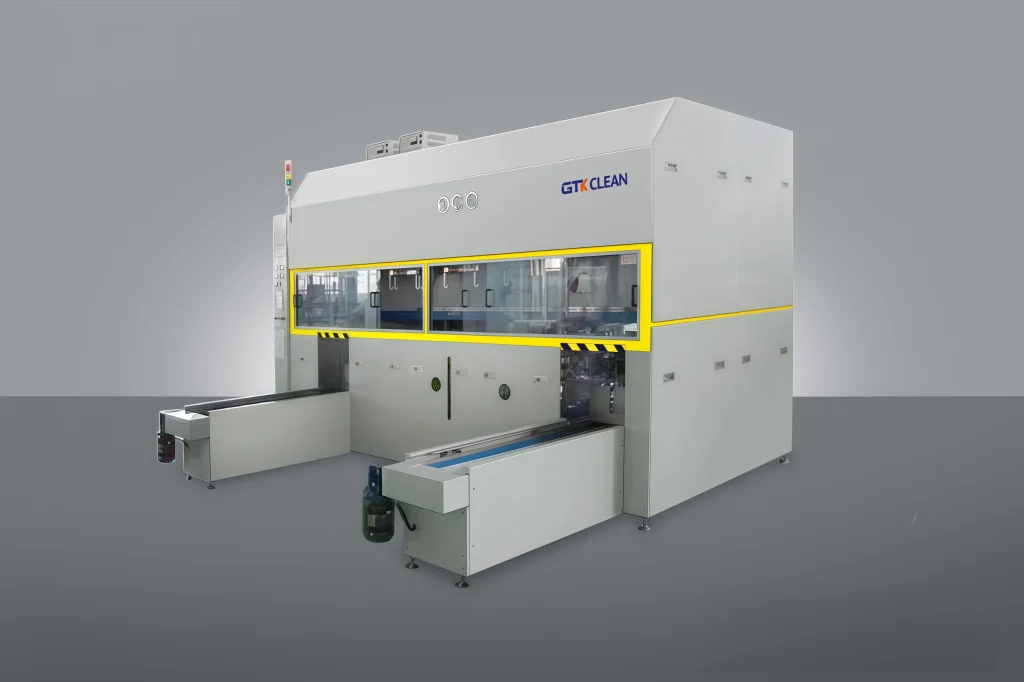
Customization separates adequate solutions from optimal ones. Part geometry, production volume, and cleanliness specifications all influence system design. GTKCLEAN's Pre PVD (Coating) Parts Ultrasonic Cleaners illustrate this principle: the systems accommodate deep holes, blind holes, and complex geometries, with layouts tailored to specific part dimensions and production capacity requirements. This level of customization ensures that the cleaning system matches the application rather than forcing the application to accommodate the equipment.
Which Quality Standards and Certifications Matter When Evaluating an Industrial Cleaning System Supplier
Certifications provide external verification that a supplier's quality claims have substance. ISO 9001 certification indicates that the supplier operates a quality management system with documented processes, internal audits, and continuous improvement mechanisms. ISO 14001 certification demonstrates environmental management practices, which increasingly matters as manufacturers face pressure to reduce chemical usage and waste generation.
Regional certifications like CE marking (for European markets) and UL certification (for North American markets) confirm that equipment meets safety and compliance requirements. These certifications are not optional for equipment deployed in regulated environments.
Quality control processes should extend from design through manufacturing and testing. A supplier who cannot describe their inspection protocols, test procedures, and acceptance criteria in detail may not have robust quality systems in place.
| Certification | What It Covers | Why It Matters for Supplier Selection |
|---|---|---|
| ISO 9001 | Quality Management Systems | Demonstrates consistent product quality and customer satisfaction focus |
| ISO 14001 | Environmental Management Systems | Shows commitment to environmental responsibility |
| CE Marking | European Conformity | Indicates compliance with EU safety, health, and environmental requirements |
| UL Certification | Safety Certification | Verifies product safety for North American markets |
| ISO 45001 | Occupational Health and Safety | Ensures safe working conditions and practices |
How After-Sales Support and Global Reach Affect Equipment Uptime
Equipment performance over its lifespan depends heavily on maintenance quality and parts availability. A supplier who sells equipment but provides minimal support leaves you dependent on third-party service providers who may lack familiarity with the specific system design.
Comprehensive after-sales service includes preventative maintenance programs, spare parts inventory, and technical support for troubleshooting. For facilities operating multiple shifts, response time matters: a cleaning system failure that takes three days to resolve costs far more in lost production than the service call itself.
Global operations require suppliers with international presence. GTKCLEAN operates in over 20 countries, providing localized support that reduces response time regardless of facility location. Their client base ranges from small companies to Global Fortune 500 corporations, indicating capability to support operations at various scales.
If your facility runs continuous production and cleaning system downtime would halt downstream operations, discussing the supplier's service level agreements and spare parts stocking policies before purchase is worth the time investment.
How to Calculate Total Cost of Ownership and ROI for Industrial Cleaning Equipment
Purchase price represents a fraction of what industrial cleaning equipment actually costs over its operational life. Energy consumption, water usage, chemical costs, maintenance labor, spare parts, and downtime all contribute to total cost of ownership.
Energy consumption varies significantly between system designs. Ultrasonic systems with efficient transducer arrays consume less power per cleaning cycle than older designs. Solvent systems with closed-loop recovery reduce chemical consumption and disposal costs.
GTKCLEAN's Pre PVD (Coating) Parts Ultrasonic Cleaners incorporate circulation filtration systems that extend cleaning solution life, directly reducing water and detergent consumption. This design choice illustrates how engineering decisions affect operating costs: a system that costs more initially but uses 30% less consumables may deliver better ROI over a five-year period.
When evaluating suppliers, request data on energy consumption per cycle, expected maintenance intervals, and consumable usage rates. Suppliers who provide this information transparently enable accurate ROI calculations. Suppliers who cannot provide this data may not have measured it, which raises questions about their engineering rigor.
What Automation and Integration Capabilities Should Modern Industrial Cleaning Systems Include
Automation reduces labor costs, improves consistency, and enables higher throughput. Manual loading and unloading creates bottlenecks, introduces variability, and exposes operators to cleaning chemicals.
Modern industrial cleaning systems should include programmable logic controllers (PLCs) with touchscreen interfaces, automatic fault diagnostics, and integration capability with plant-level control systems. GTKCLEAN systems use Siemens or Mitsubishi PLCs with color touchscreen HMI, providing operators with clear status information and maintenance alerts.
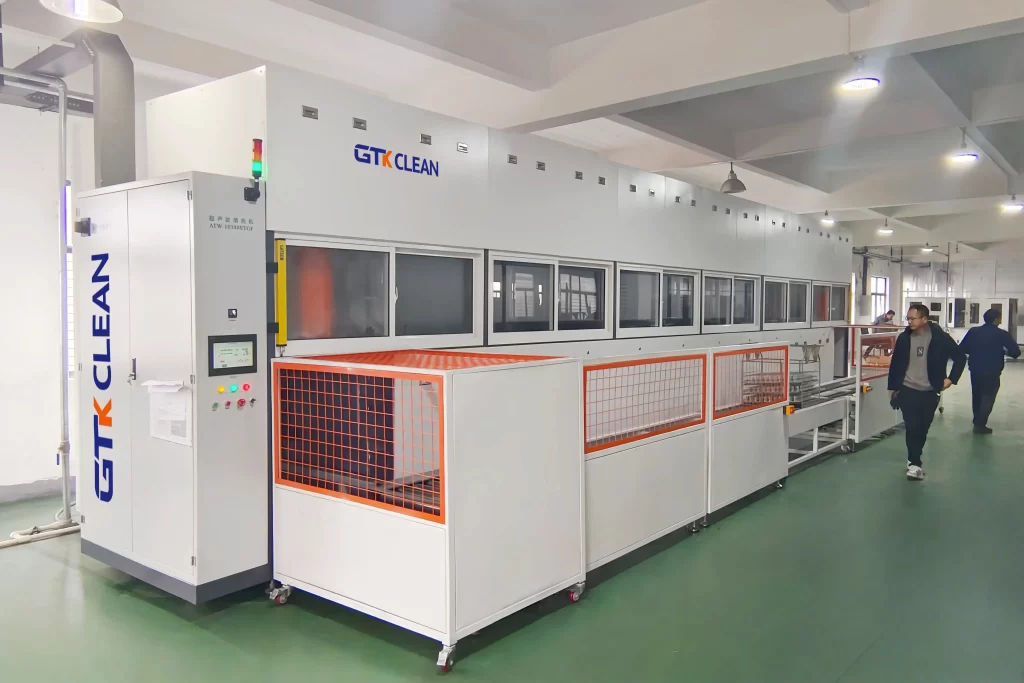
Conveyor integration enables continuous processing without manual intervention. GTKCLEAN's CNC Aluminum Shell Inline Cleaners feature continuous conveyor systems with fully automatic loading and unloading, reducing labor requirements while maintaining consistent cleanliness standards across high-volume production.
For facilities pursuing smart manufacturing initiatives, cleaning system data integration matters. Systems that log cycle parameters, cleaning solution condition, and maintenance events provide data for process optimization and traceability requirements.
Building a Supplier Relationship That Supports Long-Term Manufacturing Goals
The industrial cleaning equipment supplier you select becomes a long-term partner in your manufacturing operations. Equipment will require service, processes will evolve, and new cleaning challenges will emerge as your product mix changes.
A thorough evaluation process, covering technical capabilities, product range, quality certifications, after-sales support, total cost of ownership, and automation features, identifies suppliers capable of supporting both immediate needs and future requirements. This assessment protects your capital investment and positions your cleaning operations to support rather than constrain manufacturing growth.
To discuss your specific cleaning requirements and explore how GTKCLEAN's solutions might address them, contact Suzhou Grintek Environmental Technology Co., Ltd. at +86 17768507147 or [email protected].
Frequently Asked Questions About Industrial Cleaning System Suppliers
Which certifications indicate a reliable industrial cleaning system supplier?
ISO 9001 certification confirms quality management systems are in place, while ISO 14001 indicates environmental management practices. Regional certifications like CE marking (for European deployment) and UL certification (for North American markets) verify safety compliance. A supplier holding multiple relevant certifications demonstrates commitment to both product quality and regulatory adherence.
What factors should I include when calculating long-term equipment costs?
Total cost of ownership includes energy consumption per cycle, water and chemical usage rates, maintenance labor and spare parts costs, and production losses during downtime. Request specific consumption data from suppliers and calculate costs over a five to ten year period. A system with higher purchase price but lower operating costs often delivers better financial returns.
How does automation improve industrial cleaning system performance?
Automated systems reduce labor requirements, eliminate variability from manual handling, and enable higher throughput through continuous operation. Features like automatic loading and unloading, PLC-based process control, and integrated fault diagnostics improve consistency while reducing operator exposure to cleaning chemicals. Automation also generates process data that supports quality traceability and continuous improvement initiatives. If your production volume justifies the investment, automation typically pays back through reduced labor costs and improved first-pass yield.
If you're interested, you may want to read the following articles:
Industrial Ultrasonic Cleaning Systems: The Complete Guide
Aerospace Part Cleaning Solutions - GTK
Industrial Cleaning System ROI: Calculating Your Investment Return
Semi-Automated Ultrasonic Cleaning for Medium-Volume Production
 English
  German
  Spanish
  French
  Russian
  Portuguese