
Cleanroom cleaning equipment selection is one of those decisions that looks straightforward on paper but gets complicated fast once you start matching specifications to actual operating conditions. The equipment you choose directly affects contamination control, regulatory audit outcomes, and whether your production line runs smoothly or grinds to a halt over preventable quality failures. Seven factors consistently determine whether a cleanroom cleaning system performs as needed or becomes an expensive source of problems.
What Your ISO Classification Actually Demands from Cleaning Equipment
The ISO 14644-1 classification of your cleanroom sets hard limits on what cleaning equipment can accomplish and what it must accomplish. An ISO Class 5 environment permits far fewer airborne particles per cubic meter than an ISO Class 7 facility, and that gap translates directly into equipment requirements, cleaning frequencies, and validation protocols.
Particle contamination typically originates from three sources: personnel movement, process byproducts, and infiltration from adjacent spaces. Microbial contamination adds another layer in pharmaceutical and biotechnology settings, where cleaning protocols must incorporate sterilization steps. Electronics manufacturing introduces electrostatic discharge concerns, since static charges attract particles and can damage sensitive components. Equipment destined for ESD-sensitive areas needs static-dissipative materials throughout its construction.
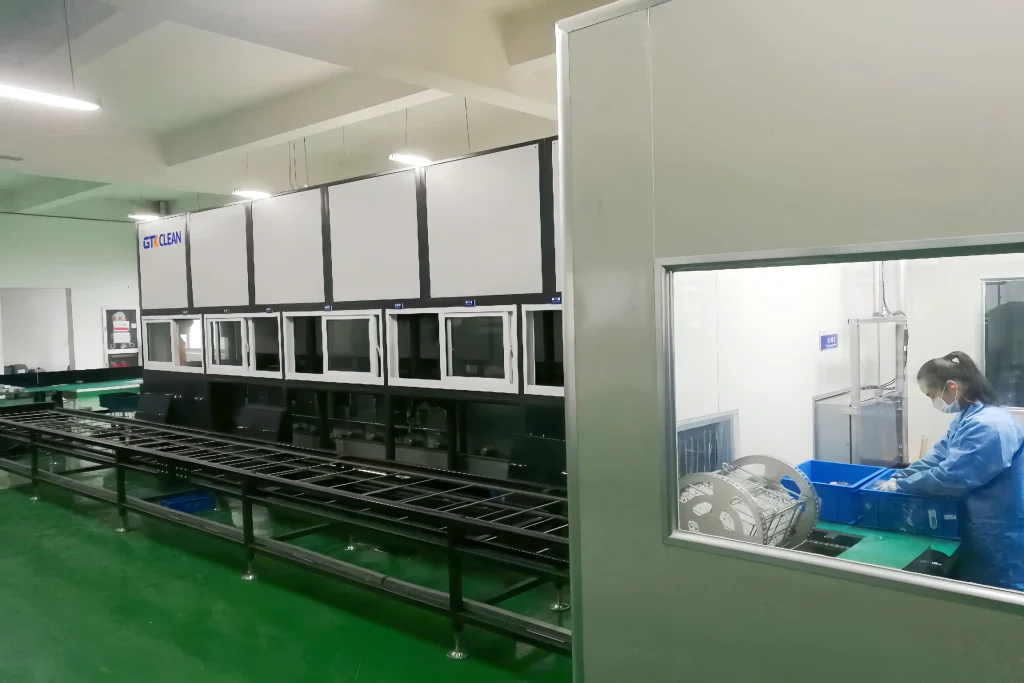
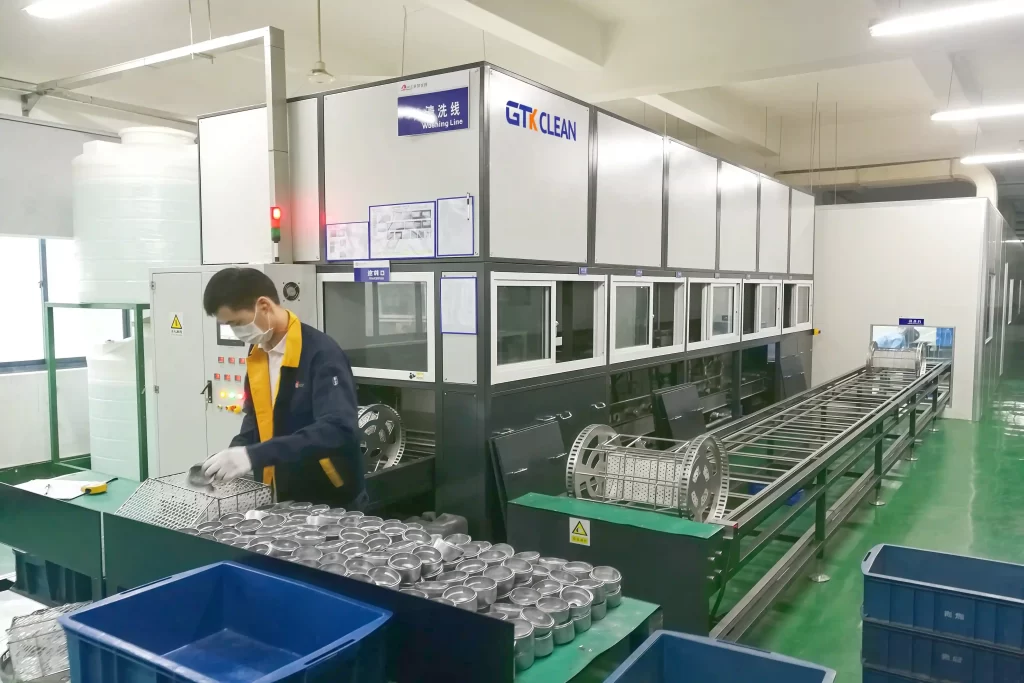
Pre PVD (Coating) Parts Ultrasonic Cleaners illustrate how equipment specifications align with classification demands. Their multi-stage cleaning process, including hydrojet spray, ultrasonic cleaning, and multi-stage ultrapure water rinsing, maintains conductivity at or below 0.06 μS/cm. That level of control prevents water spots and secondary contamination, which matters enormously when you are trying to maintain cleanroom integrity through the cleaning process itself rather than introducing new problems.
| ISO Class (US FED STD 209E Equivalent) | Particle Size (µm) | Max Particles/m³ (≥0.1µm) | Typical Industries & Contaminants |
|---|---|---|---|
| ISO 1 (Class 1) | 0.1 | 10 | Microelectronics, Nanotechnology |
| ISO 5 (Class 100) | 0.3 | 10,200 | Aseptic Filling, Medical Devices |
| ISO 7 (Class 10,000) | 0.5 | 352,000 | Pharmaceutical Compounding, Optics |
| ISO 8 (Class 100,000) | 5.0 | 29,300,000 | General Manufacturing, Packaging |
Why Material Compatibility Failures Create Contamination You Cannot See
The materials in your cleaning equipment and consumables interact with cleanroom surfaces in ways that either preserve or undermine contamination control. Abrasive cleaning pads scratch polished floors, and those scratches become particle accumulation sites that resist subsequent cleaning. Cleaning solutions that react with wall coatings or floor finishes create degradation products that enter the air handling system.
Non-shedding materials matter for every component that contacts cleanroom surfaces, from wheels to wiping surfaces. Industrial washing baskets demonstrate this principle in practice. Stainless steel, PP, PVDF, and PTFE each offer specific combinations of durability, chemical resistance, and non-shedding properties suited to particular cleaning media and workpiece types. The right basket material prevents collisions, shifting, and damage during ultrasonic, spray, or high-pressure cleaning cycles.
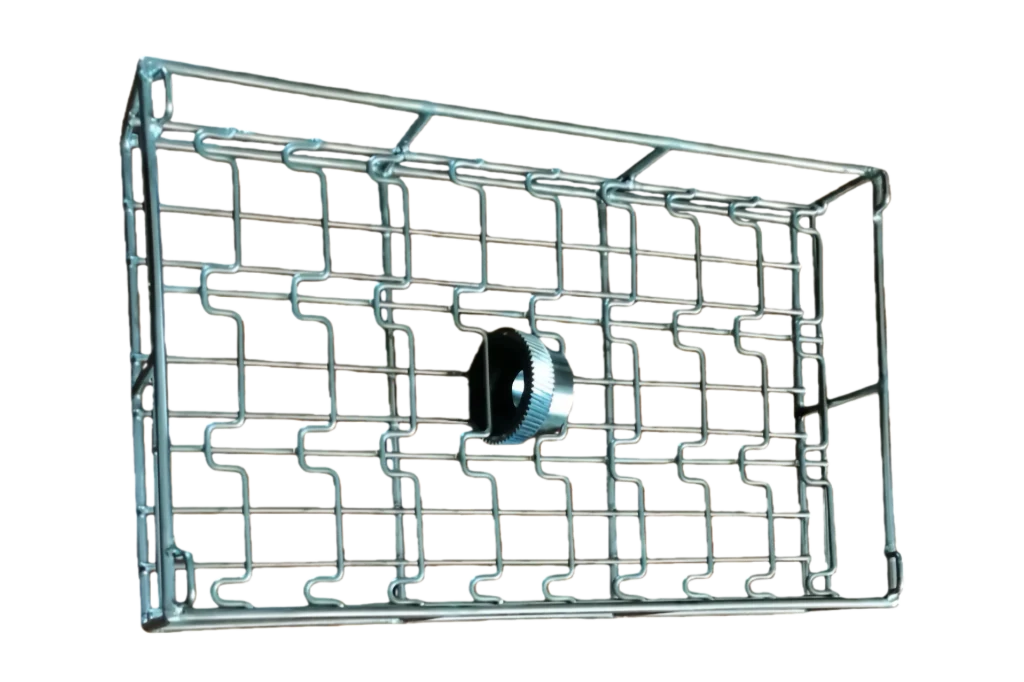
Chemical resistance becomes especially important when equipment contacts strong disinfectants or solvents. A basket that performs well with aqueous cleaners may degrade rapidly in hydrocarbon solvent systems, releasing particles or creating surface irregularities that trap contaminants on the very parts you are trying to clean.
How Automation Addresses the Human Error Problem in Cleanroom Cleaning
Manual cleaning introduces variability that automated systems eliminate. Human operators, regardless of training quality, produce inconsistent results across shifts, days, and personnel changes. Automated cleaning solutions execute identical routines every cycle, which matters for both contamination control and compliance documentation.
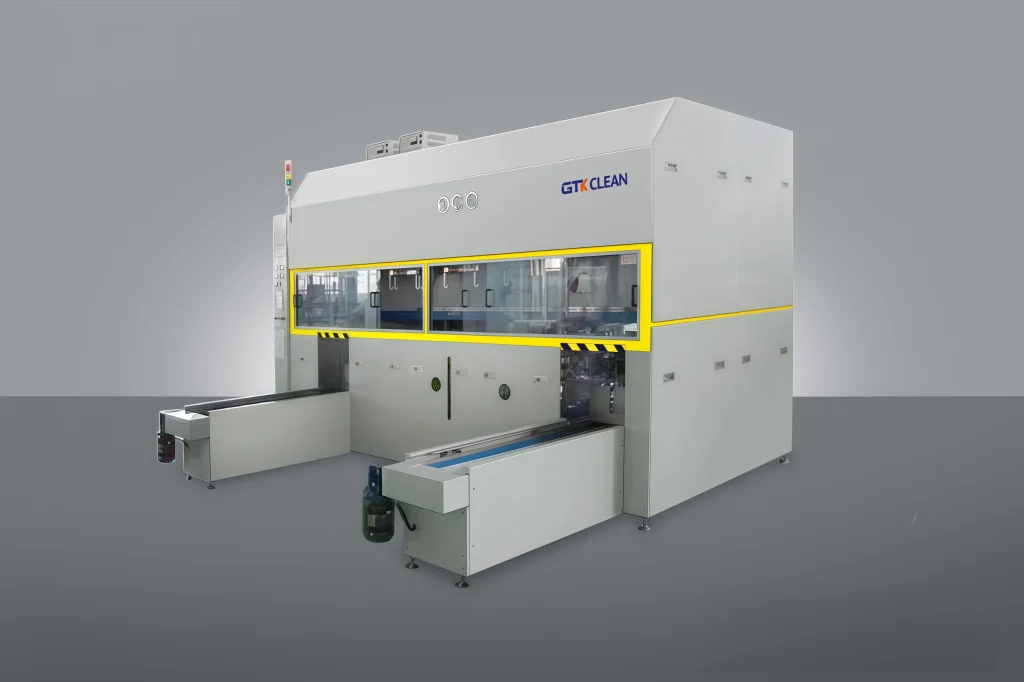
CNC Aluminum Shell Inline Cleaners use continuous conveyor systems for automated cleaning, rinsing, and drying of die-cast aluminum shells. Multi-directional spray nozzles eliminate release agents, cutting oils, and other contaminants without dead angles, achieving high throughput with minimal manual intervention. This approach removes the operator variability that makes manual cleaning results unpredictable.
Ultrasonic cleaning systems and solvent cleaning systems integrated into automated workflows handle intricate parts with blind holes or complex geometries more effectively than manual methods. The physics of ultrasonic cavitation reaches surfaces that brushes and sprays cannot access, and automated process control ensures consistent exposure times and temperatures. Automated systems also generate verifiable data logs that simplify compliance reporting, since auditors can review actual process parameters rather than relying on operator attestations.
If your cleanroom handles high-value components where contamination failures create significant scrap costs, discussing automation options with equipment suppliers before committing to manual systems is worth the time investment.
What Validation Requirements Mean for Equipment Selection
FDA, GMP, and ISO 14644 requirements dictate not just cleanliness levels but also equipment design, operation, and maintenance protocols. Equipment validation demonstrates that cleaning systems consistently perform as intended, which requires detailed documentation through installation qualification, operational qualification, and performance qualification phases.
Multi-Tank Hydrocarbon Ultrasonic Cleaners incorporate features that support validation requirements: automated controls, recirculation filtration, and safety systems that produce auditable records. Intelligent control interfaces using Siemens or Mitsubishi PLCs with color touchscreens provide automatic alarms and fault diagnostics, which simplifies both compliance documentation and troubleshooting when something goes wrong.
Quality assurance personnel need evidence that cleaning equipment contributes to maintaining specified cleanroom conditions. Equipment that generates this evidence automatically, rather than requiring manual logging, reduces the documentation burden while improving data reliability. The difference between equipment designed for validation and equipment adapted for validation often shows up during audits, when inspectors ask questions about process control that some systems cannot answer.
Where Ergonomics and Safety Affect Cleaning Consistency
Operator fatigue and discomfort create contamination risks that equipment design can either minimize or amplify. Lightweight tools, adjustable handles, and intuitive controls reduce physical strain, which means operators maintain proper technique throughout their shifts rather than cutting corners as fatigue accumulates.
Safety features protect both personnel and cleanroom integrity. Emergency stops, protective guards, and clear operating instructions prevent accidents that could introduce contamination through spilled chemicals, damaged equipment, or emergency response activities. Comprehensive training programs ensure personnel understand proper equipment usage, cleaning protocols, and the importance of maintaining cleanroom conditions. This training extends to correct PPE usage, since improperly worn protective equipment can itself become a contamination source.
Organizations that treat ergonomics and safety as secondary concerns often discover that their cleaning quality varies significantly across shifts and operators, with the variation traceable to physical demands that some personnel handle better than others.
How Total Cost of Ownership Changes Equipment Decisions
Initial purchase price tells you almost nothing about what cleanroom cleaning equipment will actually cost over its operational life. Total cost of ownership includes acquisition, ongoing maintenance, energy consumption, consumables, and labor. High-quality industrial cleaning equipment often carries higher upfront costs but delivers lower TCO through increased durability, reduced maintenance requirements, and greater energy efficiency.
Advanced filtration and circulation systems extend cleaning fluid life, reducing consumption of expensive detergents and water. Heavy-Duty Automated Ultrasonic Cleaners, built for workpieces up to 2000 kg and optimized for high-volume industrial cleaning, demonstrate how robust construction minimizes downtime and ensures consistent cleanliness across extended production runs.
| Factor | Initial Cost | Maintenance | Energy Use | Consumables | Labor | Lifespan | ROI Impact |
|---|---|---|---|---|---|---|---|
| High-Quality Automated | High | Low | Low | Moderate | Low | Long | High |
| Standard Manual | Low | Moderate | Low | High | High | Medium | Moderate |
| Entry-Level Manual | Very Low | High | Very Low | Very High | Very High | Short | Low |
A cost-benefit analysis should consider equipment lifespan, upgrade potential, and impact on operational efficiency and product yield. Equipment that seems expensive at purchase often proves economical when you factor in reduced labor costs, lower consumable consumption, and fewer contamination-related production losses.
Putting These Factors Together for Your Cleanroom
Effective cleanroom cleaning equipment selection integrates all seven factors rather than optimizing for one or two in isolation. Understanding your cleanroom classification establishes baseline requirements. Material compatibility prevents the cleaning process from creating new contamination. Automation reduces human variability and generates compliance documentation. Validation support simplifies regulatory interactions. Ergonomics and safety maintain consistent cleaning quality across shifts. Total cost of ownership reveals the true economics of equipment choices.
The organizations that maintain cleanroom performance over time are typically those that evaluate equipment against all these factors before purchase, rather than discovering gaps after installation. To discuss specific cleanroom cleaning requirements, contact GTK at [email protected] or +86 17768507147.
Frequently Asked Questions About Cleanroom Cleaning Equipment
Which factors matter most when selecting cleanroom cleaning equipment?
The cleanroom's ISO classification and the types of contaminants present establish your baseline requirements. Material compatibility determines whether equipment will degrade surfaces or introduce particles. Automation potential affects both contamination control and compliance documentation. Regulatory standards dictate validation requirements. Operator safety influences cleaning consistency. Total cost of ownership reveals actual economics over the equipment's lifespan. Prioritizing any single factor while ignoring others typically creates problems that surface during operation or audits.
How does automated cleaning equipment improve cleanroom efficiency and compliance?
Automated cleaning equipment reduces manual labor and eliminates the variability that human operators introduce. Consistent cleaning protocols mean predictable contamination control results. For compliance purposes, automated systems generate verifiable data logs showing actual process parameters, which auditors prefer over manual documentation. Repeatable processes also simplify validation, since you can demonstrate consistent performance across multiple qualification runs.
What are the long-term cost implications of investing in high-quality cleanroom cleaning technology?
High-quality cleanroom cleaning technology typically reduces long-term costs through lower labor expenses, decreased consumable consumption, extended cleanroom material lifespan, and fewer contamination incidents or compliance failures. The initial investment is higher, but the return comes from enhanced efficiency and reduced risk. Organizations that focus only on purchase price often discover that maintenance costs, consumable consumption, and contamination-related losses exceed the savings from cheaper equipment.
If you're interested, you may want to read the following articles:
Pre-Coating Cleaning Solutions for PVD - GTK
Automated Tunnel Cleaner
Industrial Cleaning System ROI: Calculating Your Investment Return
Industrial Cleaning Baskets: Why They Matter for Your Parts Washing Efficiency
 English
  German
  Spanish
  French
  Russian
  Portuguese