
FDA compliance for medical instruments comes down to one thing: can you prove your cleaning process removes what it needs to remove, every single time? Patient safety depends on it, and so does your ability to operate without regulatory interference. The cleaning protocols that healthcare facilities and device manufacturers implement are not bureaucratic exercises. They are the barrier between a sterile surgical field and a contaminated one. When those protocols fail, the consequences cascade quickly—infections, device failures, warning letters, recalls, and the kind of reputational damage that takes years to repair.
The regulatory framework here is layered. The FDA requires that medical devices be safe and effective for their intended use, which includes being properly cleaned before sterilization or reuse. 21 CFR Part 820, the Quality System Regulation, lays out current good manufacturing practice requirements that apply directly to cleaning validation. AAMI standards and ISO 17664 fill in the operational details, particularly around how devices should be classified based on patient contact. A device that enters sterile tissue or the vascular system—a critical device—demands the most rigorous reprocessing. Semi-critical devices that contact mucous membranes require high-level disinfection. Non-critical devices that touch only intact skin need less intensive treatment. The classification determines the protocol, and the protocol must be validated.
What the FDA actually expects from your cleaning validation
The FDA does not prescribe a single cleaning method. What it does require is that manufacturers provide clear, comprehensive, and validated instructions for use. Those IFUs must cover the entire reprocessing sequence: pre-cleaning, manual cleaning, automated cleaning, rinsing, and drying. Each step needs to be validated for the specific device—its materials, its geometry, its intended use. A lumen that cannot be brushed requires a different approach than a flat surgical instrument. A device with blind holes needs ultrasonic cleaning to reach surfaces that manual scrubbing cannot touch.
The validation itself must demonstrate that the cleaning process consistently removes contaminants to acceptable levels. This is not a one-time exercise. Process validation requires documented evidence that the cleaning parameters—temperature, time, detergent concentration, mechanical action—produce repeatable results across multiple cycles and multiple devices. The FDA expects to see this documentation during inspections, and it expects the documentation to be current.
| Device Classification | Patient Contact | Required Reprocessing Level |
|---|---|---|
| Critical | Enters sterile tissue or vascular system | Sterilization |
| Semi-critical | Contacts mucous membranes or non-intact skin | High-level disinfection |
| Non-critical | Contacts intact skin only | Low-level disinfection |
How a compliant cleaning protocol actually works in practice
The sequence matters. Pre-cleaning happens at the point of use, before organic material has a chance to dry onto instrument surfaces. Dried blood and tissue are significantly harder to remove than fresh contamination, so wiping down instruments and rinsing them under cold water immediately after use is not optional—it is the foundation of everything that follows.
Disassembly comes next for complex instruments. If a device has removable parts, those parts must be separated according to the manufacturer's IFU. Cleaning solutions cannot reach surfaces that are still assembled together, and surfaces that are not reached are not cleaned.
Manual cleaning with enzymatic detergents and appropriate brushes addresses the bulk of residual soil. This step is particularly important for instruments with lumens, hinges, or textured surfaces where automated cleaning alone may not provide sufficient mechanical action. The brushes must be sized correctly for the lumens they enter, and the detergent must be compatible with the device materials.
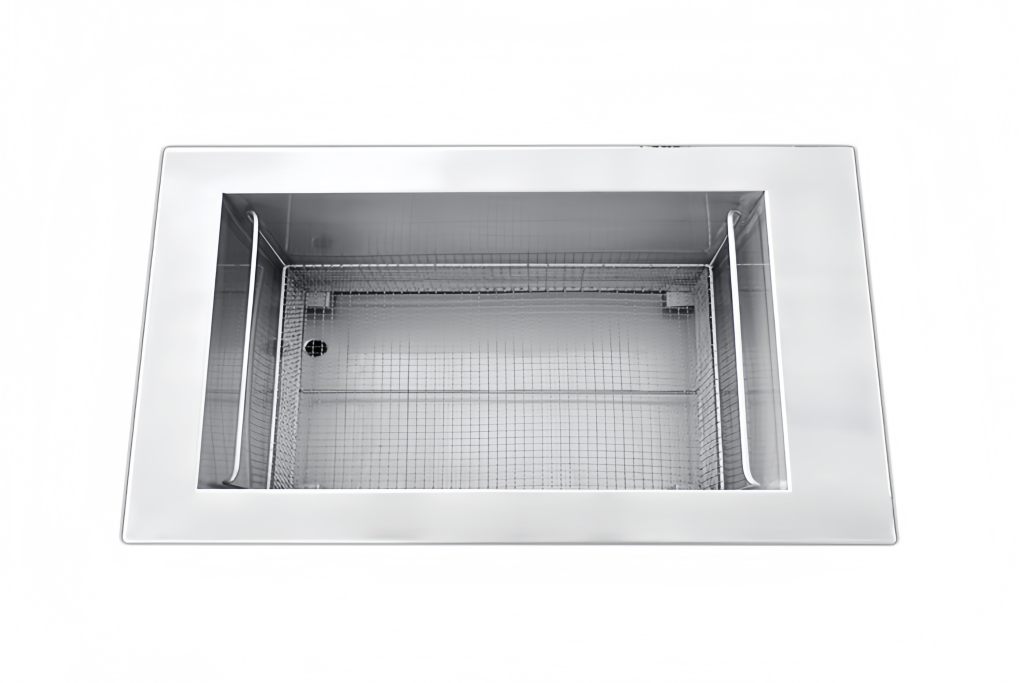
Automated cleaning follows manual cleaning in most protocols. Ultrasonic cleaning uses high-frequency sound waves—typically 25 to 45 kHz—to create cavitation bubbles in the cleaning solution. When those bubbles collapse, they generate localized energy that dislodges microscopic particles from surfaces, including recesses and blind holes that brushes cannot reach. Washer-disinfectors combine hot water, detergent, and mechanical action to clean and thermally disinfect instruments in a controlled, repeatable cycle.
Rinsing with treated water removes detergent residues and loose debris. The water quality matters here. Deionized or reverse osmosis water prevents mineral deposits and eliminates impurities that could interfere with sterilization or cause adverse patient reactions. Tap water is not acceptable for final rinse cycles.
Drying must be complete before packaging. Moisture left on instruments compromises sterility and promotes microbial growth. Hot air drying or vacuum drying are standard methods, and the drying cycle must be validated along with the rest of the process.
Where automated cleaning systems make the difference
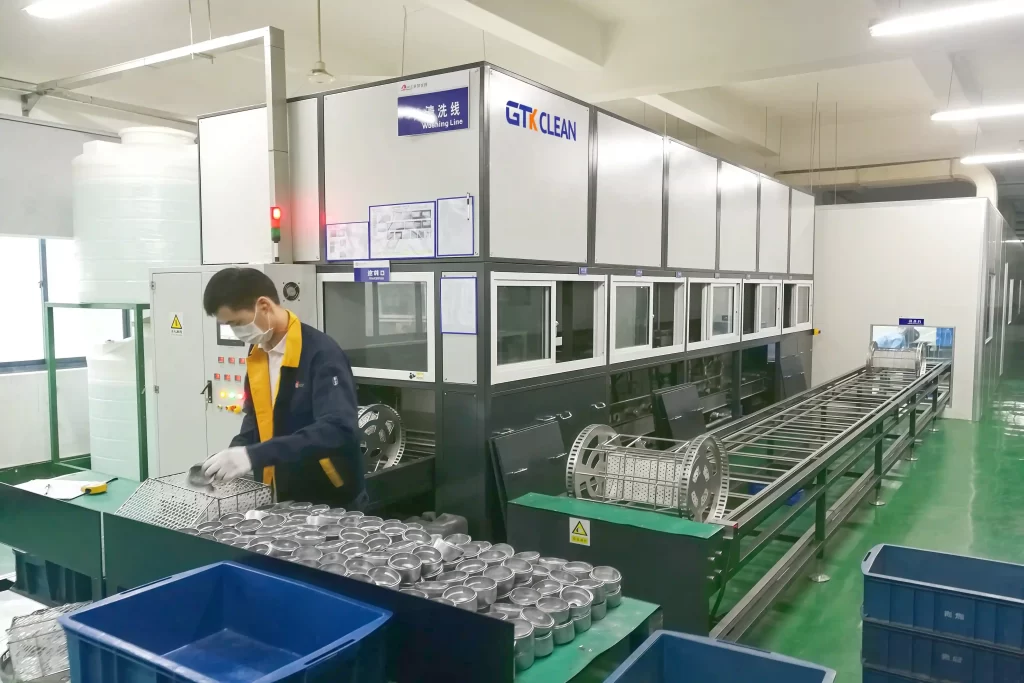
Manual cleaning introduces variability. Different technicians apply different amounts of pressure, spend different amounts of time on each instrument, and miss different spots. Automated systems eliminate most of that variability by controlling the parameters that matter: temperature, cycle time, detergent concentration, and mechanical action. They also provide something manual cleaning cannot—traceability.
Modern automated cleaning systems log every cycle. They record the parameters used, the duration, and any deviations from the validated process. That data is essential for audits. When an FDA inspector asks how you know your cleaning process is working, the answer is in the logs.
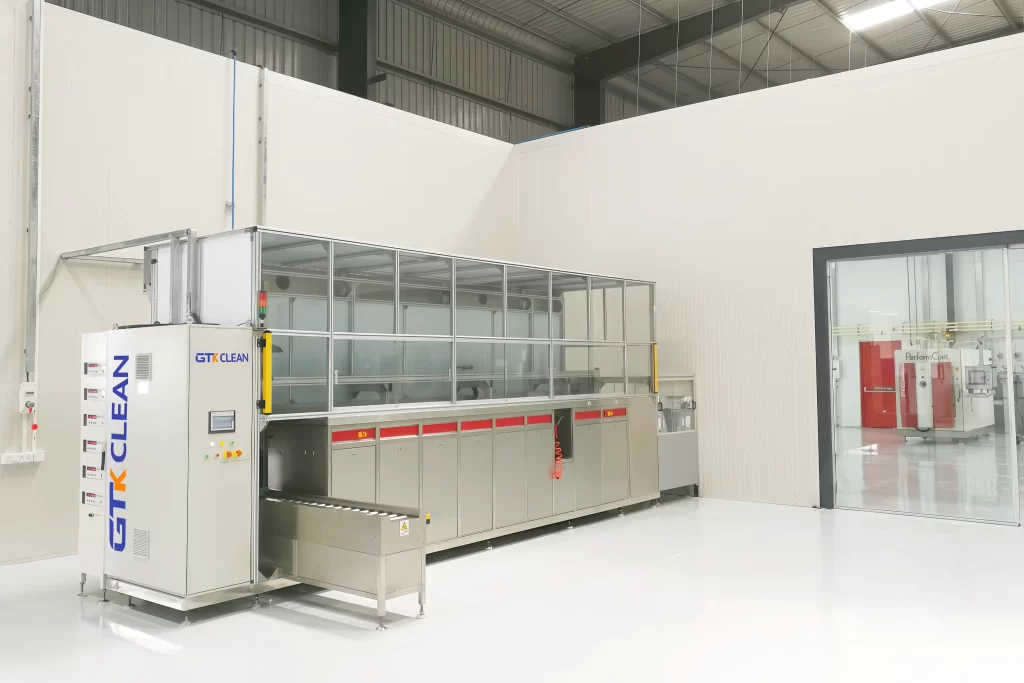
Ultrasonic cleaning is particularly effective for precision parts with complex geometries. The cavitation effect reaches surfaces that no brush can access, and the process is consistent across every cycle. For devices contaminated with stamping oils or machining fluids, hydrocarbon solvent cleaning offers superior degreasing performance. Systems that integrate ultrasonic cleaning, vacuum vapor cleaning, and drying in a single automated cycle can handle high-volume production while maintaining the cleanliness standards that FDA compliance requires.
Multi-tank hydrocarbon ultrasonic cleaners provide 360-degree cleaning for recessed and blind-hole stamped parts, operating at temperatures optimized for maximum solubility with specific contaminants. Single-station systems that combine ultrasonic cleaning, vapor degreasing, and vacuum drying can process batches up to 200 kg with cycle times of 8 to 15 minutes. These systems are designed for precision hardware, CNC machined parts, and the kind of complex geometries that manual cleaning simply cannot address consistently.
Why validation and monitoring are not separate from cleaning
Validation proves that your cleaning process works. Monitoring proves that it continues to work. Documentation proves both to the FDA.
Process validation for cleaning medical devices requires demonstrating that the validated parameters consistently remove contaminants to acceptable levels. This typically involves testing with worst-case soils, worst-case device configurations, and worst-case process conditions. If the process works under those conditions, it should work under normal conditions.
Routine monitoring includes checking water quality, verifying detergent concentration, and confirming that equipment is functioning within validated parameters. Ultrasonic cleaners need periodic cavitation testing to ensure the transducers are still generating adequate energy. Washer-disinfectors need temperature verification and cycle time confirmation. These checks are not optional—they are the ongoing evidence that your validated process remains valid.
The documentation requirements are extensive. Validation protocols, validation reports, routine monitoring logs, equipment maintenance records, staff training records, and deviation investigations all need to be maintained and accessible. A quality management system that integrates these elements with risk assessment provides the structure for continuous compliance. If your cleaning process is producing results outside validated parameters, you need to know immediately, and you need a documented process for investigating and correcting the deviation.
What happens when cleaning protocols fail
The regulatory consequences of non-compliance are significant. Warning letters, consent decrees, product recalls, and substantial fines are all on the table. But the regulatory consequences are not the worst outcome. The worst outcome is a patient who develops a surgical site infection because an instrument was not properly cleaned. The worst outcome is a device that malfunctions during a procedure because residual contamination interfered with its function.
Healthcare-associated infections are not abstract risks. They are measurable events with measurable costs—extended hospital stays, additional treatments, and in some cases, permanent harm or death. When those infections can be traced back to inadequate reprocessing, the legal and reputational consequences follow.
Continuous improvement in cleaning protocols requires ongoing staff training, regular equipment maintenance, and systematic review of cleaning outcomes. When new devices are introduced, their cleaning requirements need to be validated. When cleaning agents or equipment change, the process needs to be revalidated. When regulatory standards evolve, protocols need to be updated. Internal audits identify gaps before FDA inspections find them.
Frequently Asked Questions About FDA-Compliant Medical Instrument Cleaning
How frequently should cleaning protocols be reviewed to maintain FDA compliance?
Annual review is the minimum. Any change in regulations, instrument design, cleaning agents, or equipment should trigger an immediate review. Waiting for the annual cycle when a significant change has occurred is a compliance gap. The goal is to ensure that validated processes remain valid under current conditions, and conditions change more often than once a year in most facilities.
What role does water quality play in achieving FDA standards for medical device reprocessing?
Water quality directly affects cleaning outcomes. Impurities in water can leave residues on instruments, cause corrosion, or introduce microbial contamination. Deionized or reverse osmosis water removes minerals and particulates that tap water contains. For final rinse cycles, treated water is not a preference—it is a requirement for consistent results.
Can manual cleaning alone meet FDA requirements for all types of medical instruments?
For simple, non-critical devices with accessible surfaces, manual cleaning may be sufficient. For complex or critical devices—particularly those with lumens, hinges, or blind holes—manual cleaning alone cannot consistently meet FDA requirements. Automated cleaning provides the thoroughness, consistency, and documentation that complex devices require.
What distinguishes cleaning, disinfection, and sterilization under FDA guidelines?
Cleaning removes visible soil and organic material. It is the prerequisite for everything that follows. Disinfection eliminates most pathogenic microorganisms but does not destroy bacterial spores. Sterilization destroys all forms of microbial life, including spores. FDA guidelines specify which level is required based on device classification and intended use. Each step builds on the previous one—sterilization cannot compensate for inadequate cleaning.
If your current cleaning processes are not delivering the consistency and documentation that FDA compliance requires, it is worth evaluating whether your equipment and protocols are matched to your actual device portfolio. Contact us at [email protected] or +86 17768507147 to discuss specific requirements.
If you're interested, you may want to read the following articles:
Automated Ultrasonic Cleaning: Elevating Industrial Process Consistency
Choosing a Reliable Ultrasonic Equipment Manufacturer: A Strategic Guide
Optimizing Industrial Cleaning to Reduce Solution Expenses
Selecting Conveyor Cleaning Systems for Continuous Production
Automated Cleaning Equipment: A Beginner’s Industrial Guide
 English
  German
  Spanish
  French
  Russian
  Portuguese