
Keeping industrial cleaning equipment in working order is less about following a checklist and more about understanding what actually wears out, when, and why. After two decades of designing and deploying these systems at GTKCLEAN, I can tell you that the difference between a machine that runs reliably for fifteen years and one that becomes a maintenance headache within five usually comes down to how well the operator understands the equipment's failure modes. Industrial cleaning equipment maintenance is not a cost center when done correctly. It is the mechanism that protects your throughput and your parts quality.
Why Preventive Maintenance Schedules Actually Work
Preventive maintenance schedules exist because cleaning equipment fails in predictable ways. Ultrasonic transducers lose efficiency gradually as piezoelectric ceramics age. Solvent systems accumulate contaminants that degrade cleaning power before anyone notices a visible problem. Conveyor belt cleaners develop misalignment that worsens with each cycle until nozzle coverage becomes inconsistent.
The value of scheduling lies in catching these degradation curves before they cross into failure territory. For ultrasonic cleaning systems, this means regular checks of transducer integrity and tank cleanliness, typically every 500 operating hours or monthly, whichever comes first. Solvent cleaning systems demand consistent solvent quality monitoring because dissolved contaminants reduce solvency long before the fluid looks dirty. Conveyor belt cleaning systems benefit from routine inspection of belt tension and nozzle alignment, since a 2mm drift in nozzle position can create uncleaned zones across an entire batch.
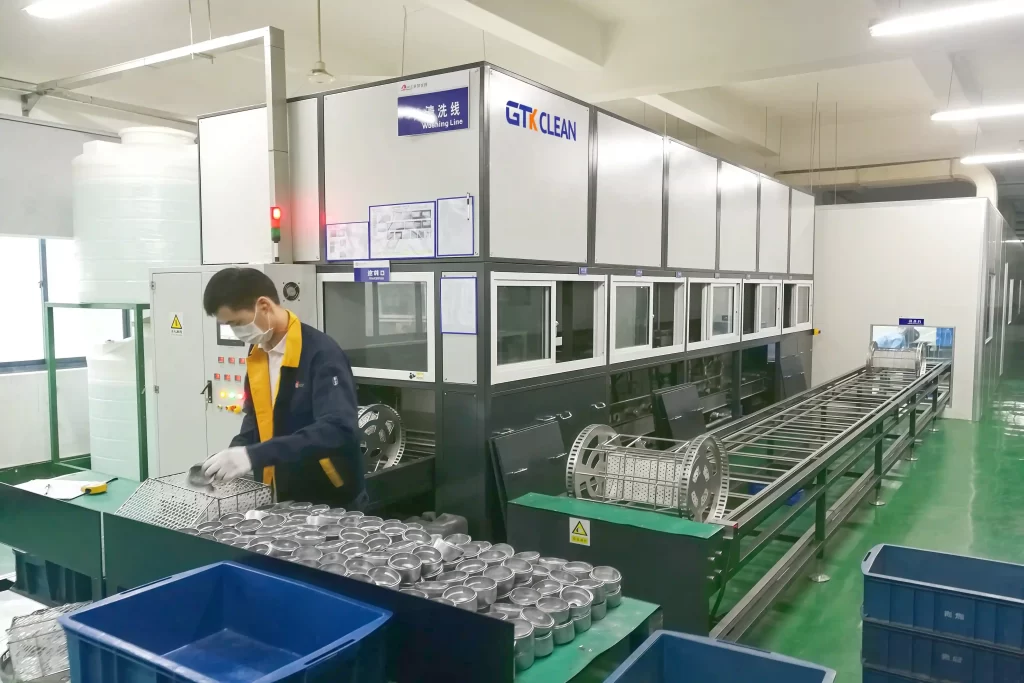
Predictive maintenance techniques add another layer of precision. Vibration analysis for motors catches bearing wear weeks before failure. Fluid analysis for hydraulic systems identifies contamination that visual inspection misses. Our automated multi-stage ultrasonic degreasing units for CNC machined parts incorporate sensors that track these parameters continuously, but even simpler systems benefit from periodic manual checks.
The real return on preventive maintenance shows up in avoided costs. Unscheduled downtime on a production cleaning line typically runs 5-10x the cost of scheduled maintenance, once you factor in expedited parts, overtime labor, and production delays.
Matching Cleaning Solutions to Equipment Materials
Cleaning solution compatibility is where I see the most avoidable damage. The wrong chemistry does not just clean poorly. It actively destroys equipment.
Stainless steel tanks and pipes, typically SUS304 or SUS316, handle alkaline, neutral, and mild acid solutions without issue. Strong acids and halogenated compounds cause pitting and stress corrosion cracking that may not become visible for months. Seals and gaskets made from Viton, EPDM, or PTFE tolerate most solvents and water-based detergents, but aromatic solvents cause swelling and premature failure. Titanium and stainless steel transducers work well with water and mild solvents but corrode when exposed to chlorinated or highly acidic chemicals.
| Component Type | Material Compatibility | Recommended Cleaning Agents | Avoid |
|---|---|---|---|
| Tanks/Pipes | Stainless Steel (SUS304/316) | Alkaline, Neutral, Mild Acid | Strong Acids, Halogens |
| Seals/Gaskets | Viton, EPDM, PTFE | Solvents, Water, Mild Detergents | Aromatic Solvents |
| Transducers | Titanium, Stainless Steel | Water, Mild Solvents | Corrosive Chemicals |
| Washing Baskets | Stainless Steel, PP, PVDF | All compatible agents | Overloading |
Temperature matters as much as chemistry. The hydrocarbon solvent heating in our multi-tank hydrocarbon ultrasonic cleaners operates at 40-60°C for maximum solubility with stamping oil. Running hotter accelerates solvent degradation and stresses seals. Running cooler reduces cleaning effectiveness and extends cycle times.
Water treatment systems present their own compatibility requirements. Ultrapure water systems maintaining conductivity at or below 0.06 μS/cm depend on compatible filtration media and properly calibrated sensors. Incompatible filter materials leach ions that defeat the purpose of purification. Sensor calibration drift causes the system to deliver water that meets the displayed specification but not the actual requirement.
What Training Programs Need to Cover
Training programs fail when they focus on button-pushing rather than understanding. An operator who knows which buttons to press but not why the sequence matters will eventually skip steps or ignore warning signs.
Effective training covers three areas. First, proper equipment operation: not just the procedure, but the reasoning behind each step. Why does the ultrasonic tank need to reach temperature before loading parts? Because cavitation intensity depends on fluid viscosity, and cold fluid produces weak cavitation. Why does the solvent system require a specific fill level? Because the heating elements are designed for a particular fluid volume, and underfilling causes localized overheating.
Second, routine inspection procedures. Operators should know what normal looks like so they can recognize abnormal. What does healthy ultrasonic cavitation sound like? What does solvent that needs replacement look like? What does proper belt tracking look like?
Third, emergency response. When the fault alarm triggers, what does the operator do first? Our systems feature intelligent controls with automatic alarms and fault diagnostics, but the system cannot fix itself. Someone needs to interpret the alarm, take appropriate action, and know when to call for support.
Safety protocols deserve equal attention. Cleaning chemicals range from mildly irritating to seriously hazardous. Hydrocarbon solvents require vapor containment and fire prevention measures. Alkaline detergents cause chemical burns. Ultrapure water systems operate under pressure. Each hazard requires specific handling procedures, protective equipment, and emergency response protocols.
How Monitoring Technology Changes Maintenance Timing
Real-time monitoring changes maintenance from a calendar-based activity to a condition-based activity. Instead of replacing a component every six months regardless of wear, you replace it when the data indicates it needs replacement.
IoT sensors and remote monitoring capabilities enable continuous data collection on equipment performance. Ultrasonic power output trending downward indicates transducer degradation. Solvent consumption increasing without a corresponding increase in throughput suggests contamination or leakage. Pump pressure fluctuations reveal developing seal wear.
The practical value shows up in two ways. First, you catch problems earlier. A transducer losing efficiency at 2% per week will fail within a month. Catching it at week one gives you time to order parts and schedule maintenance during a planned shutdown. Second, you avoid unnecessary maintenance. A component that the calendar says should be replaced but the data shows is performing normally can stay in service, saving parts cost and maintenance labor.
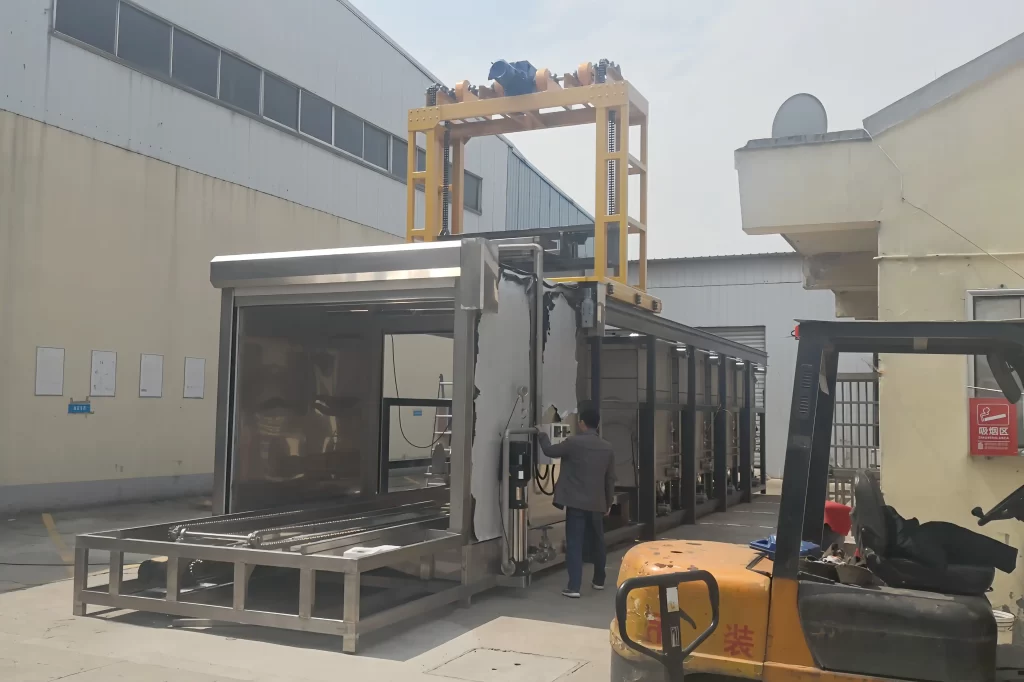
Our multi-tank ultrasonic cleaners incorporate monitoring for parameters that correlate with cleaning performance and equipment health. The data feeds into maintenance planning, allowing us to advise customers on optimal service intervals based on their actual operating conditions rather than generic recommendations.
Energy consumption tracking provides additional insight. A cleaning system that gradually uses more power to achieve the same result is working harder than it should. The cause might be contaminated fluid, worn components, or process drift. Identifying the trend early allows correction before energy costs escalate or cleaning quality suffers.
Keeping the Right Spare Parts Available
Spare parts strategy is a balance between inventory cost and downtime risk. Holding every possible part ties up capital and warehouse space. Holding nothing means every failure becomes an emergency.
The practical approach focuses on critical components with long lead times or high failure consequences. Ultrasonic vibration plates and piezoelectric ceramic transducers fall into this category. These parts are specific to the equipment model, may require weeks to manufacture, and their failure stops the cleaning process entirely. Having one or two spares on hand means the difference between a four-hour repair and a four-week wait.
Pumps, filters, and seals are consumables that wear predictably. Tracking replacement intervals allows accurate forecasting of consumption. Establishing reorder points based on lead time and usage rate prevents stockouts without excessive inventory.
Baskets and fixtures wear faster than the cleaning equipment itself. Parts handling causes dents, deformation, and coating wear that eventually affects cleaning quality. Maintaining spare baskets for our industry washing baskets allows immediate replacement when damage occurs, keeping production moving while damaged baskets go for repair or recycling.
Supplier relationships matter for parts that cannot be economically stocked. Knowing which suppliers can expedite, which carry inventory, and which require long manufacturing lead times allows informed decisions about what to stock locally versus what to order as needed.
Moving Forward with Your Maintenance Program
Industrial cleaning equipment maintenance protects your investment and your production quality. The elements discussed here, from preventive schedules to monitoring technology to spare parts management, work together as a system. Weakness in any area creates vulnerability that eventually affects the others.
If your current maintenance approach relies on reactive repairs or generic schedules that do not match your actual operating conditions, there is room for improvement. For detailed discussions on specific maintenance requirements or to learn more about our automated cleaning equipment, contact us at [email protected] or +86 17768507147.
Frequently Asked Questions About Industrial Cleaning Equipment Maintenance
What symptoms indicate that industrial cleaning equipment needs immediate attention?
Performance degradation is the most reliable indicator. Reduced cleaning effectiveness, longer cycle times, or inconsistent results across a batch all suggest something has changed. Unusual noises point to mechanical wear, often in bearings, pumps, or drive components. Vibrations that were not present before indicate imbalance or loosening. Leaks, whether fluid or air, require immediate investigation. Pressure gauges, temperature readings, and fluid levels that drift outside normal ranges provide early warning before visible symptoms appear.
What practices actually extend industrial cleaning machinery lifespan?
Adherence to preventive maintenance schedules catches wear before it becomes damage. Using compatible cleaning agents prevents chemical attack on internal components. Proper operation by trained personnel avoids stress from misuse. Regular cleaning and inspection of components identifies problems early. Prompt replacement of worn parts prevents cascading failures where one worn component damages others. The combination of these practices, applied consistently, typically doubles or triples useful equipment life compared to reactive maintenance approaches.
How does neglected maintenance affect cleaning quality and operating costs?
Neglected maintenance creates a downward spiral. Cleaning quality decreases as components wear, leading to higher part rejection rates. Energy consumption increases as the system works harder to compensate for degraded performance. Breakdowns become more frequent and more severe, requiring emergency repairs at premium labor rates and expedited parts shipping. Production downtime accumulates, affecting delivery schedules and customer relationships. The total cost of neglected maintenance typically exceeds the cost of proper maintenance by a factor of three to five, not counting the quality and customer relationship impacts. If you are seeing these patterns in your operation, it may be worth reviewing your maintenance program with someone who can identify the gaps.
If you're interested, you may want to read the following articles:
Water Based Versus Solvent Based Ultrasonic Cleaning Systems
Multi-Tank Ultrasonic Cleaning: A Deep Dive into Industrial Configurations
 English
  German
  Spanish
  French
  Russian
  Portuguese