
Pre-coating ultrasonic cleaning isn't a luxury step—it directly influences whether a coating bonds or fails. Surface preparation errors that leave behind microscopic residues are among the most common root causes of PVD, DLC, and CVD coating defects. Engineers who treat ultrasonic cleaning as just a wash step often find that coating adhesion problems persist despite using high-quality coating equipment. At GTKCLEAN, we have spent over two decades designing cleaning systems specifically for pre-coating applications, and the technical details that matter most are not the ones that appear in generic cleaning guides.
Why Pre-Coating Failures Often Start on the Cleaning Line
A coating line invests in high-vacuum chambers, precise deposition control, and expensive target materials, yet rejects often trace back to a part that was never truly clean. The mechanism is straightforward: a microscopic oil film, dust particle, or oxide layer prevents the coating from making intimate contact with the substrate. Under thermal cycling or mechanical load, those weak interfaces become initiation points for pinholes, blistering, or delamination. What makes pre-coating ultrasonic cleaning non-negotiable is its ability to reach surfaces that spray, wipe, or simple soak cleaning cannot—blind holes, threads, recesses, and fine-textured surfaces that hold contaminants. When we design a cleaning system for coating preparation, the target isn't "visibly clean." It's a surface free of any residue that would interfere with adhesion at the molecular level. A coating line that upgrades from a basic wash to a properly engineered ultrasonic process typically sees defect rates drop from mid-single digits to well under 1%, without changing anything in the coating chamber itself.
Three Contaminant Categories That Pre-Coating Ultrasonic Cleaning Must Eliminate
Surface contamination before coating falls into three distinct categories, and a cleaning system that misses any one of them will eventually produce coating failures.
Organic residues: machining oils, coolants, stamping lubricants, fingerprints, and mold release agents. These form a hydrophobic barrier that prevents the coating from wetting the substrate. Ultrasonic cavitation combined with an alkaline or neutral detergent at 45–65 °C breaks the bond between oil and metal, emulsifying the residue so it can be rinsed away. In our pre-PVD ultrasonic cleaning systems, we heat the cleaning solution to maximize solubility and cavitation intensity simultaneously.
Inorganic particles: metal chips, grinding dust, polishing compounds, and general shop debris. These particles create physical gaps between coating and substrate. Ultrasonic energy dislodges them from surfaces through micro-jetting, but the challenge is preventing re-deposition. Continuous filtration during the cleaning cycle—not just between batches—is what separates an industrial pre-coating system from a simple tank and transducer arrangement.
Surface oxides and films: light rust, passivation layers, and absorbed moisture. These alter surface energy and prevent proper adhesion. Some oxide removal requires acidic pretreatment, but ultrasonic agitation in a chemically assisted bath accelerates the process and ensures uniformity. The key is specifying the right chemistry and ultrasonic frequency for the substrate material—stainless steel, aluminum, titanium, and hardened tool steels all respond differently.
Multi-Stage Rinsing: The Overlooked Link Between Cleaning and Coating Adhesion
Rinsing is where most so-called pre-coating cleaning systems fall short. A part that leaves the ultrasonic tank clean but carries even a thin film of detergent-laden solution onto the drying stage will emerge with a surface that looks fine and fails in the coating chamber. The coating material simply cannot bond through that residual layer. For this reason, multi-stage ultrapure water rinsing is not optional; it is a design requirement.
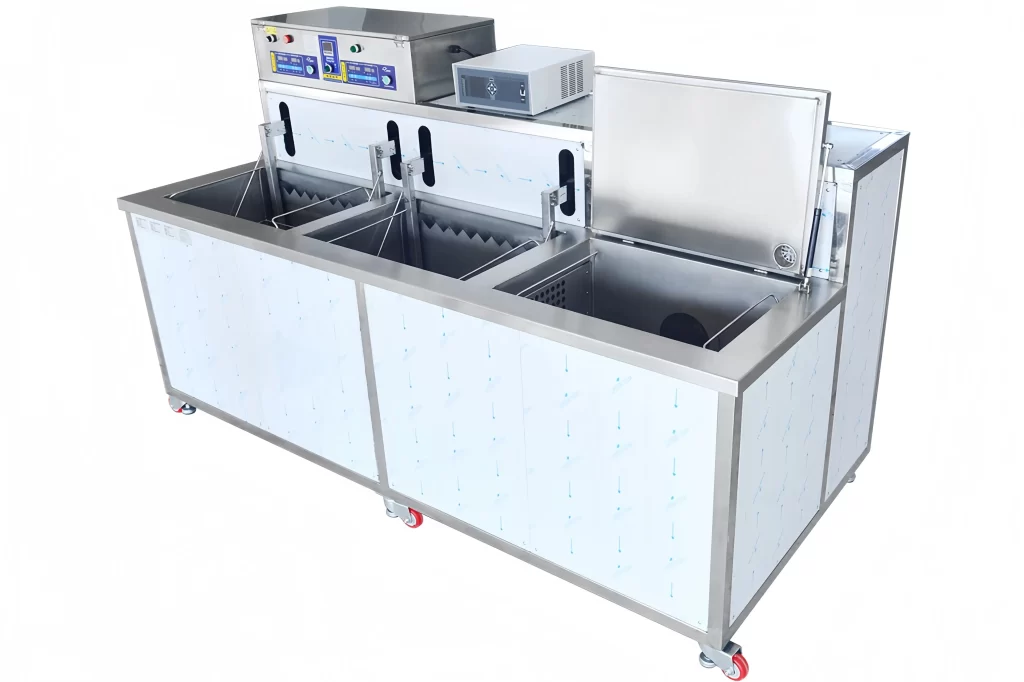
In a properly configured line, the first rinse removes bulk detergent and loosened contamination. The second rinse, supplied with deionized (DI) water, brings the surface to near-residue-free condition. A final rinse with ultrapure water—conductivity typically kept below 0.06 μS/cm—ensures no ionic contamination remains. Cascade overflow design, where fresh water is introduced at the final rinse and overflows backward to preceding stages, maintains water quality while minimizing consumption. We routinely install conductivity monitoring with automatic makeup water feed on pre-coating systems to guarantee rinse quality over full production shifts. If the cleaning line's rinse water does not meet this standard, the coating line will see sporadic adhesion problems that are nearly impossible to diagnose because the contamination is invisible.
How Ultrasonic Frequency and Power Affect Pre-Coating Surface Quality
Ultrasonic frequency directly controls cavitation bubble size and energy release. Lower frequencies—20 kHz to 28 kHz—generate larger, more energetic bubbles that deliver aggressive cleaning suitable for heavy contamination on robust parts: stamped components, engine parts, and large tooling. Higher frequencies—40 kHz to 80 kHz—produce smaller, gentler cavitation that penetrates fine features without surface erosion, making them appropriate for polished surfaces, optical components, and medical parts that will receive a high-precision coating.
Power density must be matched to both the contamination load and the part's surface tolerance. Too little power and cavitation never reaches the threshold needed to dislodge contaminants. Too much power and the part surface itself can become damaged—erosion patterns, micro-pitting, or stress concentrations that degrade coating performance. We select frequency and power based on part material, geometry, and the specific contaminant type. For a customer coating cutting inserts, for instance, 40 kHz with moderate power density cleans effectively without rounding the cutting edge. For a customer coating large stampings covered in heavy drawing oil, 28 kHz with higher power density provides the necessary aggressive action. If your pre-coating application involves parts with complex geometries such as blind holes or varying materials, the frequency selection is worth validating with test pieces before finalizing the equipment specification—reach out at [email protected] with your part details and we can recommend a starting point.
Drying Methods That Preserve Clean Surfaces for Coating
A perfectly cleaned and rinsed part can still fail if the drying stage leaves water spots, oxide blooms, or residual moisture. Spot-free drying is especially critical before coating because water-borne minerals that precipitate on the surface as the water evaporates become instant coating defects. For simple, open geometries, hot air drying is effective and economical. An air knife system, which uses high-velocity filtered air to physically blow water off surfaces, is faster and reduces spotting by minimizing the time that water remains on the part.
For parts with deep holes, recesses, or complex internal channels—common in PVD-coated tooling and components—vacuum drying is the most reliable method. Under vacuum, water boils at a much lower temperature, pulling moisture out of cavities that hot air cannot reach. Our pre-PVD ultrasonic cleaning systems offer air knife plus hot air or vacuum drying as options, and the choice depends on part geometry. A part that traps liquid in a blind hole will never dry thoroughly with hot air alone, no matter how long the cycle.
Key Specifications to Evaluate in Pre-Coating Ultrasonic Systems
When comparing pre-coating ultrasonic cleaning systems, the performance differences show up in the details that are easy to overlook when reading a brochure. The table below contrasts the specifications that separate a system designed for true pre-coating preparation from a general industrial washer.
| Specification | Basic Industrial Washer | Pre-Coating Ready System |
|---|---|---|
| Rinse water quality | Single rinse, tap water | Multi-stage, DI/ultrapure water, conductivity ≤0.06 μS/cm |
| Filtration | Single-bag filter | Multi-stage, continuous recirculation, down to 10 µm or finer |
| Control system | Timer and thermostat | Siemens/Mitsubishi PLC with recipe storage and fault diagnostics |
| Drying | Hot air blower | Air knife, hot air, or vacuum drying selected by part geometry |
| Tank material | 304 stainless steel | 316 stainless steel for chemical resistance, with passivation as needed |
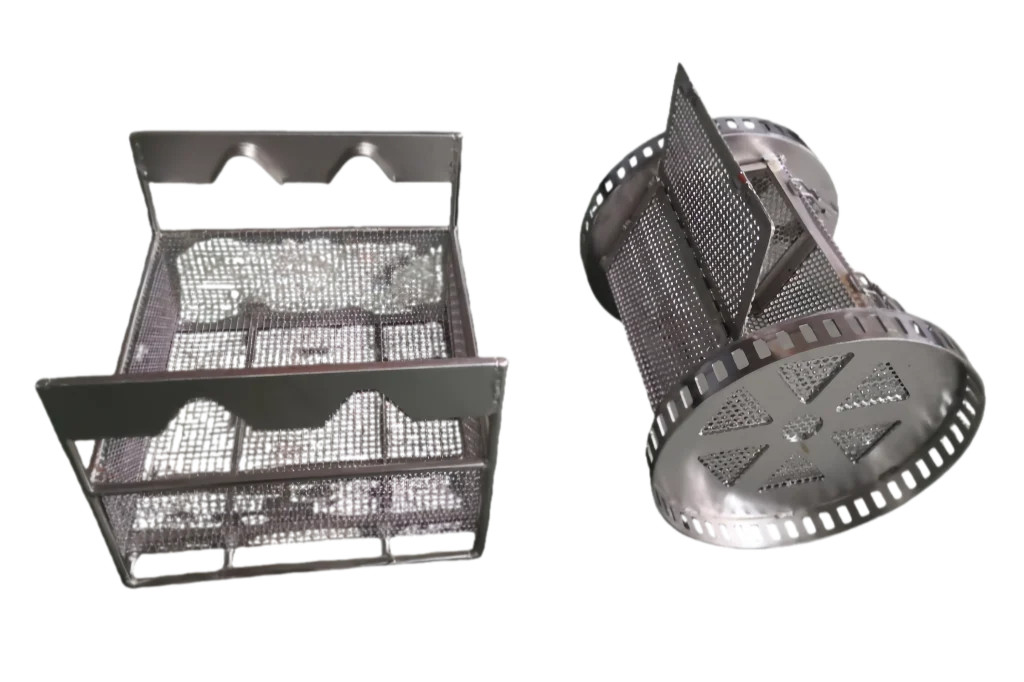
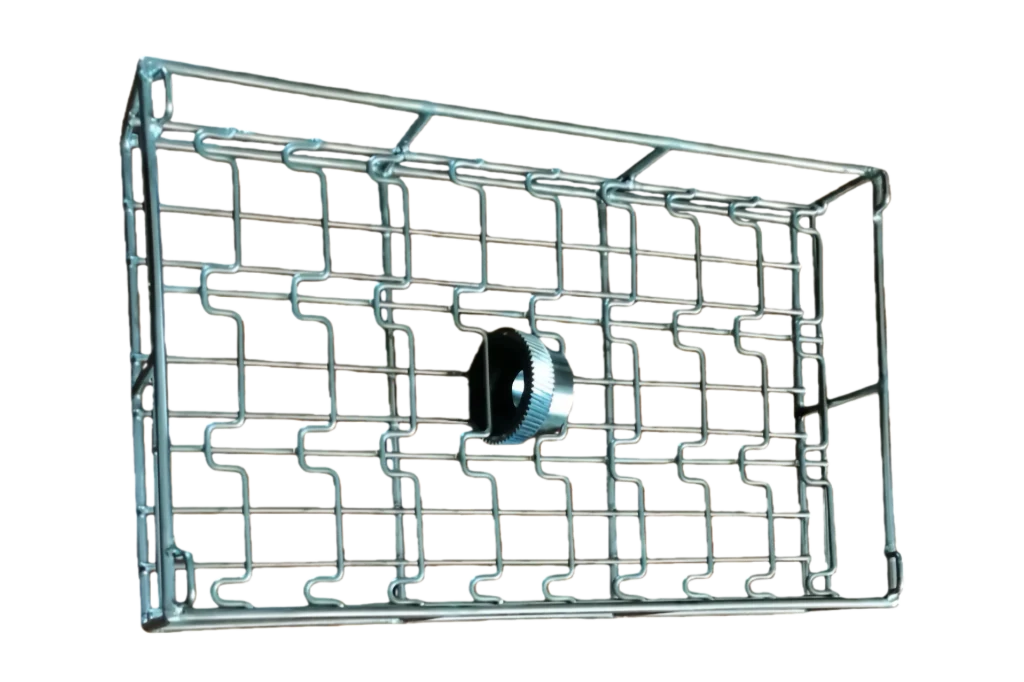
| Basket design | One-size wire basket | Custom baskets designed for part fixturing, blind-hole draining, and load capacity up to 2000 kg |
A system that checks all the boxes in the right column will require a higher capital investment than a basic washer, but it will also eliminate the coating defects that a basic washer cannot address. The cost of a rejected coating batch often exceeds the difference in equipment price.
Choosing a Pre-Coating Cleaning System That Delivers Repeatable Results
Surface preparation failures that stem from inadequate cleaning are the hardest to trace and the most expensive to fix. A coating line that produces scrap because of invisible residues wastes more than material—it erodes production schedules and customer confidence. If you are specifying or upgrading a pre-coating cleaning system, the right starting point is defining the contamination profile your parts carry and the cleanliness level your coating process demands. At GTKCLEAN, we have designed and deployed ultrasonic cleaning systems for coating preparation across over 20 countries, and the solutions that work share one common trait: they address rinse water quality, frequency selection, filtration, and drying as a single integrated process, not as disconnected accessories. Send your part drawings and current contamination profile to [email protected], or call +86 17768507147 to start a process review. We will provide a system recommendation that matches your coating requirements and production throughput.
Common Questions About Pre-Coating Ultrasonic Cleaning
Does ultrasonic cleaning damage delicate parts before coating?
With proper frequency selection, it does not. Higher frequencies above 40 kHz produce smaller cavitation bubbles that clean gently, suitable for polished surfaces and optical components. The power density is also adjustable. On our systems, we program frequency and power to match the part material and required cleanliness level. If your parts have fine surface finishes that must remain intact through cleaning, we can validate the process with test pieces before equipment delivery.
How many rinse stages do I really need?
At minimum two: one to remove bulk detergent and one final ultrapure water rinse. For coating preparation where any residue causes rejection, three stages—pre-rinse, intermediate rinse, and final DI rinse—are typical. The final rinse water conductivity should remain below 0.1 μS/cm, and we design systems with conductivity monitors and automatic fresh water feed to maintain that level through full production shifts.
Can I use solvent-based cleaning for pre-coating?
Solvent cleaning with hydrocarbon or modified alcohol works well for heavy oil contamination and avoids the water-spot risk of aqueous processes. However, solvents require vapor degreasing or vacuum drying to eliminate the cleaning medium completely. Any residual solvent film left on the part will interfere with coating adhesion just as detergent residue would. For many coating applications, aqueous ultrasonic with ultrapure rinsing remains the preferred method because the final rinse leaves a chemically neutral surface with no film-forming potential.
How do I know if my current cleaning is causing coating failures?
The most reliable diagnostic is a witness test: clean a batch of parts in your current system, then send a subset through a properly configured multi-stage ultrasonic line and coat both groups. If the test group shows consistently higher adhesion and fewer defects, the cleaning process is the limiting factor. We frequently supply test cleaning services for this exact purpose. If you would like to arrange a trial cleaning of your parts, send the part data and coating specification to [email protected] and we will confirm the feasibility and process parameters.
If you're interested, check out these related articles:
Industrial Ultrasonic Cleaners Versus Traditional Cleaning Methods
Implement Solvent Recovery Systems: A Factory Efficiency Guide
How to Select the Frequency for Ultrasonic Cleaning Equipment ?
 English
  German
  Spanish
  French
  Russian
  Portuguese