
Long cleaning cycles cost more than time. They tie up production capacity, delay downstream operations, and force manufacturers into uncomfortable tradeoffs between throughput and cleanliness. When cleaning becomes the bottleneck, the instinct is often to cut corners, reduce dwell times, or skip rinse stages. These shortcuts almost always backfire. Parts fail inspection, rework rates climb, and the cleaning station becomes a source of quality escapes rather than quality assurance. The real solution lies not in rushing the process but in understanding why it runs slowly in the first place and addressing those root causes systematically.
What Actually Slows Down Industrial Cleaning Cycles
Cleaning cycle time is rarely determined by a single factor. It accumulates from decisions made across equipment selection, process design, and daily operation. The most common time sinks I encounter fall into predictable categories.
Inadequate contaminant removal in early stages forces extended dwell times in subsequent tanks. When a pre-wash spray fails to remove bulk oil, the ultrasonic degreasing tank must work harder and longer. A 30-second spray deficiency can add 90 seconds to ultrasonic exposure, and that multiplier compounds across every batch.
Part geometry creates hidden delays. Blind holes, threaded features, and recessed surfaces trap air and resist fluid penetration. Standard immersion cleaning may achieve surface cleanliness in three minutes while internal cavities remain contaminated after eight. Without addressing these geometry-specific challenges, operators either accept inconsistent results or extend cycle times universally to accommodate worst-case parts.
Rinse water quality degrades throughout a shift. As dissolved contaminants accumulate, rinse effectiveness drops, requiring additional rinse stages or longer immersion. A system designed for three-minute rinse cycles may need five minutes by mid-shift if water management is neglected.
Drying bottlenecks often exceed cleaning time itself. Hot air drying of complex parts with blind holes can take twice as long as the combined wash and rinse stages. Vacuum drying addresses this but requires proper integration into the overall cycle design.
| Time Loss Factor | Typical Impact | Root Cause |
|---|---|---|
| Weak pre-wash | +30-90 seconds per tank | Insufficient spray pressure or coverage |
| Blind hole air trapping | +60-180 seconds | No rotation or vacuum assist |
| Rinse water degradation | +60-120 seconds | Inadequate filtration or overflow |
| Thermal drying of complex parts | +120-300 seconds | Air-only drying without vacuum |
How Ultrasonic Frequency Selection Affects Cleaning Speed
Frequency selection is often treated as a fixed specification when it should be a process optimization variable. Lower frequencies around 20-28 kHz generate larger cavitation bubbles with more aggressive cleaning action, removing heavy contamination faster but risking damage to delicate surfaces. Higher frequencies in the 40-80 kHz range produce gentler cleaning suitable for precision components but require longer exposure for equivalent contamination removal.
The mistake I see repeatedly is selecting a single frequency as a compromise. A 40 kHz system cleaning heavily oiled stamping parts will always run slower than necessary. A 25 kHz system cleaning precision optical components will damage surfaces before achieving cleanliness. The solution is matching frequency to the actual contamination and substrate, not to an average of all parts the system might encounter.
Multi-frequency systems offer flexibility but add cost and complexity. For dedicated production lines with consistent part types, a properly matched single frequency outperforms a multi-frequency system running at a compromise setting. For job shops or mixed-part environments, the flexibility justifies the investment.
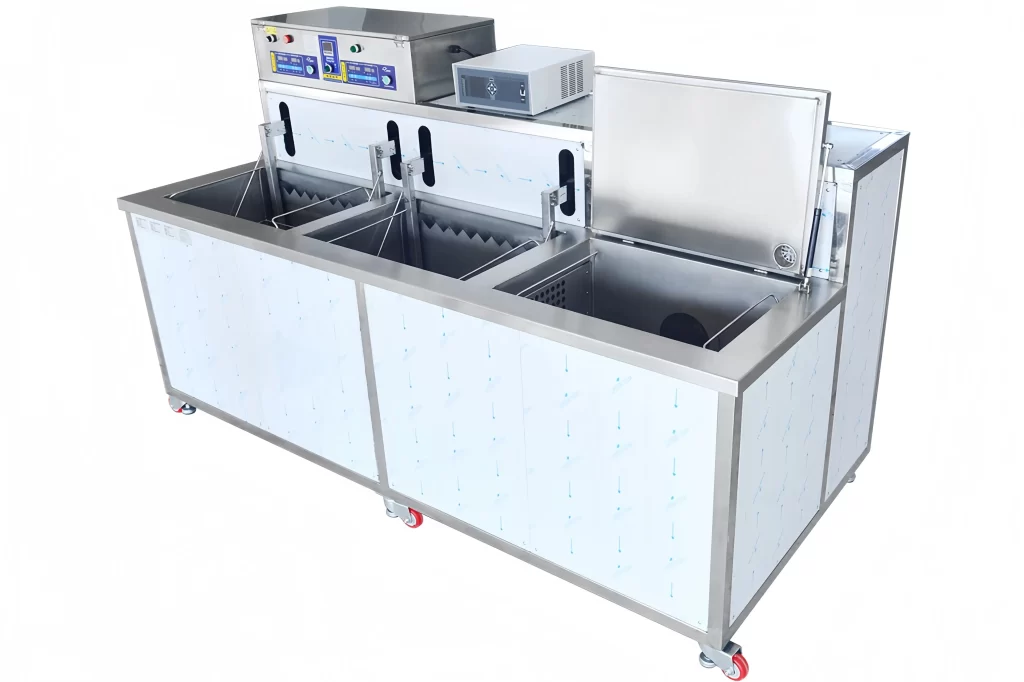
Ultrasonic power density matters as much as frequency. Insufficient power extends cycle time linearly. A tank designed for 10 watts per liter will clean faster than one running at 5 watts per liter, assuming the parts can tolerate the intensity. Transducer placement also affects cleaning uniformity. Dead zones in the tank create inconsistent results that operators compensate for with extended cycles.
Why Multi-Stage Processes Clean Faster Than Extended Single-Tank Cycles
Extending time in a single tank produces diminishing returns. Contamination removal follows a logarithmic curve. The first minute of ultrasonic cleaning may remove 80% of surface oil. The second minute removes 15% of what remains. The third minute removes another 3%. Doubling cycle time does not double cleanliness.
Multi-stage processes break this limitation by presenting parts to fresh chemistry and different cleaning mechanisms at each stage. A three-tank sequence of spray pre-wash, ultrasonic degreasing, and ultrasonic fine cleaning can achieve higher cleanliness in six total minutes than a single ultrasonic tank running for twelve minutes.
Each stage serves a distinct function. Pre-wash removes bulk contamination, preventing rapid fouling of the ultrasonic tank. Primary ultrasonic cleaning addresses embedded oils and particulates. Secondary ultrasonic cleaning with fresh solution removes residual films. Rinse stages use progressively purer water to prevent recontamination.
The transition between stages also matters. Drain time, transfer time, and any air exposure between tanks add to total cycle time without contributing to cleaning. Automated transfer systems minimize these gaps. Rotary basket systems that move parts through multiple tanks without manual intervention can reduce total cycle time by 20-30% compared to manual transfer between the same tanks.
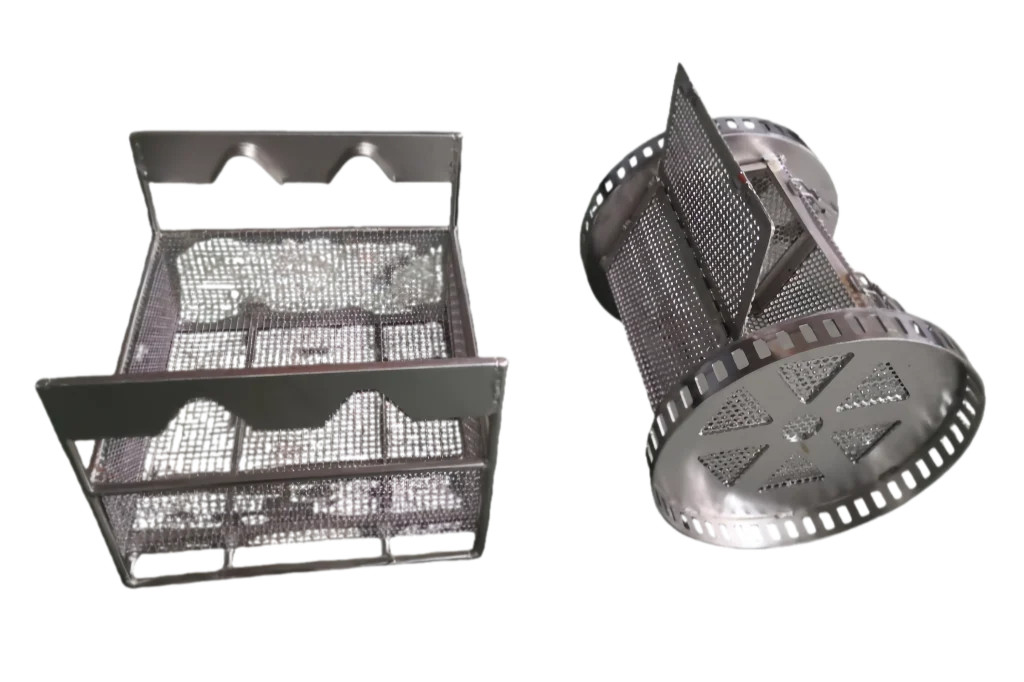
For parts with complex geometries, GTKCLEAN's rotary basket ultrasonic cleaners rotate parts 360 degrees during cleaning, ensuring blind holes and recesses receive full fluid penetration without requiring extended static immersion.
What Role Does Temperature Play in Cleaning Cycle Speed
Temperature accelerates chemical reaction rates and reduces fluid viscosity, improving both cleaning chemistry effectiveness and physical contaminant removal. Most aqueous cleaning processes run optimally between 45-65°C. Below this range, cycle times extend. Above it, evaporation increases, chemistry degrades faster, and energy costs rise without proportional cleaning improvement.
Solvent systems have different optimal ranges. Hydrocarbon cleaning typically runs at 40-60°C, where solubility of machining oils peaks without excessive vapor loss. Modified alcohol systems operate similarly. Running these systems below optimal temperature extends cycle time; running above wastes solvent through evaporation.
Temperature uniformity across the tank matters as much as average temperature. Stratification creates zones of slower cleaning. Parts positioned in cooler regions require longer exposure. Proper circulation and heating element placement eliminate these inconsistencies.
Preheat time is often overlooked in cycle calculations. A system requiring 30 minutes to reach operating temperature from cold start adds that time to the first batch of every shift. Systems with insulated tanks and efficient heating reach temperature faster and maintain it with less energy input during production.
| Temperature Zone | Aqueous Systems | Solvent Systems |
|---|---|---|
| Below optimal | Extended cycle, incomplete cleaning | Poor oil solubility, residue |
| Optimal range | 45-65°C | 40-60°C |
| Above optimal | Evaporation, chemistry degradation | Solvent loss, safety concerns |
How Basket Design and Part Loading Affect Throughput
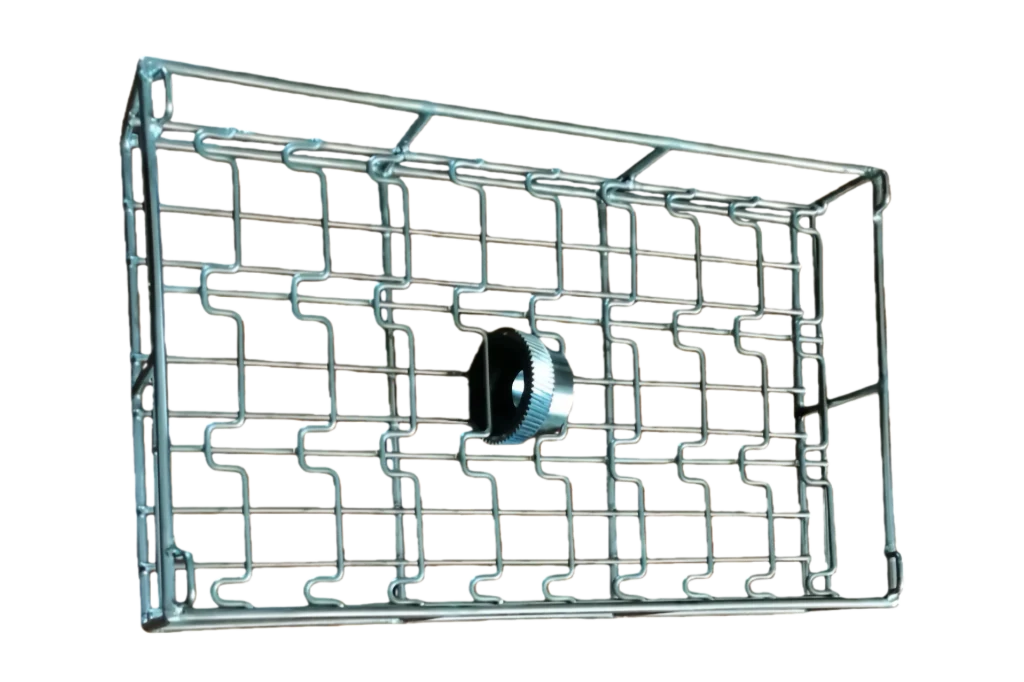
The cleaning basket is not a passive container. Its design directly affects cleaning speed, part protection, and throughput. Open mesh construction allows ultrasonic energy and fluid flow to reach parts. Solid-bottom baskets create shadow zones where cleaning is incomplete.
Part orientation within the basket determines whether blind holes fill with cleaning solution or trap air. A threaded bore positioned vertically with the opening downward will never clean properly regardless of cycle time. Proper fixturing ensures all critical features are exposed to the cleaning action.
Loading density creates tradeoffs. Tightly packed baskets maximize parts per cycle but create acoustic shadows and restrict fluid flow. The result is longer cycle times or inconsistent cleaning. Optimal loading balances throughput against cleaning effectiveness. In my experience, reducing basket loading by 20% often reduces total cycle time by 30% because each part cleans completely in the first pass rather than requiring rework.
Heavy parts require reinforced baskets and handling systems. A basket designed for 50 kg loads will flex and potentially damage parts if loaded to 80 kg. GTKCLEAN's heavy-duty automated ultrasonic cleaners handle workpieces from 100 kg up to 2000 kg with custom load-bearing baskets and reinforced tank structures.
When Automation Reduces Cycle Time and When It Does Not
Automation eliminates human variability and transfer delays. A robotic system moves parts between tanks in consistent time intervals. Manual transfer varies with operator attention, fatigue, and workload. Over a shift, automated systems maintain cycle times while manual systems drift.
Automation also enables process sequences that manual operation cannot sustain. Vacuum ultrasonic cleaning requires sealed chambers and precise timing. Vapor degreasing with solvent recovery involves temperature and pressure control beyond manual capability. These advanced processes often deliver faster cleaning than simpler manual methods precisely because they can be controlled precisely.
The limitation of automation is flexibility. A fully automated line optimized for one part family may require significant reconfiguration for different parts. Job shops with high part variety often find semi-automated systems more practical. These systems automate the cleaning cycle itself while allowing manual loading and program selection.
Automation does not fix fundamental process problems. An automated system running an inadequate cleaning recipe will produce consistent failures faster than a manual system. Process development must precede automation investment.
For high-volume production with consistent part types, inline cleaning systems integrate directly with production flow. GTKCLEAN's conveyor-based ultrasonic cleaners handle continuous throughput for stamping parts, fasteners, and machined components without batch interruption.
What Drying Method Choices Mean for Total Cycle Time
Drying often consumes more time than cleaning and rinsing combined. Hot air drying of complex parts with blind holes can require 5-10 minutes even after thorough cleaning in 3-4 minutes. This imbalance makes drying optimization the highest-leverage opportunity for cycle time reduction in many operations.
Air knife systems remove bulk water quickly but cannot address moisture trapped in recesses. Hot air circulation evaporates surface moisture but struggles with blind holes where air flow is restricted. Vacuum drying reduces the boiling point of water, causing rapid evaporation from all surfaces including internal cavities. A vacuum drying stage can reduce total drying time by 50-70% compared to hot air alone.
Infrared drying adds radiant heat that penetrates beyond surface moisture. Combined with vacuum, it addresses the most challenging drying applications. For parts requiring absolute dryness before coating or assembly, vacuum IR drying is often the only method that achieves results in acceptable cycle times.
Solvent systems offer inherent drying advantages. Hydrocarbon and modified alcohol solvents evaporate faster than water and leave no residue. Vacuum vapor drying in solvent systems removes both cleaning solvent and any trapped moisture simultaneously. GTKCLEAN's hydrocarbon solvent ultrasonic vacuum cleaners complete cleaning and drying in 8-15 minute cycles including full solvent recovery.
Practical Questions About Reducing Cleaning Cycle Time
Does faster cleaning mean lower cleanliness standards?
Not when cycle time reduction comes from process optimization rather than shortcuts. Matching ultrasonic frequency to contamination type, using multi-stage processes, and optimizing temperature all reduce time while maintaining or improving cleanliness. Cutting dwell time without addressing root causes reduces cleanliness. The distinction matters: process engineering reduces time; corner-cutting reduces quality.
How much cycle time reduction is realistic for an existing system?
Existing systems typically have 20-40% cycle time reduction potential through process optimization alone. Common opportunities include adjusting temperature to optimal range, improving basket loading patterns, adding pre-wash stages to reduce ultrasonic tank loading, and upgrading rinse water management. Capital improvements like vacuum drying or automated transfer can add another 20-30% reduction. If your current cycles seem longer than comparable operations, share your part specifications and contamination types with our engineering team at [email protected] for a process review.
What is the payback period for cleaning system upgrades focused on cycle time?
Payback depends on production volume and current bottleneck severity. A system running three shifts with cleaning as the constraint sees faster payback than a single-shift operation with excess capacity. Typical payback for cycle time-focused upgrades ranges from 6-18 months when cleaning is genuinely constraining throughput. The calculation should include not just direct labor savings but also downstream capacity unlocked by faster cleaning. For operations where cleaning cycle time limits production output, contact us at +86 17768507147 to discuss your specific throughput requirements and equipment options.
Can solvent cleaning be faster than aqueous cleaning?
For oil-heavy contamination, solvent cleaning often achieves equivalent cleanliness in shorter cycles because hydrocarbon solvents dissolve machining oils directly rather than emulsifying them. Solvent systems also dry faster due to lower boiling points. The tradeoff is solvent cost and environmental compliance requirements. For parts with mixed contamination including particulates and water-soluble residues, aqueous systems may be more effective despite longer cycles.
What maintenance issues most commonly extend cleaning cycle time?
Transducer degradation reduces ultrasonic power output, requiring longer cycles for equivalent cleaning. Heating element fouling slows temperature recovery between batches. Filter clogging restricts circulation and contaminant removal. Rinse water conductivity drift indicates contamination buildup. Regular monitoring of these parameters catches degradation before it affects cycle time. If your system requires progressively longer cycles to achieve the same cleanliness, these maintenance factors are the first places to investigate.
If you're interested, check out these related articles:
Manual Ultrasonic Cleaning Systems: Applications and Limitations Guide
Eliminate Residue in Pre-Coating Parts Cleaning: An Expert Guide
Ultrasonic Pre-Cleaning Machine for Flawless PVD/DLC Coating Pre-Treatment
Precision Mold Cleaning Solutions
 English
  German
  Spanish
  French
  Russian
  Portuguese