
Why Stamping Oil Residue Causes Downstream Failures
Stamping oil left on metal surfaces creates problems that compound through every subsequent manufacturing step. The residue interferes with coating adhesion, causing paint or plating to peel within weeks of application. In welding operations, oil contamination produces porosity in the weld bead and can introduce hydrogen embrittlement in heat-affected zones. Heat treatment processes suffer from uneven temperature distribution where oil films insulate the surface. These failures translate directly into warranty claims, rework cycles, and customer rejections. The cost of inadequate stamping oil removal typically exceeds the cost of proper cleaning by a factor of five to ten when accounting for downstream quality losses.
For operations processing thousands of stamped parts daily, the cleaning step determines whether subsequent processes can run at specification or require constant adjustment. A stamping line producing automotive brackets, for instance, cannot ship parts to a painting subcontractor without verified cleanliness levels. The subcontractor's coating process assumes a clean substrate. When that assumption fails, the entire batch returns.
How Oil Composition Affects Cleaning Method Selection
Stamping oils vary significantly in their chemical makeup, and this variation dictates which removal approach will actually work. Mineral-based oils, derived from petroleum distillates, respond well to hydrocarbon solvents because the solvent and contaminant share similar molecular structures. Synthetic oils, often formulated with esters or polyalphaolefins, may require modified alcohol solvents or specific aqueous detergent formulations. Semi-synthetic blends present the most challenging removal scenarios because they contain both oil-soluble and water-soluble components.
The additive packages in stamping oils complicate matters further. Extreme pressure additives containing sulfur or chlorine compounds can react with metal surfaces under heat, creating films that resist standard cleaning. Anti-rust additives may leave behind protective layers that interfere with subsequent processes even though they served a purpose during storage. Matching the cleaning chemistry to the specific oil formulation is not optional. A cleaning process validated for one stamping oil may fail completely when the production floor switches suppliers or formulations.
Viscosity also plays a role in method selection. High-viscosity oils cling to surfaces and fill recesses, requiring either elevated temperatures to reduce viscosity or aggressive mechanical action to displace the film. Low-viscosity oils spread into thin films that can be difficult to detect visually but still cause adhesion failures.
What works for intricate geometries and blind holes?
Parts with complex shapes, internal channels, or blind holes present the most difficult cleaning challenges. Spray systems cannot reach recessed areas. Immersion alone relies on diffusion, which is slow and incomplete. Ultrasonic cleaning addresses these limitations through cavitation, the formation and violent collapse of microscopic bubbles in the cleaning fluid. These implosions generate localized pressure waves that penetrate into spaces no spray nozzle can access.
The frequency of ultrasonic energy matters for different part geometries. Lower frequencies around 25-28 kHz produce larger cavitation bubbles with more aggressive cleaning action, suitable for heavy contamination on robust parts. Higher frequencies in the 40-80 kHz range create smaller bubbles that can reach into finer features without damaging delicate surfaces. For stamped parts with both heavy oil loads and intricate details, a dual-frequency approach or sequential processing may be necessary.
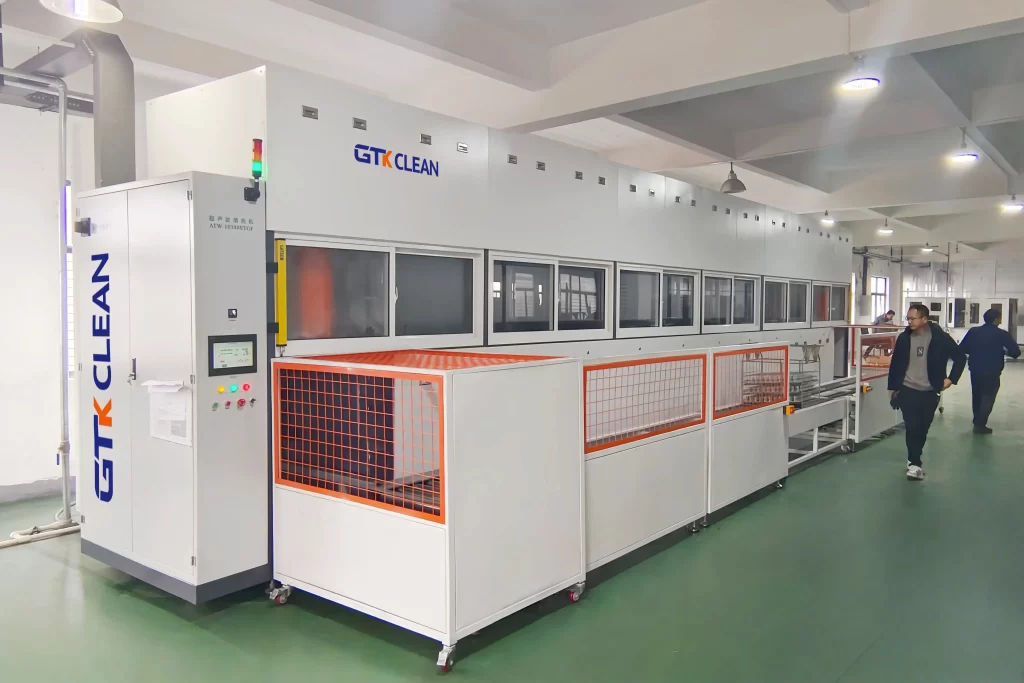
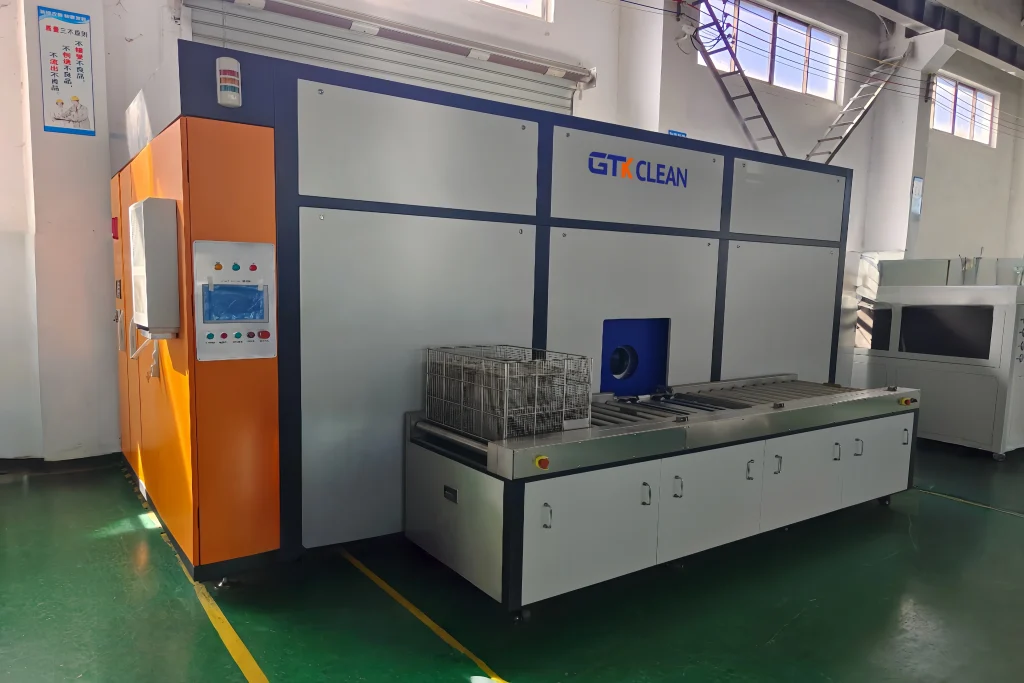
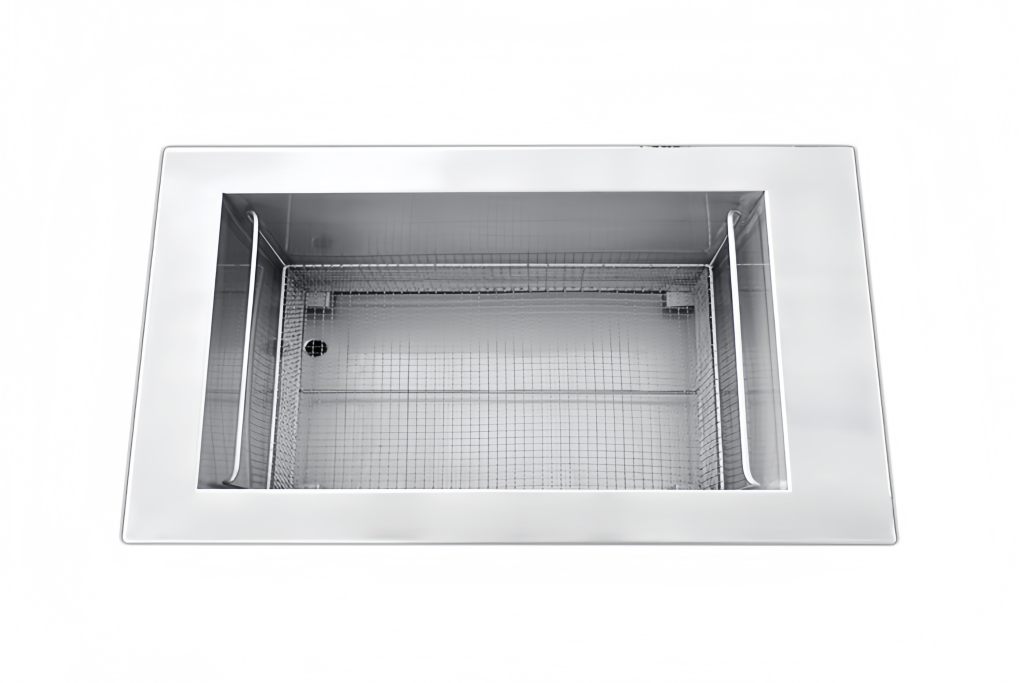
GTKCLEAN's ultrasonic systems for stamping parts incorporate these principles with tank designs that ensure uniform cavitation distribution. The systems accommodate the specific cleanliness requirements for electroplating, painting, and welding preparation.
Automated Cleaning Systems for Production-Scale Operations
Manual cleaning cannot deliver the consistency or throughput that modern stamping operations require. Automated systems provide repeatable process parameters, batch after batch, shift after shift. The cleaning cycle runs the same way whether it is the first part of Monday morning or the last part of Friday afternoon.
Multi-stage aqueous systems typically sequence through wash, rinse, and drying phases with controlled temperatures, chemical concentrations, and exposure times at each stage. Solvent systems using hydrocarbons or modified alcohols offer faster drying and superior performance on heavy oil loads, though they require vapor containment and recovery systems for environmental compliance.
| Cleaning Method | Primary Mechanism | Key Advantages | Typical Applications |
|---|---|---|---|
| Ultrasonic Cleaning | Cavitation | Deep penetration, high efficiency | Intricate parts, blind holes |
| Solvent Cleaning | Chemical dissolution | Effective for heavy oils, fast drying | Precision components, sensitive materials |
| Aqueous Spray | Mechanical force | High throughput, general degreasing | Large parts, conveyor systems |
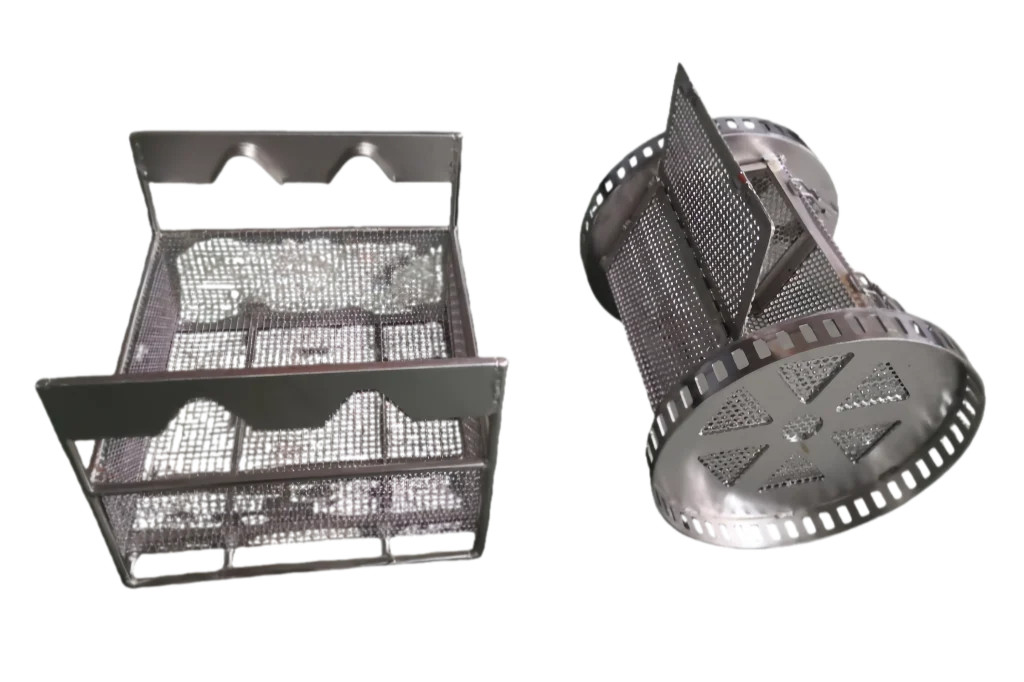
Rotary basket configurations prevent part-to-part contact during cleaning, eliminating scratches on finished surfaces while ensuring all sides receive equal exposure to the cleaning action. For operations handling engine blocks, large molds, or other heavy components, systems rated for workpieces up to 2000 kg provide the structural capacity and tank volume these parts demand.
If your stamping operation processes parts with varying geometries or contamination levels, it is worth discussing system flexibility before committing to a specific configuration.
Reducing Chemical and Water Consumption Without Sacrificing Cleanliness
Cleaning costs extend beyond equipment purchase to include ongoing chemical consumption, water usage, and waste disposal. Closed-loop solvent systems recover and purify cleaning fluid through distillation, returning clean solvent to the process while concentrating contaminants for disposal. Recovery rates above 95% are achievable with properly designed vacuum distillation systems.
Aqueous systems benefit from filtration and oil separation equipment that extends bath life. A cleaning tank that would require dumping and refilling weekly can often run for months with proper maintenance equipment. Overflow weirs skim floating oils. Bag filters or cartridge filters remove particulates. Coalescers separate emulsified oils. Each of these components reduces the frequency of bath changes and the volume of waste requiring treatment.
Water treatment systems integrated with aqueous cleaning lines enable discharge compliance or even water recycling. The treatment approach depends on local regulations and the specific contaminants present, but options range from simple oil-water separation to membrane filtration and chemical treatment.
Do environmentally preferable cleaning options actually perform?
The assumption that green cleaning means compromised performance no longer holds. Aqueous formulations using biodegradable surfactants and chelating agents now match or exceed the cleaning power of traditional solvent systems for many applications. Bio-based solvents derived from plant feedstocks offer another pathway, providing the solvency characteristics of petroleum-derived products without the associated environmental profile.
The key is matching the cleaning chemistry to the contamination. A biodegradable aqueous detergent optimized for mineral oil removal will outperform a general-purpose solvent on that specific task. The environmental benefit comes without a performance penalty when the chemistry is properly selected.
Meeting Safety and Regulatory Requirements
Stamping oil removal operations fall under multiple regulatory frameworks depending on location and the chemicals involved. Solvent systems require vapor containment, explosion-proof electrical components, and often air permits for emissions. Aqueous systems generate wastewater that must meet discharge limits or be hauled for treatment. Worker exposure limits for both solvent vapors and detergent mists require appropriate ventilation and personal protective equipment.
OSHA regulations in the United States, REACH requirements in Europe, and equivalent frameworks in other jurisdictions establish baseline requirements. Many customers impose additional specifications through their supplier quality programs. Automotive OEMs, for instance, often require documented cleanliness verification using standardized test methods.
Equipment design can simplify compliance. Enclosed cleaning chambers contain vapors and mists. Integrated exhaust systems with appropriate treatment remove contaminants before discharge. Automated chemical dosing maintains concentrations within specified ranges. Access controls and interlocks prevent exposure during operation. These features reduce the administrative burden of compliance while protecting workers and the environment.
Where Cleaning Technology Is Heading
Sensor integration is changing how cleaning processes are controlled and validated. Rather than running fixed cycle times and assuming adequate cleanliness, systems increasingly monitor actual contamination levels and adjust parameters in real time. Fluorescence sensors can detect oil films at levels invisible to the eye. Conductivity measurements track rinse water purity. These data streams enable adaptive process control that responds to actual conditions rather than worst-case assumptions.
The broader trend toward manufacturing data integration means cleaning systems will increasingly communicate with upstream and downstream equipment. A stamping press could transmit oil application data to the cleaning system, allowing automatic adjustment of cleaning parameters. The cleaning system could report cleanliness verification results to the coating line, enabling lot-specific process adjustments.
Research into cleaning chemistries continues to push performance boundaries while reducing environmental impact. Microemulsion cleaners, enzymatic formulations, and supercritical CO2 cleaning represent different approaches to the same goal: removing contamination effectively while minimizing resource consumption and waste generation.
Frequently Asked Questions About Stamping Oil Removal
How does ultrasonic cleaning compare to manual methods in actual production?
Ultrasonic cleaning eliminates the variability inherent in manual processes. A worker scrubbing parts will clean differently at the start of a shift than at the end, and differently from the worker on the next shift. Ultrasonic cavitation delivers consistent energy to every surface, every cycle. Processing times drop from minutes to seconds for many applications. Chemical consumption decreases because the mechanical action of cavitation reduces reliance on chemical solvency alone. The combination of speed, consistency, and reduced chemical usage typically delivers payback periods under twelve months for operations currently using manual cleaning.
What should drive system selection for high-volume stamping operations?
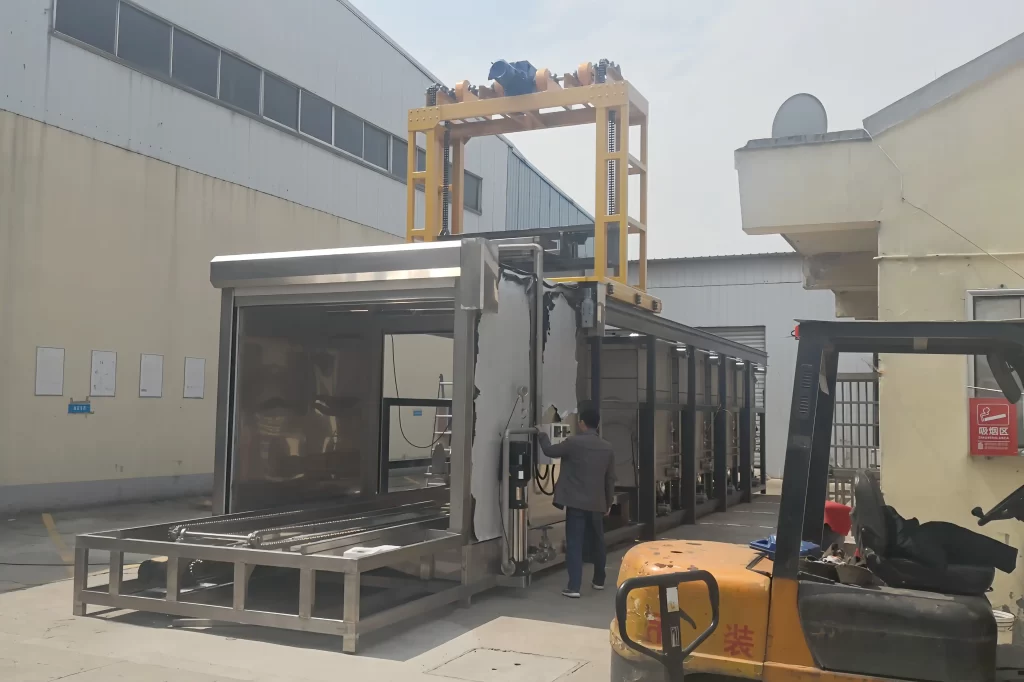
Throughput capacity must match or exceed production rates with margin for growth. The system should handle the full range of part sizes and geometries in the product mix without requiring manual intervention for changeover. Chemical compatibility with the specific stamping oils in use is non-negotiable. Energy consumption and waste generation directly affect operating costs and should be evaluated over the expected equipment life, not just at purchase. Integration capability with existing material handling and quality systems reduces labor and enables traceability. GTKCLEAN's conveyor belt cleaning systems address these requirements for continuous high-volume processing.
Can small amounts of residual oil really cause problems in welding and painting?
Contamination levels that appear insignificant can cause significant defects. Oil films measured in micrograms per square centimeter are sufficient to cause paint adhesion failures. In welding, organic contamination decomposes under arc heat, releasing gases that create porosity in the weld metal. The porosity may not be visible on the surface but will appear in radiographic inspection and reduce joint strength. Heat treatment processes are similarly sensitive. The cost of a single rejected lot typically exceeds the cost of proper cleaning equipment. To discuss cleanliness requirements for your specific application, contact GTKCLEAN at [email protected] or +86 17768507147.
If you're interested, you may want to read the following articles:
Design an Efficient Multi-Stage Industrial Cleaning Process
Precision CNC Part Cleaning Solutions - GTK
Factory Manager’s Guide: Integrating Automated Cleaning Lines
 English
  German
  Spanish
  French
  Russian
  Portuguese