

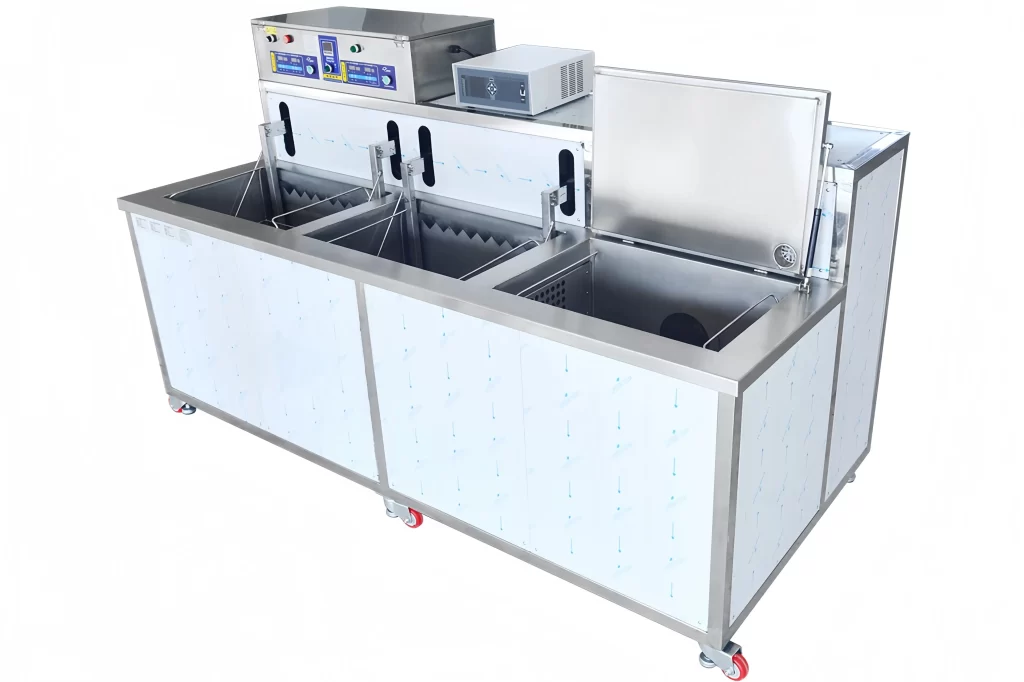
Industrial cleaning equipment operates in aggressive environments where water, detergents, heat, and mechanical stress combine to make corrosion a persistent threat. If unchecked, corrosion can compromise structural integrity, contaminate cleaned parts, and cause premature equipment failure long before the machinery reaches its design life. Our engineering team has seen mild steel components rust through in months, while properly specified stainless steel systems in similar service remain structurally sound after a decade of continuous production. Understanding why cleaning equipment corrodes and how to stop it is not only about preserving capital investment; it directly affects part quality, process consistency, and the cost of unplanned downtime. This article draws on more than twenty years of experience designing ultrasonic and automated cleaning systems for operations across 20+ countries to provide practical, field-tested guidance on corrosion prevention for industrial cleaning equipment.
How Corrosion Attacks Cleaning Equipment
Corrosion in a cleaning system rarely has a single cause. Most industrial washers combine metal tanks, piping, pumps, heating elements, and baskets, each exposed to different chemical and thermal conditions. The most common types we encounter during field inspections include uniform surface corrosion, pitting, crevice corrosion, and galvanic corrosion.
Uniform corrosion is the most predictable: an entire surface degrades at roughly the same rate, usually because the chosen stainless steel grade is too low for the cleaning chemistry. Pitting is more dangerous because it concentrates damage in small areas, often beneath settled contaminants or at weld seams. Crevice corrosion develops where stagnant fluid remains trapped — under gaskets, at threaded joints, or inside poorly designed basket corners. Galvanic corrosion occurs when dissimilar metals are joined in a conductive solution; a stainless steel tank with a carbon steel heating element, for instance, will rapidly corrode the steel element if the electrical path is not broken.
One factor we watch for in ultrasonic systems is stray current. Ultrasonic generators and transducers operate at high frequency, and without proper grounding and insulation, small leakage currents can turn the tank into an electrochemical cell. We have seen transducer mounting plates corrode from behind, invisible until a mounting stud pulls through and the tank begins to leak. That failure mode is entirely preventable with correct transducer installation and periodic ground-continuity checks.
Material Selection Is the First Line of Defense
For aqueous cleaning systems, austenitic stainless steels are the default choice, but the difference between 304 and 316L is often the difference between a tank that lasts eighteen months and one that lasts fifteen years. The critical variable is chloride content. Municipal water supplies, certain detergents, and even airborne salt from facility processes can push chloride concentration high enough to initiate pitting in 304 stainless steel.
316L adds molybdenum, which dramatically improves resistance to chloride-induced pitting and crevice corrosion. For systems that run heated alkaline detergents with even modest chloride levels, we specify 316L as the minimum for all wetted surfaces. For hydrocarbon solvent systems, where water is absent but solvents may carry acidic breakdown byproducts, 304 is usually adequate if the solvent is regularly distilled and replaced.
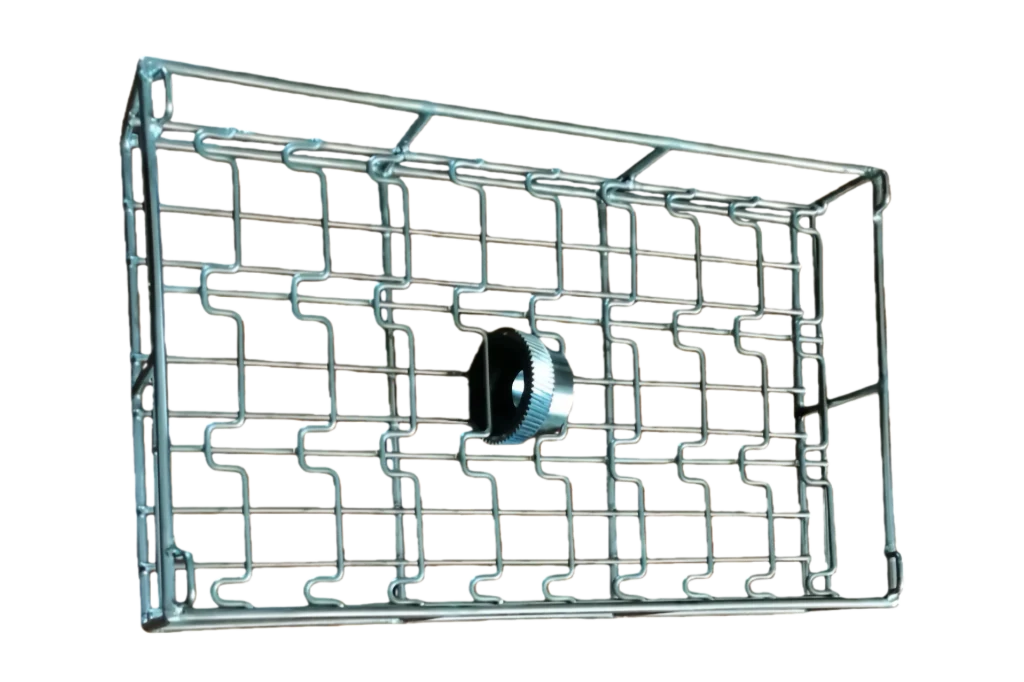
The cleaning basket material matters just as much as the tank. A basket that releases iron oxide particles onto cleaned components undoes the entire purpose of a precision cleaning line. Our standard recommendation is 316L for aqueous baskets and polypropylene or PVDF for harsh chemical processes where stainless steel is vulnerable. The extra material cost is minor compared to the expense of re-cleaning a production batch because a corroded basket contaminated the parts.
If your facility operates near the coast or uses recirculated water with rising chloride concentration, it is worth confirming the actual material grade before the first pinhole appears. Getting the material wrong at specification is a preventable problem. Send your water quality data and cleaning chemistry to [email protected], and our engineers can advise on the minimum material grade for your application.
Design Details That Reduce Corrosion Risk
Even the best stainless steel alloy fails if the design creates reservoirs for stagnant liquid. In our equipment, all tank seams are fully welded and continuously polished to remove the microscopic fissures where crevice corrosion starts. Drainage is engineered so that no water remains pooled after a cycle; sloped tank bottoms and properly sized outlet ports prevent standing liquid between shifts. Pipe connections use butt-weld fittings rather than threaded joints wherever possible, because threads create ideal crevice geometries.
Ventilation is often overlooked. Condensation on the underside of a tank lid or on overhead structures drips back into the solution, and if the condensate has absorbed airborne chlorides or acids, it becomes a concentrated corrosion source. We incorporate active ventilation and condensation management into large automated systems to break that cycle. For systems with stainless steel heating elements, using Incoloy sheathed heaters reduces galvanic risk. We also place sacrificial anodes in certain multi-metal assemblies to protect critical components, a technique adapted from marine engineering that adds negligible cost.
Rotary basket systems, commonly used for blind-hole parts, present an extra challenge: liquid can become trapped inside the basket frame itself. We drain-test every custom basket design before shipping to confirm that no blind tube ends or hollow sections retain fluid after the basket exits the rinse stage.
Maintenance Practices That Extend Equipment Life
Corrosion prevention does not end at installation. A disciplined maintenance routine prolongs the life of even a mid-grade stainless steel system, while neglect can destroy a premium 316L build within a few years.
The highest-impact daily action is emptying and rinsing the tank at the end of production. Allowing hot cleaning solution to cool and remain overnight concentrates contaminants and accelerates localized corrosion. A five-minute fresh-water flush and drain removes chloride-laden residue.
Weekly inspection should cover weld seams, transducer mounting points, basket contact surfaces, and any threaded fasteners. Early pitting appears as tiny dark speckles, often just a fraction of a millimeter in diameter. Catching those early means the affected area can be passivated or re-polished. Ignoring them allows pits to deepen until they perforate the tank wall. We have seen tanks taken out of service prematurely because maintenance teams did not know what early-stage pitting looked like. Training operators to recognize it is part of the commissioning we provide with every new system.
Water quality monitoring is equally important. For systems equipped with reverse osmosis or deionized water treatment, we recommend logging conductivity daily. A rising conductivity trend signals that the water purification system needs attention before chloride levels reach damaging concentrations. In solvent systems, regular titration of acid content prevents the slow acid buildup that corrodes pump seals and heat exchangers.
When Corrosion Has Already Done Enough Damage
There is a threshold beyond which repairing a corroded tank costs more than replacement, and recognizing it saves money. If pitting has penetrated through the tank wall at any point, the corrosion is deep enough that grinding and re-welding will at best buy a few more months. Thin spots around welds, visible flaking rust on load-bearing frames, and transducer mounting plates that no longer hold torque specifications all point toward replacement rather than repair.
For welded structures that have not yet perforated, passivation with a nitric or citric acid solution can restore the chromium oxide passive layer and halt further pitting. This treatment is not a permanent fix but can extend service life by one to two years while a replacement is budgeted. We have used passivation successfully on tanks that showed surface staining but no structural loss. Once mechanical strength is compromised, however, attempting to save the tank becomes a safety risk, especially in automated lines where baskets weighing hundreds of kilograms move overhead.
If your existing cleaning line is showing signs of corrosion that you are not certain how to assess, getting a technical evaluation before a failure stops production is the least expensive path. Corrosion accelerates once the protective layer is breached; a small problem this quarter often becomes a capital replacement next year.
Common Questions About Cleaning Equipment Corrosion
Does ultrasonic cleaning itself increase corrosion risk?
It can, but only when stray electrical paths exist. The piezoelectric transducers that generate cavitation operate at 20 kHz to 80 kHz, and if the insulation between the transducer and the tank degrades, small currents can flow into the liquid. Properly insulated transducers with bonded ground connections eliminate this. In programs we have supported, including multi-tank hydrocarbon ultrasonic systems for stamped components, we test each transducer's insulation resistance at final assembly and again during commissioning to confirm no leakage path exists.
What basket material works best for chemically aggressive processes?
For strong acids or high-temperature chlorinated solutions, stainless steel, even 316L, may not hold up. In those cases, we specify polypropylene or PVDF baskets, sometimes reinforced with stainless steel external frames if high loads are involved. The polymer basket isolates the parts from any metal corrosion product, while the external steel frame carries the mechanical load. This dual-material approach has worked well for applications involving pickling solutions and aggressive degreasers.
How often should I replace the cleaning solution to minimize corrosion?
Replacement frequency depends on contamination load, not a fixed calendar. The more reliable indicator is conductivity. When solution conductivity rises significantly above fresh-solution baseline, dissolved metal ions and chlorides have accumulated to corrosive levels. In a typical CNC machined parts cleaning operation running two shifts, we recommend monitoring conductivity every four hours and changing the solution when conductivity exceeds 150% of baseline. A recirculating filtration and oil-separation system can extend solution life by a factor of three while keeping conductivity in check.
Can I weld a patch onto a pitted cleaning tank and keep using it?
Temporary patches can allow a system to run until a planned shutdown, but they are not a long-term repair. Welding on a contaminated tank wall creates heat-affected zones with altered microstructure that are even more susceptible to corrosion than the original material. If you must patch, the repair should be done by a certified welder using matching filler material, followed by passivation of the entire tank interior. Even then, treating it as a stop-gap measure is the realistic expectation.
When does it make economic sense to replace rather than repair a corroded cleaning system?
The decision comes down to structural integrity and cleaning quality. If any load-bearing component shows corrosion penetration or deformation, replacement is the only safe option. If the tank interior retains deep pitting that traps contamination and re-deposits it on cleaned parts, the quality cost of rework and customer returns quickly exceeds the price of new equipment. For an older system where each repair cycle fixes a symptom but not the root cause, a purpose-built replacement using the correct material grade for the actual chemistry often pays back within eighteen months through reduced downtime and lower maintenance labor. If you are uncertain whether your system falls into the repair or replace category, sharing a few photos of the affected areas with us at [email protected] or calling +86 17768507147 lets us give you a frank technical assessment based on what we have seen across hundreds of installations. We can help you evaluate whether a retrofit, a partial replacement, or a new corrosion-resistant configuration is the right direction for your production line.
If you're interested, check out these related articles:
Eliminate Residue in Pre-Coating Parts Cleaning: An Expert Guide
Justify Ultrasonic Cleaning Equipment Investment: A Strategic ROI Guide
How to Integrate Automated Cleaning into Production Lines
Pre-Coating Cleaning Solutions for PVD - GTK
 English
  German
  Spanish
  French
  Russian
  Portuguese