
Understanding What You're Actually Cleaning—And How Clean It Needs to Be
Every cleaning process starts with two questions that sound simple but trip up more projects than any equipment failure: what exactly is on the part, and how clean does it actually need to be? Get either one wrong and you'll spend the next six months chasing cycle times, rework rates, or both.
Contamination analysis isn't just checking whether there's oil on the surface. Cutting fluids behave differently from stamping oils. A polishing compound residue that looks identical to flux under a loupe requires a completely different removal approach. We've seen facilities misidentify their primary contaminant and end up with cleaning cycles running 30% longer than necessary—not because the equipment was wrong, but because nobody asked the right questions at the start.
The cleanliness standard matters just as much. "Visually clean" means something very different from "micron-level particulate-free." A part heading into powder coating can tolerate what would be catastrophic contamination for a PVD-coated component. Surface preparation requirements for coating adhesion, assembly fit, or subsequent processing all demand different cleanliness thresholds. Establishing these standards upfront—and validating that your process actually hits them—prevents the expensive discovery that your "clean" parts are failing downstream.
| Contaminant Type | Examples | Typical Removal Methods |
|---|---|---|
| Oils/Greases | Cutting fluids, stamping oils, lubricants | Alkaline cleaning, solvent degreasing, ultrasonic |
| Particulates | Metal chips, dust, burrs | Ultrasonic, spray washing, mechanical agitation |
| Residues | Flux, polishing compounds, fingerprints | Ultrasonic, solvent, rinsing |
| Oxides/Corrosion | Rust, tarnish | Acid cleaning, passivation |
How Equipment Selection Actually Affects Your Cleaning Results
Picking cleaning equipment isn't a catalog exercise. The geometry of your parts, what they're made of, and how many you need to clean per shift all push you toward different technologies—and the wrong choice shows up fast in either inadequate cleaning or unnecessarily high operating costs.
Ultrasonic cleaning systems generate high-frequency sound waves that create cavitation bubbles in the cleaning solution. When those bubbles implode against the part surface, they dislodge contaminants from places spray washing can't reach: blind holes, internal channels, intricate geometries. For precision machined components with complex features, ultrasonics often deliver results that mechanical agitation simply cannot match.
Solvent cleaning systems work differently, using chemical solvents to dissolve specific contaminants—particularly effective for heavy degreasing or when the part material doesn't tolerate aqueous solutions. Some substrates and some soils just respond better to solvent chemistry than to water-based approaches.
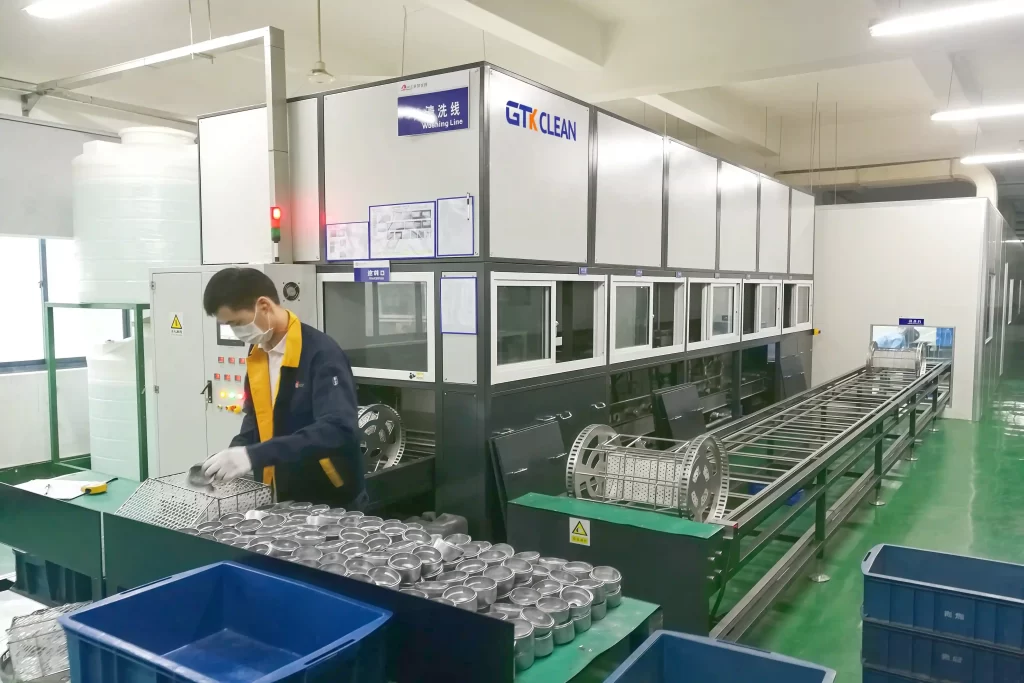
Automated conveyor belt cleaning systems make sense when you're running continuous production and need consistent throughput without operator variability. The equipment investment is higher, but the per-part cleaning cost drops significantly at volume. The ROI calculation depends heavily on your actual production numbers, not on theoretical capacity.
Balancing Chemical Performance Against Material Safety and Environmental Limits
Chemical selection sits at the intersection of three constraints that don't always cooperate: the chemistry needs to actually remove your contaminants, it can't damage your parts, and it has to comply with environmental and safety regulations.
Alkaline cleaners work well on oils and greases but can attack aluminum or zinc if the formulation isn't matched to the substrate. Solvents that cut through heavy contamination quickly may carry worker exposure limits or disposal costs that change the economics entirely. The "best" cleaning chemical for any application is the one that balances efficacy against all the real-world constraints you're operating under.
Multi-stage cleaning processes with circulation filtration extend solution life significantly. Instead of dumping and replacing cleaning baths on a fixed schedule, you're removing contaminants from the solution continuously and keeping the chemistry active longer. This reduces both chemical consumption and waste treatment costs—practical sustainability that also improves the bottom line.
If your current process involves specific contaminants or substrate materials that have proven difficult to clean without damage, discussing the chemistry options before committing to equipment often prevents expensive retrofits later.
Where Automation and Digital Monitoring Actually Pay Off
Automation in industrial cleaning delivers value in two distinct ways: consistency and data. Manual cleaning processes introduce variability every time an operator makes a judgment call about timing, temperature, or part positioning. Automated systems eliminate that variability—cleaning consistency improvements of 95% compared to manual processes aren't unusual, and labor reduction of 70% is achievable for operations that previously relied on manual handling.
The digital side matters for different reasons. Industrial IoT sensors collecting temperature, pressure, and cycle data enable predictive maintenance—identifying when a pump is starting to degrade or when a heater element is drifting out of spec before it causes a cleaning failure. Proactive maintenance based on actual equipment condition costs less than reactive repairs after a breakdown stops production.
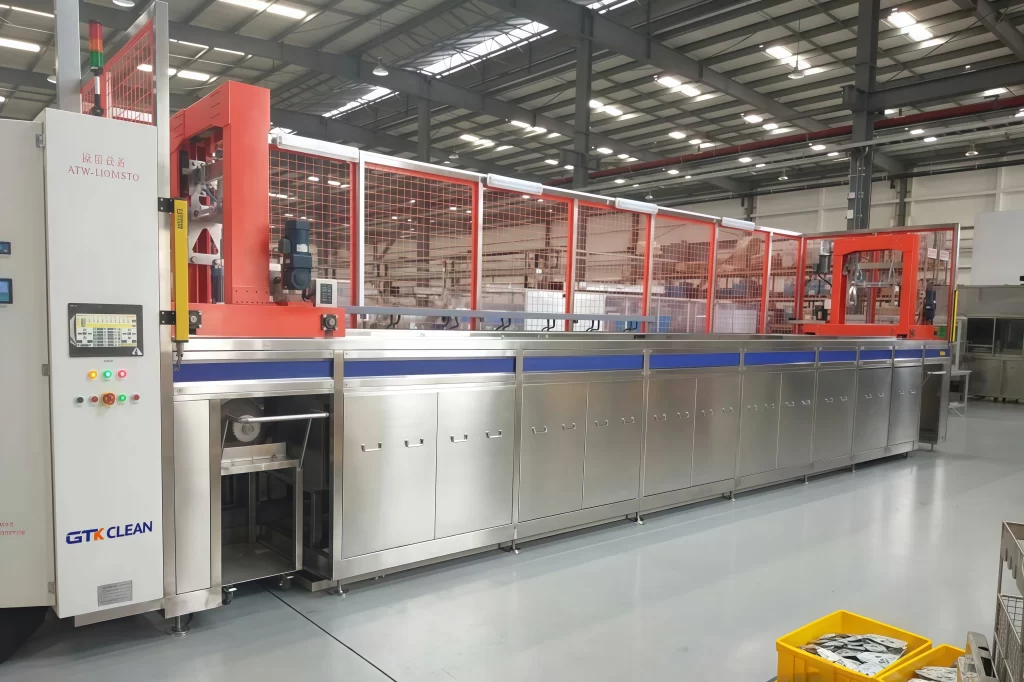
Modern automated cleaning equipment typically uses PLCs from Siemens or Mitsubishi with touchscreen HMI interfaces. Automatic alarms and fault diagnostics mean operators know immediately when something needs attention, rather than discovering a problem through failed parts downstream.
Managing Water Use When Rinsing Drives Your Operating Costs
Rinsing stages often consume more water than the cleaning stages themselves, and in many facilities, water costs and discharge fees represent a significant portion of total operating expense. Closed-loop water treatment systems address this directly by reclaiming and purifying rinse water for reuse. Facilities implementing these systems routinely see water consumption drop by 80-90%.
The purity requirements vary by application. General industrial rinsing may tolerate higher dissolved solids than precision cleaning for optical or electronic components. Pre-PVD cleaning, for instance, typically requires ultrapure water with conductivity below 0.06 μS/cm to prevent water spots and secondary contamination that would compromise coating adhesion. Matching your water treatment capability to your actual cleanliness requirements avoids both under-performance and unnecessary investment in purity you don't need.
Validating That Your Process Actually Works—And Keeps Working
A cleaning process that worked during qualification can drift out of spec over time as equipment wears, chemistry degrades, or production conditions change. Regular process validation catches these drifts before they become quality problems.
Validation means actually measuring cleanliness against your established standards, not just confirming that the equipment ran through its cycle. Gravimetric analysis, particle counting, surface energy testing, or visual inspection under specified conditions—the method depends on what you're trying to verify. The point is having objective evidence that parts leaving the cleaning system actually meet requirements.
Ongoing monitoring provides the data to identify trends before they become failures. If rinse water conductivity is creeping up, or if cycle temperatures are drifting, the monitoring system flags it for attention. Facilities with robust validation programs report preventing up to 40% of cleaning-related product defects compared to operations relying on periodic spot checks.
This systematic approach also supports regulatory compliance documentation and provides the training foundation for operators to maintain consistent results.
Taking the Next Step Toward Better Cleaning Performance
GTKCLEAN brings over 20 years of R&D experience and 28 technical patents to industrial cleaning challenges. To discuss your specific requirements and explore customized cleaning solutions, contact us at [email protected] or +86 17768507147.
Frequently Asked Questions About Industrial Cleaning Efficiency
How does operator training affect cleaning process efficiency?
Operators who understand proper equipment operation, chemical handling, and basic troubleshooting maintain consistent cleaning quality and catch problems early. Untrained operators can inadvertently cause part damage, reduce cleaning effectiveness, or create safety incidents—all of which show up as increased costs and reduced throughput. The training investment pays back through fewer errors and more reliable results.
Can smaller manufacturers achieve efficient cleaning without major capital investment?
Modular and scalable cleaning systems let smaller operations match equipment to actual production needs rather than over-investing in capacity they won't use. Optimizing chemical usage, maintaining equipment properly, and automating the highest-impact process steps often deliver significant efficiency gains without requiring large upfront expenditures. A benchtop ultrasonic cleaner handling precision parts, for example, can provide excellent cleaning performance at a fraction of the cost of a full production line.
What makes advanced cleaning technology worth the investment over time?
The long-term returns come from multiple directions: lower energy and water consumption, reduced chemical waste, extended part life from superior cleaning, fewer quality rejections, improved worker safety, and stronger environmental compliance. These benefits compound over the equipment lifespan, often delivering ROI that justifies the initial investment within the first few years of operation. If you're evaluating cleaning technology options, we can help you work through the specific cost factors for your situation—reach out at [email protected].
If you're interested, you may want to read the following articles:
Choosing the Right Production-Line Ultrasonic Cleaning System Guide
Leasing Versus Buying Industrial Cleaning Equipment Strategic Guide
What Is Ultrasonic Cavitation Effect?
Ultrasonic Cleaning Equipment Explained: The Ultimate Guide
 English
  German
  Spanish
  French
  Russian
  Portuguese