
Procurement decisions for industrial cleaning equipment can make or break a production line. Yet many B2B buyers uncover cleaning equipment supplier issues only after a system is installed, leading to costly downtime and rework. Over twenty years of designing automated ultrasonic, solvent, and conveyor cleaning systems for manufacturers in over 20 countries have shown me the same sourcing mistakes repeating across projects. The root cause is rarely the cleaning technology itself. It is the gap between what the buyer expects and what the supplier actually delivers — a gap that opens when technical vetting is shallow and after-sales commitments are assumed rather than verified. This article identifies the most common supplier-related pitfalls and outlines a structured evaluation process that helps procurement teams select partners capable of delivering reliable, high-performance cleaning solutions from day one.
What Are the Most Common Cleaning Equipment Supplier Issues
The problems I encounter during project rescues fall into a few predictable categories. The first is specification mismatch. A buyer orders a cleaning system for stamped parts with deep blind holes, and the supplier delivers a standard immersion ultrasonic tank with no provision for cavity drainage or basket rotation. The cleaning result is inconsistent, and suddenly the supplier blames the part geometry. This is not a rare edge case. I have reviewed systems where the ultrasonic frequency, tank dimensions, and drying method were all chosen from a supplier’s standard catalog rather than adapted to the production requirements.
A second cluster involves lead-time drift. Suppliers commit to a delivery schedule during the quotation phase and then shift dates because they are waiting on subcontractors for tanks, transducers, or PLC components. Without a binding milestone structure, the buyer has no leverage.
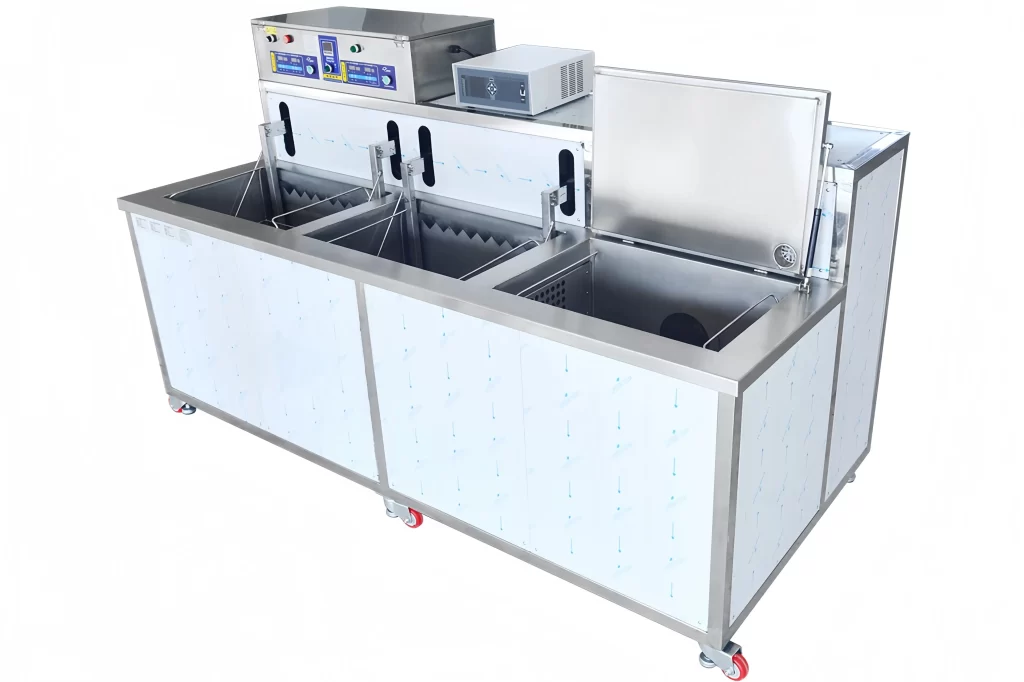
An equally serious but less visible issue is after-sales disengagement. A system ships, passes the superficial acceptance test, and then issues surface during production: transducer bonding fails, filtration bags clog prematurely, the HMI shows cryptic alarms. When the buyer calls for support, the response is slow, the technician is not fluent in the project specifics, and spare parts take weeks because no recommended spare-parts list was ever shared. I have stepped into situations where a multi-tank ultrasonic line sat idle for six weeks waiting for a replacement pump that should have been on-site.
| Supplier Issue | Typical Consequence |
|---|---|
| Standard design applied to non-standard parts | Inconsistent cleaning, rework |
| Unmanaged subcontractor dependencies | Delivery delays, idle line time |
| No spare-parts list or local stocking advice | Extended downtime |
| Shallow acceptance test criteria | Hidden performance gaps |
| Generic after-sales support, no project handover | Long resolution cycles, production loss |
These failures are not caused by malice. They happen because the buyer’s sourcing process does not force the supplier to prove capability at the detail level early enough.
How to Verify Supplier Technical Capabilities Before Ordering
The most reliable predictor of a successful cleaning system installation is the engineering depth the supplier demonstrates during the pre-order phase. I distinguish between what I call catalog-driven suppliers and application-driven suppliers. Catalog-driven suppliers can configure a system from a fixed menu of tanks, generators, and pumps. They work well when the cleaning task is straightforward, the part geometry is simple, and the throughput requirement is low to moderate. The risk appears when the cleaning challenge includes blind holes, heavy contamination, tight drying windows, or complex material compatibility constraints. In those cases, only an application-driven supplier who can modify tank layouts, design custom baskets, select the right multi-stage filtration, and validate cleaning chemistry for your specific contaminant will deliver a system that works on Day One.
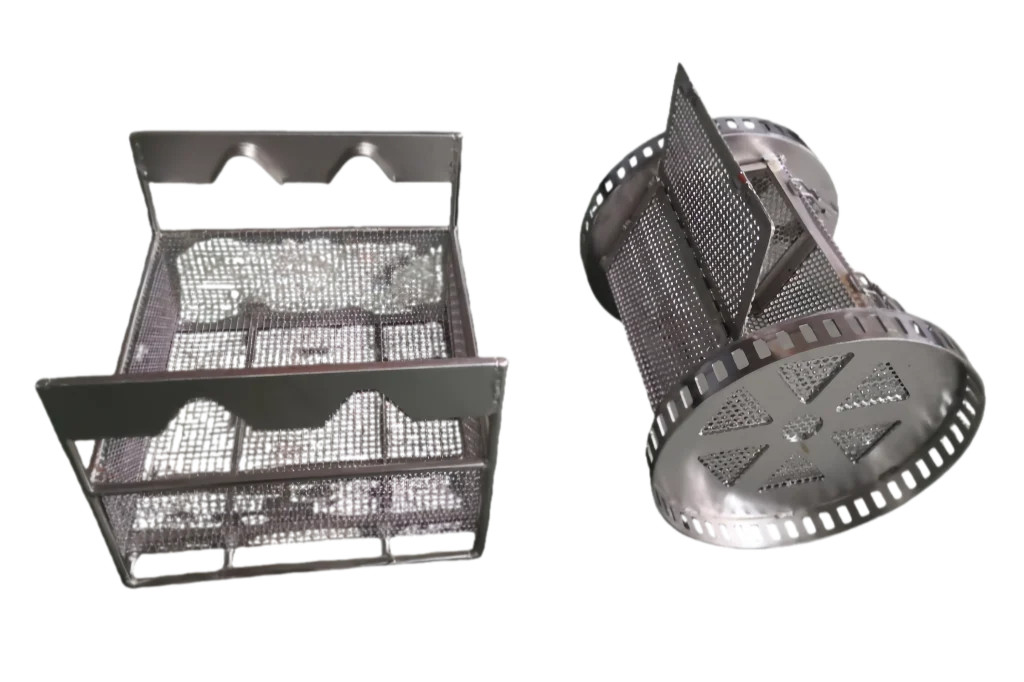
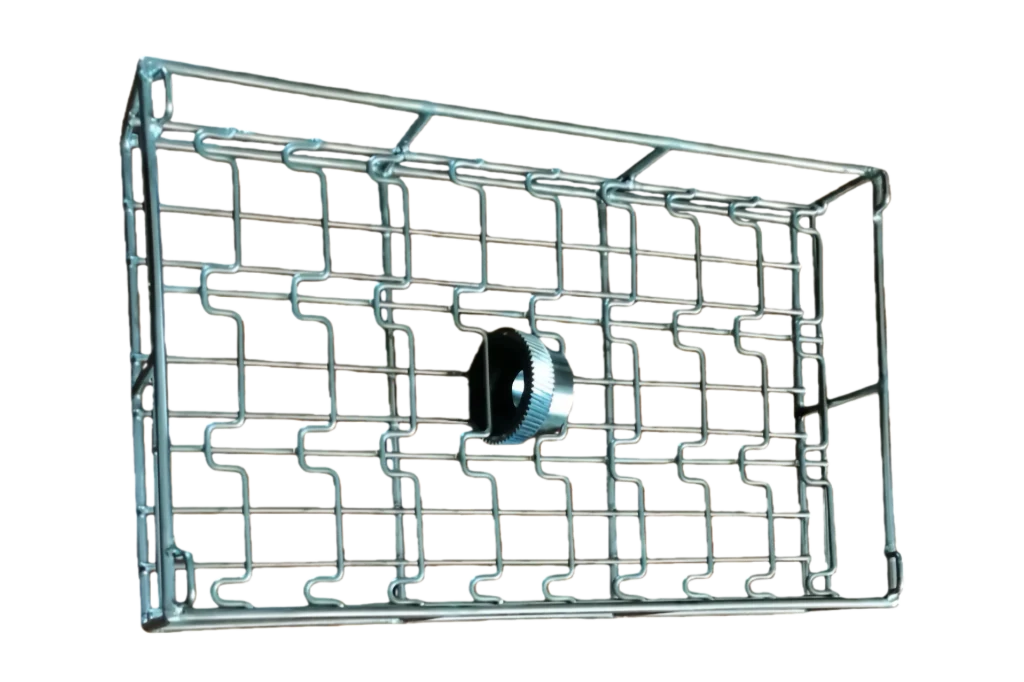
Concrete verification steps before placing a purchase order: require a detailed technical proposal that goes beyond a quotation with model numbers. The proposal should document the cleaning flow, the ultrasonic frequency selection rationale, the drying method, and the material of construction for every wetted component. Request reference lists with contactable project sites, not just logos. Ask for cleaning basket concept drawings — basket design is often where standard equipment fails for complex parts. If the supplier cannot produce a preliminary basket layout after seeing your part drawings, that is a signal. I routinely provide these before any customer commitment, because the basket determines whether fluid reaches every surface.
If your program involves multi-stage cleaning for parts with deep recesses or high cleanliness requirements, it is worth confirming the supplier’s experience with rotary basket or multi-tank ultrasonic configurations before finalizing your bill of materials. At GTKCLEAN, we review part drawings and production targets to validate the cleaning process concept early. Share your requirements at [email protected] for a no-obligation technical assessment.
The Hidden Costs of Poor After-Sales Support in Cleaning Equipment
The purchase price of a cleaning system is only the first cost the buyer will ever pay. The larger costs, in my experience, accumulate in the operational phase. A system that cannot be maintained quickly multiplies its financial impact. If a production line depends on a conveyor belt cleaning system and the belt motor fails, every hour of downtime costs throughput. In automotive or fastener manufacturing, where parts flow continuously, a two-day repair window translates into significant lost output, not to mention the cascading effect on downstream processes that depend on clean parts.
After-sales support quality separates competent suppliers from the rest. Three factors matter. First, spare-parts availability. A supplier committed to after-sales relationships provides a recommended spare-parts list tied to expected consumption rates and offers optional local consignment stock. Second, remote diagnostic capability. Modern PLC-based cleaning systems support remote access for troubleshooting. Suppliers that refuse to support remote diagnostics force their own technicians to travel for every fault, and that lag burns production time. Third, documentation quality. A user manual that is a generic template with no wiring diagrams, no fault-tree logic, and no maintenance schedule is not sufficient. I have seen plants operate cleaning lines for years without knowing the correct ultrasonic transducer coupling inspection interval, simply because the manual never mentioned it.
Why Certifications and Factory Audits Matter for Cleaning System Suppliers
ISO certifications provide a baseline indicator of management system discipline, but they do not verify cleaning-specific engineering competence. A supplier with ISO 9001 still needs to demonstrate that its design process accounts for tank resonance analysis, transducer temperature management, and agitation uniformity. CE marking indicates a machine meets European safety directives, not that it cleans parts effectively. The certifications that carry more weight for cleaning equipment are those tied to specific industries: for example, ATEX compliance for solvent systems in hazardous environments, or FDA materials compatibility documentation for food and medical applications. If a supplier cannot explain which standards apply to your industry, that is a warning.
Factory audits complete the picture. I recommend that buyers visit the supplier’s manufacturing floor before finalizing an order — or mandate a third-party inspection if travel is not an option. During the audit, look at how tanks are welded. Check whether ultrasonic transducers are bonded under controlled humidity conditions. Observe the electrical panel assembly and labeling. A supplier that designs its machines in an office but subcontracts all fabrication and assembly to job shops is effectively a trading company, not a manufacturer. Nothing is wrong with that as a business model, but the buyer should know, because traceability and quality control are thinner when the engineering team does not control the build.
How to Build a Reliable Cleaning Equipment Sourcing Process
A structured sourcing process that reduces supplier risk is neither complicated nor bureaucratic. It simply forces the right conversations at the right time.
Start with a written cleaning requirement specification that goes beyond “clean the parts.” Include the maximum permissible contaminant weight per part, the part material, the contaminant type, the production rate, the available floor space, and any regulatory constraints on cleaning chemistry or wastewater discharge. This specification becomes the benchmark against which all supplier proposals are measured.
Next, issue a request for proposal that asks suppliers to describe the complete cleaning process in their own words, not just list equipment items. Suppliers that respond with a cut-and-paste quotation are filtering themselves out.
Require a cleaning trial using a representative batch of your production parts. A cleaning trial generates measurable cleanliness data, not promises. I have seen trials reveal that what looked workable on paper would, in reality, leave residual oil in threaded holes or cause pitting on soft surfaces.
Finally, structure the contract with milestone payments tied to measurable deliverables: design approval, factory acceptance test, on-site installation, and production ramp-up support. This alignment of payments with performance gives both parties a stake in the system’s success.
Partnering with a Supplier That Reduces Sourcing Risk
Cleaning equipment procurement teams that focus solely on price comparison inherit the risk of specification mismatch, drawn-out lead times, and operational downtime that erodes any initial savings. The underlying cause is a sourcing process that treats all cleaning equipment suppliers as interchangeable — an assumption that does not survive contact with complex part geometries, aggressive production schedules, or strict cleanliness standards. What actually protects a buyer is a supplier’s willingness to perform detailed engineering work before an order is placed, to provide genuine after-sales support, and to accept accountability through verifiable milestones.
When you are ready to de-risk your cleaning equipment sourcing, send your part specifications and production requirements to [email protected] or call +86 17768507147 for a free engineering review. My team and I will assess your application and confirm whether a standard or custom approach fits.
Common Questions About Cleaning Equipment Supplier Selection
The most reliable indicator of a cleaning equipment supplier’s capability is its documented experience solving cleaning challenges similar to yours. A supplier should readily produce cleaning test reports, installation reference lists, and basket or fixture design examples for parts comparable to your own. If a supplier claims experience but cannot show documentation, consider it unverified. The second indicator is whether the supplier asks detailed questions about your process — contaminant type, acceptable cleanliness level, production rate — before quoting. A supplier that quotes a price without first gathering this data is running a catalog, not an engineering evaluation.
A low price usually signals either standard equipment forced into a custom application or cost-cutting on components you cannot see. In one project I reviewed, a lower-priced ultrasonic system used a steel tank with a thin coating that corroded within six months. The replacement cost and production downtime exceeded the price difference many times over. That does not mean the most expensive supplier is always the best choice, but if a bid is substantially lower than others, ask the supplier to explain exactly where the saving comes from. If the answer is vague about materials, process stages, or after-sales commitments, treat it as an unquantified risk.
There is no universal certification that guarantees cleaning equipment quality, but incompliance with regional safety directives should disqualify a supplier immediately. For industrial cleaning equipment, ask for CE certification covering the full machine directive if you are importing into Europe, UL or equivalent for North America, and any local electrical safety marks. Beyond safety, industry-specific certifications such as ATEX for solvent systems or FDA-compliant materials documentation for food and medical applications become essential. A supplier that cannot produce the relevant safety documentation for your market is not a viable partner, regardless of price.
Factory audits often reveal the difference between a manufacturer and a reseller, which directly affects long-term reliability. In programs I support, we encourage buyers to observe the manufacturing floor: how tanks are welded, how transducers are mounted, how electrical enclosures are assembled. A supplier that manages all core fabrication in-house typically has shorter lead times and faster issue resolution than one relying on a chain of subcontractors. If an on-site visit is not possible, request a live video walkthrough of the production line with a focus on the specific machine being built for your order.
The documentation a supplier provides should cover the full system lifecycle, not just the installation. Expect a detailed operation manual with wiring diagrams, a recommended spare-parts list with part numbers, a maintenance schedule, and the cleaning test report from the factory acceptance test. If your application involves critical cleaning, also request the cleanliness data and the test method used. Documentation gaps make troubleshooting difficult later, and a supplier that resists sharing this information before shipment is unlikely to support you well after delivery. Share your requirements at [email protected] and I will help you confirm whether your supplier’s documentation meets industry standards for your specific application.
If you're interested, check out these related articles:
Die-Cast Cleaning Solutions for Industrial Parts - GTK
Mastering Automation Levels in Industrial Ultrasonic Cleaning
How to Choose Cleaning Equipment for Medical Device Manufacturing
Optimize Ultrasonic Frequency for Diverse Materials
 English
  German
  Spanish
  French
  Russian
  Portuguese