
Selecting industrial cleaning equipment means understanding where Chinese and European manufacturers actually differ—and where the gap is narrower than marketing materials suggest. After two decades developing ultrasonic, solvent, and conveyor cleaning systems for clients across automotive, aerospace, and precision machining, I've seen both approaches succeed and fail depending on how well the equipment matched the buyer's real operating conditions. This comparison draws on that experience to help industrial buyers weigh design philosophy, cost structure, and support infrastructure against their specific production requirements.
How Chinese and European Manufacturers Approach Industrial Cleaning Equipment Differently
European manufacturers build industrial cleaning equipment around precision engineering and component longevity. The design assumption is that equipment will run for 15 to 20 years under demanding conditions, so assembly tolerances stay tight and material grades skew toward premium alloys and seals. CE and ISO certifications are baseline, not differentiators. ATEX certification for explosive atmospheres is common in solvent cleaning systems destined for aerospace or chemical processing. The tradeoff is longer lead times and higher unit costs, which makes sense for buyers who amortize equipment over a decade or more.
Chinese manufacturers, including GTKCLEAN, optimize for production efficiency and iteration speed. Quality management systems have matured significantly since 2010, and international certifications are now standard for export-oriented factories. Our ultrasonic cleaning systems and solvent cleaning systems pass the same CE and ISO audits as European competitors. The difference shows up in design philosophy: shorter development cycles, faster customization turnaround, and pricing that opens advanced automation to mid-sized manufacturers who previously couldn't justify the capital outlay. Component selection balances cost and performance rather than defaulting to the most expensive option.
| Feature | Chinese Manufacturers | European Manufacturers |
|---|---|---|
| Primary Focus | Production efficiency, cost-effectiveness, rapid innovation | Precision engineering, durability, long-term reliability |
| Quality Control | Evolving, increasingly stringent, often certified | Highly rigorous, established, strong adherence to standards |
| Certifications | ISO, CE (increasingly common), national standards | CE, ISO, specific industry certifications (e.g., ATEX) |
| Materials | Diverse, balancing cost and performance | Often premium-grade, emphasizing longevity |
Where Automation and Technology Investments Actually Diverge
European R&D spending concentrates on refining niche applications: highly precise solvent cleaning systems for medical implants, advanced water treatment systems for semiconductor fabs, robotics integration for aerospace component handling. Incremental gains in contamination removal or energy efficiency justify premium pricing in markets where specifications leave no margin for error.
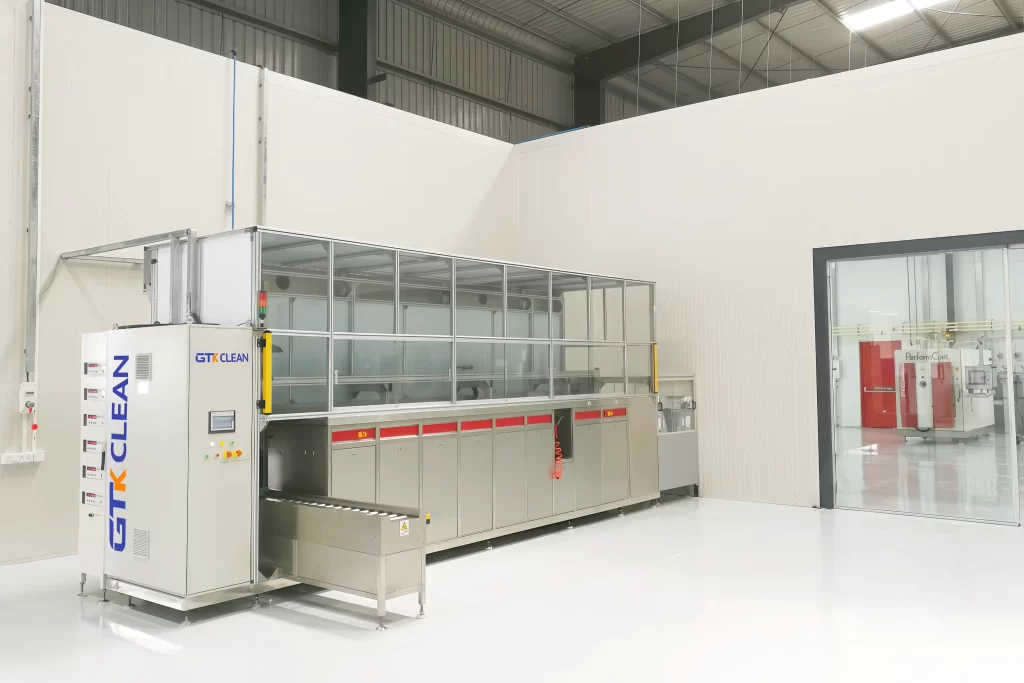
Chinese manufacturers have closed the gap on general-purpose automation faster than most buyers realize. Our CNC Aluminum Shell Inline Cleaners run continuous conveyor systems with multi-directional spray nozzles, Siemens or Mitsubishi PLCs, and touch-screen HMIs that require minimal operator training. Twenty-plus years of R&D have produced 28 technical patents covering ultrasonic transducer arrays, fluid circulation optimization, and automated process sequencing. Overflow, filtration, and circulation systems extend fluid life and reduce waste, which matters when solvent costs run into five figures annually. The technology isn't exotic, but the integration is mature enough that buyers no longer sacrifice reliability for price.
What Total Cost of Ownership Looks Like in Practice
Initial purchase price is the easiest number to compare and the least useful for predicting five-year costs. Chinese industrial cleaning equipment typically lands 30 to 50 percent below European equivalents at the quote stage. That gap narrows or reverses depending on energy consumption, maintenance intervals, and downtime frequency.
European equipment often wins on energy efficiency per cleaning cycle, particularly in solvent systems with heat recovery. Maintenance intervals stretch longer because seals, pumps, and transducers are specified for extended service life. A heavy-duty automated ultrasonic cleaner rated for workpieces up to 2000 kg might cost 40 percent more upfront but run 25 percent longer between overhauls.
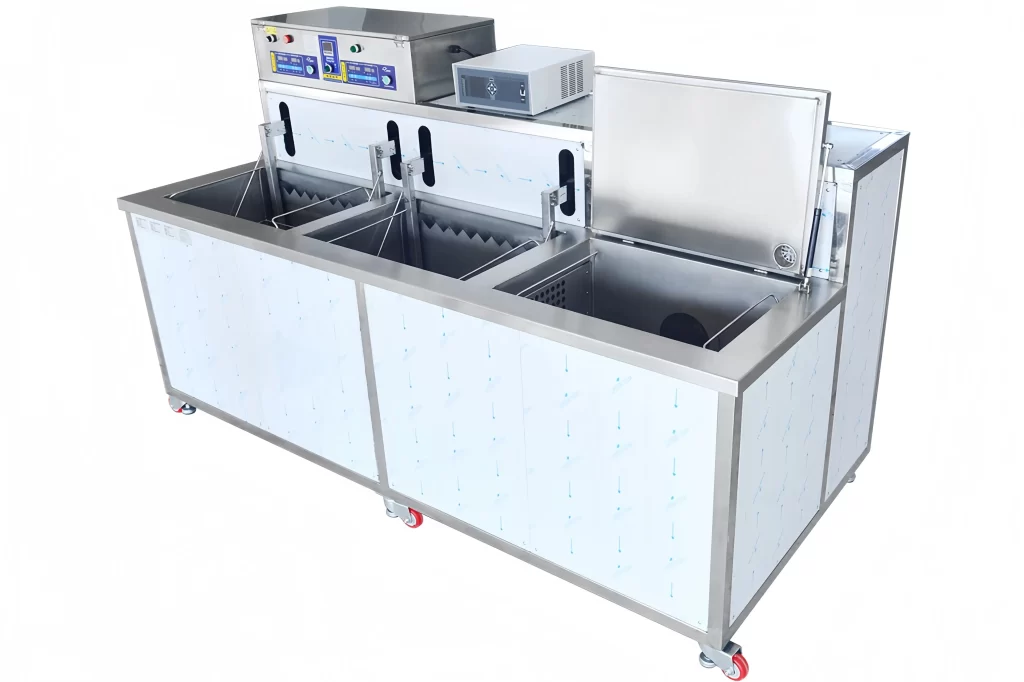
Chinese equipment competes on operational cost through fluid recycling and accessible spare parts. Our multi-tank ultrasonic cleaners use circulation filtration to extend bath life by 30 to 40 percent compared to single-pass designs. Parts availability has improved as Chinese manufacturers built out global logistics networks. For high-volume, standardized production, the lower capital outlay and competitive consumable costs often yield a faster payback period.
| Factor | Chinese Equipment | European Equipment |
|---|---|---|
| Initial Investment | Generally lower | Generally higher |
| Operational Costs | Competitive, with focus on fluid recycling | Often lower due to efficiency and durability |
| Maintenance Needs | Moderate, parts generally accessible | Lower frequency, specialized parts might be required |
| Equipment Lifespan | Good, with continuous improvements | Very long, built for endurance |
| ROI Potential | High, especially for high-volume, cost-sensitive tasks | High, through long-term reliability and efficiency |
How Regulatory Compliance Shapes Equipment Design
European manufacturers design within REACH and RoHS constraints from the outset. Closed-loop solvent systems, advanced filtration, and material choices that facilitate end-of-life recycling are standard rather than optional upgrades. Buyers in regulated industries (pharmaceutical, food processing, aerospace) often specify European equipment because compliance documentation is already in place.
Chinese manufacturers have accelerated sustainability adoption, driven partly by export requirements and partly by domestic environmental regulations that tightened significantly after 2015. Our Multi-Tank Hydrocarbon Ultrasonic Cleaners incorporate distillation-based solvent recovery that reclaims 85 to 90 percent of hydrocarbon volume. Pre PVD Coating Parts Ultrasonic Cleaners deliver ultrapure water at conductivity ≤ 0.06 μS/cm, preventing secondary contamination while minimizing water consumption through overflow rinsing and circulation. Safety features like automatic alarms, fault diagnostics, and multi-level access control are now standard across both regions.
If your operation faces strict environmental audits or handles hazardous solvents, it's worth discussing compliance documentation requirements before committing to any supplier.
What After-Sales Support Actually Delivers
European manufacturers built global service networks over decades. Spare parts ship from regional warehouses, field technicians arrive within contractual response windows, and training programs cover everything from operator certification to preventive maintenance protocols. The infrastructure is mature, and buyers in Western Europe or North America rarely wait long for support.
Chinese manufacturers are catching up. GTKCLEAN operates in over 20 countries, providing on-site installation, operator training, and remote software upgrades for fully automatic systems. Spare parts logistics have improved as we established regional distribution points. Our Rotary Basket Ultrasonic Cleaners are designed for maintainability: modular transducer arrays, accessible pump assemblies, and diagnostic interfaces that simplify troubleshooting. Response times vary by region, so buyers outside major industrial centers should verify local support availability before purchase.
Matching Industrial Cleaning Equipment to Your Actual Requirements
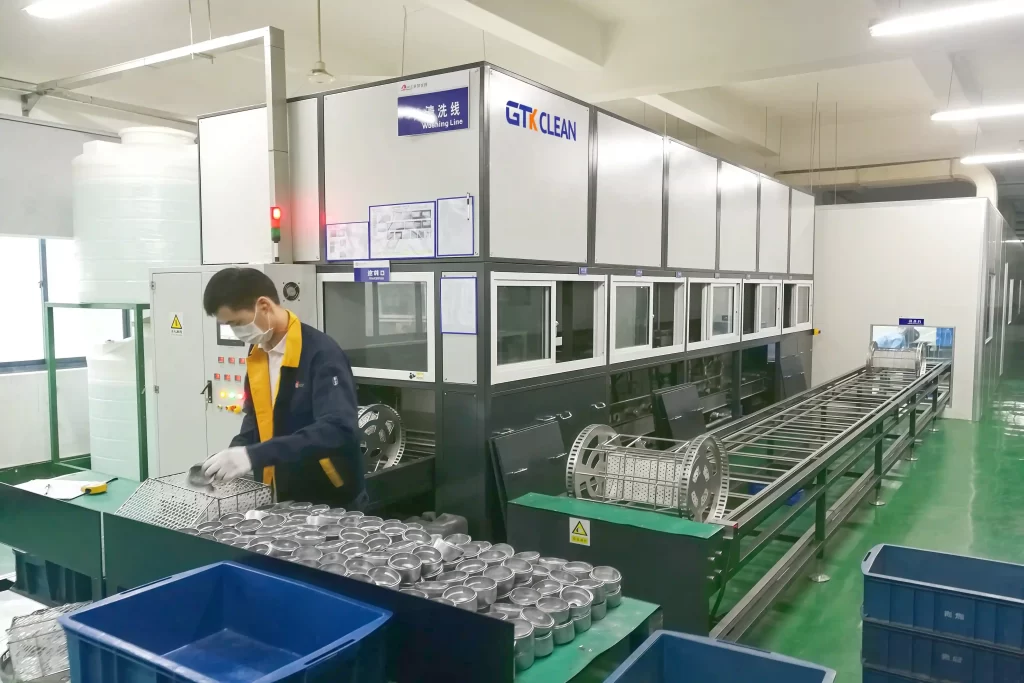
The Chinese-versus-European framing oversimplifies what is really a set of tradeoffs that shift depending on production volume, cleanliness specifications, and capital constraints. High-volume operations running standardized parts benefit from Chinese automation and competitive pricing. Our Fastener Tunnel Cleaners process ≥2 tons per hour with automated inline cleaning, which makes sense for fastener manufacturers or stamping operations where throughput matters more than micron-level precision.
Buyers in aerospace, medical devices, or semiconductor fabrication often need the extreme precision and compliance documentation that European manufacturers provide as standard. The premium reflects real engineering differences, not just brand positioning.
Customization options exist in both regions. We tailor tank dimensions, transducer frequencies, and process sequencing to match specific part geometries and contamination types. European manufacturers offer similar flexibility, usually with longer lead times. Evaluating supplier reliability, technical support infrastructure, and the availability of local service technicians matters as much as the equipment specifications themselves.
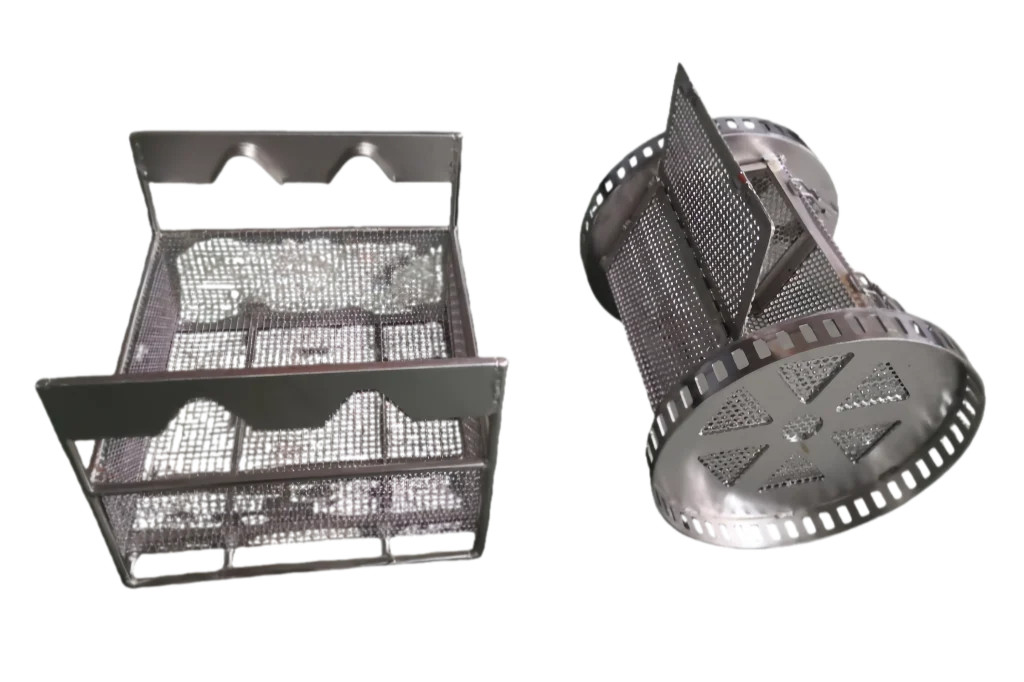
Partner with GTKCLEAN for Advanced Cleaning Solutions
GTKCLEAN's 20+ years of R&D expertise and 28 patented technologies support industrial cleaning processes across automotive, aerospace, and precision manufacturing. To discuss requirements for ultrasonic, solvent, conveyor, or water treatment systems, contact us at [email protected] or +86 17768507147.
Frequently Asked Questions
What makes Chinese industrial cleaning equipment competitive with European alternatives?
Chinese industrial cleaning equipment delivers highly automated solutions at price points that open advanced cleaning technology to mid-sized manufacturers. Rapid technological adoption, efficient manufacturing, and customizable designs contribute to strong value propositions. Fluid recycling systems and circulation filtration extend consumable life, which reduces ongoing operational costs.
How do European cleaning equipment manufacturers maintain quality and compliance standards?
European manufacturers operate within stringent regulatory frameworks including CE, ISO, and industry-specific certifications like ATEX. Precision engineering, premium material grades, and extended component service life are standard design priorities. Equipment is typically built for 15 to 20 year operational lifespans with robust performance under demanding conditions.
Which regional approach fits specific industrial cleaning applications better?
The answer depends on production volume, cleanliness specifications, and budget constraints. High-volume operations with standardized parts often benefit from Chinese automation and competitive pricing. Applications requiring extreme precision, hazardous solvent handling, or comprehensive compliance documentation may justify European equipment premiums. Evaluating technical requirements, regulatory environment, and local support availability before purchase prevents mismatches. For help determining which approach fits your operation, reach out to discuss your specific cleaning requirements.
If you're interested, you may want to read the following articles:
Implement Solvent Recovery Systems: A Factory Efficiency Guide
Budgeting for Industrial Cleaning Equipment Upgrades A Strategic Guide
Mastering Automation Levels in Industrial Ultrasonic Cleaning
 English
  German
  Spanish
  French
  Russian
  Portuguese