
Selecting the right degreasing method for industrial parts cleaning shapes everything from production throughput to regulatory compliance. Manufacturers routinely evaluate hot water degreasing against solvent-based systems when removing machining oils, and the decision depends on oil type, part material, target cleanliness, and environmental constraints. Getting this choice wrong means rework, contamination failures, or unnecessary operating costs. The sections below break down how each method performs, where each excels, and how to match the process to your specific application.
How Hot Water Degreasing Actually Works
Hot water degreasing combines thermal energy with aqueous cleaning solutions and emulsifying agents to lift oils and greases from part surfaces. Elevated water temperature reduces oil viscosity, making contaminants easier to dislodge, while detergents break down and emulsify the residue. This approach avoids volatile organic compounds (VOCs), which simplifies environmental compliance in facilities subject to air quality regulations.
Ultrasonic degreasing technology changes the performance ceiling of hot water systems. Cavitation, the formation and implosion of microscopic bubbles, generates intense localized scrubbing action that reaches blind holes, internal channels, and complex geometries that spray washing alone cannot address.
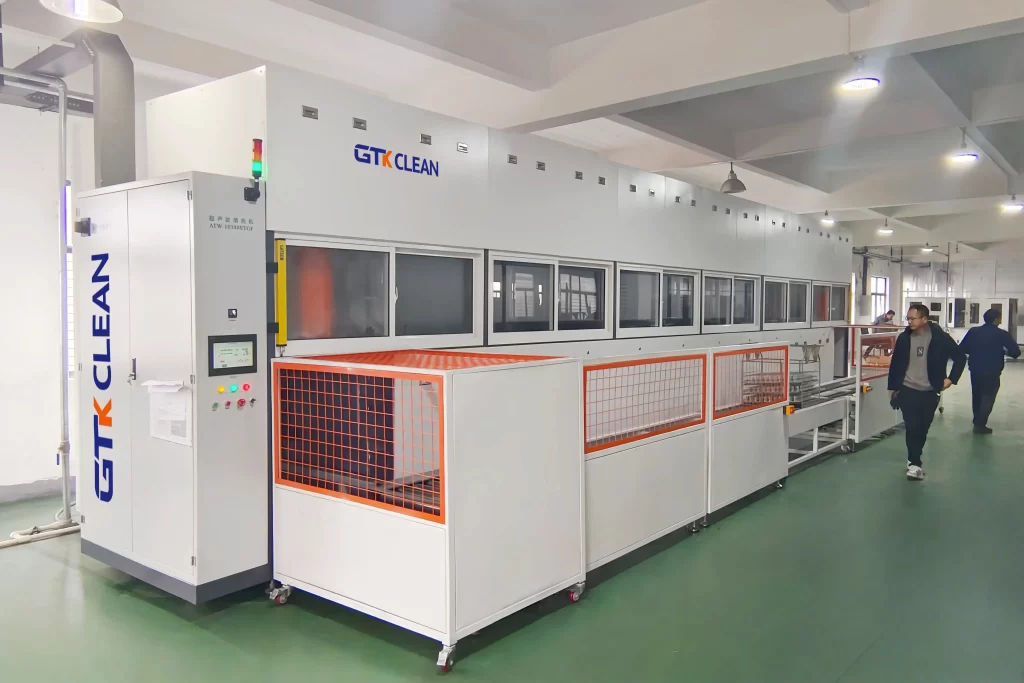
Our Pre PVD (Coating) Parts Ultrasonic Cleaners operate with ultrapure water and alkaline or neutral detergents at 45–65°C. The process sequence includes ultrasonic cleaning, multi-stage ultrapure water rinsing, and configurable drying options. Maintaining ultrapure water conductivity at or below 0.06 μS/cm prevents water spots and secondary contamination, a requirement for components heading into coating or bonding operations. GTKCLEAN's ultrasonic cleaning systems extend these capabilities to parts with deep holes or intricate internal features where conventional aqueous methods fall short.
Why Solvent Degreasing Delivers Faster Oil Removal
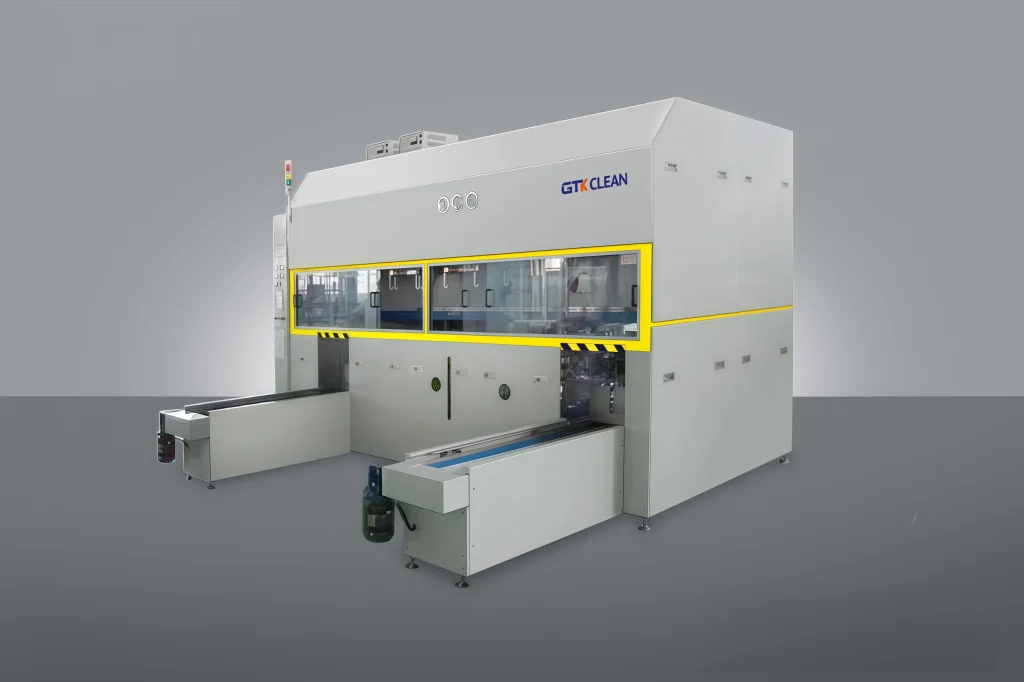
Solvent degreasing systems remove oil through direct chemical dissolution rather than emulsification. Hydrocarbon solvents and modified alcohol solvents dissolve oils and greases on contact, which typically shortens cleaning cycles and improves precision on intricate parts. Vapor degreasing, a common solvent-based technique, suspends parts in a heated solvent vapor cloud. The solvent condenses on cooler part surfaces, dissolves contaminants, and drips away, leaving a clean, dry surface without additional drying steps. This method suits precision cleaning applications where minimal residue is acceptable and cycle time matters. GTKCLEAN's solvent cleaning systems are engineered for rapid oil removal under stringent cleanliness specifications.
Solvent degreasing introduces safety considerations that shape facility design and operating procedures. Hydrocarbon solvents are flammable, certain chemicals carry toxicity risks, and VOC emissions face increasing regulatory scrutiny. Proper ventilation, fire suppression systems, and personal protective equipment are mandatory. Environmental regulations in many jurisdictions now restrict high-VOC solvents, driving adoption of modified alcohol solvents or closed-loop systems with solvent recovery.
Comparing Speed, Cleaning Performance, and Environmental Impact
Comparing hot water and solvent degreasing reveals trade-offs across cleaning speed, oil removal effectiveness, and environmental footprint. Solvent systems typically deliver faster cycle times because dissolution is more direct than emulsification, a meaningful advantage in high-throughput manufacturing. Hot water degreasing, while often slower per cycle, offers a safer and more environmentally sound alternative that avoids VOC handling and disposal costs.
| Feature | Hot Water Degreasing | Solvent Degreasing |
|---|---|---|
| Primary mechanism | Thermal energy plus emulsification | Chemical dissolution |
| Typical cycle time | Longer (emulsification and rinsing stages) | Shorter (direct dissolution, vapor drying) |
| VOC emissions | None | Present (requires controls or closed-loop) |
| Regulatory complexity | Lower | Higher (air permits, waste handling) |
| Residue risk | Water spots possible without ultrapure water | Minimal if solvent is clean |
| Capital cost | Generally lower | Higher (solvent recovery, safety systems) |
| Operating cost | Water, detergent, energy | Solvent replacement, recovery energy |
Hot water degreasing can match solvent cleanliness levels when augmented with ultrasonic technology and precise process control. While solvents dissolve many contaminants directly, water-based systems with effective surfactants and physical agitation emulsify and remove oils, greases, and particulates. The key lies in optimizing temperature, detergent concentration, and ultrasonic frequency. Our Pre PVD (Coating) Parts Ultrasonic Cleaners achieve precision cleaning through multi-stage rinsing with ultrapure water, ensuring no secondary contamination for coating-ready surfaces.
Matching the Degreasing Method to Your Application
Selecting the optimal degreasing method requires weighing several factors against each other: contaminant type, part material, cleanliness specification, and total operating cost. Each application presents unique constraints, and a method that works for one product line may fail on another. GTKCLEAN offers automated cleaning equipment in both aqueous and solvent configurations, tailored to specific industrial requirements.
A client manufacturing precision optical components needed a cleaning process that would leave no residue and avoid material degradation. I recommended our Hydrocarbon Solvent Ultrasonic Vacuum Cleaners. This single-station, fully automatic system integrates ultrasonic cleaning, vacuum vapor cleaning, and drying. It accepts hydrocarbon or modified alcohol solvents and includes built-in vapor condensation and vacuum distillation for solvent recovery. The result was a 99.9% removal rate for machining oils and particulates, and the optical components met stringent clarity standards without surface damage.
Oil type significantly influences the choice between hot water and solvent degreasing. Heavy, viscous oils respond better to solvents because of their superior solvency power. Lighter oils and water-soluble coolants can be handled efficiently by hot water systems, especially when combined with appropriate detergents and ultrasonic agitation. Understanding the chemical composition and physical properties of the contaminant is the starting point for effective surface preparation.
If your application involves high-value parts with tight cleanliness tolerances, it is worth discussing contaminant chemistry and material compatibility before committing to a system configuration.
Where Industrial Degreasing Technology Is Heading
Industrial cleaning development is converging on sustainability and efficiency. Closed-loop solvent systems minimize emissions and reduce solvent consumption through efficient recycling, addressing both regulatory pressure and operating cost. Aqueous systems are advancing with new biodegradable detergents and more effective filtration and water treatment, extending bath life and reducing discharge volumes. Automated cleaning equipment with intelligent control systems is becoming standard, reducing labor variability and ensuring consistent cleaning quality across shifts.
Making the Decision
Choosing between hot water and solvent degreasing is a strategic decision that affects production quality, operating costs, and environmental responsibility. Both methods offer distinct advantages depending on the specific industrial application. By evaluating contaminant type, material compatibility, and target cleanliness, manufacturers can implement an effective and sustainable degreasing solution.
To discuss requirements for your industrial parts cleaning application, contact us at [email protected] or +86 17768507147.
FAQ
What are the primary safety concerns with solvent degreasing?
Solvent degreasing presents several safety concerns, primarily related to the flammability of hydrocarbon solvents, the toxicity of certain chemicals, and the emission of VOCs. Proper ventilation, fire suppression systems, and personal protective equipment are mandatory. Environmental regulations increasingly restrict the use of high-VOC solvents, prompting a shift towards modified alcohol solvents or closed-loop systems with solvent recovery.
Can hot water degreasing achieve the same cleanliness levels as solvents?
Achieving the same cleanliness levels as solvents with hot water degreasing is possible, especially when augmented with ultrasonic technology and precise process control. While solvents directly dissolve many contaminants, water-based systems, particularly when combined with effective surfactants and physical agitation, can emulsify and remove oils, greases, and particulates. The key lies in optimizing parameters such as temperature, detergent concentration, and ultrasonic frequency. Our Pre PVD (Coating) Parts Ultrasonic Cleaners achieve precision cleaning through multi-stage rinsing with ultrapure water, ensuring no secondary contamination.
How does the type of oil impact the choice between hot water and solvent degreasing?
The type of oil significantly influences the choice of degreasing method. Heavy, viscous oils are often more effectively removed by solvents due to their superior solvency power. Lighter oils and water-soluble coolants can be efficiently handled by hot water degreasing systems, especially when combined with appropriate detergents and ultrasonic agitation. Understanding the chemical composition and physical properties of the oil is crucial for effective surface preparation. If you are unsure which method suits your contaminant profile, we can review your process requirements and recommend a configuration.
If you're interested, you may want to read the following articles:
- Ultrasonic Cleaning Systems for Precision Parts
- Solvent Recovery in Industrial Cleaning
- Aqueous Cleaning vs Solvent Cleaning: A Technical Comparison
Choosing the Right Production-Line Ultrasonic Cleaning System Guide
Reduce Energy Costs in Industrial Ultrasonic Cleaning
Mastering Automation Levels in Industrial Ultrasonic Cleaning
How to Choose the Best Ultrasonic Power for an Ultrasonic Cleaning Machine ?
 English
  German
  Spanish
  French
  Russian
  Portuguese