

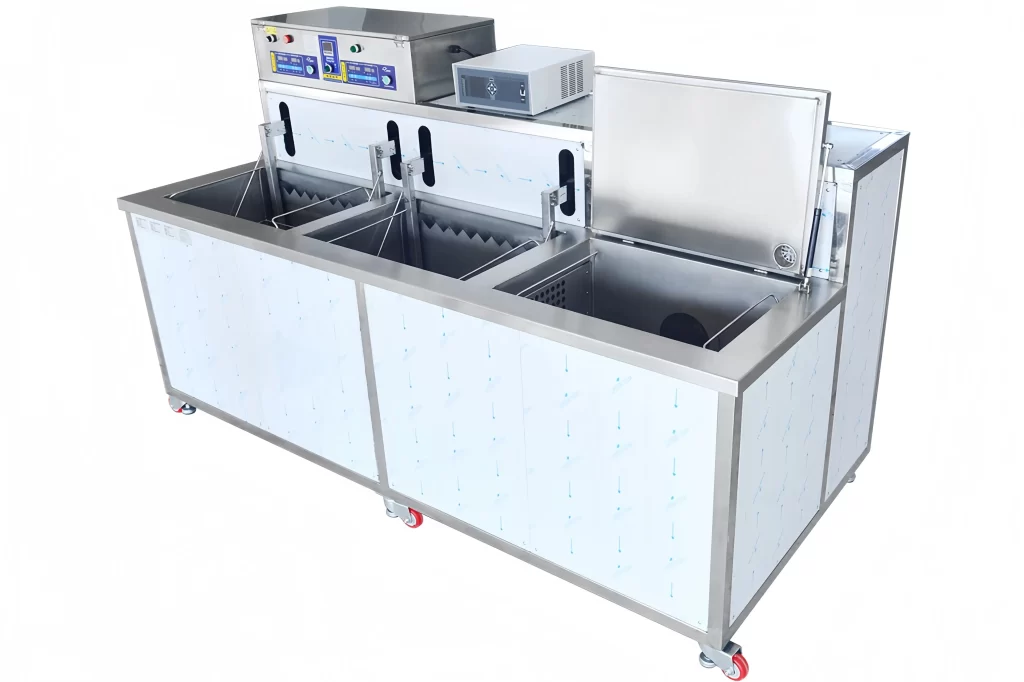
Water spots on precision parts after cleaning represent more than a cosmetic defect. They signal mineral deposits, residual contaminants, or incomplete drying that can cause coating adhesion failures, corrosion initiation, and rejected batches in downstream processes. The root cause is rarely the drying equipment itself. In my experience designing automated cleaning systems, water spots most often trace back to rinse water quality, part geometry that traps liquid, or drying parameters mismatched to the application. Addressing these factors systematically eliminates spots without expensive equipment upgrades.
Why Water Spots Form After Industrial Cleaning
Water spots appear when rinse water evaporates and leaves behind dissolved solids. Tap water contains calcium, magnesium, silica, and chlorides at concentrations ranging from 100 to 500 ppm total dissolved solids (TDS) depending on local supply. When this water evaporates on a metal surface, those minerals remain as visible residue.
Three conditions must align for water spots to form:
- Rinse water carries dissolved minerals or contaminants
- Water remains on the part surface long enough to evaporate rather than drain
- Drying conditions allow slow, uneven evaporation
Parts with blind holes, recesses, or horizontal surfaces trap water that cannot drain freely. Slow air drying at ambient temperature gives water time to evaporate in place. High humidity environments extend drying time and increase spot formation.
The chemistry matters as well. Alkaline cleaning solutions that are not fully rinsed leave surfactant films. Oils that emulsify during cleaning can re-deposit during rinsing if the rinse water is contaminated. I have seen cases where the cleaning tanks were perfectly maintained, but the rinse tanks were neglected, and every part came out spotted.
Rinse Water Quality Standards That Prevent Spots
The single most effective intervention against water spots is controlling rinse water quality. For general industrial parts, RO (reverse osmosis) water with conductivity below 10 μS/cm eliminates most visible spotting. For pre-coating applications where surface cleanliness directly affects adhesion, DI (deionized) water with conductivity at or below 0.06 μS/cm is the standard.
| Application | Water Type | Conductivity Target | TDS (ppm) |
|---|---|---|---|
| General industrial | RO water | < 10 μS/cm | < 5 |
| Pre-coating / PVD | Ultrapure DI | ≤ 0.06 μS/cm | < 0.03 |
| Medical devices | DI water | < 1 μS/cm | < 0.5 |
| Optical components | Ultrapure DI | ≤ 0.06 μS/cm | < 0.03 |
Conductivity monitoring should be continuous, not periodic. A conductivity meter installed on the final rinse tank with an alarm setpoint catches water quality degradation before it affects production. When conductivity rises above the target, either the DI system needs regeneration or the tank needs draining and refilling.
Multi-stage rinsing dramatically reduces spot risk. A three-stage cascade rinse, where fresh DI water enters the final tank and overflows backward through earlier stages, keeps the final rinse consistently clean while reducing water consumption. Parts exiting the final stage contact only the lowest-conductivity water.
Drying Methods That Leave Surfaces Spot-Free
Even with perfect rinse water, improper drying creates spots. The goal is removing water before it can evaporate in place. Three drying technologies address this differently.
Air knife drying uses high-velocity compressed air to physically blow water off surfaces. Air knives work well for flat parts and external surfaces. They struggle with blind holes and recesses where air cannot reach. Positioning matters: angling parts so water drains toward the air stream improves results. Air knife systems typically operate at 4 to 6 bar pressure with heated air at 40 to 60°C.
Hot air drying evaporates water using convective heat. Temperatures of 80 to 120°C accelerate evaporation, but if the part has trapped water, that water evaporates in place and leaves spots. Hot air drying works best after air knife pre-drying has removed bulk water.
Vacuum drying drops chamber pressure so water boils at low temperature. At 50 mbar, water boils at approximately 33°C. This pulls water out of blind holes and recesses that air cannot reach. For parts with complex geometries, vacuum drying is often the only method that achieves spot-free results. The GTKCLEAN hydrocarbon ultrasonic vacuum cleaning systems use this principle, combining vacuum conditions with vapor drying to remove both water and solvent residues from precision components.
The sequence matters. I recommend air knife first to remove 80 to 90% of surface water, followed by hot air or vacuum drying to finish. Skipping the air knife stage and relying entirely on thermal drying wastes energy and increases cycle time.
Part Geometry and Fixturing Considerations
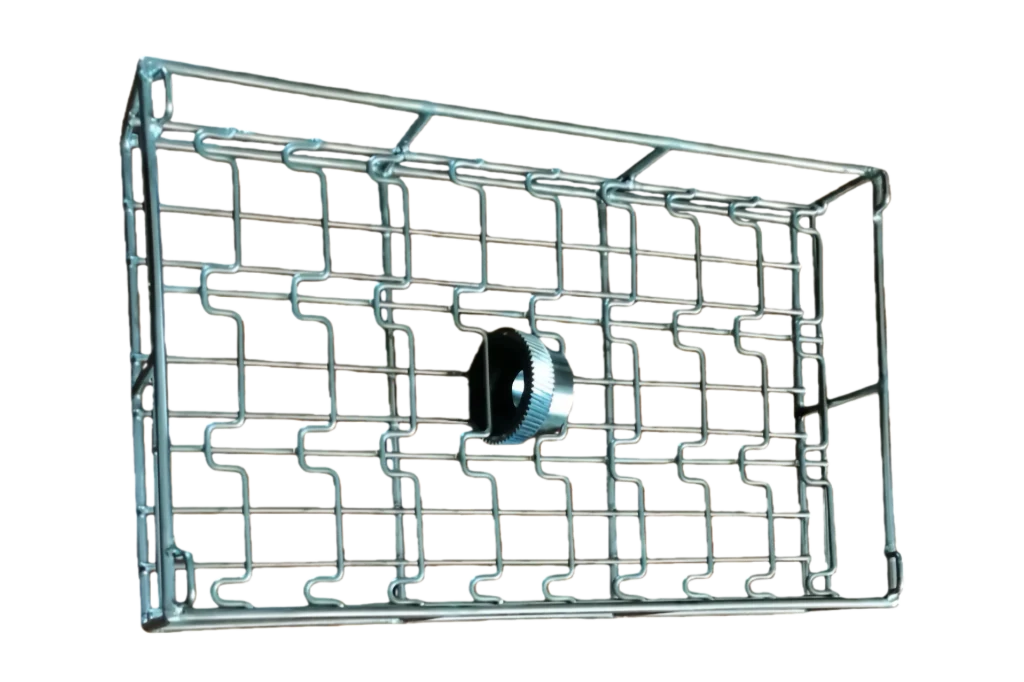
A well-designed drying system fails if parts are fixtured incorrectly. Orientation during drying determines whether water drains or pools.
Parts with blind holes should be oriented so holes face downward or at an angle that allows drainage. Horizontal blind holes trap water regardless of drying method. If part geometry prevents ideal orientation, vacuum drying becomes mandatory.
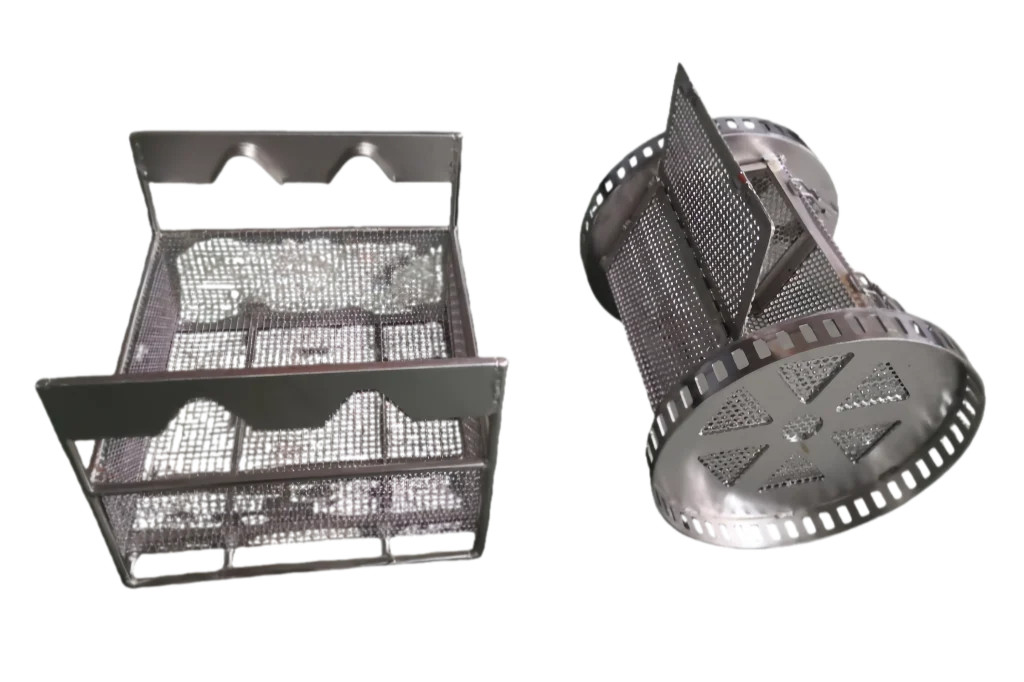
Cleaning baskets affect drying performance. Solid-bottom baskets trap water beneath parts. Mesh or perforated baskets allow water to drain. Basket design should match part geometry: round rotating baskets work well for parts with blind holes because rotation continuously changes orientation, allowing trapped water to escape.
Overloading baskets creates shadows where air cannot reach. Parts touching each other retain water at contact points. Spacing parts adequately, even if it reduces batch size, improves drying consistency and reduces rejects.
Process Parameter Optimization for Consistent Results
Drying is not a fixed recipe. Parameters must be tuned to specific parts and adjusted as conditions change.
Temperature: Higher temperatures accelerate evaporation but can damage heat-sensitive parts or cause flash drying that traps water in crevices. Start at the lower end of the acceptable range and increase only if spots persist.
Time: Insufficient drying time leaves water on parts. Excessive time wastes energy and reduces throughput. Establish minimum effective drying time through testing, then add a safety margin of 10 to 20%.
Airflow: For convective drying, airflow velocity and uniformity matter. Dead zones in the drying chamber create inconsistent results. Periodic airflow mapping with smoke or tracer gas identifies problem areas.
Vacuum level: For vacuum drying, deeper vacuum removes water more aggressively but requires longer pump-down time. A staged approach, pulling to moderate vacuum first, then deeper vacuum, often works better than immediate deep vacuum.
Document parameters for each part number. When spots appear on a previously successful part, compare current parameters to the documented baseline. Drift in temperature, pressure, or time often explains sudden quality problems.
Troubleshooting Persistent Water Spot Issues
When spots persist despite correct water quality and drying parameters, systematic diagnosis identifies the root cause.
Check rinse water at the point of use, not just at the DI system output. Contaminated piping, tank buildup, or cross-contamination from previous stages can degrade water quality after it leaves the treatment system.
Examine the spots under magnification. Mineral deposits appear crystalline or powdery. Organic residues appear as films or smears. The appearance indicates whether the problem is water quality, cleaning chemistry, or contamination.
Test with a known-good part. If a simple, flat test coupon dries spot-free but production parts do not, the issue is geometry-related. If the test coupon also spots, the issue is water quality or drying parameters.
Verify cleaning chemistry is fully rinsed. Alkaline cleaners and surfactants that carry over into the rinse stage cause spots even with perfect DI water. Increase rinse stages or rinse time, or reduce detergent concentration in the cleaning stage.
If your drying process involves parts with complex internal geometries or you are seeing inconsistent results across batches, it is worth reviewing the complete cleaning and drying sequence together. Reach out at [email protected] or +86 17768507147 with your part drawings and current process parameters, and we can identify where the breakdown occurs.
Common Questions About Drying Process Problems
What conductivity level prevents water spots on pre-coating parts?
For PVD, CVD, or other coating applications, rinse water conductivity should be at or below 0.06 μS/cm. At this level, dissolved solids are low enough that evaporation leaves no visible residue. Higher conductivity water may appear acceptable visually but can leave microscopic contamination that causes coating adhesion failures. Continuous conductivity monitoring on the final rinse tank catches degradation before it affects production. If your current system cannot achieve this level, a DI water treatment upgrade is the most cost-effective solution.
Why do blind holes still have water spots after hot air drying?
Hot air drying relies on evaporation, which requires air contact with the water surface. Water trapped in blind holes has minimal air contact, so it evaporates slowly and leaves concentrated mineral deposits. The solution is either reorienting parts so holes drain before drying, using vacuum drying to pull water out by lowering pressure, or switching to a rotating basket system that continuously changes part orientation. For parts with multiple blind holes at different angles, vacuum drying is typically the only reliable option.
How do I know if spots are from water quality or incomplete rinsing?
Analyze the spots. Scrape a small sample and examine it. White crystalline residue indicates mineral deposits from water. Oily or sticky residue indicates cleaning chemistry carryover. You can also test by rinsing a spotted part in fresh DI water: if spots remain, they are baked-on minerals; if they dissolve, the issue is incomplete rinsing. Another diagnostic is running a clean test coupon through only the rinse and dry stages. Spots on the coupon point to water quality; no spots point to cleaning chemistry carryover.
Can air knife drying alone eliminate water spots?
For simple, flat parts with no recesses, air knife drying can be sufficient if rinse water quality is adequate. For parts with any geometric complexity, air knives remove bulk water but cannot reach trapped liquid. Combining air knife pre-drying with a finishing stage, either hot air or vacuum, produces consistent results across part geometries. The air knife handles 80 to 90% of the water removal quickly and efficiently; the finishing stage addresses what remains.
What maintenance prevents drying-related water spots?
Inspect and clean air knife nozzles weekly; mineral buildup or debris reduces airflow uniformity. Drain and flush rinse tanks on a schedule based on production volume, not calendar time. Monitor DI system output daily and regenerate or replace cartridges before conductivity rises. Check vacuum pump oil and seals monthly for systems with vacuum drying. Verify temperature sensors and controllers quarterly against a calibrated reference. Preventive maintenance catches degradation before it causes quality escapes. Share your current maintenance schedule and we can suggest adjustments specific to your equipment configuration.
If you're interested, check out these related articles:
Solvent Cleaning System Maintenance: A Complete Guide
How to Ensure Perfect Coating Adhesion Without Water Spots or Stains?
Ultrasonic Cleaning Process: A Step by Step Technical Guide
Essential Questions for Industrial Cleaning Equipment Suppliers
Multi-Tank Ultrasonic Cleaning: A Deep Dive into Industrial Configurations
 English
  German
  Spanish
  French
  Russian
  Portuguese