Most heavy-duty automated ultrasonic cleaning system specifications begin with tank size and ultrasonic power. Those two numbers tell you little about whether a 900 kg gearbox will come out clean on every cycle. The real risk sits in load support, basket restraint, and transfer sequencing. If those are wrong, cavitation reaches only part of the surface and automated cycles still produce rework. I focus this checklist on the decisions that industrial buyers should make before comparing quotations, because correcting a load path after installation costs far more than specifying it properly from the start.
Which Parts Justify a Heavy-Duty Automated Ultrasonic Cleaning System?
Heavy-duty systems are not simply larger versions of benchtop cleaners. We specify them when part mass, geometry, or production volume makes manual loading unsafe and small baskets inefficient. Typical candidates are engine blocks, gearboxes, bearing housings, large gears, and large molds. These parts often exceed 100 kg and can reach 2,000 kg with reinforced lifting and basket structures. The deciding factor is not physical size alone. A dense part with blind holes and internal galleries may need heavy-duty handling even below 100 kg because rotation and full immersion become key to cavitation coverage. If the part cannot be effectively accessed in a standard basket, the equipment is no longer a cleaning upgrade; it is a cleaning bottleneck.
How Does Load Capacity Change Basket and Frame Design?
In a light industrial system, the basket is mostly a container. In a heavy-duty system, it is a load-bearing structure. We reinforce tanks, motors, and lifting mechanisms for the rated workpiece mass and add custom baskets that locate the part instead of merely holding it. A gearbox that shifts during transfer can trap liquid, shield surfaces from ultrasonic action, and mark mating faces. The basket must keep drain paths open and prevent contact points from blocking the cleaning media. For parts with blind holes and recesses, rotary baskets improve cleaning, rinsing, and drying because the part rotates through the cavitation field instead of sitting in one position.
Load mistakes are more visible on heavy parts because the consequences show up as scrap or rework rather than a longer cycle. <Industrial Cleaning Baskets: Why They Matter for Your Parts Washing Efficiency> explains why circular baskets suit blind-hole parts, sheet-style baskets protect flat faces, and heavy-load baskets require strength without blocking the cleaning media.
What Automation Choices Prevent Transfer Failures?
Automation in heavy-duty ultrasonic cleaning should be judged by cycle consistency, not just labor count. A hoist or robotic transfer system that lowers a 1,200 kg part too quickly can disturb the liquid level, but the larger problem is positional repeatability. If the part does not land in the same orientation every cycle, some surfaces may receive less cavitation. We specify PLC-controlled transport with defined speeds and dwell times, plus alarms for overload, short fill, low temperature, and transfer fault. On a fully automatic line, cleaning quality should not depend on an operator remembering a sequence.
How Much Operator Involvement Does a Fully Automated Heavy-Duty System Still Need?
Some operator involvement remains for loading raw parts, confirming fixture engagement, and reacting to alarms. The machine should handle all cleaning, rinsing, rust prevention, and drying transitions. We use Siemens or Mitsubishi PLC control with touchscreen HMI so recipe parameters and fault diagnostics stay visible without opening the control cabinet.
What Does Robotic Lifting Add Compared With a Programmed Hoist?
Robotic lifting matters when the part must be reoriented in more than one plane or when multiple tanks require different immersion angles. A two-axis or three-axis hoist covers many straight-line transfers at lower cost. A robot becomes justified when blind holes would otherwise trap air or liquid and the part must rotate during entry.
The automation decision has a breakpoint. <Semi Automated vs Fully Automated Ultrasonic Cleaning Systems> compares semi-automated transfer with fully automated sequencing and shows that full automation pays back when a missed step creates contamination, rework, or expensive downstream failure.
How Should Process Configuration Match the Cleanliness Target?
A heavy-duty system may use a single-stage ultrasonic wash, but most industrial parts need multiple stages: ultrasonic degreasing, recirculated rinse, fresh or DI water rinse, rust prevention, and drying. We specify the stage sequence according to contaminant and the next operation. Parts headed for assembly may tolerate a light oil film; parts headed for coating, plating, or welding cannot.
Process stage
Primary function
Key specification check
Ultrasonic degreasing
Remove oil, chips, compounds
Power density, frequency, temperature
Rinsing
Remove detergent and loosened soil
Fresh water flow, overflow, DI water quality
Rust prevention
Protect parts between operations
Concentration and drainage time
Drying
Remove residual water from blind features
Air knife, hot air, or vacuum assistance
Why Do Blind Holes Fail Cleanliness at Full Load?
The mechanism is gas and particle entrapment. A blind hole facing upward may trap air, preventing cavitation from reaching the bottom; facing downward it may retain contaminated liquid. Rotation, proper part orientation, and enough dwell time correct this. We check the result by residual particle counts after drying, not by assuming tank coverage.
What Frequency and Temperature Ranges Work for Heavy Steel Parts?
For large steel components, 20 to 28 kHz is common because lower frequencies produce stronger cavitation with longer reach into recesses. Cleaning solution temperature around 45 to 65 C removes oil faster without boiling off the detergent, while rinse water around 30 to 40 C improves drying. We adjust these values to the specific contaminant rather than using a fixed recipe. [caption id="attachment_446" align="alignnone" width="300"] Heavy-Duty Automatic Ultrasonic Cleaning Machine[/caption]
If your part mix includes blind holes, high mass, and a coating or plating step downstream, it is worth confirming basket orientation and drying method before finalizing the line layout. Send a part drawing and the required cleanliness level to [email protected] and we can check which process sequence fits without overbuilding.
What Specification Factors Keep Heavy-Duty Automated Ultrasonic Cleaning Systems Cost-Effective?
The highest cost risk is over-specifying capacity that a plant will never use, followed closely by under-specifying the load path and then reworking it after installation. We ask buyers to define five items before pricing: maximum part mass and dimensions, cycle rate, contaminant type, cleanliness requirement, and available floor space. These inputs set tank size, ultrasonic power, heat capacity, and transfer type. A system designed for 2,000 kg may be poor value for a plant that never exceeds 300 kg, while a 300 kg frame cannot simply be upgraded later with a heavier hoist. Fluid management matters at this scale. Circulation filtration extends cleaning solution life and reduces water and detergent consumption, which affects operating cost more than a small purchase price difference. If the current line still moves large parts through manual washing or a general-purpose tank, the larger problem is usually inconsistency, not the initial machine cost. GTKCLEAN designs heavy-duty automated ultrasonic cleaning systems around part weight, geometry, and downstream cleanliness targets. Send the part number, maximum batch weight, and production rate to [email protected] or call +86 17768507147 and we can confirm the necessary tank stages, lifting method, and fixture before you commit to a layout.
What Questions Do Buyers Ask About Heavy-Duty Automated Ultrasonic Cleaning Systems?
What Load Capacity Is Typical for a Heavy-Duty System?
Standard engineering ranges from about 100 kg to 2,000 kg per load, with heavier workpieces requiring a custom frame and lifting system. The exact figure depends on whether the part must rotate and how many pieces share a basket. A 500 kg gear and a 500 kg batch of bearing housings create different load distributions. We ask for part weight, dimensions, and center of gravity rather than quoting from tank volume alone.
Do Heavy-Duty Systems Always Require Solvent?
No. Water-based ultrasonic cleaning with the right detergent covers many heavy industrial parts, especially when the line includes rinsing and rust prevention. Solvent systems become relevant when parts contain deep blind holes, sensitive surfaces, or hydrocarbons that water cannot remove quickly enough. The process should be matched to the contaminant and drying requirement, not chosen as a default.
Why Can a Large Tank Still Produce Poor Cleaning on Heavy Parts?
It depends on how the part sits in the basket. A large tank creates sufficient liquid volume, but if the part blocks cavitation, traps air in blind holes, or retains cleaning solution after rinsing, the result is uneven cleanliness. Weight, orientation, drainage, and fixture contact points often explain a failed validation more than ultrasonic power does.
What Information Does a Manufacturer Need Before Quoting?


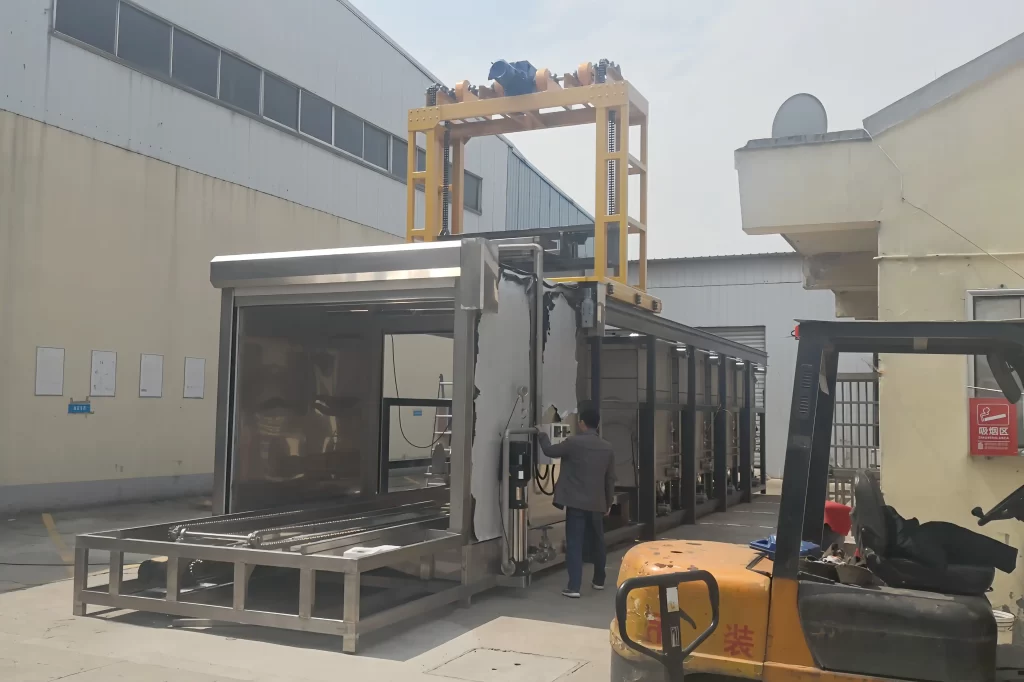
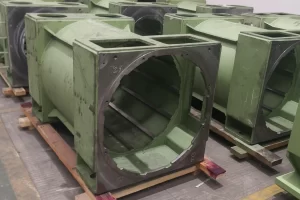
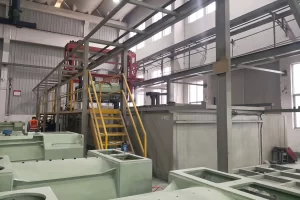 Heavy-Duty Automatic Ultrasonic Cleaning Machine[/caption]
 English
  German
  Spanish
  French
  Russian
  Portuguese