
Industrial cleaning environmental regulations are tightening across every manufacturing region, and the cleaning equipment you choose has a direct impact on your ability to stay compliant. I've spent more than two decades designing automated cleaning systems for factories in over 20 countries, and the most common compliance headache I see is not knowing the regulations; it's having equipment that can't meet them without costly retrofits. Whether your operation faces VOC limits, wastewater discharge standards, or solvent use restrictions, the path to compliance starts with the equipment specification, not with an afterthought. This article covers the regulations that matter, how equipment design affects environmental performance, and what to look for when sourcing cleaning systems that will keep you ahead of the rules.
What Environmental Regulations Apply to Industrial Cleaning Equipment?
Regulatory pressure on industrial cleaning processes comes from multiple directions, and the rules that apply to your factory depend on where you operate and what you clean. The most common environmental regulations affecting cleaning equipment fall into three categories: air emissions, wastewater, and chemical safety.
| Regulation Area | Example Requirements | Impact on Cleaning Equipment |
|---|---|---|
| Air Emissions (VOCs) | Limits on volatile organic compounds released during solvent cleaning; EPA NESHAP and EU IED set thresholds. | Demands closed-loop or vacuum solvent systems with vapor recovery to prevent emissions. |
| Wastewater Discharge | Limits on oil, grease, metals, and cleaning chemicals in water sent to drains. | Requires on-site water treatment, closed-loop rinse systems, or contract disposal of waste solutions. |
| Chemical Safety / Substance Bans | REACH, TSCA, and local regulations restrict or ban specific solvents and surfactants. | Forces selection of approved cleaning agents and may require reformulation or equipment changes. |
| Waste Management | Hazardous waste rules for spent cleaning solutions, sludge, and filters. | Promotes in-process recycling, solvent recovery, and filtration to reduce waste volume. |
| Energy Efficiency | ISO 50001 and regional standards incentivize lower energy consumption. | Equipment with efficient heating, drying, and pump designs reduces carbon footprint and operational cost. |
Many factories face requirements in multiple categories simultaneously, so the cleaning system you choose must address the full spectrum, not just one regulation.
How Does Equipment Design Affect Environmental Compliance?
The design of a cleaning machine is not just about cleaning performance; it directly controls how much solvent, water, or energy the process consumes and what leaves the factory as waste. Two areas where design has the biggest impact are water management and solvent handling.
The Role of Closed-Loop Water Systems
In aqueous cleaning lines, each rinse stage can generate thousands of liters of wastewater per day if you're running a single-pass system. A closed-loop design with recirculating rinse tanks and integrated filtration (or deionized water regeneration) reduces that to a fraction. In some of our installations for automotive parts suppliers, we've eliminated external wastewater discharge entirely by incorporating reverse osmosis and vacuum evaporation into the process. The upfront cost is higher, but the payback period through reduced water and disposal fees is typically under two years for medium-volume lines. This approach also simplifies compliance because there's no sewer discharge permit to negotiate; the system treats and reuses its own water.
Reducing VOC Emissions Through Solvent Recovery
Solvent-based cleaning remains necessary for parts with blind holes, complex geometries, or heavy oil contamination that aqueous systems can't handle. The environmental problem isn't the solvent itself; it's letting it escape into the air or into waste streams. A properly designed solvent cleaning system incorporates a distillation-based recovery unit that separates and recycles the solvent, keeping VOCs contained. Our hydrocarbon solvent vacuum cleaners, for example, combine ultrasonic cleaning, vacuum vapor degreasing, and vacuum drying in a single sealed chamber. The vapor extraction system captures over 98% of solvent fumes, and the distillation unit recovers the cleaning solvent for continuous reuse. This not only meets emission limits but cuts solvent consumption by roughly 80% compared to open-top vapor degreasers.
What Features Should You Look for in a Compliant Cleaning System?
When you're comparing cleaning systems, the environmental compliance features are not an optional add-on. They should be built into the core design. The table below highlights the differences in environmental impact between common cleaning approaches.
| Cleaning Technology | Typical Environmental Footprint | Built-In Compliance Features |
|---|---|---|
| Open-top vapor degreasing | High VOC emissions, hazardous waste generation | None without retrofits. |
| Benchtop ultrasonic with manual solvent handling | Solvent spills, uncontrolled emissions | Manual solvent recovery is possible but inconsistent. |
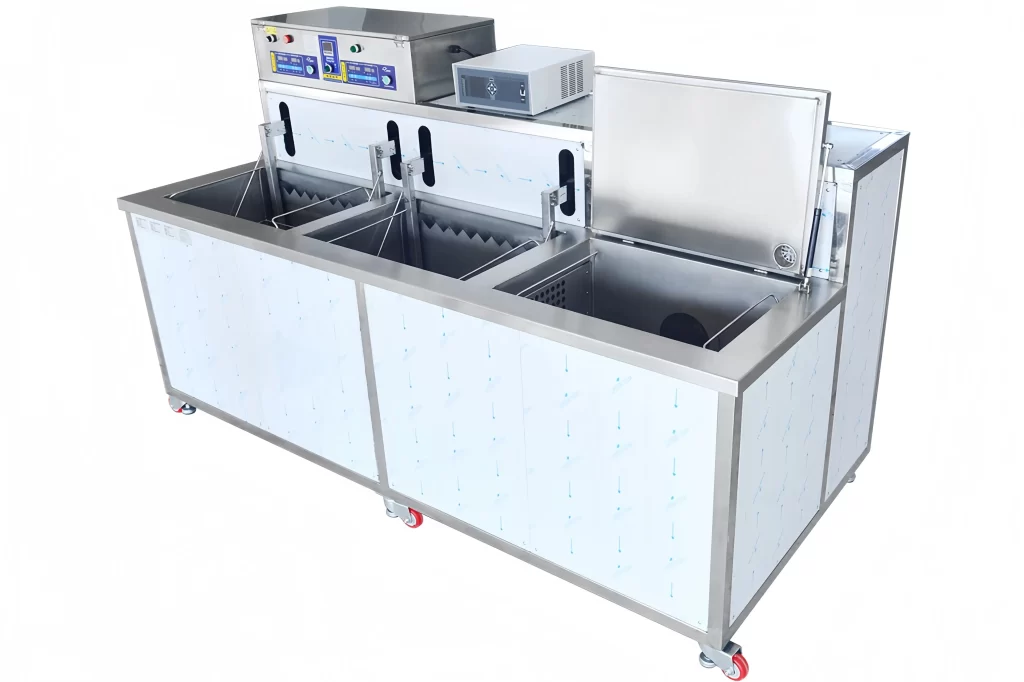
| Automated aqueous multi-tank with closed-loop rinses | Very low water discharge, moderate energy use | Integrated filtration, recycling, and optional zero-liquid-discharge design. |
| Hydrocarbon vacuum ultrasonic with solvent recovery | Near-zero VOC emissions, minimal solvent waste | Sealed process, distillation recovery, vacuum drying. |
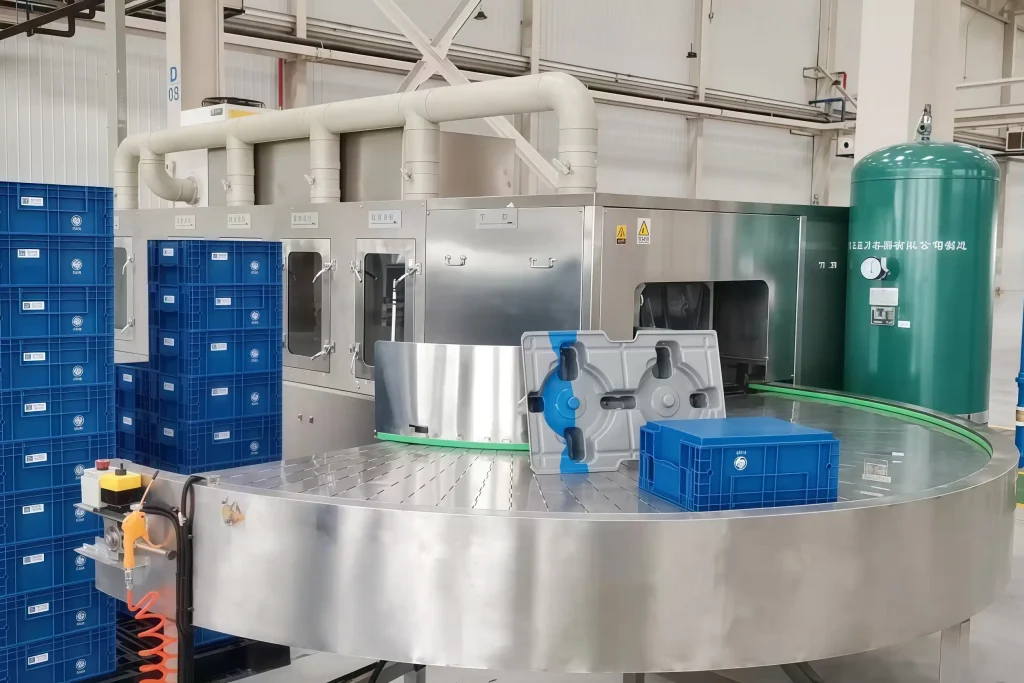
| Inline conveyor spray cleaning (aqueous) | High water usage without recirculation | Can be equipped with cascading rinse tanks, oil separation, and water recycling. |
If your program involves a mix of part materials and contaminant types, the cleaning system must handle multiple chemistries while keeping each process stream separate to avoid cross-contamination and hazardous mixing. That's when an engineer-led evaluation of your production line becomes essential.
Evaluating Cleaning Agent Compatibility
The solvent or detergent you use has a regulatory string attached to it. Some solvents that were widely used ten years ago are now restricted under REACH or are subject to strict use conditions. When selecting a cleaning agent, check its current regulatory status in every market you ship to. I've seen factories get tripped up because their cleaning agent was allowed in their home country but restricted in the EU, and their export parts were rejected for having residue from a banned substance. The equipment supplier should be able to recommend compatible cleaning agents that are approved for your target regions and your specific contaminants.
Energy Efficiency and Its Regulatory Benefits
Energy regulations for industrial equipment are getting tighter, particularly in the EU and regions with carbon pricing. A cleaning system's energy profile comes from heating, pump power, and drying. Recirculating hot air dryers with heat recovery, insulated tank walls, and variable-frequency drives on pumps all reduce energy draw. These are not exotic features; they should be standard in a machine designed in the last five years. Lower energy use not only helps with carbon reporting but often qualifies for utility rebates and reduces peak demand charges.
Can Solvent Recovery Systems Help You Meet Emission Standards?
For many precision manufacturing shops, a compliant solvent cleaning operation is not about eliminating solvents – it's about eliminating emissions and waste. A solvent recovery system integrated into the cleaning machine is the most practical way to do that.
A hydrocarbon solvent ultrasonic vacuum cleaner works in a closed cycle: parts are loaded into a sealed chamber, cleaned under vacuum in heated solvent, then transferred to a vapor rinse stage where solvent vapors condense on the parts. The vapors are drawn back into the distillation unit, where the solvent is purified and returned to the clean tank. Contaminants concentrate in a small volume of oily waste that can be collected and disposed of through a licensed handler. No solvent vents to atmosphere. This type of system meets the strictest VOC limits without the operator having to manage separate recycling equipment.
In our experience deploying these systems for CNC machining shops, the main challenge is not the technology; it's matching the solvent to the contaminant and the part geometry. A vacuum cleaning system only works well when the solvent's boiling point, the cleaning time, and the part loading are aligned. We run process trials in our factory before shipping a system to confirm that the cycle meets both cleanliness and emission targets. If your current solvent consumption exceeds what you'd expect for a closed system, there's a good chance your vapor recovery isn't performing as designed.
How Do You Future-Proof Your Cleaning Operations Against Tighter Regulations?
Regulations don't stay static. The European Commission's Chemical Strategy for Sustainability, for example, signals a move toward progressively restricting a broader range of industrial chemicals. New wastewater discharge limits for per- and polyfluoroalkyl substances (PFAS) are emerging in the US and Europe, directly impacting cleaners used in precision optics and electronics. A cleaning line you buy today must be able to adapt to rules that will be in force five years from now.
The most flexible cleaning systems are modular: tank configurations can be rearranged, filtration stages added, and solvent types changed without replacing the whole line. A machine that runs a hydrocarbon solvent today should be capable of switching to a modified alcohol or even an aqueous chemistry with reasonable reconfiguration. The control system should log all process parameters for compliance audits, and remote monitoring capability lets you track performance and get ahead of deviations before they become compliance problems.
If you're planning a cleaning line for a new product line or factory, it is worth having your proposed process reviewed against current and anticipated regulations. Send your part specifications, production volume, and target cleanliness level to [email protected] or call +86 17768507147, and we'll map your requirements to a compliant cleaning concept that includes documented environmental performance data.
Common Questions About Industrial Cleaning Environmental Regulations
Do all industrial cleaning machines need to meet the same environmental regulations?
No. The regulations that apply depend on the type of cleaning agent, the volume of solvent or water used, and the location of the factory. A small manual bench top ultrasonic cleaner using water-based detergent has far simpler compliance requirements than a large vapor degreaser using a chlorinated solvent. The local environmental agency in your area will classify your process based on emissions potential, not on the machine type.
What are the most common VOCs released in solvent cleaning, and how are they regulated?
The most common VOCs in industrial cleaning include toluene, xylene, acetone, and various hydrocarbon blends. In the US, the EPA's National Emission Standards for Hazardous Air Pollutants (NESHAP) set limits for halogenated solvent cleaning machines. The EU Industrial Emissions Directive requires permits and sets emission limits. Most regulations target total VOC emissions rather than individual compounds, but specific solvents like perchloroethylene have additional use restrictions.
Can I reuse cleaning solution to reduce waste?
Yes, and you should. In aqueous systems, filtration and oil separation extend bath life significantly. In solvent systems, distillation recovery can recycle the solvent nearly indefinitely, with only the concentrated waste removed for disposal. A well-designed cleaning line treats solution reuse as a standard engineering requirement, not an optional extra.
Is aqueous cleaning always more environmentally friendly than solvent cleaning?
Not necessarily. Aqueous cleaning avoids VOC emissions but can use large volumes of water and generate wastewater containing detergents and heavy metals if not properly treated. The energy required to heat water and dry parts can also be substantial. The most environmentally sound choice is the cleaning method that removes the contamination with the least resource consumption and the most contained waste stream, which depends entirely on the part and contaminant. Share your part cleaning requirements and the regulatory framework you operate under, and we'll confirm which cleaning technology provides the most compliant and resource-efficient solution for your operation.
If you're interested, check out these related articles:
Recommended Optimum Cleaning Temperature for Ultrasonic Cleaning Equipment (Including Special Guidance for Aluminum Parts and Polishing Wax)
What Is the Principle of an Ultrasonic Cleaning Machine?
Industrial Ultrasonic Cleaning Systems: The Complete Guide
What Is The Piezoelectric Effect?
Conveyor Ultrasonic Washers for Heavy Industrial Parts
 English
  German
  Spanish
  French
  Russian
  Portuguese