
Achieving pristine component surfaces is a fundamental requirement across many industrial sectors, yet parts residue after cleaning remains a persistent challenge for manufacturers. Even after undergoing what seems like a thorough cleaning cycle, components can still exhibit undesirable films, spots, or particles. These residues compromise product quality, lead to reworks, and can cause significant failures in subsequent manufacturing steps or end-use applications. Understanding the underlying causes and implementing advanced solutions is the path to consistent, high-standard cleanliness.
Why Parts Still Show Residue After a Full Cleaning Cycle
Understanding the root causes is the first step to effective problem-solving, preventing recurring issues and costly reworks in manufacturing. Many factors contribute to parts retaining residue after cleaning.
Inadequate rinsing stands as a primary culprit, failing to completely flush away dissolved contaminants or cleaning agents. Drying process flaws, such as slow or incomplete drying, allow dissolved solids in rinse water to concentrate and deposit on surfaces, creating visible spots or films.
Re-contamination sources are another common problem. This can occur from dirty handling equipment, airborne particles, or even residue from previous cleaning stages that recirculates within the system. Material compatibility problems between the cleaning solution and the part material can also lead to residue formation, where the cleaning agent itself reacts with the surface.
Surface finish impact is significant as well. Rougher surfaces or parts with complex geometries, such as blind holes or intricate channels, naturally trap contaminants more effectively, making them harder to clean and rinse thoroughly. GTKCLEAN's expertise includes diagnosing cleaning failures and recommending appropriate solutions based on material and residue type.
Parts can exhibit various types of residue post-cleaning, each with distinct origins and implications. These often include organic films from machining oils, lubricants, or fingerprints. Inorganic residues, such as salts, metal oxides, or hard water deposits, are also common. Particulate matter like dust, fibers, or metal chips may remain, especially in intricate geometries. Chemical residues from cleaning agents can persist if rinsing is insufficient or if the cleaning agent is incompatible with the material.
How Cleaning Chemistry and Water Quality Create or Prevent Residue
Proper selection of cleaning agents and control over water quality are critical for preventing residue formation and achieving desired cleanliness levels. The cleaning agent selection must align with the type of contaminant, the substrate material, and the required cleanliness standard. Using an overly aggressive chemical can damage the part, while a too-mild one will not remove contaminants effectively, leaving residue behind.
Water quality issues are equally significant. Hard water, rich in minerals like calcium and magnesium, can leave behind white, chalky deposits upon drying. Even seemingly clean tap water contains dissolved solids that can become residues on the part surface.
Optimizing cleaning chemistry involves not only selecting the right agent but also maintaining its concentration, temperature, and exposure time. Industrial degreasing challenges, for instance, often require specific solvent or aqueous chemistries to break down tough oils and greases without harming the part. The environmental impact of cleaning agents also plays a role, pushing for more eco-friendly yet effective solutions.
I have observed that even with the correct cleaning agent, if the water used for rinsing is not adequately purified, it negates much of the cleaning effort. High levels of dissolved minerals in hard water can react with cleaning agents, reducing their effectiveness and forming insoluble precipitates that deposit as residue. Impurities like rust, sediment, or organic matter in process water can also re-contaminate parts. Using deionized water or ultrapure water for final rinses is the standard approach, as it contains minimal dissolved solids, preventing water spots and ensuring a truly clean, residue-free surface.
Which Advanced Cleaning Technologies Actually Eliminate Stubborn Residues
State-of-the-art cleaning equipment can significantly improve efficiency and effectiveness, tackling complex residues that traditional methods miss. Ultrasonic cleaning effectiveness stems from cavitation, the rapid formation and collapse of microscopic bubbles, which creates scrubbing action to dislodge contaminants from surfaces, including blind holes and intricate geometries.
Solvent cleaning solutions, particularly hydrocarbon solvents, are highly effective at dissolving organic contaminants like oils and greases, often with lower surface tension for better penetration into tight spaces. Aqueous cleaning methods utilize water-based solutions with detergents or other additives, offering an environmentally friendlier alternative to solvents.
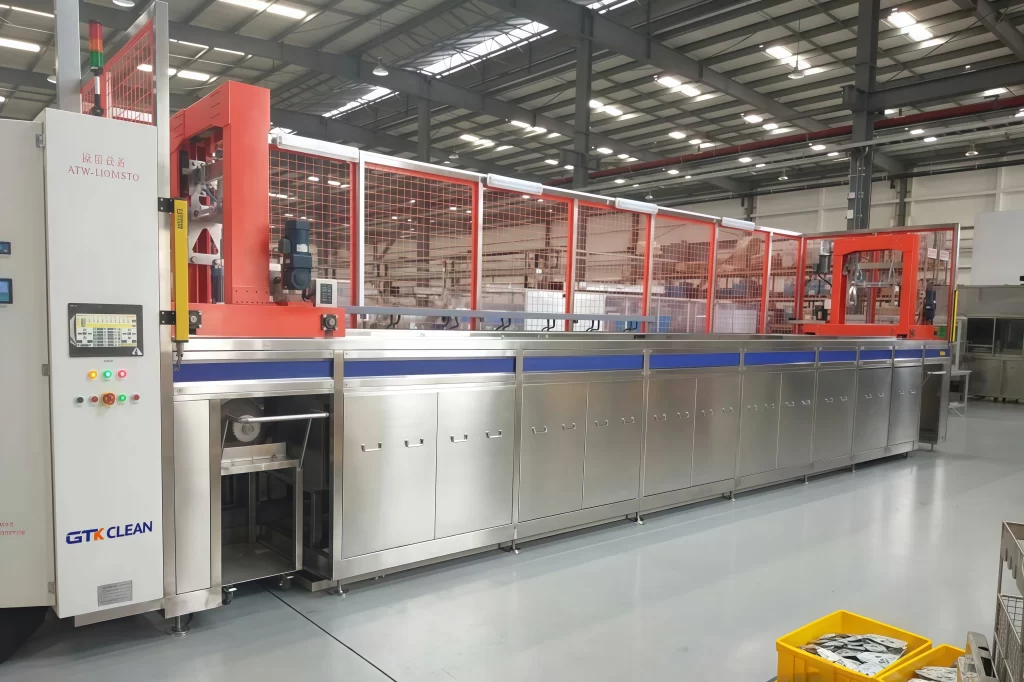
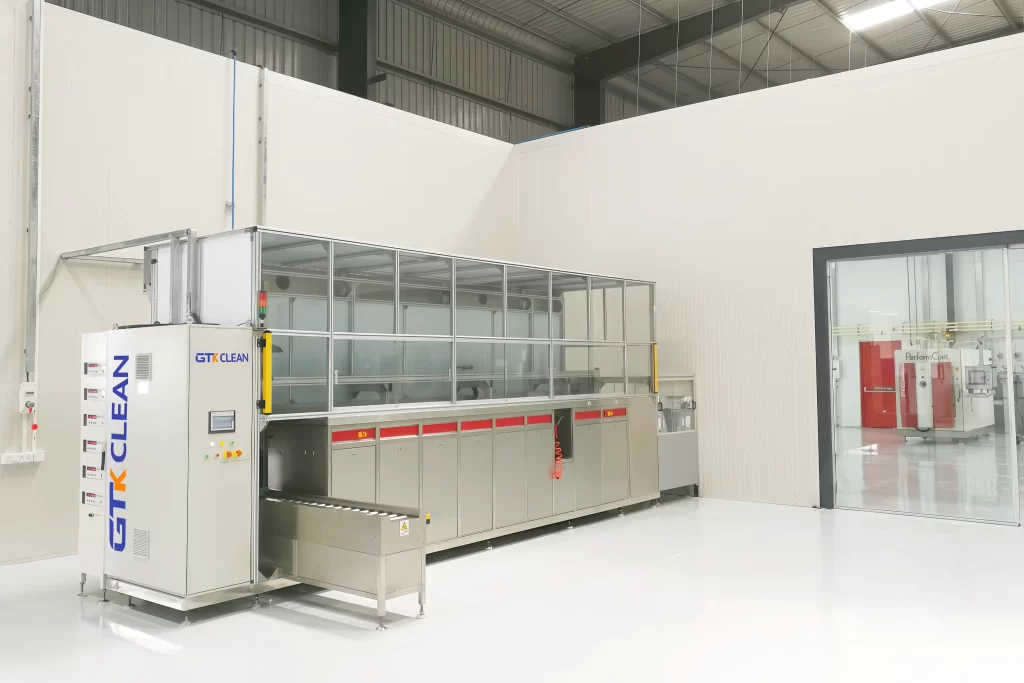
Vapor degreasing principles involve using heated solvent vapors to condense on cooler parts, dissolving contaminants and dripping them away. Automated cleaning systems integrate these technologies into multi-stage processes, ensuring consistency and reducing manual labor. Precision cleaning requirements for industries like electronics or medical devices often necessitate these advanced methods to achieve extremely high cleanliness. GTKCLEAN offers a comprehensive range of ultrasonic and solvent cleaning systems designed to achieve the highest cleanliness standards.
| Cleaning Method | Primary Application | Key Advantage |
|---|---|---|
| Ultrasonic Cleaning | Complex geometries, stubborn particles | Cavitation reaches hidden areas |
| Hydrocarbon Solvent Cleaning | Oils, greases, organic films | Superior solvency, low surface tension |
| Aqueous Cleaning | General industrial cleaning, environmental focus | Water-based, versatile chemistry |
| Vapor Degreasing | Precision parts, rapid drying | Effective solvent use, no residue from solvent |
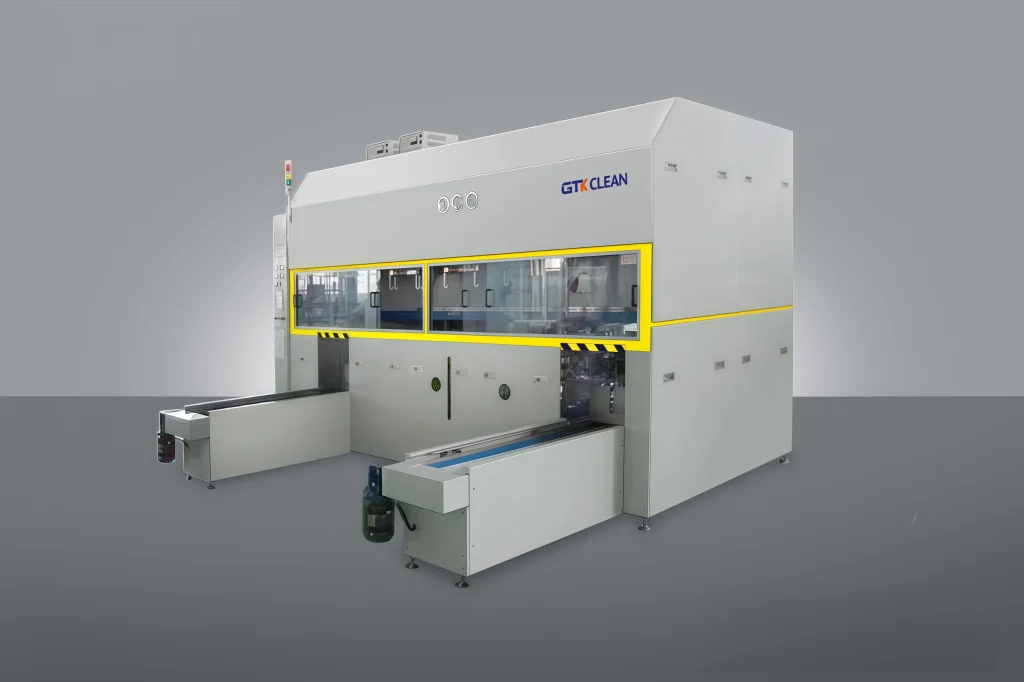
Our Pre PVD (Coating) Parts Ultrasonic Cleaners are specifically engineered for critical applications. I recall a project where a client struggled with microscopic water spots on parts destined for PVD coating. These spots, though tiny, caused adhesion failures. We implemented a system featuring a multi-stage ultrapure water rinsing process, ensuring water conductivity of ≤ 0.06 μS/cm. This precise control over water quality completely eliminated water spots and secondary contamination, leading to a significant improvement in coating adhesion rates and a reduction in costly reworks.
What Process Controls Prevent Parts Residue After Cleaning
A well-designed and controlled cleaning process minimizes variability, reduces operational costs, and ensures repeatable, high-quality results.
Preventative maintenance for cleaning equipment is fundamental. Regular checks, filter replacements, and calibration of sensors prevent system degradation and the re-introduction of contaminants. Process control in cleaning involves monitoring and adjusting parameters such as temperature, concentration, immersion time, and ultrasonic power to maintain optimal performance.
Filtration systems for cleaning baths extend the life of cleaning solutions and prevent the redeposition of removed contaminants. Integrating deionized water benefits the final rinse stages by eliminating mineral deposits that cause water spots. Cleaning validation protocols, including cleanliness standards like ISO or ASTM, provide a systematic approach to verify that parts meet specified requirements.
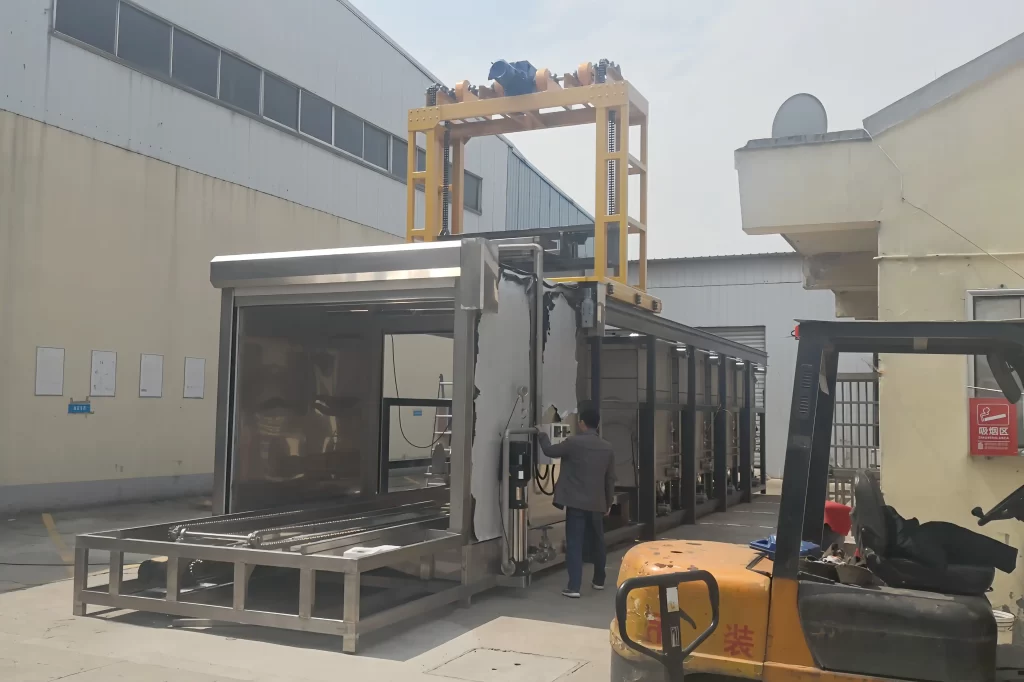
If your facility is dealing with inconsistent cleanliness results across batches, it is worth reviewing filtration intervals and rinse water conductivity before committing to equipment changes. GTKCLEAN's water treatment systems and automated conveyor belt cleaning solutions provide integrated process control for enhanced efficiency and repeatable results.
How to Inspect and Validate That Parts Are Actually Clean
Robust inspection and validation protocols are essential for verifying cleanliness, meeting industry standards, and preventing downstream manufacturing defects.
Post-cleaning inspection can range from visual checks for gross contamination to advanced analytical techniques for microscopic residues. Cleanliness standards, such as those from ISO or ASTM, define acceptable levels of contamination for various applications, guiding the inspection process.
Residue analysis techniques include gravimetric analysis to measure total non-volatile residue, particle counting for particulate contamination, and surface analysis methods like Fourier-transform infrared spectroscopy (FTIR) or scanning electron microscopy (SEM) to identify chemical films. Quality assurance in parts cleaning involves not just inspecting the final product but also monitoring and controlling every stage of the cleaning process. This comprehensive approach helps prevent manufacturing defects due to residue, ensuring that parts are truly ready for subsequent processes or final assembly.
The best method for validating part cleanliness depends on the specific application and required cleanliness level. For critical applications, a combination of techniques is often necessary. This typically includes gravimetric analysis for overall residue, particle counting for particulate contamination, and surface analysis (e.g., FTIR, SEM with EDX) to identify specific chemical or organic films. Visual inspection under magnification also plays a role, but it should be supplemented by quantitative methods to meet stringent standards.
Frequently Asked Questions
Can using hard water lead to residue on cleaned parts?
Yes, hard water contains minerals like calcium and magnesium that can precipitate and leave behind white, chalky residues, especially during drying. Utilizing deionized water or water treatment systems prevents such deposits and ensures a truly clean surface.
How often should industrial cleaning equipment be maintained to prevent residue issues?
Regular preventative maintenance for cleaning equipment is vital, with frequency depending on usage and equipment type. This includes checking filters, replacing fluids, and calibrating sensors to ensure optimal performance and prevent the accumulation of contaminants that could lead to re-contamination.
Is it possible for the cleaning agent itself to cause residue?
Improper cleaning agent selection, incorrect concentration, or inadequate rinsing can leave behind chemical films or residues. Choosing agents compatible with both the part material and the residue type, followed by thorough rinsing, achieves a pristine finish.
What role does drying play in preventing post-cleaning residue?
Drying process flaws can significantly contribute to residue formation, particularly if parts are not dried quickly and completely. Slow drying can allow dissolved solids in the rinse water to concentrate and deposit on the surface, leading to visible spots or films.
How can automated cleaning systems help reduce residue problems?
Automated cleaning systems offer precise control over cleaning cycles, temperatures, and chemical concentrations, significantly reducing human error and process variability. This consistency, coupled with advanced filtration and rinsing stages, minimizes the chances of re-contamination and ensures superior, repeatable cleanliness. To discuss your specific cleaning challenges and explore tailored solutions, contact GTKCLEAN at [email protected] or +86 17768507147.
Inconsistent cleaning results and stubborn residues do not have to compromise your production quality or efficiency. To discuss requirements for your facility, contact GTKCLEAN at [email protected] or +86 17768507147.
If you're interested, check out these related articles:
Choosing a Reliable Ultrasonic Equipment Manufacturer: A Strategic Guide
Ultrasonic Cleaning systems for Pre PVD (Coating) Parts
How to Select the Best Cleaning Solution for Metal Parts
Implement Solvent Recovery Systems: A Factory Efficiency Guide
 English
  German
  Spanish
  French
  Russian
  Portuguese