

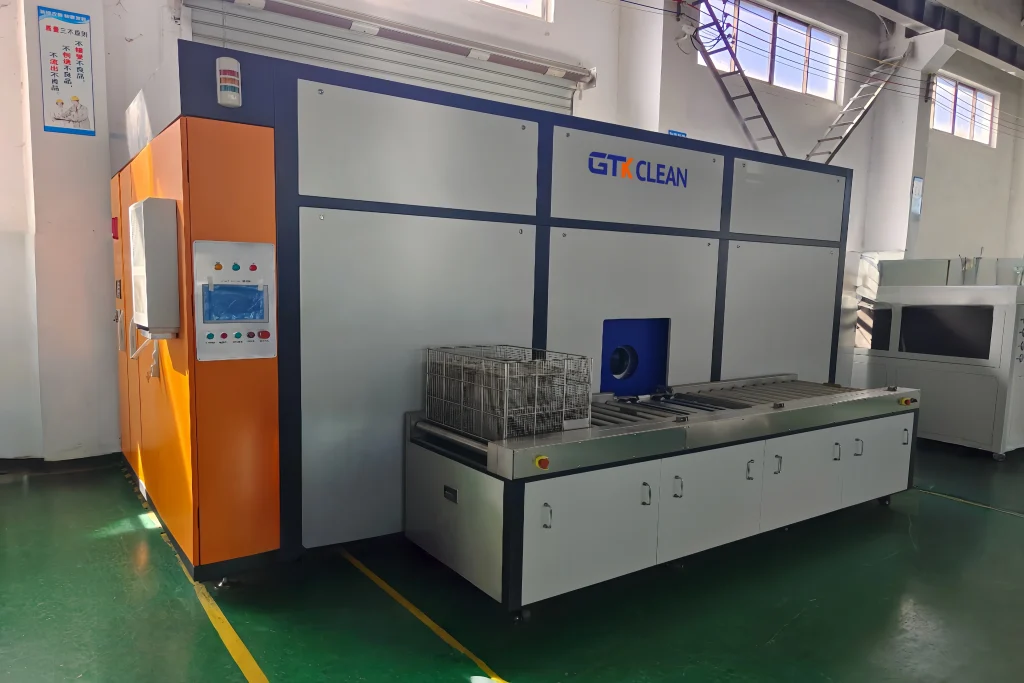
Maintaining industrial ultrasonic cleaners properly determines whether you get five years of reliable service or face unexpected shutdowns after eighteen months. The difference comes down to understanding what actually wears these systems out and addressing those factors before they compound into expensive repairs. Most premature failures trace back to a handful of preventable causes—cavitation erosion, transducer degradation, tank corrosion, and operational mistakes that stress components beyond their design limits. This guide covers the practical steps that extend equipment life, drawn from patterns observed across hundreds of installations in precision manufacturing environments.
What Actually Causes Industrial Ultrasonic Cleaners to Fail Early
Several factors drive premature failure in industrial ultrasonic cleaners, and they usually work together rather than in isolation. Cavitation erosion ranks among the most common culprits. The microscopic bubbles generated by ultrasonic waves implode with enough force to gradually pit tank surfaces, particularly when power densities run high or when aggressive cleaning chemistries accelerate the attack. Over months of continuous operation, this erosion weakens tank walls until leaks develop.
Transducer failure presents another frequent problem. These components convert electrical energy into mechanical vibration, and they degrade when subjected to overheating, improper mounting, or electrical overload. A transducer operating outside its design parameters loses efficiency progressively, forcing the system to work harder and accelerating wear on other components.
Tank corrosion deserves particular attention because it often goes unnoticed until significant damage has occurred. Certain cleaning chemistries react with stainless steel in ways that accelerate degradation, especially at elevated temperatures. SUS304 handles most aqueous solutions adequately, but chloride-containing fluids or strongly acidic formulations may require SUS316 or specialized coatings.
Power supply problems contribute to failures more often than operators realize. Voltage fluctuations stress electronic components, while capacitor degradation in older units leads to inconsistent ultrasonic output. When the generator cannot deliver stable power, transducers experience uneven loading that shortens their service life.
Building a Preventative Maintenance Schedule That Actually Works
A maintenance schedule only extends equipment life if it addresses the specific wear patterns your system experiences. Generic recommendations provide a starting point, but effective maintenance adapts to your operating conditions, cleaning chemistries, and production demands.
Daily visual inspection catches problems early. Check for fluid leaks around tank seams, unusual deposits on tank surfaces, and changes in cavitation patterns during operation. Listen for variations in the characteristic hum—a buzzing or rattling sound often indicates transducer issues before they become visible.
Fluid management directly affects both cleaning performance and equipment longevity. Contaminated solutions accelerate tank corrosion and reduce cavitation efficiency. Most industrial operations benefit from weekly fluid changes, though heavy contamination loads may require more frequent replacement. Maintaining proper concentration prevents both under-cleaning and unnecessary chemical attack on tank materials.
Transducer inspection requires more attention than many maintenance programs provide. Monthly checks should verify bond integrity between transducers and the tank bottom. A simple test involves running the system and feeling for temperature variations across the tank bottom—cool spots indicate transducers that are not generating cavitation effectively.
Quarterly calibration ensures that power output, frequency, and temperature controls remain accurate. Drift in these parameters often occurs gradually enough that operators adapt without recognizing the degradation. Calibrated instruments reveal whether the system actually delivers the settings displayed on the control panel.
| Maintenance Task | Frequency | What It Prevents |
|---|---|---|
| Visual Inspection | Daily | Undetected leaks, debris accumulation, early component wear |
| Fluid Replacement | Weekly to bi-weekly | Contamination buildup, accelerated corrosion, reduced cleaning effectiveness |
| Transducer Check | Monthly | Bond failures, uneven cavitation, progressive efficiency loss |
| Calibration | Quarterly | Parameter drift, inconsistent cleaning results, component stress |
| Filter Maintenance | Daily to weekly depending on load | Pump |
If you're interested, check out these related articles:
Solvent Cleaning System Maintenance: A Complete Guide
Industrial Cleaning Basket Design: Optimizing Performance & Durability
Ultrasonic Cleaning Systems for Manufacturing A Technical Guide
Ultrasonic Cleaning Process: A Step by Step Technical Guide
 English
  German
  Spanish
  French
  Russian
  Portuguese