
Choosing between aqueous and solvent cleaning comes down to what you're actually trying to remove, what the parts are made of, and how clean they need to be afterward. Both methods work, but they solve different problems. Getting this wrong means either parts that fail downstream processes or money wasted on overkill cleaning that adds nothing to quality.
What Actually Separates Aqueous from Solvent Cleaning
Aqueous cleaning uses water mixed with detergents and surfactants. The water carries away contaminants while the additives break down oils and suspend particles. Most aqueous systems add mechanical action—spray washing, immersion agitation, or ultrasonic cleaning systems that generate cavitation bubbles to blast contaminants off surfaces. The ultrasonic approach works particularly well for parts with textured surfaces or light contamination that needs dislodging rather than dissolving.
Solvent cleaning takes the opposite approach. Organic solvents dissolve contaminants directly rather than suspending them. Vapor degreasing exposes parts to solvent vapors that condense on cooler part surfaces, dissolve oils, and drip away clean. The part dries almost instantly because the solvent evaporates completely.
A typical aqueous process runs through multiple stages: initial spray to knock off loose debris, ultrasonic cleaning to handle what's left, several rinse cycles with progressively cleaner water, then drying with air knives or heated air. Pre-PVD coating applications often require ultrapure water in the final rinse stages to prevent mineral deposits that would interfere with coating adhesion.
Solvent systems can compress these steps. A hydrocarbon solvent ultrasonic vacuum cleaner combines ultrasonic cleaning, vacuum vapor cleaning, and drying in one station. Parts with blind holes or internal passages benefit from this approach because the vacuum pulls solvent into areas that spray or immersion might miss.
| Feature | Aqueous Cleaning | Solvent Cleaning |
|---|---|---|
| Cleaning Medium | Water, detergents, surfactants | Organic solvents (hydrocarbons, modified alcohols) |
| Contaminants | Light oils, coolants, particulate matter, salts | Heavy greases, waxes, cutting fluids, non-polar oils |
| Drying Time | Longer, requires heat or air knives | Rapid, often residue-free |
| Environmental | Lower VOCs, requires wastewater treatment | Higher VOC potential, requires closed-loop systems |
| Part Geometry | Effective with ultrasonic, challenging for blind holes | Excellent penetration for complex parts |
Matching the Cleaning Method to What You're Actually Removing
The contaminant dictates the chemistry. Water-soluble coolants and machining fluids respond well to aqueous detergents that emulsify and suspend them. Heavy greases, waxes, and petroleum-based cutting fluids need solvents that can actually dissolve them—water-based systems will just push these around without removing them.
Material compatibility narrows the options further. Some aluminum alloys corrode in alkaline aqueous solutions unless the pH stays carefully controlled. Certain plastics swell or crack in strong organic solvents. Reactive metals might need corrosion inhibitors in the rinse water. Testing a sample part before committing to a process saves expensive surprises.
Part geometry matters more than most people expect. A simple stamped bracket cleans easily with almost any method. A machined housing with deep blind holes, cross-drilled passages, and tight tolerances is another story entirely. Rotary basket systems that spin parts during ultrasonic cleaning can reach surfaces that fixed-position cleaning misses. The 360-degree rotation prevents the blind spots that lead to rejected parts or field failures.
Cleanliness standards vary enormously by application. Medical device components and aerospace parts often require residue-free surfaces for subsequent bonding or coating operations. Solvent cleaning with vacuum drying typically achieves these standards because nothing remains on the surface after the solvent evaporates. General industrial parts might only need visible cleanliness, where aqueous systems offer adequate results at lower operating cost.
How Environmental Regulations Shape Cleaning Decisions
VOC regulations have reshaped the industrial cleaning landscape over the past two decades. Aqueous cleaning produces minimal VOC emissions and often uses biodegradable detergents, which simplifies permitting and aligns with corporate sustainability commitments. The tradeoff is wastewater—aqueous systems generate contaminated water that requires treatment before discharge.
Solvent cleaning demands more careful management but remains viable with proper engineering controls. Closed-loop systems recover and distill solvents for reuse, dramatically reducing both consumption and waste disposal volumes. A multi-tank hydrocarbon ultrasonic cleaner with integrated distillation can recycle solvent continuously, removing accumulated contaminants and returning clean solvent to the process. This approach cuts solvent purchases by 80% or more compared to open systems while keeping emissions within regulatory limits.
Personnel safety requires attention regardless of method. Solvent systems need adequate ventilation, gas monitoring, and emergency exhaust capability. Aqueous systems using heated water or steam present burn hazards. Both require appropriate personal protective equipment and training. If your facility handles parts contaminated with hazardous materials, the cleaning process itself may generate hazardous waste requiring special handling and disposal documentation.
Getting Consistent Results from Automated Cleaning Equipment
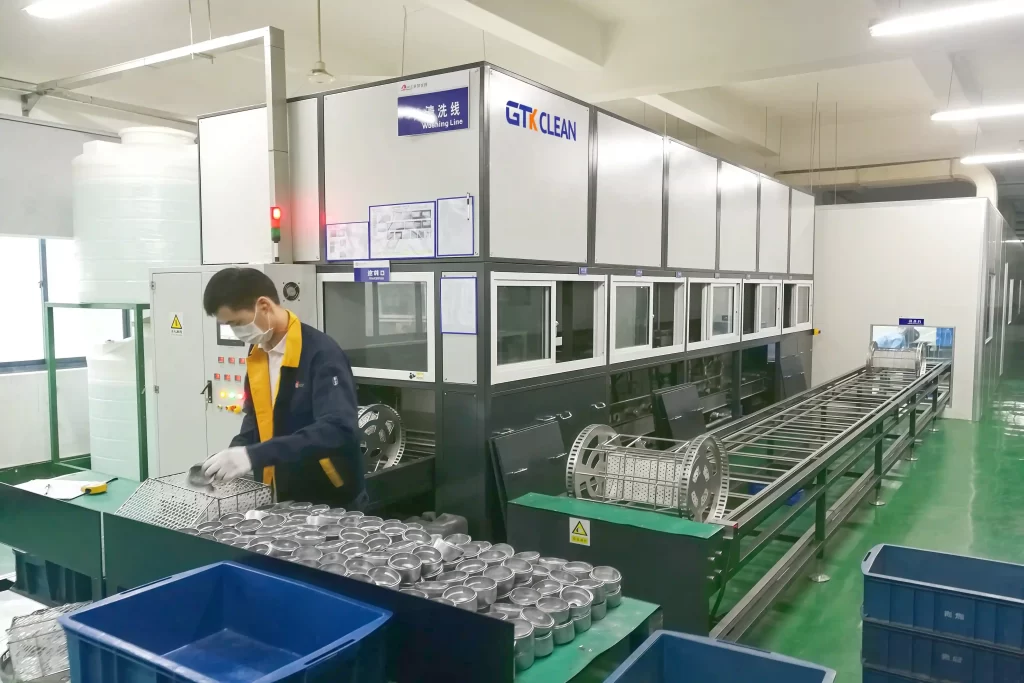
Manual cleaning produces variable results because human attention varies. Automated cleaning equipment removes that variable. A conveyor belt cleaning system processes parts identically every cycle—same spray pressure, same immersion time, same rinse sequence. Production volume increases while reject rates drop.
Process parameters need validation and ongoing monitoring. Cleaning temperature, cycle time, ultrasonic frequency, and chemical concentration all affect results. A pre-PVD parts cleaner might run at 45–65°C with 5–6 minute cycles per tank, but those parameters came from testing against actual cleanliness specifications. Changing the part geometry, contamination level, or cleanliness requirement means revalidating the process.
Maintenance keeps validated processes working. Filtration systems extend cleaning fluid life by removing suspended particles before they redeposit on parts. Circulation prevents stratification in heated tanks. Regular calibration confirms that temperature controllers and timers still match their setpoints. Skipping maintenance eventually shows up as rejected parts or customer complaints—the equipment doesn't announce when it's drifting out of specification.
Heavy parts present their own challenges. A 2000 kg workpiece needs custom load-bearing baskets and robotic or crane-assisted handling. The cleaning tank must accommodate the mass without structural stress, and the ultrasonic transducers must deliver enough energy to clean surfaces that far from the tank walls.
Where GTKCLEAN Fits in Industrial Cleaning Applications
GTKCLEAN has spent over 20 years developing industrial cleaning solutions, accumulating 28 technical patents in the process. That R&D background shows up in equipment that handles problems other systems struggle with—blind holes that trap contamination, complex geometries that create cleaning shadows, throughput requirements that demand inline processing rather than batch operations.
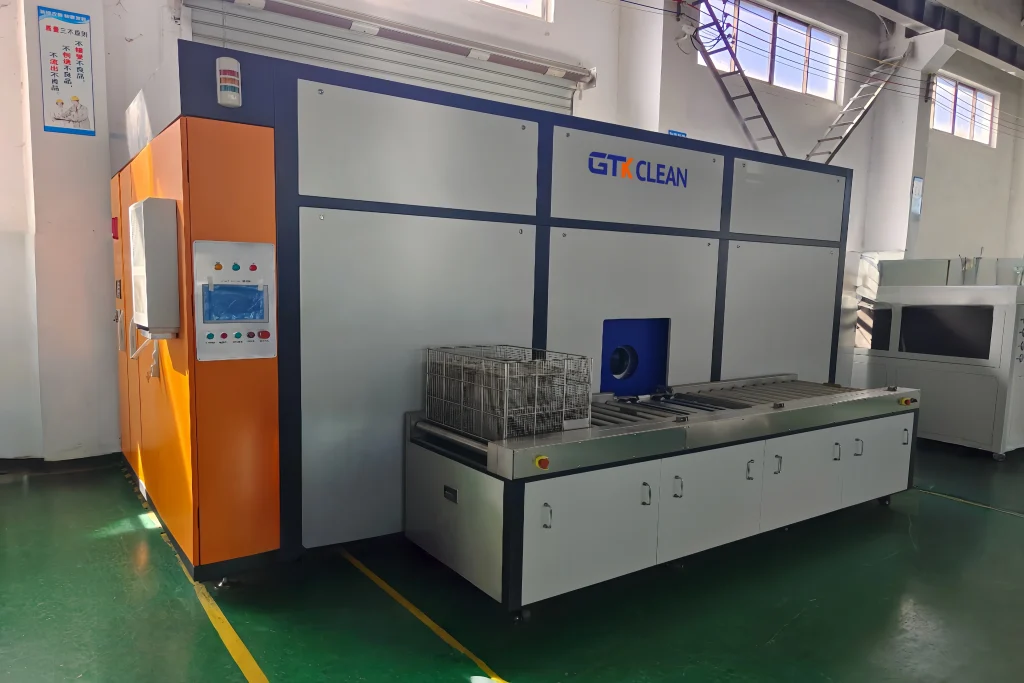
The product range covers both aqueous and solvent approaches. CNC aluminum shell inline cleaners use multi-directional spray nozzles to reach all surfaces of complex castings without manual repositioning. Fastener tunnel cleaners process high volumes with integrated oil-water separation to extend fluid life. Hydrocarbon solvent ultrasonic vacuum cleaners achieve the residue-free surfaces that precision applications require.
If your current cleaning process leaves residue that interferes with downstream operations, or if you're facing new cleanliness specifications that existing equipment can't meet, a conversation about your specific parts and contamination would clarify what's actually needed.
Frequently Asked Questions About Industrial Cleaning Methods
Can aqueous cleaning handle heavy machining oils and greases?
Aqueous cleaning works well for water-soluble coolants, light oils, and particulate contamination. Heavy greases, waxes, and petroleum-based cutting fluids often resist aqueous detergents because they're not water-soluble. You can sometimes overcome this with higher temperatures, longer cycle times, or more aggressive detergent formulations, but solvent cleaning typically removes these contaminants more reliably. Testing your actual parts with their actual contamination is the only way to know for certain.
What makes solvent cleaning environmentally acceptable today?
Closed-loop systems changed the equation. Modern solvent cleaners recover vapors, distill and recycle the solvent, and maintain emissions well below regulatory thresholds. The solvent stays in the system rather than escaping to atmosphere or leaving as waste. GTKCLEAN's hydrocarbon systems include integrated distillation that removes accumulated oils and returns clean solvent to the process, reducing both consumption and disposal requirements.
How do I clean parts with blind holes and internal passages?
Blind holes trap air pockets that prevent cleaning fluid from reaching contaminated surfaces. Vacuum-assisted cleaning pulls air out and draws fluid in. Ultrasonic cavitation helps dislodge contaminants once the fluid reaches them. Rotary fixtures that change part orientation during cleaning can also help by allowing trapped air to escape. The specific approach depends on hole depth, diameter, and how much contamination needs removal. GTKCLEAN designs systems specifically for these challenging geometries—contact [email protected] or +86 17768507147 to discuss your application.
If you're interested, you may want to read the following articles:
Aerospace Part Cleaning Solutions - GTK
Solvent Recovery Systems: Unlocking Industrial Cost Savings
Multi-Tank Ultrasonic Cleaning: A Deep Dive into Industrial Configurations
Implement Solvent Recovery Systems: A Factory Efficiency Guide
Solvent Cleaning System Maintenance: A Complete Guide
 English
  German
  Spanish
  French
  Russian
  Portuguese