

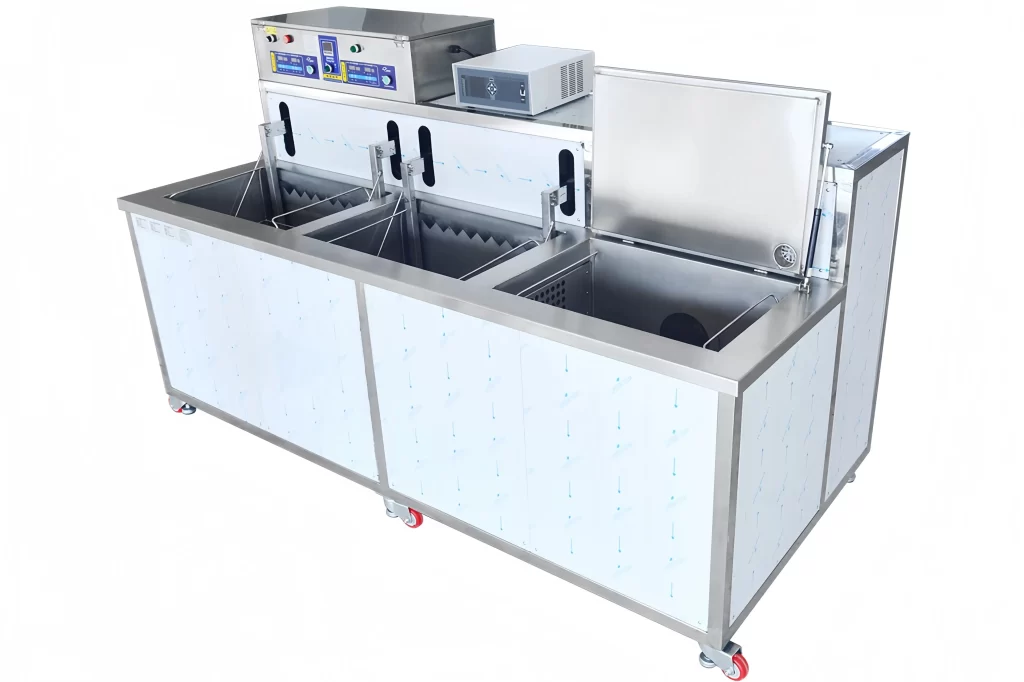
Benchtop ultrasonic cleaners offer a quick, accessible way to clean small precision parts, but their limitations become apparent when you move from prototyping to production. As an engineer who has designed cleaning lines for manufacturers across 20 countries, I’ve seen these machines handle light soiling effectively in R&D labs. Yet when parts accumulate stamping oil, demand repeatable cycle times, or carry blind holes, the gap between a benchtop unit and an automated system widens quickly. This article maps out where benchtop cleaners deliver value, where they fall short, and the performance thresholds that signal it is time to consider a larger, automated solution.
What Benchtop Ultrasonic Cleaners Do Well
Benchtop ultrasonic cleaners sit right on the workbench, running at frequencies between 20 kHz and 80 kHz with tanks from roughly 30 to 187 litres. The GTKCLEAN range, for instance, uses 304 or 316 stainless steel tanks, ultrasonic power from 750 W to 2,400 W, and heating elements up to 6,000 W. That hardware is enough for many routine tasks. Laboratories use them to clean delicate glassware and small instruments without abrasive scrubbing. Jewelers rely on them to remove polishing compound from intricate settings. Medical device re-processers clean surgical tools before sterilization. In machine shops, benchtop units handle light cutting-oil residue on small batches of parts that will be assembled or inspected the same day.
The real strength is simplicity. You fill the tank with a water-based detergent or a mild solvent, heat it to 45–65 °C, and start the cycle. There is no complex PLC program to write, no conveyor to align. For R&D departments, toolrooms, and prototype lines where the variety of parts is high but the volume is low, a benchtop cleaner keeps workflow moving without demanding any material handling engineering. A single operator can load, run, and unload several batches in a shift, provided the parts are not heavy and the soil load is modest.
Cleaning small parts manually works well until the volume climbs. <Manual Ultrasonic Cleaning Machines: When to Use Them> describes how repetitive manual tasks introduce variability in rinse quality and cycle timing once throughput moves beyond a few baskets per hour.
Key Specifications That Shape Performance
Performance does not scale linearly with tank size. The real drivers are ultrasonic power density, frequency, and heating capability. A 30 L tank with only 750 W of ultrasonic power produces weak cavitation in the corners of the bath; the same tank with 1,500 W will strip tenacious cutting oil from a batch of small turned parts in half the time. Frequency matters equally. Lower frequencies around 20–28 kHz generate larger, more aggressive cavitation bubbles that tackle thick grease and carbon deposits. Higher frequencies near 40–80 kHz produce smaller, gentler bubbles that reach into fine cracks and blind holes without damaging polished surfaces.
Heating also has a practical ceiling. Benchtop heaters typically range from 1,000 W to 6,000 W. With a 100 L tank, 6,000 W brings the solution from ambient to 60 °C in roughly 45 minutes. That is acceptable for a first batch in the morning, but if you plan to run back-to-back cycles with cold top-up water, the recovery time stretches. In a production environment, that delay compounds. I have seen shops try to work around it by pre-heating water in a separate kettle, which defeats the purpose of an easy, single-tank machine.
Where Benchtop Cleaners Fall Short in Industrial Environments
The limitations are not about poor design. They are about the nature of a single-tank, manually operated machine. The first hard boundary is throughput. A single operator loading and unloading a 50 L tank might process 12 to 15 batches in an eight-hour shift. If each batch holds 20 small parts, that is 300 parts per day. As soon as production demands 500 or 1,000 parts per day, the operator becomes the bottleneck. You either extend shifts, buy more benchtop units, or both. Those extra units then need extra floor space, extra power drops, and extra manual effort. The hidden cost of labour—loading, rinsing, drying, and inspecting—typically exceeds the purchase price of the machines within the first year.
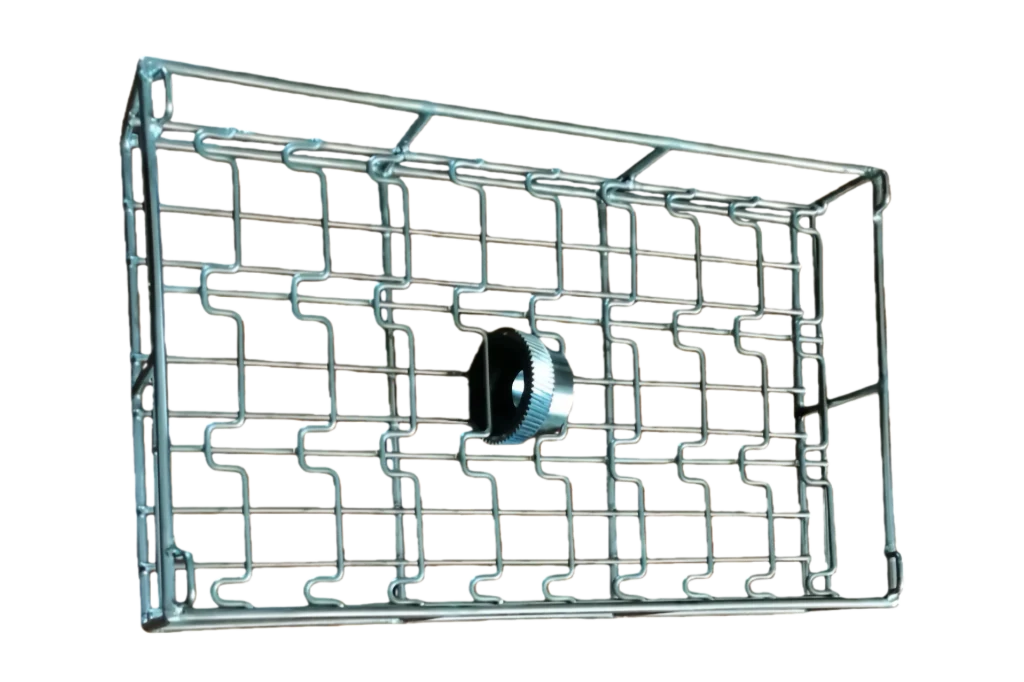
The second limitation is process consistency. A benchtop tank lacks separate wash, rinse, and drying stages. The operator must lift the basket out of the hot detergent, drain it, perhaps dip it in a standalone rinse bucket, and then dry the parts with compressed air or paper towels. That sequence changes from person to person and shift to shift. For parts heading into PVD coating or anodizing, any residual detergent film causes adhesion failures. I have seen coating suppliers reject entire lots because water spots or surfactant residue remained on the part surface, traceable back to an inconsistent manual rinse step.
A third boundary is solvent handling. While benchtop units primarily run water-based chemistries, some users try to use mild hydrocarbon solvents in the hope of faster degreasing. An open-top benchtop tank offers no vapour containment; solvent evaporates into the room, creating a health and fire hazard that most shop-floor risk assessments will not accept. Industrial solvent machines solve this with sealed chambers and integrated vapour recovery, something a benchtop simply cannot provide.
The fourth gap is cleaning blind holes and complex internal features. A benchtop tank generates a uniform ultrasonic field, but the part orientation is fixed. If a blind recess points upward, gas bubbles can trap inside and prevent cavitation. In a multi-tank rotary basket system, the basket rotates continuously, exposing every surface. In a benchtop, the operator must manually reposition the basket partway through the cycle—another variable.
As cleaning demands grow, the choice between benchtop and multi-tank configurations becomes central. <How to Choose Multi-Tank Ultrasonic Systems for High Volume> explains how multi-stage designs add dedicated rinsing and drying stations that cut cycle time and raise cleanliness consistency.
When to Move Beyond Benchtop Cleaning
A few practical signals tell you it is time to leave the benchtop behind. The first is when your rinse-and-dry step takes longer than the ultrasonic cleaning step itself. That is your process telling you it needs automation. The second signal is when you start stacking benchtop machines to meet volume. Two 100 L units with three operators already occupy more floor space and labour than a single automated two-tank system that one operator oversees. The third signal is a customer audit or coating supplier rejection tied to inconsistent cleanliness—those failures rarely go away by adding another manual rinse bucket.
The table below compares typical benchtop operation against a multi-tank automated system across the factors that most often trigger an upgrade.
| Factor | Benchtop Ultrasonic Cleaner | Multi-Tank Automated System |
|---|---|---|
| Throughput (parts/shift) | 200–500 (operator-limited) | 2,000–8,000 (line-speed) |
| Rinse and dry | Manual, variable | Automated, validated |
| Part orientation | Fixed; blind holes may trap gas | Basket rotation keeps surfaces exposed |
| Solvent compatibility | Water-based only; no vapour control | Compatible with hydrocarbons, alcohol, vacuum drying |
| Labour requirement | One dedicated operator, often full-time | One operator oversees multiple stations |
| Cycle time consistency | Operator-dependent, ±20% | PLC-controlled, repeatable to ±2 seconds |
Planning Your Upgrade: What to Look for in an Automated System
When you move to automated cleaning, the machine’s architecture matters more than the tank count. The first decision is whether to stay with ultrasonic immersion or add spray stages. For parts with deep blind holes, rotary basket ultrasonic systems maintain consistent cavitation exposure. For flat parts like stampings, a conveyor spray system may be faster.
Control capability is the next filter. A Siemens or Mitsubishi PLC with a colour touchscreen allows recipe storage, fault diagnostics, and remote upgrades—features that directly reduce downtime. Barcode-based auto-recipe selection, which some systems support, removes operator programming errors entirely when the part type changes over.
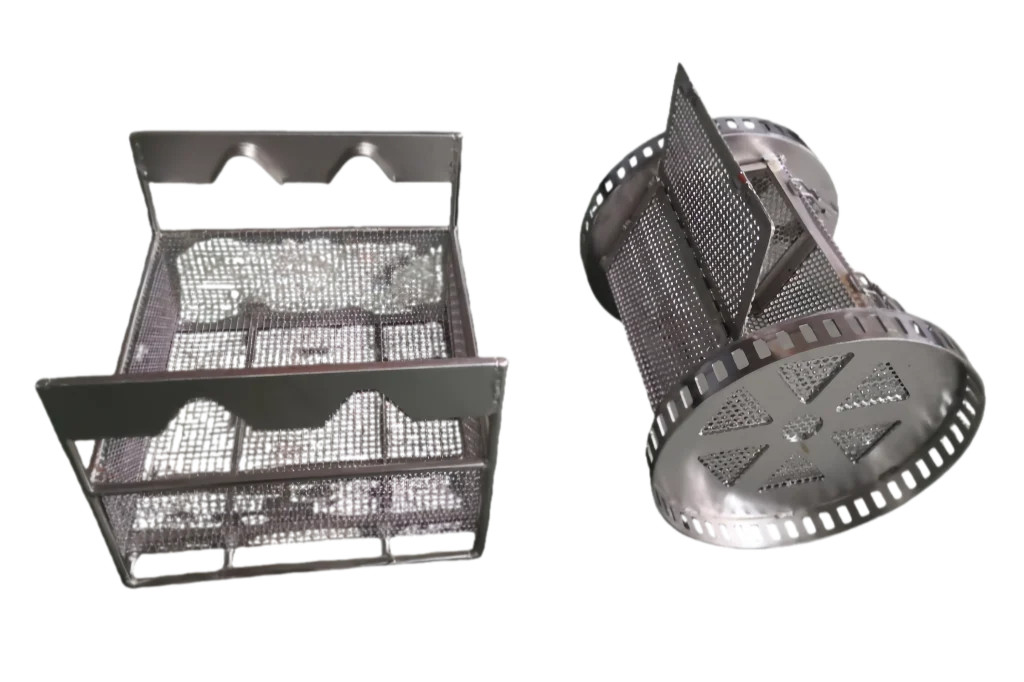
Rinse and drying architecture also deserves close attention. A multi-stage line with dedicated DI water rinse tanks and either hot air or vacuum drying eliminates the water spot problem permanently. The payback calculation usually tips in favour of automation when the cost of rejected parts or rework exceeds the annual lease or finance payment on the system. I have seen coating lines where a single day of reject work attributable to poor cleaning covered a full month’s lease on a three-tank ultrasonic rinse-dry system.
When you plan the upgrade, specify the part weight and dimensions early. Automated systems use load-bearing baskets, reinforced tanks, and motorized lifts; specifying heavy parts later may force a redesign. For parts up to 2,000 kg, heavy-duty automated cleaners with custom load frames are standard. For light, delicate parts, the mechanical handling can be simpler, but the rinse and drying validation remains critical because there is less film mass to mask residue.
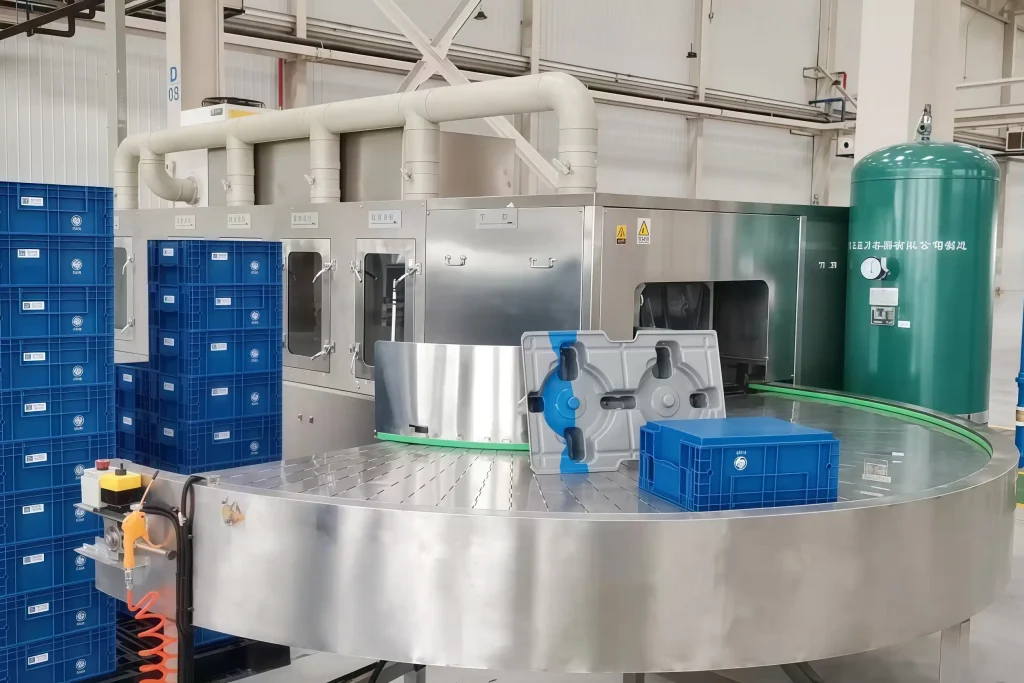
Benchtop units handle light shop-floor cleaning well, but once a line demands documented, repeatable cleanliness, an automated system pays for itself quickly. <Automated Ultrasonic Cleaning: Elevating Industrial Process Consistency> breaks down the data that help production managers justify the investment, including labour savings and reject reduction figures from real deployments.
Getting the Right System for Your Production Targets
A benchtop ultrasonic cleaner remains a valuable tool when part volumes are low, geometries are simple, and the cleaning chemistry is water-based. The moment throughput climbs above a few hundred parts per day, or when downstream processes such as coating or sterilization demand repeatable surface quality, the limitations of a single-tank manual machine start to cost more than the price of an automated alternative. The decision is rarely about cleaning power alone. It is about labour cost, process control, and the risk of quality escapes that compound across a production run.
If you are evaluating where your current cleaning setup stands, send your part drawings, daily throughput target, and the soil you need to remove to [email protected] or call +86 17768507147. We will work through the process data with you—specifying whether a benchtop unit, a multi-tank system, or a fully automated line fits your operation—so you can base the decision on cycle times and contamination risks rather than guesswork.
Common Questions About Benchtop Ultrasonic Cleaning
Can a benchtop unit clean parts with blind holes effectively?
It can, but only if the operator adjusts the part orientation partway through the cycle. The cavitation field in a stationary tank cannot penetrate a blind hole that points upward and traps an air pocket. Rotating the basket manually every two to three minutes helps, but the result varies with the operator. For production volumes where blind holes are common, a rotary basket system that continuously exposes those recesses is the more reliable choice.
Why do some parts come out of a benchtop cleaner with water spots?
Water spots form when tap water droplets dry on the part surface after rinsing. Benchtop cleaners rarely include a dedicated DI water rinse or heated drying stage, so the operator usually dries parts manually with compressed air or towels. That leaves spots if the rinse water contains dissolved solids. For applications where spots matter, you need either a final DI water rinse and hot-air drying—both of which are standard on multi-tank automated machines—or you must switch to a vacuum drying stage.
What is the largest part a benchtop cleaner can handle?
The tank dimensions set the physical limit. Typical benchtop tanks range from 30 to 187 litres, with internal working dimensions roughly 500 mm × 300 mm × 200 mm depending on the model. The weight the operator can safely lift and place inside the tank is often a tighter constraint. Parts above 15–20 kg become an ergonomic problem when loaded by hand multiple times per hour. For heavy parts, automated systems with lifting hoists and reinforced baskets are the necessary next step.
How do I know when to add a second benchtop unit versus moving to a multi-tank system?
Watch the rinse and dry time. If a single operator cannot keep up with the ultrasonic cleaning cycle because rinsing and drying take too long, adding a second benchtop unit does not solve that bottleneck—it just multiplies it. Two units with two operators cost more than one automated two-tank system that one operator supervises. As a rule of thumb, if you are running more than six cycles per shift and the rinse/dry steps force the operator into a sprint, a multi-tank machine will pay for itself within 12 to 18 months through labour savings alone.
Is it possible to use hydrocarbon solvents in a benchtop ultrasonic cleaner?
Technically yes, but it is risky. Open-top benchtop tanks have no vapour containment. Hydrocarbon solvents release flammable vapours that build up in the work area and create fire and health hazards. Most industrial hygiene standards require sealed equipment with active carbon filtration or integrated distillation when hydrocarbons are used. If your application demands solvent cleaning, a sealed hydrocarbon or modified alcohol vacuum machine is the appropriate tool. If you share your cleaning requirements and the material safety data sheet of the solvent you intend to use, we can confirm whether a benchtop unit can be safely specified or whether you need a closed-loop system.
If you're interested, check out these related articles:
Automated Versus Manual Cleaning Investment Comparison for Industry
Optimizing Industrial Cleaning to Reduce Solution Expenses
 English
  German
  Spanish
  French
  Russian
  Portuguese