Industrial cleaning equipment cost analysis usually begins with the wrong number. Buyers compare machine quotations, but the quotation is only a thin slice of what they will spend over five or seven years. My position after two decades of designing automated cleaning lines is direct: budget against the cost per clean part, not the equipment invoice. Cleaning fluid consumption, filtration replacement, energy draw, basket handling, rework, and unplanned downtime usually decide whether a line is profitable. The sections below break down those drivers and where a buyer can actually move them.
The Cost Layers Beneath the Purchase Price
A quotation for industrial cleaning equipment is not a single number. It bundles the machine frame, tank set, ultrasonic generators, transducers, baskets, filtration, heating, drying module, controls, and often installation and training. Two suppliers can quote the same tank volume but different generator quality, basket design, and pump flow. The lower number may still be the more expensive system to operate.
Quotation Element
What Buyers Should Check
Hidden Cost Risk
Machine frame and tanks
Tank volume, material grade, number of stages
Undersized tanks force slower cycles
Ultrasonic generators and transducers
Frequency, wattage, transducer placement
Weak cavitation leaves residue and adds rework
Baskets and fixtures
Part orientation, load capacity, drainage
Poor drainage carries solution into rinses
Filtration and circulation
Pump flow, filter size, oil separation
Short filter life raises consumables
Drying module
Air knife, hot air, or vacuum
Incomplete drying creates water spots
Controls
PLC, HMI, recipe storage, alarms
Manual override decisions reduce repeatability
When a quote excludes baskets or assumes a simpler drying process, the buyer has not saved money. Those costs return as change orders or at start up. In high precision cleaning, the basket is not an accessory. It sets part orientation, drainage, and whether blind holes clear properly.
Cleaning Fluid and Filtration as Recurring Cost Drivers
Cleaning fluid is a compounding cost because every load carries solution out of the tank. The wash bath loses level through drag-out, evaporation, and contamination. Without circulation and oil separation, the bath reaches its dirt load sooner and gets dumped early. Detergent and DI water lines show the same pattern: the cost is not the first fill, it is the replacement rate and the waste stream. For water based precision lines, conductivity control matters. One pre PVD cleaning system in our product range holds rinse water at 0.06 µS/cm or better, which prevents mineral residue from reaching the coating stage. That saves cost at the most expensive point: after cleaning, when a coating defect already carries the value of a fully processed part. Solvent systems are more visible on cost per liter but can be cheaper per part if recovery is designed in. A hydrocarbon vacuum ultrasonic machine with an initial fill around 1,800 liters and consumption held below 200 liters per month is not consuming its tank volume every few weeks. Distillation returns solvent to the process and leaves oil concentrate for disposal. That changes the budget line.
Cutting solution consumption usually matters more than shaving a few percent off the machine price. <Optimizing Industrial Cleaning to Reduce Solution Expenses> covers how overflow, circulation filtration, and drag-out control reduce detergent and water consumption on multi-stage systems.
Labor and Rework Costs Across Automation Levels
Manual, semi automatic, and fully automatic cleaning systems do not simply have different machine prices. They move cost into different places. Manual equipment has the lowest invoice but depends on operator technique, bath checks, drying decisions, and inspection time. Automated equipment has higher initial capital but locks the cycle sequence, temperature, and dwell time inside a PLC recipe. The value is repeatability more than headcount. I have watched a production line stay manual to keep capital down, and the result was the opposite of the intent. Part orientation errors and irregular rinse times produced intermittent residue, and the rework and inspection needed to catch it exceeded the labor saving. The decision should hinge on whether the same cycle will run the same way against every load. Semi automatic multi tank machines often land in the middle for a reason. An operator transfers the basket between loaded stations, but the PLC controls time, temperature, and ultrasonic output. This suits medium volume lines where complete automation would add handling complexity without enough throughput to pay for it.
Automation changes the cost conversation from labor hours to line reliability and process consistency. <Mastering Automation Levels in Industrial Ultrasonic Cleaning> covers how manual, semi automatic, and fully automatic systems differ in loading, cycle control, and rework risk.
If your site runs a mix of high volume parts and occasional complex components, do not let the automation level be a guess from a brochure. Send the part drawing, batch weight, and target pieces per shift to [email protected] or call +86 17768507147 and ask for a cycle time estimate before the layout is fixed.
Tank Configuration and Drying Impact on Cost Per Cleaned Part
Single station, multi tank, inline, and vacuum configurations change the relationship between capital and throughput. A single tank machine has a small footprint and lower first cost, but wash, rinse, and dry compete for the same chamber. A multi tank system keeps baskets moving through dedicated stages; one basket enters rinse while another is being washed. Throughput per shift rises even if the price rises. Drying choice is where cost per part is won or lost in high precision work. Air knife and hot air are less expensive to buy but can leave moisture in blind holes and threads. Vacuum drying costs more and pulls liquid from recesses as pressure drops. If the next operation is coating, assembly, or packaging, incomplete drying becomes a hidden reject cost. An inline system is capital intensive but suits continuous flow with stable part families. For high volume repeated cleaning of containers and trays, inline machines handle continuous throughput with less manual loading. A solvent vacuum machine adds safety systems, condensation, and distillation, which raises the invoice but can cut both solvent consumption and drying defects. The calculation that matters is total five year ownership divided by accepted clean parts. If a higher capital option cuts reject rate, energy per part, or labor minutes per load, it can deliver a lower per part cost even when the quote is higher.
Add one time costs: machine, baskets, installation, commissioning, training.
Divide by the number of clean parts shipped over the same period.
If the finance team asks for a return number, separate one-time capital from recurring cost per part. <Industrial Cleaning System ROI: Calculating Your Investment Return> covers the inputs that matter: cycle time, uptime, labor rate, consumables, and expected reject rate.
A Cost Review That Starts With Your Parts
Cost analysis goes wrong when it starts with a generic equipment category. A machine for small precision valve parts, a stamping line, and an optical pre coating process have different tank sizes, filtration needs, drying requirements, and cycle times. If quotes are compared before these are fixed, the buyer is ranking assumptions rather than equipment. GTKCLEAN can run the comparison against the three or four configurations most likely to fit the part after the part drawing, contamination type, cleanliness spec, and production rate are defined. That is the only way to see whether a solvent recovery system, a vacuum dryer, or an additional rinse tank earns its cost. Send the part drawing, contamination type, required parts per shift, and cleanliness spec to [email protected] or call +86 17768507147. A cost review that starts with your parts produces a more accurate budget than comparing equipment categories.
Common Questions About Industrial Cleaning Equipment Costs
Why do industrial cleaning equipment quotes for similar machines differ so much?
Quotes differ because they are not comparing the same scope. One supplier may include baskets, filtration, installation, and commissioning, while another excludes anything beyond the tank and generator. Different transducers, pump capacities, and controls also change the price. The buyer has to request the same line item format from every bidder. Without that, the lower quote is often the one with more cost pushed into the next purchase order.
Should I compare equipment cost by tank count or by production rate?
Buyers often rank machines by tank count, but tank count does not set cost per part. Three poorly arranged tanks can produce less than two correctly sized stations if basket transfer, rinse quality, or drying time becomes the bottleneck. The better comparison is accepted parts per shift at the required cleanliness level, then total ownership cost is divided by that output. That shows whether extra stations are buying throughput or adding idle capacity.
How much of the total cost comes from consumables?
If the parts carry heavy oil or fine chips, consumables can pass the machine price difference within two years. Low residue, simple geometry parts might sit below it. The safest way is to ask for a bath life estimate under your part mix, not a generic monthly consumption figure. Different suppliers will assume different drag-out rates and filtration cycles, so that estimate has to be based on the same part loading and production schedule.
When does solvent cleaning cost more than water based cleaning?
In systems we design, solvent cleaning usually costs more on the day of purchase because of safety, sealing, condensation, and recovery systems. It can cost less per part when the part has deep blind holes, when water spotting is unacceptable, or when drying time is long. The comparison should be made on the same downstream requirement. Share your part drawing, contamination type, and required output with [email protected], and we can check whether a solvent or water based configuration fits the total cost better. If you're interested, check out these related articles: Ultrasonic Cleaning systems for Pre PVD (Coating) PartsWhat’s the Best Pre-Coating Cleaning Machine for PVD, DLC & CVD Coating Factories?


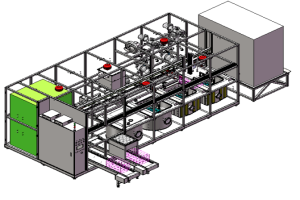
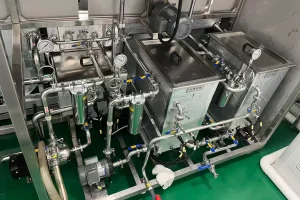 Semi automatic multi tank machines often land in the middle for a reason. An operator transfers the basket between loaded stations, but the PLC controls time, temperature, and ultrasonic output. This suits medium volume lines where complete automation would add handling complexity without enough throughput to pay for it.
 The calculation that matters is total five year ownership divided by accepted clean parts. If a higher capital option cuts reject rate, energy per part, or labor minutes per load, it can deliver a lower per part cost even when the quote is higher.
 English
  German
  Spanish
  French
  Russian
  Portuguese