
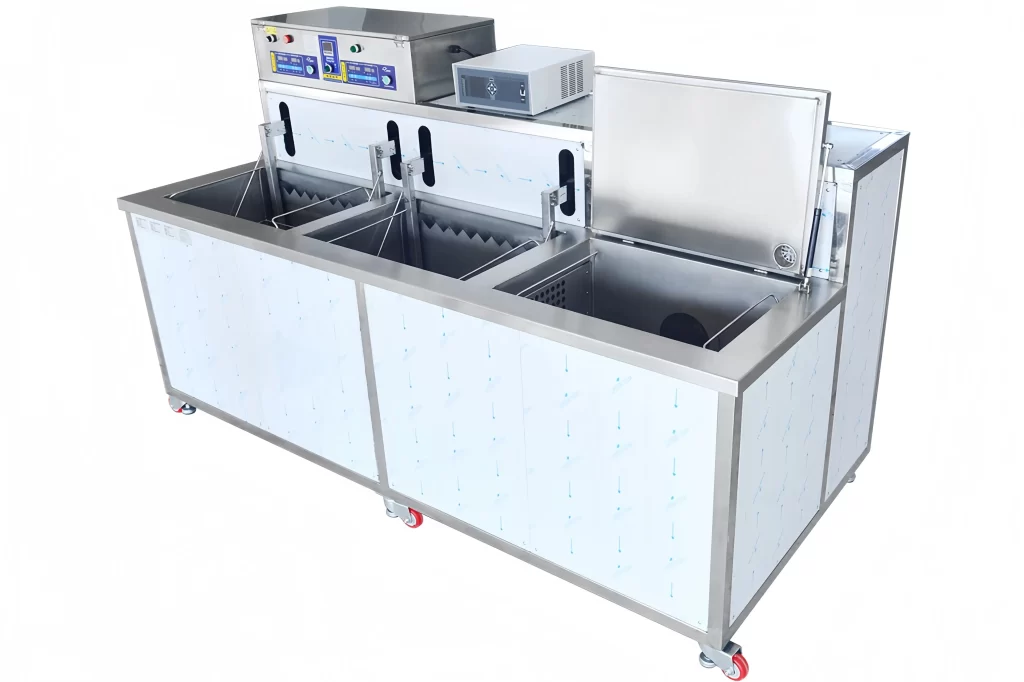
Industry 4.0 integration in cleaning automation is shifting from a pilot concept to a baseline requirement in many manufacturing industries. Factories connecting real-time process monitoring, predictive maintenance, and smart data platforms to their cleaning systems are seeing higher throughput, lower scrap rates, and tighter process traceability. But the phrase “Industry 4.0 ready” is used loosely in the cleaning equipment market, and not every platform marketed under that label delivers genuine integration. Drawing on more than twenty years of designing automated ultrasonic, solvent, and conveyor cleaning systems, I want to highlight the capabilities that actually matter, the integration challenges that rarely appear in marketing material, and the evaluation criteria that hold up when you commission a new line.
What Industry 4.0 Integration Means for Cleaning Automation
For a cleaning system, Industry 4.0 integration moves beyond standalone programmable logic control. It means the machine becomes a node in a factory-wide data infrastructure, exchanging process variables with an MES or ERP system, recording trend data for quality audits, and triggering maintenance alerts before a fault stops production. I have seen many installations where the PLC was fully capable, but the system lacked a structured data export mechanism. The result was a modern machine that was still a data island. The integration layer is not the PLC itself. It is the software and protocol stack that translates process parameters into information the factory can act on.
One common misconception I encounter is the belief that a device with Ethernet connectivity is automatically Industry 4.0 compliant. That is like saying a laptop with a network port is a server. The real test is whether the cleaning system can publish data in a structured format that other factory systems can consume without custom middleware. When that capability exists, the cleaning process stops being a black box and turns into a measurable step in the production chain.
Why Connectivity Alone Is Not Enough
A cleaning machine with a communication port is not integrated if it only sends a “running” or “fault” signal to a stack light. Useful integration requires the system to expose detailed parameters: tank temperatures, ultrasonic power output, detergent concentration, rinse water conductivity, cycle time, alarm history, and energy consumption. Without that data, predictive maintenance is guesswork. I have been asked multiple times to retrofit connectivity onto machines that had Ethernet ports but no data model behind them. It always costs more than specifying an open architecture from the start.
How Industry 4.0 Improves Process Consistency
When cleaning process data is logged and time-stamped, variation across shifts and batches becomes visible. A well-integrated ultrasonic cleaning line might record how ultrasonic generator output changes as transducers age, allowing maintenance to be scheduled before a quality deviation occurs. In one investigation we supported, a line that cleaned injection-molded parts before coating was producing intermittent residue failures. Data logs showed a gradual decline in rinse water conductivity over a shift, linked to filter loading. Without historical data, that correlation would have been invisible. With it, the plant changed filter replacement intervals and eliminated the scrap.
Technical Capabilities of a Truly Industry 4.0 Ready Cleaning System
When I evaluate whether a cleaning system is designed for integration, I look for five specific technical capabilities, not just a checklist of buzzwords. These are the features that separate a system you can plug into a smart factory from one that will require constant engineering support to keep connected.
| Capability | Basic System | Industry 4.0 Ready System |
|---|---|---|
| Communication protocol | Proprietary or serial only | Standardized (OPC UA, Modbus TCP, EtherNet/IP) |
| Data logging | Local HMI with limited history | Structured historical database, exportable to SQL or CSV |
| Remote access | None or via third-party VPN | Native secure remote connection for diagnostics and updates |
| Predictive maintenance | Reactive, based on visual checks | Condition-based alerts from sensor trends (e.g., filter pressure, transducer impedance) |
| Energy monitoring | None | Per-cycle or per-part energy consumption data |
Open communication protocols are non‑negotiable. OPC UA has become the preferred backbone because it provides security, data modeling, and client‑server architecture that does not depend on a single vendor’s PLC. In my experience, the most common integration failure is not technical incompatibility but insufficient planning on the data structure. If the cleaning machine vendor cannot provide a tag list mapping every monitored parameter to an OPC UA node, the integration effort will stall at the control system engineer’s desk.
Beyond connectivity, the quality of the sensor infrastructure determines whether the data is useful. An ultrasonic cleaning system with temperature, flow, and level sensors on every tank can deliver enough data for statistical process control. Systems that rely on one temperature sensor and a timer provide confirmation that the cycle ran, not evidence that it ran correctly. We design our multi‑tank systems with per‑tank monitoring that feeds into a central PLC, and we make that data accessible to the plant’s network as standard. This design decision does not add significant hardware cost, but it requires engineering time to configure the data mapping correctly, and that is where many suppliers take shortcuts.
Which Protocols Matter Most for Integration?
For discrete manufacturing, OPC UA is the standard to insist on. It provides a secure, object-oriented framework that major MES platforms can consume directly. EtherNet/IP is common in Rockwell Automation environments and works well when the plant is already standardized on that ecosystem. Modbus TCP is simpler and adequate for less complex monitoring, but it lacks the discovery and modeling capabilities of OPC UA. I usually recommend asking the equipment supplier which protocol their most recent installation used and whether they can provide a sample data model from that project.
Integration Challenges When Retrofitting Existing Cleaning Lines
Retrofitting Industry 4.0 capabilities onto a cleaning line that was not designed for them is often underestimated. The machine’s existing control system might use a closed protocol, the sensor set may be minimal, and the physical installation of additional sensors can interfere with the production environment. I have worked on projects where the decision came down to whether the mechanical frame and tank structure justified the cost of a complete controls upgrade.
The single most common failure mode I have observed in retrofit projects is the assumption that adding a protocol converter will solve the data problem. A gateway can translate signals, but it cannot create data that does not exist. If the original machine has no ultrasonic power monitoring, no filter pressure sensor, and no conductivity measurement in the rinse tanks, the gateway will just relay empty messages. The value of integration is proportional to the richness of the sensor data, and retrofitting sensors requires engineering time and often downtime. For many mid‑life machines, the total cost of a thorough retrofit can reach 40 to 60 percent of a new machine’s price, and that number often tips the decision toward replacement.
If your program involves integrating legacy cleaning equipment with modern MES, it is worth confirming sensor retrofit feasibility before finalizing your BOM. Reach out at [email protected] and we can walk through the specific data points your quality system requires and what your existing equipment can realistically deliver.
Is It Better to Retrofit or Replace?
The answer depends on the controls architecture of the existing machine. If the primary cleaning chamber and material handling system are robust and the controls are already based on a modern PLC with available I/O, retrofitting can make technical and financial sense. If the PLC is an obsolete model with limited memory and no support for Ethernet‑based protocols, replacement is usually the faster and more reliable path. I recommend evaluating the controls age, the available sensor ports, and the mechanical condition of the machine together, because a new machine also brings improved cleaning performance, not just connectivity.
How to Evaluate a Cleaning Equipment Supplier’s Industry 4.0 Claims
Because “Industry 4.0” is a marketing term as much as an engineering one, I suggest asking suppliers a few direct questions that require concrete answers, not brochure language. First, ask for a real-time screen capture of the data dashboard that the system provides to operators and quality managers. If the supplier hesitates or shows only a generic PLC screen, they likely have not built the application layer that makes data actionable. Second, ask whether the system can export historical trend data without requiring an additional software license. Licensed historian software adds cost that many medium‑sized plants cannot absorb. Third, request a written list of all OPC UA nodes or Modbus registers the machine exposes, with a description of each data point’s meaning and update rate. This is the document a plant’s controls engineer will use to build the interface.
It is also worth asking about cybersecurity. An integrated machine on the factory network is a potential entry point. A responsible supplier should implement at least basic access control: separate user roles, secure remote access with logging, and the ability to disable external connections when not needed. At GTKCLEAN, we include multi‑level user access as a standard feature on our automated systems, and remote software upgrades are authenticated and logged. Suppliers who cannot answer the cybersecurity question with specific measures should be scrutinized carefully.
Emerging Trends Shaping the Next Phase of Cleaning Automation
Looking forward, the trends I am tracking most closely are the use of artificial intelligence for real‑time process optimization and the application of digital twins for cleaning process simulation. Both are still in early adoption for industrial cleaning equipment, but the building blocks are there. A cleaning system that already records temperature, power, and conductivity data generates exactly the kind of multivariate time series that machine learning algorithms can use to predict optimal cycle parameters for different part batches. I expect the first production‑ready implementations to focus on variable cycle time optimization, where the system shortens or lengthens the cleaning time based on the contamination load detected in the first rinse stage.
Digital twins are further out, but I view them as the logical next step for plants that need to validate cleaning processes for new part designs without running physical trials. A twin of an ultrasonic immersion tank, calibrated with fluid dynamics and cavitation distribution data, could predict cleaning coverage for complex geometries. That capability would reduce the design‑to‑production timeline for parts with intricate internal features, such as hydraulic blocks or fuel system components. I have not yet seen a cleaning equipment supplier commercialize a digital twin at scale, but I anticipate it becoming a differentiator in the next three to five years.
Partnering for Industry 4.0 Integration in Cleaning Automation
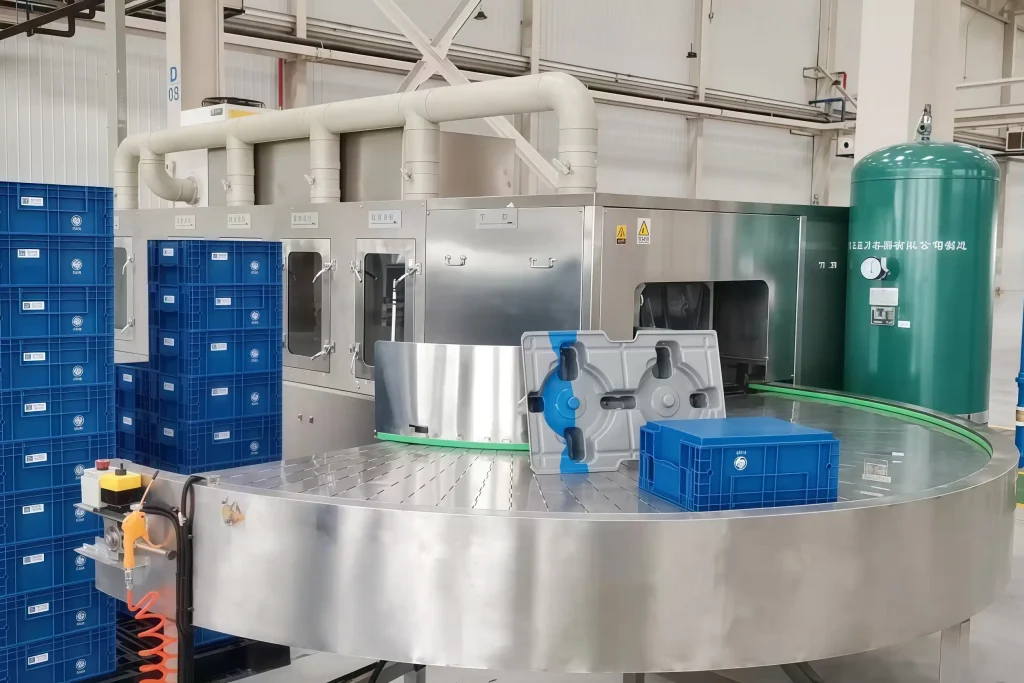
Deciding how to integrate your cleaning process into a broader Industry 4.0 framework involves technical choices that are difficult to make from a specification sheet alone. The sensor and protocol decisions you make during equipment selection will define how much process visibility you have for years afterward. I have seen too many plants invest in “smart” cleaning machines that produced no actionable data because the integration layer was left to be completed later, and later never came.
If you are planning a new line or evaluating a retrofit and need to confirm that the cleaning system will genuinely connect to your factory’s data infrastructure, send your part specifications and integration requirements to [email protected] or call +86 17768507147. We can provide a preliminary review of the process parameters you need to monitor and how to architect the system to deliver them without surprises during commissioning.
Common Questions About Industry 4.0 in Cleaning Automation
Does Industry 4.0 integration add significant cost to a cleaning system?
It depends on whether the integration is designed in from the start or retrofitted later. When the controls architecture is planned for OPC UA and the sensor set is specified during the initial design, the additional hardware cost is modest, typically under five percent of the total system price. The engineering time to map data points and commission the interface is the larger contributor. Retrofit costs can be far higher if the existing PLC and sensor set need to be replaced.
What is the difference between IoT and Industry 4.0 in cleaning?
IoT refers to the technical layer of connected sensors and devices. Industry 4.0 is the broader concept of a fully integrated manufacturing environment where those connected devices feed data into analytics, planning, and quality systems. A cleaning system can be IoT-enabled by broadcasting its temperature on a dashboard, but it is only Industry 4.0 integrated when that temperature data is part of a closed-loop process that adjusts cleaning parameters or triggers quality alerts automatically.
Will Industry 4.0 eliminate the need for operator oversight of cleaning machines?
No, it shifts the operator’s role from monitoring individual machine status to interpreting process trends and managing exceptions. The system handles routine checks, like ensuring tank temperature is within tolerance, and alerts the operator only when a parameter drifts. That improves consistency but still requires skilled personnel to understand the alerts and decide how to respond. The operator becomes a process manager, not a machine attendant.
How long does it take to integrate a cleaning system with an existing MES?
For a new system designed with open protocols, the MES integration can be completed during commissioning, typically within a few days of controls setup, provided the tag list and data mapping are prepared in advance. Retrofitting an older machine can take much longer because of the time needed to install sensors, upgrade the PLC, and reconfigure the network architecture. A practical plan should budget two to four weeks of integration engineering after the mechanical installation is complete.
Is cybersecurity really a concern for industrial cleaning equipment?
Yes. Any device connected to the factory network is a potential entry point. Cleaning systems often sit on the same network as CNC machines and MES servers, so an unprotected access point could allow lateral movement. At a minimum, the system should require authenticated access with role-based permissions, support secure remote access with session logging, and allow the plant to disable external connections when not needed. If your plant has a network security policy, ask the cleaning equipment supplier to show how their system complies before the machine arrives on site. If you are unsure what cybersecurity questions to include in your equipment specification, send your requirements to [email protected] and we can help you build a checklist that aligns with your facility’s standards.
If you're interested, check out these related articles:
What Is The Piezoelectric Effect?
Choosing the Right Ultrasonic Cleaning System for Your Factory
Ultrasonic Transducer Technology: An Expert’s Guide to Industrial Cleaning
Selecting Industrial Parts Washers for CNC Machining Success
 English
  German
  Spanish
  French
  Russian
  Portuguese