
Deciding between new and used industrial cleaning equipment requires careful consideration beyond the initial price tag. Businesses must weigh immediate budget constraints against long-term operational efficiency and the evolving demands of cleanliness standards. A strategic investment in industrial cleaning equipment directly impacts productivity, product quality, and overall cost of ownership. This decision shapes a facility's ability to maintain optimal hygiene and process integrity.
What Actually Drives the Total Cost of Industrial Cleaning Equipment
The initial purchase price is only one component of the total cost of ownership for industrial cleaning equipment. While used equipment typically presents a lower upfront investment, it often comes with hidden costs that accumulate over its lifespan. These include potentially higher maintenance costs due to wear and tear, reduced energy efficiency compared to modern counterparts, and a shorter remaining operational lifespan. New industrial cleaning equipment demands a higher initial capital outlay but usually offers lower operating expenses, extended warranties, and predictable maintenance schedules. Calculating the return on investment involves analyzing these factors over several years, not just the first few months.
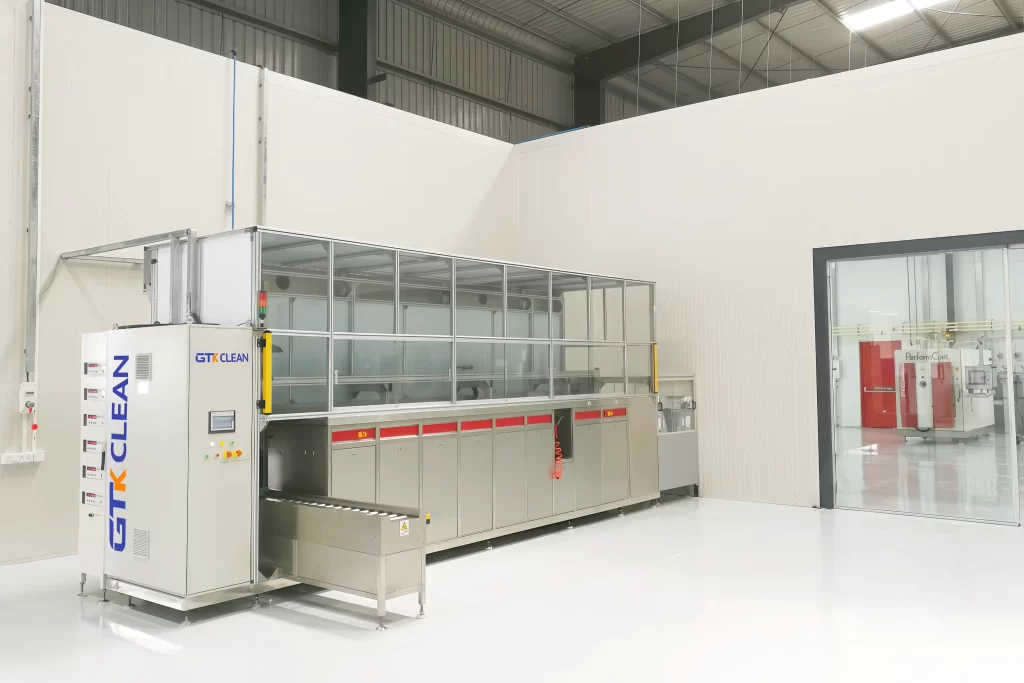
To illustrate the financial considerations, I often present clients with a clear comparison. We once advised a client in precision manufacturing who was considering a used multi-tank ultrasonic cleaner. While the used unit was 40% cheaper upfront, our analysis showed its projected energy consumption was 25% higher, and it lacked the advanced filtration systems that extend fluid life. Over five years, the new GTKCLEAN Multi-Tank Ultrasonic Cleaner, despite its higher initial cost, demonstrated a 15% lower total cost of ownership due to reduced energy, detergent, and maintenance expenses, alongside consistent high-quality output.
| Feature | New Industrial Cleaning Equipment | Used Industrial Cleaning Equipment |
|---|---|---|
| Initial Cost | Higher | Lower |
| Warranty Coverage | Comprehensive, manufacturer-backed | Limited or none |
| Maintenance Costs | Lower, predictable | Potentially higher, unpredictable |
| Energy Efficiency | High, optimized designs | Variable, often lower |
| Lifespan | Longer, full operational cycle | Shorter, unknown remaining life |
| Financing Options | Favorable terms, leasing available | Limited, higher interest rates |
Where New Industrial Cleaning Equipment Outperforms Used Models
Modern cleaning equipment offers significant advancements in automation, energy efficiency, and cleaning effectiveness that directly impact operational productivity. New industrial cleaning equipment often integrates advanced control systems, such as Siemens or Mitsubishi PLCs with color touchscreens, enabling precise process control and fault diagnostics. These features allow for optimized cleaning cycles, reduced human error, and consistent cleaning quality. Our Ultrasonic Cleaners for CNC Machined Parts feature fully automatic operation, minimizing manual labor and ensuring stable cleaning quality.
These technological improvements translate into tangible benefits. Energy-efficient designs, such as integrated heat recovery systems in our CNC Aluminum Shell Inline Cleaners, reduce power consumption. Enhanced cleaning mechanisms, like the 360° rotary cleaning in our Rotary Basket Ultrasonic Cleaners, ensure thorough contaminant removal from complex geometries. GTKCLEAN's 20+ years of R&D and 28 technical patents provide superior cleaning performance and cutting-edge automated cleaning systems that older models simply cannot match. This continuous innovation allows for higher throughput and cleaner parts, which is critical for subsequent processes like coating or assembly.
How Reliability and Maintenance Costs Differ Between New and Used Equipment
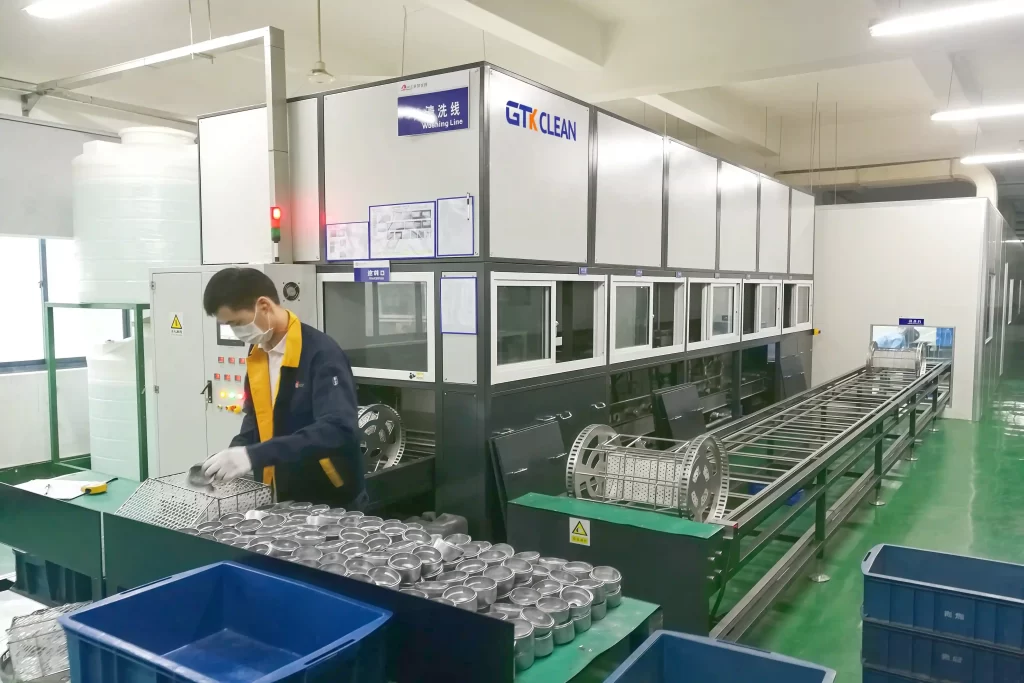
The longevity and consistent operation of cleaning equipment are critical for uninterrupted production and predictable budgeting. New industrial cleaning equipment comes with the assurance of factory-fresh components, full manufacturer support, and comprehensive warranties. This minimizes unexpected downtime and provides access to readily available spare parts. We design our equipment, such as the Heavy-Duty Automated Ultrasonic Cleaners, for maximum durability and sustained performance under demanding industrial conditions.
Used equipment, while cheaper, often lacks these assurances. Its operational history might be unknown, leading to unforeseen maintenance issues and costly repairs. The availability of spare parts for older models can be challenging or expensive, potentially causing prolonged production halts. With global operations and comprehensive support, GTKCLEAN ensures high reliability and readily available service for its industrial cleaning equipment, offering peace of mind and operational continuity.
What Compliance and Safety Risks Come with Used Cleaning Equipment
Mitigating operational risks, ensuring safety, and adhering to industry regulations are paramount when investing in industrial equipment. New industrial cleaning equipment is designed to meet current safety standards and environmental regulations, often incorporating features like advanced filtration systems for solvent recovery or ultrapure water systems to prevent secondary contamination. Our Multi-Tank Hydrocarbon Ultrasonic Cleaners include robust safety features such as gas monitoring, exhaust systems, and safety protection systems.
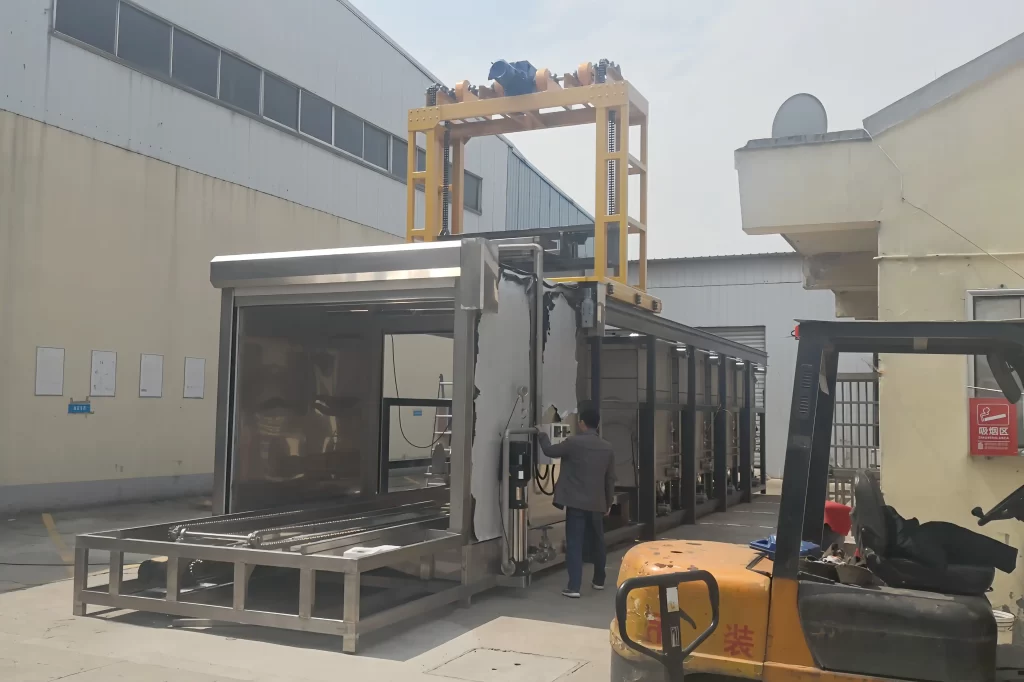
Buying used equipment introduces several risks. There is a higher chance it may not comply with the latest safety codes or environmental mandates, potentially leading to fines or operational restrictions. A thorough used equipment inspection is essential to identify potential hazards, structural weaknesses, or outdated components. Refurbished equipment can offer a middle ground, as it has typically been inspected and repaired to a certain standard, but its warranty and compliance status should be verified. The environmental impact of older, less efficient machines can also be higher due to increased energy consumption or less effective waste management.
How to Match Industrial Cleaning Equipment to Your Production Requirements
A systematic approach to evaluating specific operational needs against equipment characteristics ensures a sound investment that aligns with business goals. Consider the required cleanliness level, the volume and type of parts to be cleaned, and the desired level of automation. Customization options are often more extensive with new equipment, allowing for tailored solutions that precisely fit unique production lines. Our Pre PVD (Coating) Parts Ultrasonic Cleaners offer customizable designs to accommodate deep holes, blind holes, and complex parts.
Scalability is another factor. New systems can often be integrated into existing infrastructure or expanded more easily as production demands grow. If your facility is evaluating cleaning equipment for a new production line or an upgrade, it is worth discussing your specific throughput and cleanliness requirements before committing to either new or used options. The decision hinges on balancing budget considerations with performance reliability, long-term cost savings, and the need for consistent, high-quality output. A detailed cost-benefit analysis, factoring in both direct and indirect costs over the equipment's projected lifespan, will provide the clearest path forward.
Frequently Asked Questions
What factors determine the true value of industrial cleaning equipment over its lifespan?
The true value of cleaning equipment over its lifespan is determined by its total cost of ownership, which includes purchase price, energy consumption, maintenance and repair costs, spare parts availability, and residual value. Factors like operational efficiency, cleaning effectiveness, and the equipment's impact on production uptime also significantly contribute to its overall value.
How do new cleaning equipment warranties compare to used options?
New cleaning equipment typically includes a manufacturer's warranty covering parts and labor for a specified period, offering significant protection against defects and premature failures. Used equipment warranties are usually much shorter, if they exist at all, and often provided by the reseller rather than the original manufacturer, offering limited coverage.
What are the typical lead times for new industrial cleaning equipment?
Lead times for new industrial cleaning equipment vary significantly based on customization and manufacturer, often ranging from several weeks to a few months. Used equipment is typically available for immediate acquisition, offering a quicker deployment for urgent operational needs.
Can used cleaning equipment be upgraded with new technologies?
Upgrading used cleaning equipment with new technologies is often possible but depends on the equipment's age, design, and the specific technological advancements. While some components like control systems or sensors might be retrofitted, fundamental performance enhancements can be limited.
How does financing differ between new and used cleaning equipment purchases?
Financing options for new cleaning equipment often include manufacturer-backed loans, leases, and traditional bank loans, typically with more favorable terms due to lower risk. Used equipment financing might involve higher interest rates or require larger down payments, reflecting its depreciation and potentially higher maintenance costs. To discuss equipment specifications and financing options for your facility, contact GTKCLEAN at [email protected] or call +86 17768507147.
If you're interested, check out these related articles:
What Is the Principle of an Ultrasonic Cleaning Machine?
Ultrasonic Cleaning System Components Explained
The Indispensable Link Between Coating Technologies and Industrial Cleaning Systems
Ultrasonic Cleaning Equipment Explained: The Ultimate Guide
Industrial Cleaning Basket Design: Optimizing Performance & Durability
 English
  German
  Spanish
  French
  Russian
  Portuguese