
What Actually Drives Your Cleaning Schedule
Production volume sets the baseline, but contamination type determines whether that baseline holds. High-throughput lines generate more residue per shift—that much is obvious. What gets overlooked is how different contaminants behave over time. Cutting oils oxidize and harden. Metal fines embed into surfaces. Dust accumulates in layers that become progressively harder to remove.
Continuous operations need cleaning integrated into the workflow, often automated, because stopping the line for manual cleaning defeats the purpose of running continuously. Batch operations offer more flexibility—you can adjust cleaning frequency based on what each batch leaves behind. A run of aluminum parts coated in water-soluble coolant requires different treatment than a run of steel parts with heavy-duty cutting oil.
The risk assessment comes down to two questions: how much contamination accumulates per cycle, and what happens if that contamination carries over to the next process. A machining center feeding parts directly into an assembly line has tighter tolerances for residual contamination than one producing components that will be cleaned again downstream.
| Contamination Risk | Production Volume | Recommended Cleaning Frequency |
|---|---|---|
| Low | Low | Weekly or Bi-weekly |
| Medium | Low | Daily or Every Other Day |
| Low | High | Daily |
| Medium | High | Multiple times per day |
| High | Low | Multiple times per day |
| High | High | Continuous or Shift-based |
How Regulatory Requirements Shape Your Cleaning Calendar
External standards often override internal preferences. Food processing facilities operate under cleaning frequencies prescribed by regulatory bodies—there is no negotiating with food safety requirements. Pharmaceutical operations face validation protocols that document whether cleaning processes achieve specified cleanliness levels every single time, not just on average.
GMP requirements in food and pharma environments specify not just how often to clean, but how to verify that cleaning actually worked. This verification step adds time and cost, which means the cleaning frequency itself becomes part of a larger compliance calculation. ISO protocols and environmental regulations add additional layers, particularly for operations that discharge wastewater or handle hazardous materials.
The practical implication: your cleaning schedule may be partially dictated by auditors and inspectors rather than by your own operational analysis. Understanding which requirements apply to your specific operation—and which have flexibility built in—determines how much room you have to optimize.
What Happens When Cleaning Falls Behind
Insufficient cleaning frequency creates problems that compound over time. Equipment malfunctions increase as contamination interferes with moving parts, sensors, and seals. Maintenance shifts from preventative to reactive, which costs more and disrupts production unpredictably.
Product quality suffers in ways that may not be immediately visible. Contamination can cause defects that only appear after subsequent processing steps, making root cause analysis difficult. In regulated industries, failed cleanliness checks can trigger batch rejections, recalls, or regulatory action. The reputational damage from a contamination-related recall often exceeds the direct financial costs.
The compounding effect matters here. A cleaning schedule that falls slightly behind creates conditions where contamination builds faster, which makes the next cleaning cycle less effective, which accelerates the buildup further. By the time the problem becomes obvious, you are dealing with accumulated contamination that requires more aggressive intervention than routine cleaning would have prevented.
Matching Cleaning Methods to Equipment and Materials
Equipment geometry and material composition determine which cleaning methods work and how often they need to be applied. Complex parts with blind holes, internal channels, or intricate surface features require cleaning methods that can reach hidden areas. Ultrasonic cleaning uses cavitation—microscopic bubbles created by high-frequency sound waves—to dislodge contaminants from surfaces that manual cleaning cannot reach effectively.
Material compatibility limits your options. Some alloys react poorly to certain cleaning chemistries. Aqueous cleaning works well for many applications, but parts sensitive to water may require solvent-based approaches. The solvent choice then determines cleaning intervals based on solvent life and contamination loading.
Conveyor systems and continuous production lines need cleaning solutions that operate without stopping the line. Inline cleaners, automated spray systems, and integrated wash stations allow cleaning to happen as part of the production flow rather than as a separate operation. The cleaning frequency for these systems often ties directly to production rate rather than calendar time.
Preventative maintenance cleaning—cleaning performed to extend equipment life rather than to address visible contamination—follows a different schedule than production cleaning. This distinction matters for budgeting and planning purposes.
Measuring Cleanliness Instead of Guessing
Visual inspection tells you whether something looks clean, which is not the same as knowing whether it is clean. Quantitative methods provide data you can act on.
ATP testing measures adenosine triphosphate, a molecule present in organic material. High ATP readings indicate organic residue remains on the surface, even if that residue is not visible. This method works well for food processing and pharmaceutical applications where organic contamination poses the primary risk.
Microbial sampling provides direct data on bacterial contamination levels. For operations where microbial control matters—medical device manufacturing, food processing, certain pharmaceutical applications—this testing validates that cleaning frequencies are achieving their intended purpose.
These measurement methods allow you to adjust cleaning frequencies based on actual results rather than assumptions. If ATP levels remain acceptable with less frequent cleaning, you have evidence to support extending intervals. If levels spike despite maintaining your current schedule, you have early warning that something has changed in your process or contamination sources.
Environmental Conditions That Change Everything
The same cleaning schedule can produce different results depending on facility conditions. Temperature and humidity affect how quickly contaminants accumulate and how effectively cleaning agents work. High humidity accelerates corrosion on metal surfaces and promotes microbial growth, both of which may require more frequent cleaning intervention.
Airborne particulates settle on surfaces continuously. A facility with poor dust control will need more frequent surface cleaning regardless of what the production process itself generates. HVAC system maintenance directly affects how much airborne contamination reaches production areas.
Facility layout matters too. Operations located near material handling areas, loading docks, or other contamination sources may need different cleaning frequencies than identical operations in cleaner locations within the same building. Cross-contamination pathways—how contaminants move from one area to another—should inform both cleaning frequencies and cleaning priorities.
If your current cleaning schedule was developed under different environmental conditions, or if facility conditions have changed, the schedule may no longer be appropriate even if nothing else has changed about your production process.
The Cost Calculation Behind Cleaning Frequency
Cleaning costs include obvious expenses—labor, chemicals, water, energy—and less obvious ones. Downtime for cleaning represents lost production capacity. Waste disposal adds cost, particularly for operations using regulated cleaning chemistries. Equipment wear from cleaning processes contributes to maintenance and replacement costs over time.
The return on investment from optimized cleaning frequency comes from avoiding the costs of inadequate cleaning: equipment repairs, product quality failures, regulatory penalties, and the operational disruption that accompanies all of these. The calculation is asymmetric—the cost of cleaning too little typically exceeds the cost of cleaning too much, but both represent waste.
Automated cleaning systems change the cost structure by reducing labor requirements and often reducing chemical and water consumption through more precise application. The capital investment in automation pays back through lower operating costs per cleaning cycle, which can make more frequent cleaning economically viable.
Energy consumption varies significantly across cleaning technologies. Heated cleaning solutions, high-pressure systems, and certain drying methods consume substantial energy. Comparing cleaning technologies on a total cost basis—not just purchase price or chemical cost—reveals which approaches actually minimize cost over time.
Technology That Makes Better Schedules Possible
Sensor-based monitoring allows cleaning schedules to respond to actual conditions rather than following fixed intervals. Contamination sensors can trigger cleaning cycles when thresholds are exceeded, which means cleaning happens when needed rather than on a predetermined schedule that may be too frequent or not frequent enough.
Ultrasonic cleaning systems handle complex geometries that other methods cannot clean effectively. For precision components, this capability often means cleaner parts with less frequent cleaning cycles—the cleaning that does happen is more thorough, so residual contamination does not accumulate as quickly.
Solvent systems with recycling capabilities extend solvent life and reduce consumption. Vacuum stages in the cleaning process improve drying and reduce solvent carryover. These features affect both cleaning effectiveness and operating cost, which together determine optimal cleaning frequency.
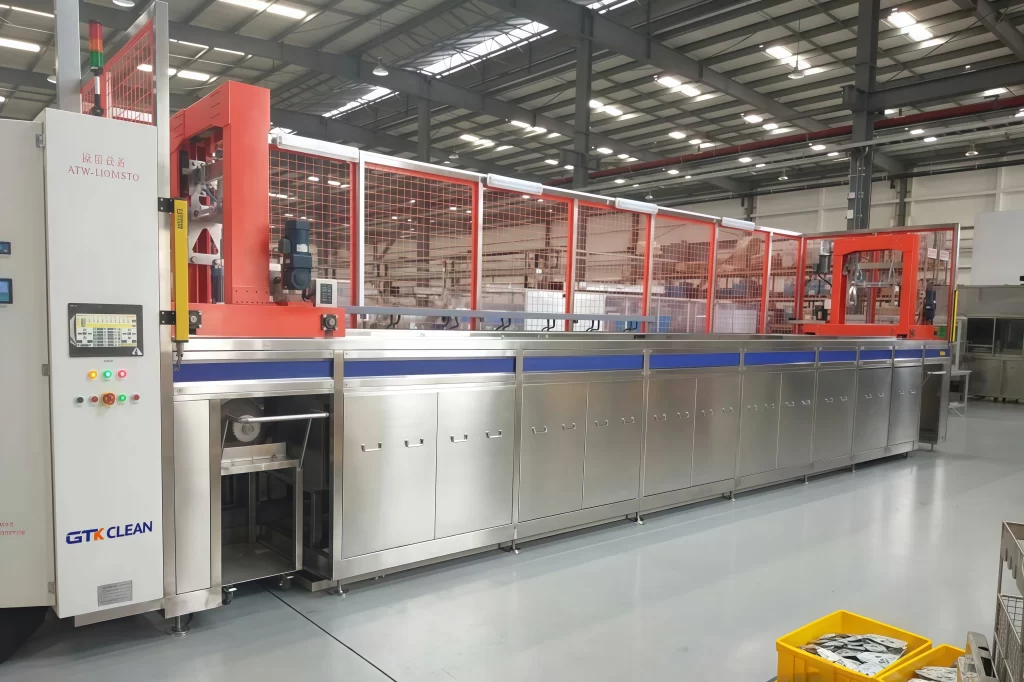
Conveyor-based systems for continuous cleaning—inline cleaners for CNC parts, tunnel cleaners for fasteners and small components—integrate cleaning into production flow. The cleaning frequency question becomes less about how often to clean and more about how to maintain consistent cleaning performance as production rates vary.
Industry-Specific Requirements Worth Knowing
Automotive component manufacturing often requires pre-coating cleanliness levels that demand specialized cleaning processes. Parts destined for PVD coating, painting, or bonding operations need surface preparation that removes not just visible contamination but also films and residues that would interfere with coating adhesion.
Medical device manufacturing operates under sterilization and cleaning protocols that specify both methods and frequencies. These requirements are documented in detail and subject to regulatory inspection.
Electronics manufacturing has its own cleanliness standards, particularly for components that will be soldered or bonded. Ionic contamination, flux residues, and particulate matter all have specified limits that drive cleaning requirements.
The common thread across industries: cleaning frequency is not arbitrary. It derives from the cleanliness levels required for downstream processes to succeed and for products to meet specifications. Understanding what cleanliness level your application actually requires—not just what seems reasonable—is the starting point for determining appropriate cleaning frequency.
Working With GTKCLEAN on Your Cleaning Requirements
GTKCLEAN's ultrasonic, solvent, conveyor, and water treatment systems address the range of cleaning challenges that determine optimal cleaning frequency. With over 20 years of development work and 28 technical patents, the equipment is designed for the specific demands of industrial cleaning applications.
If your operation is evaluating cleaning frequency optimization, discussing your specific contamination types, production volumes, and cleanliness requirements with GTKCLEAN's technical team can identify which equipment configurations match your needs. Contact the team at +86 17768507147 or [email protected].
Frequently Asked Questions About Industrial Cleaning Frequency
What signals that our current cleaning frequency needs adjustment?
Rising equipment breakdown rates, product contamination incidents, increasing maintenance costs, and failed quality control checks all indicate a mismatch between cleaning frequency and actual contamination levels. These symptoms often appear together because they share a common cause—contamination that the current cleaning schedule is not adequately controlling. Addressing the underlying frequency problem prevents these issues from compounding.
How does automation change optimal cleaning frequency?
Automated cleaning systems deliver consistent results that manual cleaning cannot match, which often allows extending intervals between cleaning cycles while maintaining or improving cleanliness levels. The consistency matters as much as the thoroughness—automated systems eliminate the variability that comes with different operators, different shift conditions, and the inevitable shortcuts that happen under production pressure. The result is more predictable contamination control with less total cleaning time.
Can cleaning happen too often?
Excessive cleaning frequency wastes labor, chemicals, water, and energy while adding unnecessary wear to equipment surfaces. Some cleaning processes, particularly those involving aggressive chemistries or mechanical action, can damage surfaces over time if applied more frequently than necessary. The goal is matching cleaning frequency to actual contamination levels and cleanliness requirements—not defaulting to more frequent cleaning as a safety margin. Measurement-based approaches help identify when current frequencies exceed what the application actually requires.
If you're interested, you may want to read the following articles:
How to Choose Cleaning Equipment for Medical Device Manufacturing
Industrial Cleaning Baskets: Why They Matter for Your Parts Washing Efficiency
How to Choose Multi-Tank Ultrasonic Systems for High Volume
Reduce Solvent Consumption in Industrial Cleaning: A Guide
Eliminate Residue in Pre-Coating Parts Cleaning: An Expert Guide
 English
  German
  Spanish
  French
  Russian
  Portuguese