
Solvent vapor degreasing remains one of the most effective methods for removing oils, greases, and particulate from precision components. While many publications outline the basic process, practical decisions around solvent selection, equipment configuration, and recovery systems determine whether a line runs profitably or becomes a compliance headache. In over two decades of designing automated cleaning systems, I've seen that the difference between a well-engineered degreasing cell and an underperforming one often comes down to how waste solvent is handled. This article breaks down vapor degreasing technology, compares it to alternatives, and explains why integrating distillation recovery changes the cost equation for manufacturers handling high-value parts.
How Solvent Vapor Degreasing Works
Solvent vapor degreasing uses the condensation of heated solvent vapor onto cooler parts to dissolve and carry away contaminants. In a typical system, a boiling sump at the bottom generates a saturated vapor zone above it. Parts enter this zone, and the vapor condenses on their surfaces, dissolving oils and grease which then drip back into the sump. Because the solvent is continuously distilled, the condensing vapor remains clean, leaving parts dry and residue-free without a separate drying stage. This process is particularly effective for complex geometries with blind holes and recesses where liquid immersion cleaning struggles to reach. The types of solvents used—typically hydrocarbons or modified alcohols—are selected based on the soils being removed and the materials of the parts.
Why Solvent Vapor Degreasing Outperforms Aqueous Cleaning
Aqueous cleaning systems rely on detergents, water, and drying. While they work for many applications, they often leave water spots or require lengthy drying cycles. For precision components like bearings, optical connectors, or parts destined for PVD coating, any residual moisture can cause corrosion or adhesion failures. Solvent vapor degreasing eliminates water entirely, producing dry, spot-free parts immediately after the vapor cycle. I’ve worked with manufacturers who switched from aqueous lines to vapor degreasing after repeated quality failures in post-coating tests. They found that the transition not only improved cleanliness consistency but also reduced process steps and energy consumption because drying ovens were no longer needed.
Critical Components of Solvent Vapor Degreasing Equipment
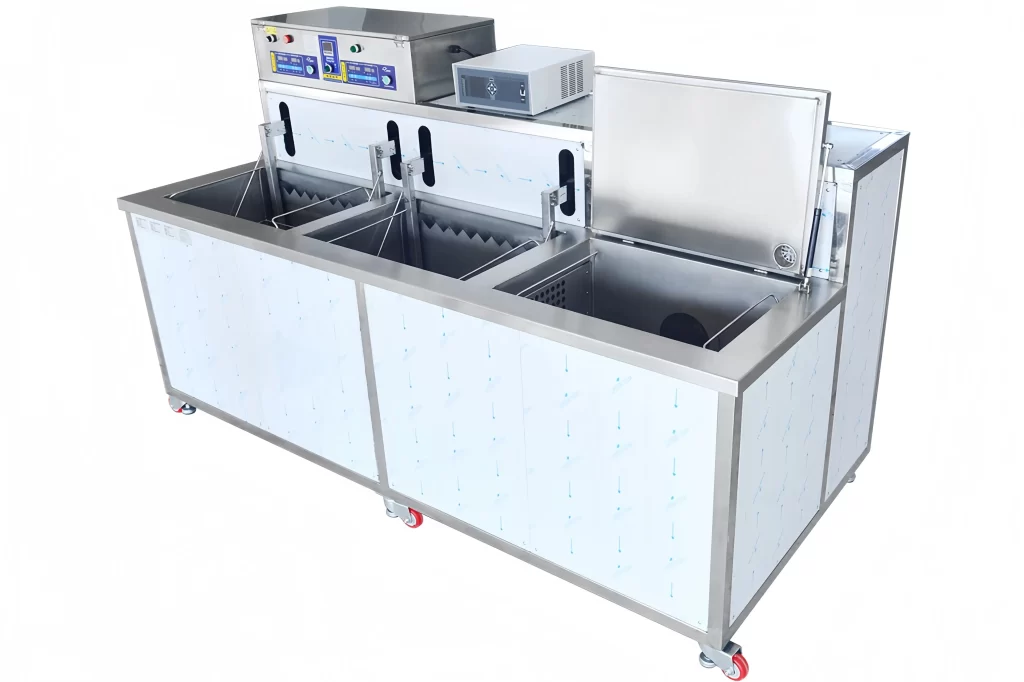
A standard vapor degreaser includes a boiling sump, a vapor zone, cooling coils around the freeboard area to contain vapor, and a condensate trough. More advanced systems integrate ultrasonic transducers into the boiling sump to boost cleaning efficiency for stubborn contaminants. For example, our Ultrasonic Vapor Degreasing Equipment combines 28kHz or 40kHz ultrasonic cavitation with vapor degreasing, which breaks down heavy stamping oils and carbon deposits that vapor alone might not fully remove. The freeboard ratio, typically 100% or more, and the cooling system design are critical for minimizing solvent loss. A poorly designed freeboard leads to excess solvent vapor escaping, driving up operating costs and creating workplace safety concerns.
For parts with stubborn baked-on soils, <Ultrasonic Vapor Degreasing Equipment> explores how adding ultrasonic cavitation to a vapor degreaser can cut cycle times by half for heavy stamping oil removal.
How Solvent Recovery Distillation Cuts Operating Costs
The single largest ongoing expense in vapor degreasing is solvent replacement. Every time parts are loaded, some solvent is lost through drag-out, evaporation, and venting. A closed-loop distillation recovery unit reclaims spent solvent from the sump and rinsing stages, separating clean solvent from oils and contaminants. Our Hydrocarbon Solvent Ultrasonic Vacuum Cleaner, for instance, incorporates a vacuum distillation module that reduces monthly solvent consumption to under 200 liters on a line handling up to 200 kg batches. Without recovery, a similar line might consume over 1,000 liters per month. The payback on a recovery system is often less than 12 months when solvent costs alone are considered, not including the reduced waste disposal fees.
Solvent costs can dominate the total cost of ownership for a vapor degreasing line. <Reduce Solvent Consumption in Industrial Cleaning: A Guide> covers practical strategies for minimizing solvent usage through equipment design, operator training, and closed-loop recovery, with real-world consumption benchmarks from production lines.
If your current solvent consumption exceeds 500 liters per month, it is worth evaluating whether a distillation recovery unit would eliminate the excess. Send your current usage data to [email protected] for a projected cost analysis.
Key Operational Parameters and Daily Maintenance
Maintaining consistent cleaning quality depends on monitoring a few critical parameters: solvent boiling temperature, vapor zone height, freeboard temperature, and the condition of the solvent. If the solvent accumulates too much oil, its boiling point rises, and cleaning performance declines. I recommend routine testing of solvent purity at least weekly and more often in high-throughput lines. Daily checks should include verifying the cooling coil function, inspecting safety interlocks, and confirming that the vapor zone is stable. A common mistake I see is operators ignoring gradual increases in solvent consumption, which often signal a failing chiller or a clogged condensate system. Addressing these early prevents both safety incidents and unnecessary solvent waste.
| Maintenance Task | Frequency | Impact if Neglected |
|---|---|---|
| Check solvent purity (refractive index or GC) | Weekly | Reduced cleaning efficiency, oil carry-over |
| Inspect cooling coils and chiller performance | Daily | Increased vapor loss, higher solvent consumption |
| Verify safety interlocks and vapor sensors | Daily | Fire/health risk, regulatory non-compliance |
| Clean or replace condensate filters | Monthly | Clogged system, poor vapor recovery |
| Check freeboard seals and gaskets | Quarterly | Vapor leaks, worker exposure |
Selecting a Solvent Vapor Degreasing System for Your Parts
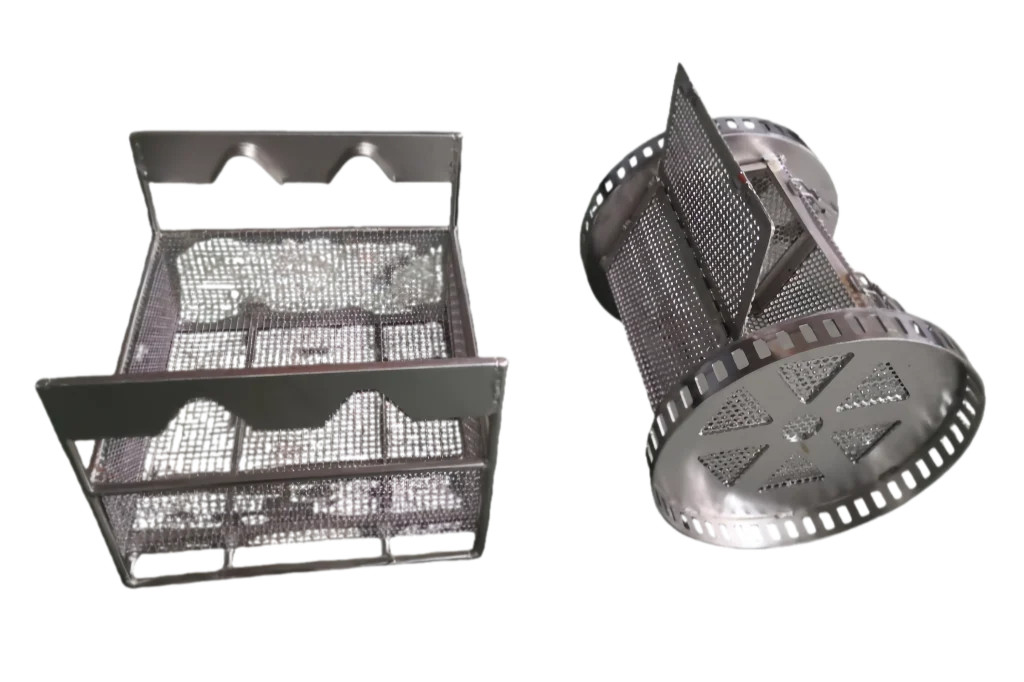
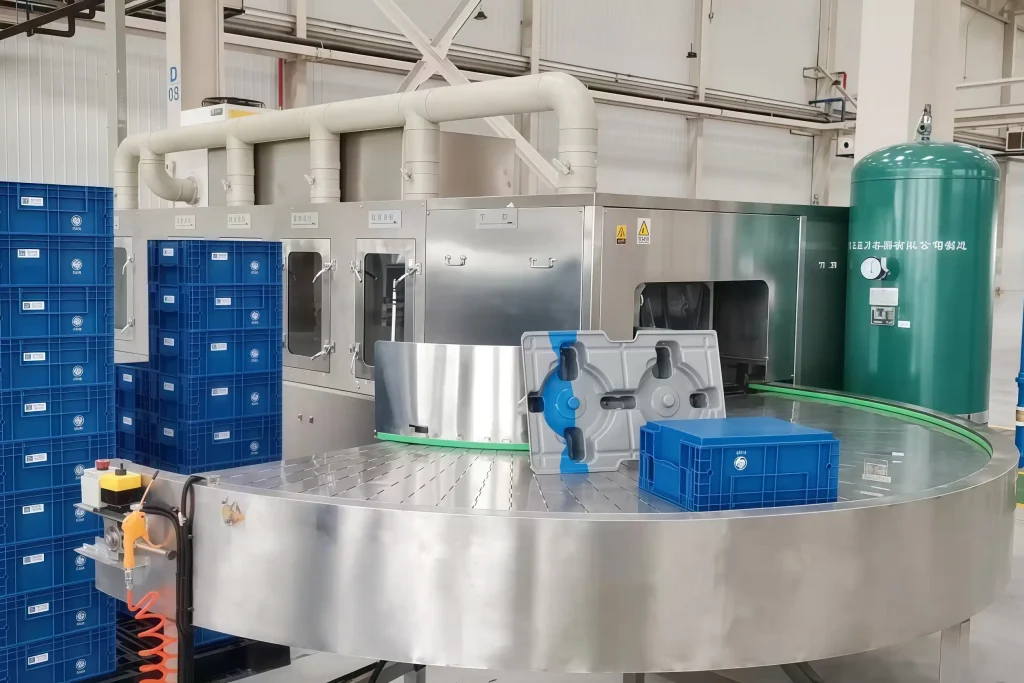
Choosing the right system starts with three factors: part size and geometry, production volume, and the type of soils present. Large castings might require custom deep-tank degreasers, while high-volume small parts benefit from automated inline systems with conveyor loading. For parts with blind holes, rotating baskets improve drainage and solvent recovery. Solvent type also matters—hydrocarbons handle heavy grease, while modified alcohols are suitable for lighter oils and leave minimal residue. Custom engineering, like the solutions we design at GTKCLEAN, can incorporate multiple cleaning stages, ultrasonic assist, and integrated drying to meet specific cleanliness standards.
If your program involves parts with deep recesses or if you need to meet ISO 16232 cleanliness specifications, it is worth confirming early in the equipment selection process whether a standard vapor degreaser or an ultrasonic vapor hybrid is required. This decision affects floor space, solvent capacity, and initial capital cost.
Next Steps for Your Degreasing Operation
Implementing or upgrading a solvent vapor degreasing line is a significant investment, but the operational savings from solvent recovery and consistent quality often outweigh the upfront cost within the first year of operation. For manufacturers running high-value parts where cleanliness failures cause scrap or rework, the case is even stronger. To get a clear picture of what a tailored vapor degreasing system would look like for your specific parts and throughput, send your part drawings, required cleanliness standard, and daily volume to [email protected] or call +86 17768507147. We can provide a technical proposal and projected solvent consumption based on actual production parameters.
Common Questions About Solvent Vapor Degreasing
Is solvent vapor degreasing safe for operators in the production environment?
Modern vapor degreasers are designed with multiple safety layers: freeboard cooling, automated covers, vapor sensors, and exhaust systems that prevent solvent exposure above regulatory limits. Our equipment meets CE and OSHA standards, with gas monitoring that alarms well before any hazardous concentration is reached. When properly maintained, a vapor degreaser operates with lower worker exposure than many open-top aqueous cleaning tanks.
How do I decide between hydrocarbon and modified alcohol solvents?
Hydrocarbons are more aggressive and work well on heavy stamping oils and greases, but they require higher boiling temperatures and may leave a slight residue on sensitive optics. Modified alcohols evaporate more cleanly, leaving virtually no residue, and are preferred for pre-coating applications or electronics. The choice often comes down to the type of contaminant and the material being cleaned. In programs we’ve supported, switching to a modified alcohol vapor degreaser eliminated post-clean bake steps for optical connectors.
What maintenance tasks are critical for preventing solvent carry-out?
The most impactful maintenance actions are keeping cooling coils clean and free of scale, verifying the chiller is set correctly, and ensuring the freeboard area is not too hot. Solvent carry-out spikes when vapor condenses on warmer parts or when the freeboard temperature rises above design limits. I recommend a quick daily log of solvent top-up amounts; an upward trend is an early warning sign that the condensation system needs attention.
Can I retrofit my existing aqueous cleaning line with a vapor degreaser?
It is rarely a direct retrofit because vapor degreasers require sealed chambers, solvent-resistant materials, and explosion-proof electricals that aqueous lines do not have. Usually, it is more cost-effective to install a dedicated vapor station. If you are evaluating a shift, share your current layout and throughput data with us at [email protected]. We can help assess the feasibility and expected cost savings compared to your existing process.
Does solvent vapor degreasing require special waste disposal procedures?
Yes. Spent solvent and oil mixtures must be handled as hazardous waste in most regions. However, distillation recovery units drastically reduce the volume of waste by recycling clean solvent. The remaining sludge is concentrated and easier to dispose of. Our solvent recovery systems can reduce waste volume by 80–90%, simplifying compliance and lowering disposal costs. If you are unsure about local regulations for your solvent type, send your solvent SDS and part volume to [email protected]. We can help evaluate the waste stream before you commit to a purchase.
If you're interested, check out these related articles:
Automated Ultrasonic Cleaning: Elevating Industrial Process Consistency
Factory Manager’s Guide: Integrating Automated Cleaning Lines
Industrial Ultrasonic Cleaning Systems: Diverse Applications Guide
Ultrasonic Cleaning Process: A Step by Step Technical Guide
 English
  German
  Spanish
  French
  Russian
  Portuguese