Water-based or solvent ultrasonic cleaning is not an environmental preference contest. The right choice follows the contaminant you are removing, the geometry of the part, and whether your line can reliably dry what the cleaning stage leaves behind. I see too many manufacturers start with chemical cost alone and then absorb the real penalty in rinsing, drying, or wastewater handling. In most metalworking applications, aqueous systems earn their place when water-soluble coolants and light oils dominate. Solvent systems pull ahead when heavy oil, grease, wax, or blind-hole residue would force an aqueous line into excessive heat, detergent, and drying time.
Water-Based Ultrasonic Cleaning Handles General Contamination Without Solvent Management
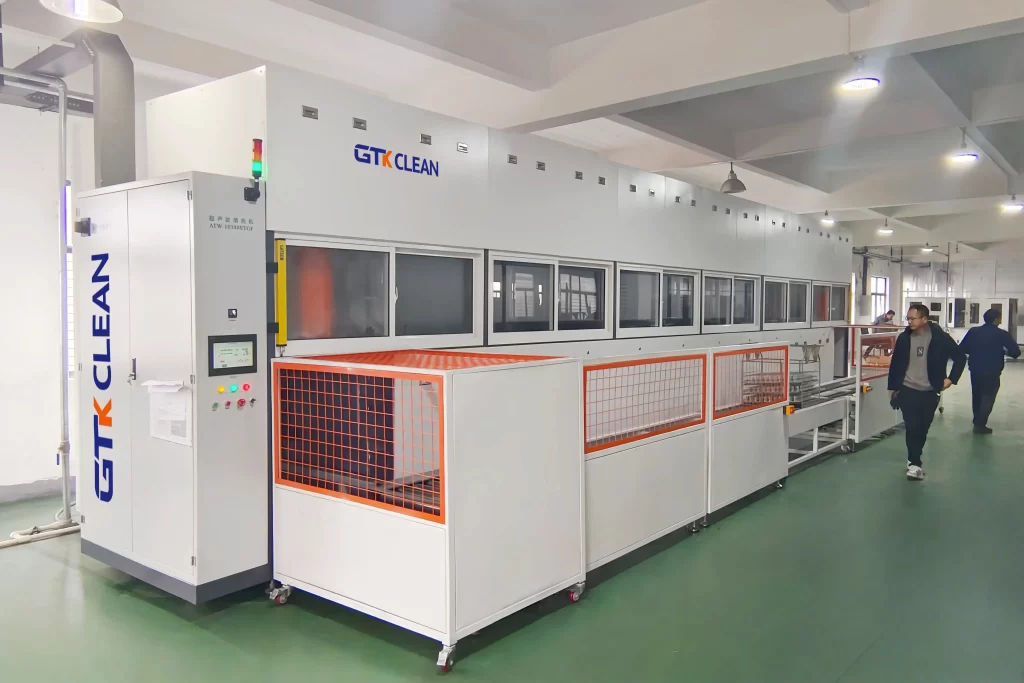
Water-based ultrasonic cleaning stays the default in high-volume metalworking because the chemistry is forgiving for water-soluble coolants, fingerprints, fine chips, and light mineral oils. A well-run tank holds the detergent at 45 to 65°C while cavitation works the surface. The system becomes less forgiving in the rinse and dry legs: if the final rinse is not low-conductivity water, spots and mineral films defeat the cleaning work. GTKCLEAN's pre-coating aqueous machines build the rinse train around ultrapure water at 30 to 40°C with conductivity controlled at 0.06 μS/cm or below. That is not a decorative spec. Parts destined for PVD or CVD coating fail on rinse residue long before they fail on gross contamination. Once the water leaves the final rinse, air knives, hot air, or vacuum drying must remove it completely from blind holes and threads. This is where many users discover the hidden cost of an aqueous decision: thermal drying energy plus the compressed air required to blow water out of recessed features.
Detergent selection is where aqueous lines either stay stable or drift into rust and residue problems. <How to Select the Best Cleaning Solution for Metal Parts> covers how to match alkaline or neutral chemistry to the base metal and incoming soil package instead of running one generic cleaner across every part family.
Solvent Ultrasonic Cleaning Removes Heavy Oil and Blind-Hole Residue Faster
Hydrocarbon and modified alcohol systems solve a different problem. The solvent wets blind holes and fine threads more readily than water, especially when the process runs under vacuum. That is why our multi-tank hydrocarbon and single-station vacuum machines combine ultrasonic cavitation with solvent vapor condensation and vacuum distillation. In a single-station configuration, a 670 by 480 by 400 mm basket can carry up to 200 kg per batch, and a two-stage cycle runs about 12 to 15 minutes. Solvent consumption stays around 200 liters per month or less on the equipment we build because the distillation return loop reclaims most of the working fluid. The tradeoff is not only chemical cost. Solvent machines need exhaust, gas monitoring, temperature control, and a site that accepts the recovery loop. A vacuum hydrocarbon machine with vapor recovery is different from a bench-scale solvent bath. When the parts carry stamping oil, drawing oil, heavy grease, or polishing wax, this equipment clears contamination that would require multiple heated aqueous stages and aggressive detergent. The direct question is whether the line can manage solvent input, still residue, and drying in one enclosure. In many cases, it can, and the cycle time advantage outweighs the added safety equipment.
Part Geometry and Production Volume Decide Between Water-Based and Solvent Ultrasonic Cleaning
The table below separates what water-based and solvent ultrasonic cleaning actually deliver before a buyer considers purchase price. Use the part geometry column first, because that is the factor most likely to force a route change after equipment is installed.
Factor
Water-Based Ultrasonic Cleaning
Solvent Ultrasonic Cleaning
Best contaminant fit
Water-soluble coolants, chips, light mineral oils, fingerprints
Heavy oil, grease, wax, drawing compound, blind-hole residue
Blind holes and fine threads
Requires strong ultrasonic and precise rinsing and drying
Better wetting, especially with vacuum assist
Drying method
Air knife, hot air, or vacuum drying
Vacuum vapor drying with solvent recovery
Utility demand
DI water treatment, wastewater handling, high drying energy
Exhaust, gas monitoring, distillation recovery loop
Cycle time
Often 5 to 6 minutes per wash tank plus rinse and dry
Roughly 8 to 15 minutes depending on stage count and load
I would not choose between these two on chemistry preference alone. A part with deep blind holes and machining oil can turn a low-chemical-cost aqueous line into a bottleneck if the rinse cannot reach the same cavity the oil occupied. A high mix of simple stamped parts rarely needs solvent-level wetting, but it may need high throughput and minimal waste treatment.
Operating cost comparisons often stop at the detergent or solvent purchase price, but that misses the larger cost drivers. <Optimizing Industrial Cleaning to Reduce Solution Expenses> covers how filtration, bath life, and rinse volume management usually remove more cost than switching chemistry.
If your program includes parts with deep recesses and a coating specification, it is worth confirming the drying and recovery sequence before the tank layout is fixed. Email [email protected] with your part drawing, weekly volume, and the incoming contaminant.
Rinsing and Drying Requirements Change the True Cost of Each Cleaning Method
Water-based cleaning carries a hidden thermodynamic burden: the part leaves the wash tank wet with a liquid that must be removed from surfaces, threads, and blind holes. The final rinse has to be low-conductivity enough to avoid films, so the water treatment equipment is not optional. Air knives and hot air dryers consume significant power on high-volume lines, and vacuum drying adds capital cost for complex parts. If a producer skimps on drying, flash rust or water spots appear downstream and create rework that erases the detergent savings. Solvent systems move that cost from water removal to vapor recovery. The solvent must be condensed, separated, and returned to the process, and the drying chamber must be tight enough to avoid emissions and atmospheric moisture reentry. A practical water-based or solvent ultrasonic cleaning comparison has to separate wash chemistry cost from drying and waste cost. A direct energy comparison is rarely helpful because the two systems load different utilities. The practical question is which burden your plant can handle better: a wastewater discharge path plus drying energy, or a closed-loop solvent room with exhaust and operator controls.
Drying and bath heating usually dominate the utility bill more than ultrasonic power. <Ultrasonic Cleaning Energy Costs Minimizing Strategies> covers practical ways to cut wasted energy in heating, drying, and pump operation on industrial lines.
The Water-Based or Solvent Ultrasonic Cleaning Route Should Be Confirmed Before the Line Layout Freezes
The wrong time to finalize cleaning chemistry is after the floor plan, electrical feed, and utility connections are already committed. A water-based selection made without DI water capacity forces a retrofit. A solvent selection made without a proper exhaust and recovery room forces a line shutdown or an expensive process change. The part geometry and soil package should determine the route first, then the line layout can fall in behind it. GTKCLEAN reviews the part print, incoming contamination, weekly throughput, and drying target before proposing tank sequence, recovery equipment, and control architecture. Send your part drawing, weekly volume, and a photo of the contaminated part to [email protected] or call +86 17768507147, and we will confirm which route fits the existing floor plan.
Most Water-Based and Solvent Ultrasonic Cleaning Questions Start With Drying and Waste Handling
Does water-based ultrasonic cleaning always produce better environmental compliance?
No. Compliance depends on what leaves the plant and how the site treats it, not on the word water. Aqueous lines concentrate oil and detergent into rinse water that may require pH adjustment, oil separation, and discharge permits. Solvent lines concentrate waste into still bottoms and require VOC controls, gas monitoring, and permitted exhaust. A properly closed solvent recovery system can sometimes create a smaller regulated waste stream than a poorly filtered aqueous line. The better question is which waste stream your facility is permitted to handle.
When does solvent ultrasonic cleaning justify the extra system cost?
It depends on the contaminant and the geometry. Solvent ultrasonic cleaning earns its higher capital and safety cost when parts carry heavy oil, grease, wax, or drawing compound, or when blind holes and fine threads trap residue that water cannot wet reliably. It also wins when drying speed matters and when the site prefers a closed solvent loop to expanded wastewater treatment. For simple parts with light coolant residue, the higher system cost is harder to recover.
Can one machine run both water-based and solvent chemistry?
Not without a level of rework that most plants underestimate. The tanks, seals, filtration, venting, and controls are specific to the chemistry, and residual moisture or solvent carryover creates quality and safety problems. We treat water-to-solvent conversion as a line rebuild, not a recipe change. If the product range genuinely demands both, the practical route is often separate machines or a dedicated solvent station later in the same production flow.
What is the fastest way to confirm which route fits an existing factory?
In projects we have evaluated, a focused technical review removes the wrong options before purchase. The review needs the part drawing, weekly volume, incoming contaminant, cleanliness specification, and available utilities. With that data, we compare cycle time, drying method, waste stream, and floor space instead of starting from a catalog price. Share your requirements at [email protected], and we will confirm the water-based or solvent route before you commit to a layout. If you're interested, check out these related articles: Industrial Ultrasonic Cleaning Systems: The Complete GuideConveyor Ultrasonic Washers for Heavy Industrial Parts

 English
  German
  Spanish
  French
  Russian
  Portuguese