
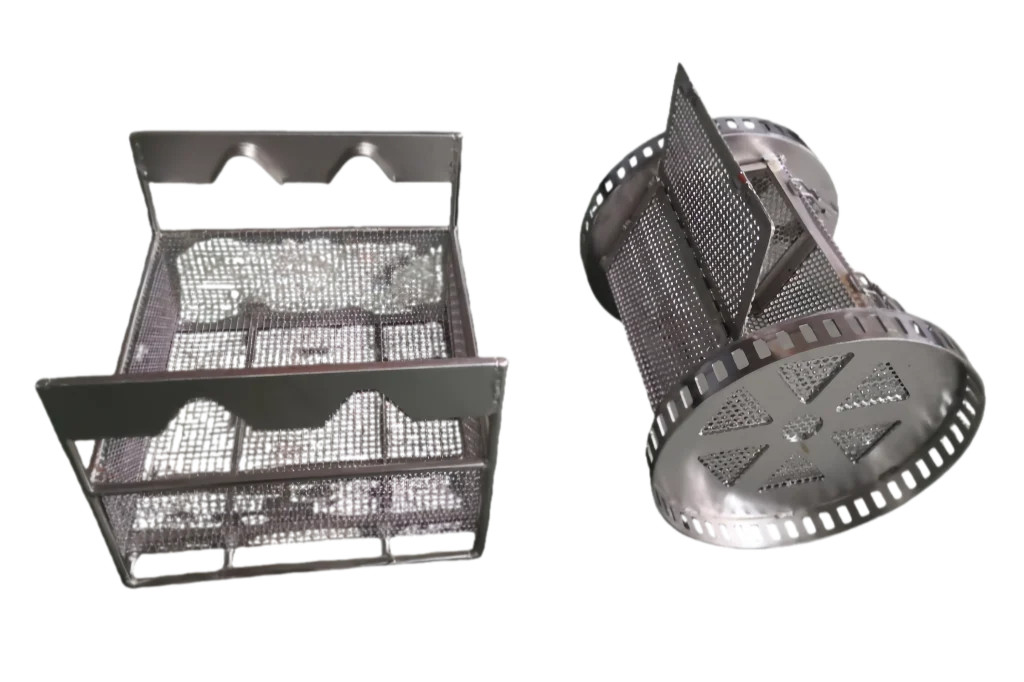
Uneven oxide scale on heat-treated parts can delay downstream processes like coating or assembly, and manual descaling often creates a bottleneck. Heat treatment scale removal, when done with automated cleaning equipment, delivers repeatable results, lower labor demand, and better surface readiness. Our team has seen that the right process — combining mild chemical detergents with ultrasonic or spray action — can cut post-heat-treatment rework by more than half. This guide covers the formation of scale, compares available removal methods, and explains how to select and optimize automated cleaning equipment to integrate into your production line.
The Causes of Heat Treatment Scale on Metal Parts
When ferrous and many non‑ferrous alloys are heated to hardening or annealing temperatures, the metal surface reacts with oxygen, forming an oxide layer. The thickness and composition of this layer depend on furnace atmosphere, temperature, and soak time. Carbon steel typically develops a blue-black iron oxide, while tool steels and stainless grades may form tenacious chromium‑rich scales. If left in place, the scale weakens paint or PVD coating adhesion, alters critical dimensions, and can act as an initiation point for corrosion.
A Comparison of Heat Treatment Scale Removal Methods
Several descaling approaches are used in production, each with trade‑offs in cycle time, part damage risk, and automation potential.
| Method | Typical cycle | Surface contact | Suitability for complex geometries | Automation ready |
|---|---|---|---|---|
| Manual wire brushing / grinding | Highly variable per part | Abrasive, may remove base material | Low – blind holes difficult | No |
| Abrasive blasting | 2–8 min per batch | Aggressive, can mask precision features | Moderate – line-of-sight limits | Semi‑automatic |
| Acid pickling | 10–60 min | Chemical dissolution, risk of hydrogen embrittlement | Good if parts are immersed | Batch immersion only |
| Ultrasonic + mild detergent | 5–15 min per basket | Cavitation reaches cracks, threads, blind holes | Excellent | Fully automatic |
| High‑pressure spray | 3–10 min per cycle | Mechanical stripping + detergent | Good for open surfaces | Inline or batch |
Manual methods often fail to remove scale from recessed areas and introduce unacceptable variance when part volumes rise. Acid pickling, while effective, demands careful chemical management and waste treatment. For most production environments, a combination of chemical action and mechanical energy — delivered by ultrasonic or spray systems — yields the most consistent result.
Choosing Automated Equipment for Heat Treatment Scale Removal
The geometry of your parts and your throughput target should drive equipment selection.
For long, slender parts or those with deep blind holes, an ultrasonic immersion system is usually the best fit. The cavitation bubbles generated at 28–40 kHz collapse forcefully enough to detach scale from internal passages without eroding the parent metal. A multi‑tank ultrasonic line lets you cascade through pre‑wash, ultrasonic descaling, rinse, and drying without manual transfer. When parts also need protection against scratches or demand even higher coverage, a rotary basket ultrasonic system turns the components through 360° inside the tank, ensuring every surface is exposed to the cleaning liquid. GTKCLEAN’s rotary basket ultrasonic cleaners, for example, handle loads up to 2 000 kg and can be integrated with filtration and chemical circulation to extend detergent life. 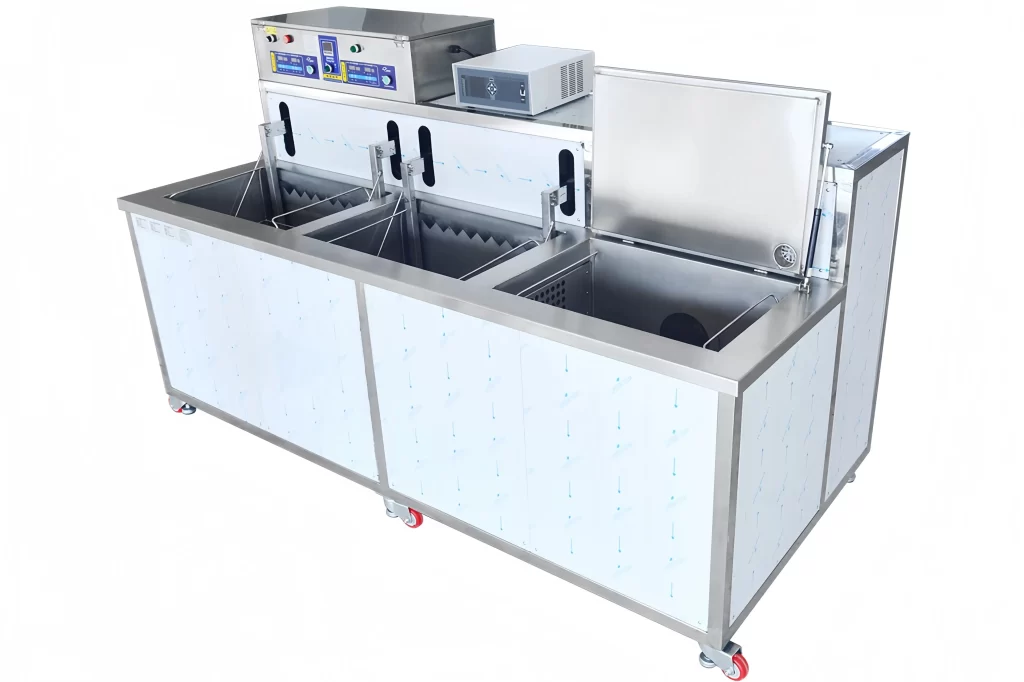
For flat plates or parts with open forms, a high‑pressure spray line — possibly tunnel‑type conveyors — can clean hundreds of units per hour because the spray jets provide both chemical stripping and mechanical force. In many cases, a hybrid system that combines spray pre‑wash with ultrasonic fine‑cleaning gives the best trade‑off between speed and blind‑hole capability.
If your program involves parts with deep recesses or strict pre‑coating cleanliness requirements, the cleaning system choice directly affects yield rates. Before finalizing specifications, it is worth confirming that the proposed machine can demonstrate repeatable cleanliness on your actual part profile. Send your part drawings and throughput number to [email protected] for a process evaluation.
For a deeper engineering discussion on tank configurations, refer to our Multi‑Tank Ultrasonic Cleaning: A Deep Dive into Industrial Configurations.
Optimizing the Heat Treatment Scale Removal Process
Choosing the right equipment is only half the equation; dialing in the process parameters determines whether cleaning meets specifications day after day.
- Cleaning chemistry: Alkaline detergents (pH 9–11) are effective on many carbon‑steel scales and are easier to rinse than strong acids. Modified alcohol or hydrocarbon solvents can be used when subsequent coating processes forbid any aqueous residue.
- Temperature: Most detergents work best at 45–65 °C; higher temperatures may accelerate scale dissolution but also increase energy and vapor losses.
- Ultrasonic frequency: Lower frequencies (20–28 kHz) deliver higher cavitation intensity for tough scale, while higher frequencies (40 kHz) are gentler and better for delicate substrates.
- Rinsing and drying: Multi‑stage ultrapure water rinsing prevents water spots, and vacuum or hot‑air drying eliminates moisture that could trigger flash rust.
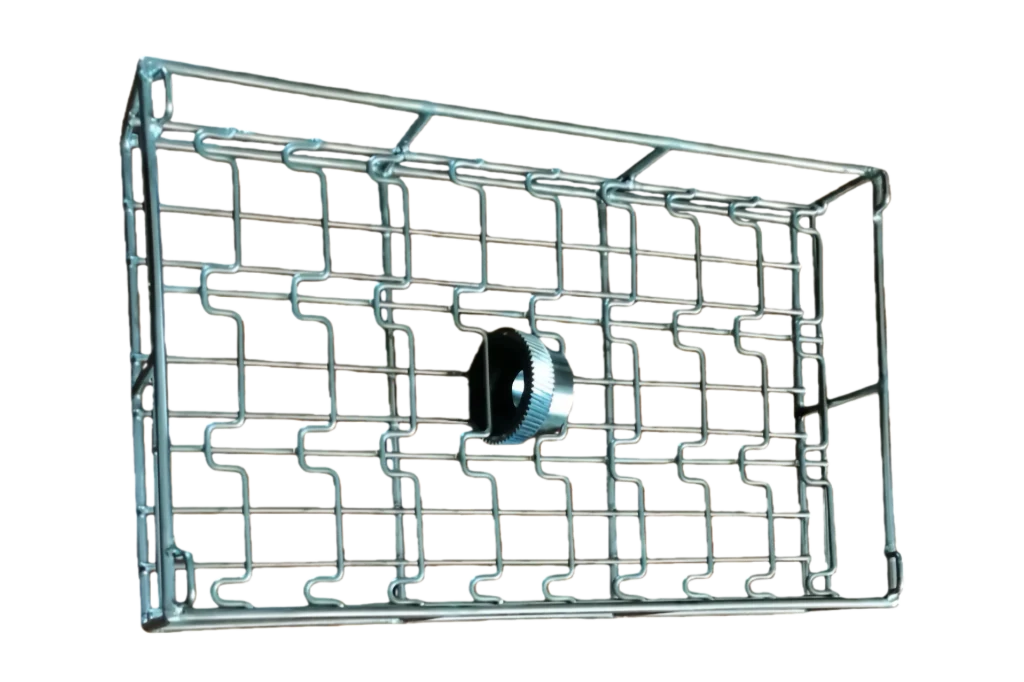
Process validation should include regular surface cleanliness tests — such as water‑break or dyne‑ink checks on representative parts — because scale remnants are not always visible to the naked eye. We have found that a 5–6‑minute ultrasonic stage combined with 30–40 °C rinse water consistently achieves a water‑break‑free surface on heat‑treated steel components that previously required manual rework.
Managing Costs and Environmental Impact in Scale Removal
Automated descaling lines do represent a higher initial capital outlay than a manual pickling tank, but the per‑part cost often drops substantially once the line runs at capacity. Labor requirement falls to one operator, chemical consumption decreases because filtration and circulation extend bath life, and rework rates decline. When solvent‑based cleaning is used, adding a distillation recovery unit further reduces operating expenses and simplifies compliance with VOC emission limits.
| Cost driver | Manual descaling | Automated ultrasonic line |
|---|---|---|
| Labor per shift | 2–3 operators | 1 operator |
| Chemical usage | Replacement every 2–3 days | Circulation extends life 4× |
| Rework rate | 5–15% | <2% |
| Waste disposal | Frequent acid neutralization | Infrequent, after filtration |
Environmental regulations in many regions now restrict open acid baths, and substituting alkaline detergents with mechanical agitation is a practical path to compliance. GTKCLEAN’s systems incorporate overflow rinsing, oil‑water separation, and optional solvent recovery to help manufacturers meet discharge limits without sacrificing throughput.
Steps to Implement an Automated Descaling Line
Moving from a manual or mixed‑process shop to a fully automated heat treatment scale removal line follows a straightforward sequence.
- Part audit: Catalog the full range of parts that will pass through the system — note material, maximum dimensions, internal features, and post‑cleaning requirements.
- Define cleanliness specification: Quantify the acceptable residue level (e.g., no visible oxide under 10× magnification, or <1 µg/cm² hydrocarbon).
- Select an equipment partner: Look for a supplier with in‑house engineering and process support, not just a machine seller. Share your part portfolio and target throughput.
- Run off‑line trials: Validate the chemistry, cycle time, and fixture design on a representative sample before committing to full integration.
- Integrate with production: Connect the cleaning line to existing conveyors, data systems, and quality checkpoints.
Removing heat treatment scale manually often leads to inconsistent quality and hidden rework costs. Automated cleaning lines overcome these issues by combining controlled chemistry, precise mechanical action, and repeatable cycles. If you are ready to move beyond manual descaling, send your part specifications and target throughput to [email protected] or call +86 17768507147. Our engineers can design a system matched to your production, complete with a process validation report.
Common Questions About Heat Treatment Scale Removal
Does ultrasonic cleaning remove all types of heat treatment scale?
Ultrasonic cleaning is highly effective on oxide scales that are reasonably adherent — the cavitation impact dislodges loosely bonded layers and, when paired with an alkaline detergent, gradually dissolves the remaining scale. Extremely thick, fused scales may require a quick pre‑soak or a short mechanical pre‑treatment; however, for most production parts, a 10‑minute ultrasonic cycle leaves surfaces ready for the next manufacturing step.
Which cleaning chemical is safest for heat treatment scale removal?
Alkaline detergents are generally safer than strong mineral acids because they avoid hydrogen embrittlement and are less corrosive to equipment. When the process demands solvent‑only cleaning, hydrocarbon or modified‑alcohol solvents offer effective degreasing and mild descaling with lower toxicity than chlorinated solvents.
How do I prevent flash rust after descaling?
Flash rust occurs when clean metal is exposed to air humidity. A multi‑stage rinse with ultrapure water (conductivity ≤ 0.06 µS/cm) removes ionic residues, and immediate hot‑air or vacuum drying eliminates surface moisture. In high‑humidity environments, a brief rust‑preventative dip may be added as a final station.
Can one cleaning system handle both heat treatment scale and machining oils?
Yes, a properly designed multi‑tank system can first degrease in a hydrocarbon or alkaline stage, then descale in a dedicated ultrasonic tank, and finally rinse and dry — all in one automated sequence. This consolidates two cleaning operations into a single line, saving floor space and labor.
If your production involves high‑volume scale removal and you would like a tailored process recommendation, sharing your part data and cleanliness goals with us is often the quickest way to identify the most cost‑effective cleaning configuration.
If you're interested, check out these related articles:
Automated Ultrasonic Cleaning Systems for Advanced Manufacturing
Industrial Ultrasonic Cleaning Systems: Diverse Applications Guide
Reduce Energy Costs in Industrial Ultrasonic Cleaning
How to Choose Multi-Tank Ultrasonic Systems for High Volume
 English
  German
  Spanish
  French
  Russian
  Portuguese