

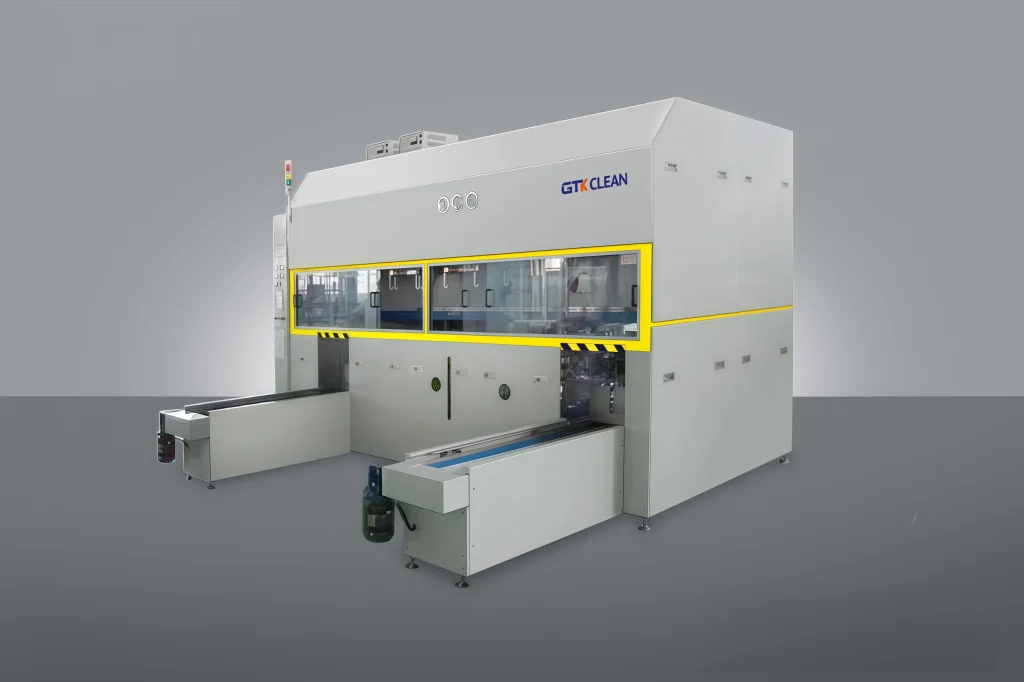
Ultrasonic cleaning performance depends on how well you manage the interaction between frequency, power density, solution chemistry, and part handling. Each variable affects cavitation behavior differently, and the optimal configuration changes with the contaminant type, material composition, and required cleanliness standard. This guide covers the technical factors that determine cleaning outcomes and explains how to adjust them for specific industrial applications.
How Ultrasonic Frequency Determines Cleaning Behavior
Frequency selection controls the size and energy of cavitation bubbles formed in the cleaning solution. Cavitation occurs when ultrasonic waves create pressure fluctuations that generate microscopic vapor bubbles, which then collapse violently and release localized energy against contaminated surfaces.
Higher frequencies, typically 40 kHz and above, produce smaller bubbles in greater numbers. These smaller implosions distribute energy more evenly and penetrate fine features without damaging delicate substrates. Lower frequencies below 40 kHz generate larger bubbles with more aggressive collapse energy, better suited for heavy contamination on robust materials.
The practical range spans from 20 kHz for aggressive cleaning of durable parts to 80 kHz for precision components with intricate geometries. GTKCLEAN Benchtop Ultrasonic Cleaners cover this full spectrum, allowing operators to match frequency to the specific workpiece. Variable frequency systems add flexibility when a single line handles diverse part types, though most dedicated production cells benefit from fixed-frequency optimization based on the dominant application.
Why Power Density Requires Precise Control for Ultrasonic Cleaning Performance
Power density measures ultrasonic energy per unit volume of cleaning solution. This parameter determines whether cavitation reaches sufficient intensity to dislodge contaminants or falls short of the threshold needed for effective cleaning.
Insufficient power density produces weak cavitation that leaves residues in place. Excessive power density creates cavitation erosion, a condition where bubble implosions pit or erode material surfaces. The damage threshold varies by material: soft metals and polymers tolerate less energy than hardened steel or ceramics.
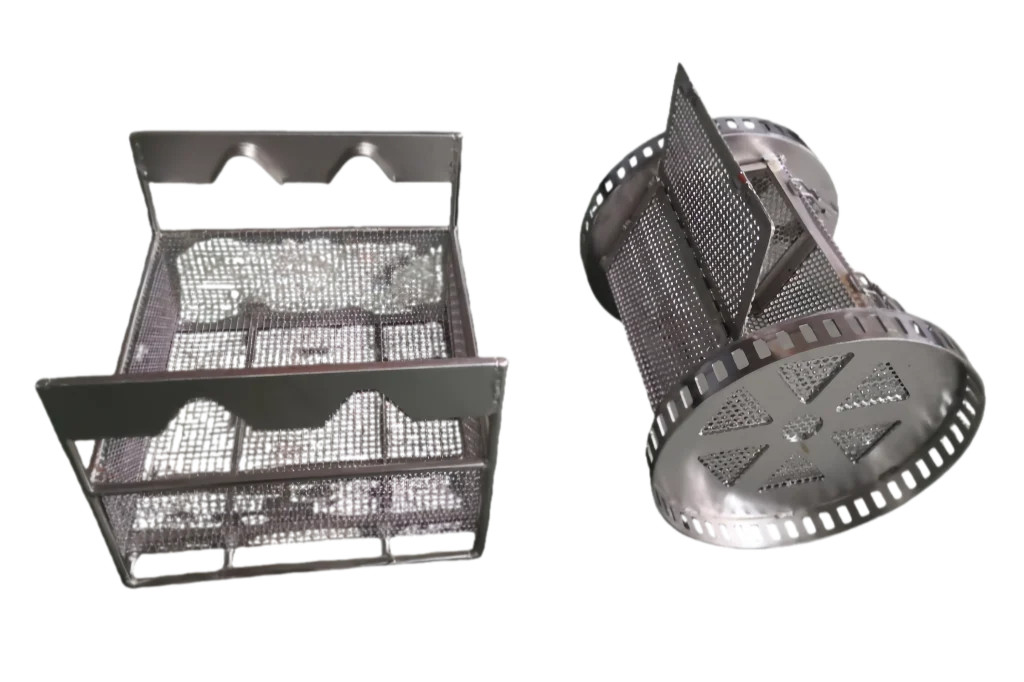
Uniform power distribution across the tank volume matters as much as total power output. Transducer placement affects energy concentration, and poor layouts create hot spots where erosion occurs alongside dead zones where cleaning fails. GTKCLEAN Heavy-Duty Automated Ultrasonic Cleaners address this through engineered transducer arrays and reinforced tank construction rated for loads up to 2000 kg. Custom load-bearing baskets maintain consistent part positioning relative to the energy field.
Temperature and Solution Chemistry Work Together in Ultrasonic Cleaning
Temperature affects both the physical properties of the liquid and the reaction kinetics of cleaning chemicals. Elevated temperatures reduce surface tension and viscosity, making bubble formation easier and increasing molecular activity that accelerates contaminant dissolution.
The cleaning solution itself must match the contaminant chemistry. Alkaline formulations break down oils and greases through saponification. Neutral solutions provide gentler action for sensitive metals. Hydrocarbon solvents dissolve waxes and heavy oils that aqueous systems cannot handle efficiently.
If your cleaning application involves pre-coating preparation, it is worth discussing solution compatibility with the downstream process before committing to a chemistry. GTKCLEAN Pre PVD Parts Ultrasonic Cleaners operate with ultrapure water and alkaline or neutral detergents at 45–65°C for cleaning stages and 30–40°C for rinsing, temperatures selected to maximize chemical activity while preventing thermal damage to precision surfaces.
| Cleaning Solution Type | Primary Application | Key Benefit | Example GTKCLEAN System |
|---|---|---|---|
| Aqueous (Alkaline) | Oils, greases, particulates | Versatile, eco-friendly | CNC Machined Parts Cleaners |
| Aqueous (Neutral) | General cleaning, sensitive metals | Gentle, non-corrosive | Pre PVD Parts Cleaners |
| Hydrocarbon Solvent | Heavy oils, waxes, complex geometries | High solvency, residue-free | Multi-Tank Hydrocarbon Cleaners |
| Acidic | Rust, scale, oxides | Aggressive removal | Specialized industrial units |
Part Geometry and Loading Practices That Affect Ultrasonic Cleaning Performance
Complex part geometries create challenges for cavitation penetration. Blind holes trap air and resist solution exchange. Narrow crevices may not allow bubble formation at the required scale. Internal passages need sufficient flow to carry dislodged contaminants away from cleaned surfaces.
Part orientation determines which surfaces receive direct cavitation exposure. Loading density affects whether parts shield each other from ultrasonic energy. Overloading creates shadow zones where cleaning fails entirely, while underloading wastes capacity and extends cycle times unnecessarily.
Cleaning duration requires optimization for each application. Insufficient time leaves contaminants in place. Excessive time risks material degradation or allows dissolved soils to redeposit on cleaned surfaces. GTKCLEAN Rotary Basket Ultrasonic Cleaners address geometry challenges through continuous rotation that exposes all surfaces to cavitation, including blind holes and recessed features that static positioning would miss.
How Transducer Technology Shapes Ultrasonic Cleaning System Performance
Transducers convert electrical energy into mechanical vibration at ultrasonic frequencies. Piezoelectric ceramic elements are the standard technology for industrial systems, selected for their efficiency and durability under continuous operation.
Transducer bonding to the tank wall affects energy transfer into the cleaning solution. Poor bonds create losses and uneven distribution. Transducer degradation over time reduces output and shifts frequency response, requiring periodic inspection and replacement to maintain consistent cleaning results.
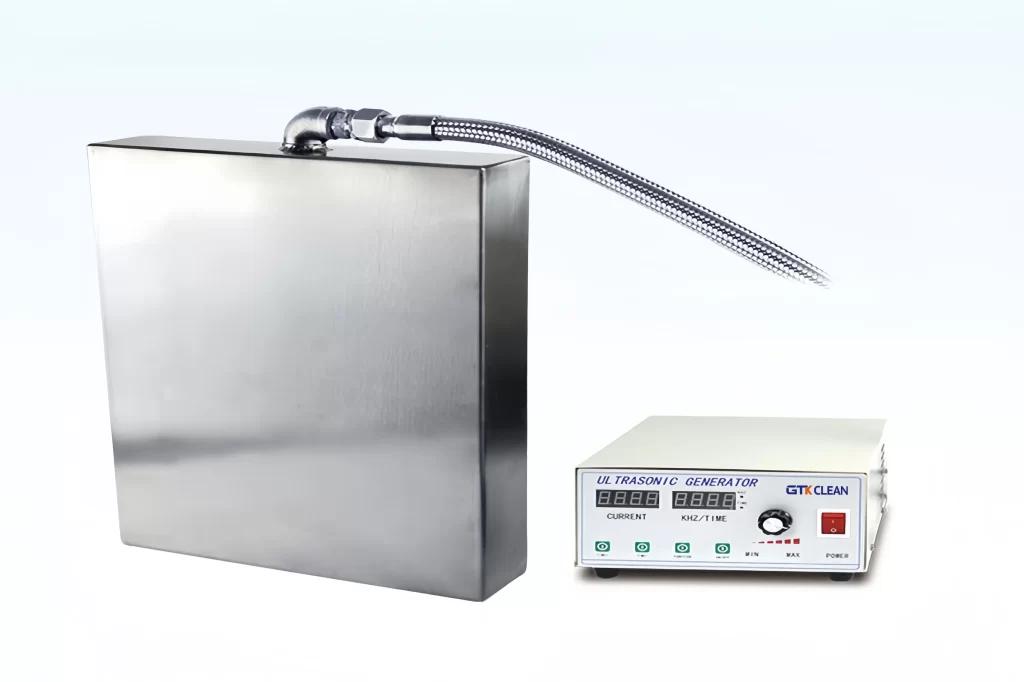
System design integrates transducer arrays with generator controls to deliver stable power across varying load conditions. GTKCLEAN Ultrasonic Vibration Plates use piezoelectric ceramic transducers available at 20kHz, 28kHz, 40kHz, and 80kHz, allowing integration into existing industrial cleaning infrastructure where tank replacement is not practical.
Matching Contaminant Types and Water Quality to Your Ultrasonic Cleaning Process
Different contaminants respond to different removal mechanisms. Oils and greases require chemical breakdown or dissolution. Particulates need mechanical dislodgement through cavitation energy. Oxide layers may require acidic chemistry that attacks the contamination selectively without damaging the base material.
GTKCLEAN Ultrasonic Cleaners for CNC Machined Parts handle the typical contamination profile from metalworking operations: cutting fluids, chips, burrs, dust, and fingerprints. Multi-stage processing with detergents and deionized water addresses both organic and inorganic soils in sequence.
Water quality affects solution stability and cleaning consistency. Hard water introduces calcium and magnesium ions that react with cleaning chemicals and deposit scale on parts and equipment. Scale buildup on transducer surfaces reduces energy transfer. GTKCLEAN Pre PVD Parts Ultrasonic Cleaners incorporate water treatment systems achieving conductivity below 0.06 μS/cm, the purity level required for coating preparation where any residual contamination causes adhesion failures.
Discuss Your Ultrasonic Cleaning Performance Requirements with GTKCLEAN
To discuss specific cleaning requirements or request system recommendations, contact GTKCLEAN at [email protected] or +86 17768507147. Our engineering team draws on 28 technical patents in industrial cleaning to configure systems matched to your application.
Frequently Asked Questions About Ultrasonic Cleaning Performance
What single factor has the greatest impact on ultrasonic cleaning results?
Frequency and power density selection, combined with appropriate solution chemistry, determine whether cavitation effectively removes specific contaminants from specific materials. These parameters set the baseline for cleaning capability. Temperature, time, and loading practices then optimize results within that capability envelope. No single factor operates independently, but getting the frequency and chemistry wrong limits what any other adjustment can achieve.
How do you prevent cavitation damage on delicate components?
Higher frequencies above 40 kHz reduce individual bubble energy while maintaining cleaning action through increased bubble density. Lower power density settings further reduce the risk of erosion. Solution selection matters too: aggressive chemistries compound mechanical damage from cavitation. Proper fixturing in specialized baskets prevents parts from contacting each other or tank surfaces during cleaning. Shorter cycles reduce cumulative exposure when margins are tight.
Can existing ultrasonic cleaning systems be optimized without replacement?
Most systems have adjustment range in temperature, solution concentration, and cycle timing that operators can tune for better results. Degassing procedures remove dissolved air that dampens cavitation intensity. Transducer inspection identifies degraded elements that reduce cleaning power. Solution maintenance, including filtration, concentration monitoring, and periodic replacement, prevents contamination buildup that interferes with cleaning chemistry. A systematic audit often reveals opportunities that incremental changes can capture without capital investment. For a review of your current system configuration, contact our technical team.
If you're interested, you may want to read the following articles:
Semi-Automated Ultrasonic Washers: Cost vs Performance Analysis
Reduce Energy Costs in Industrial Ultrasonic Cleaning
Upgrading to Automated Ultrasonic Cleaning Systems for Efficiency
Industrial Ultrasonic Cleaners Versus Traditional Cleaning Methods
The Engineer’s Guide to Pre-Coating Surface Preparation
 English
  German
  Spanish
  French
  Russian
  Portuguese