Rod vs plate ultrasonic transducers are not interchangeable in industrial cleaning, even when their frequency and power ratings look similar. A plate transducer spreads cavitation energy across a large bonded surface and suits general tank cleaning and mixed part baskets. A rod transducer concentrates energy from a small radiating face, which makes it the better tool for deep pockets, narrow channels, or retrofits where a full plate cannot be fitted. The real selection problem is not the transducer element alone; it is how the transducer will live inside a production tank for thousands of operating hours. In my experience, most standard immersion tanks should start with plate transducers and introduce rod transducers only when geometry or contamination load leaves no cleaner option.
What Actually Separates Rod and Plate Ultrasonic Transducers?
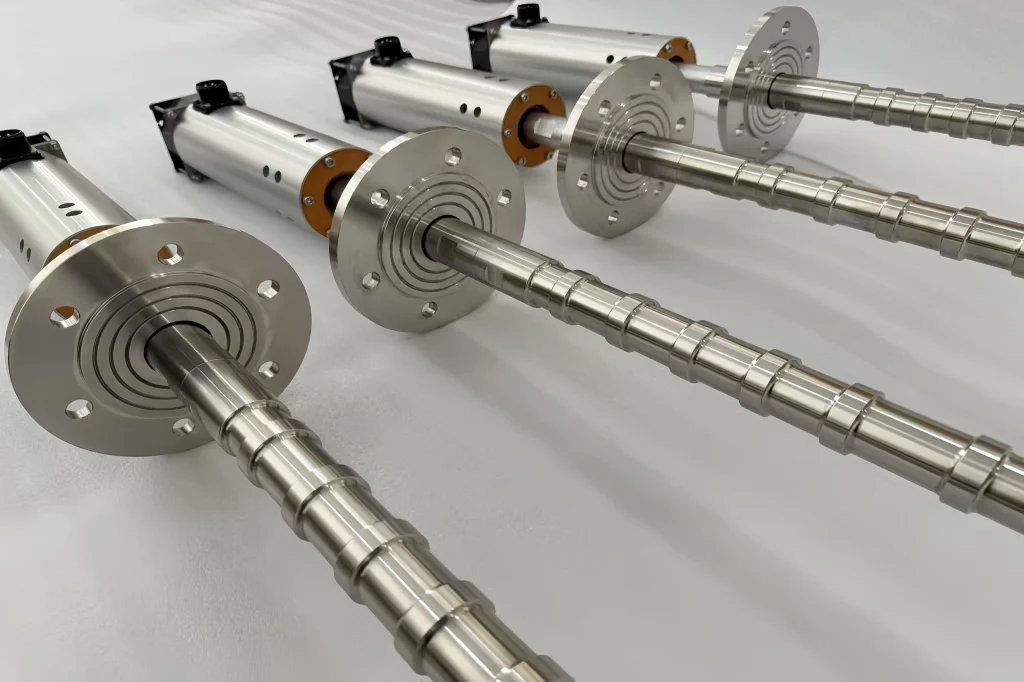
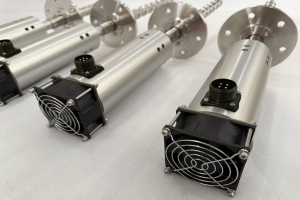
Both types convert electrical energy from an ultrasonic generator into mechanical vibration through piezoelectric ceramic elements. The difference comes downstream. A plate transducer mounts those ceramic elements onto a stainless steel plate that becomes the radiating surface. The plate can be welded into a tank wall or bottom, so the entire bonded area becomes part of the ultrasonic field. A rod transducer packages the ceramic stack into a tubular stainless steel housing. It can be immersed directly into the cleaning liquid or mounted inside a sealed tube, with the energy concentrated at the rod face and immediate surroundings.
Factor
Plate transducer
Rod transducer
Bonded area
Large flat plate surface
Small cylindrical radiating face
Cavitation field
Broad, more uniform across the tank
Localized, high energy near the rod
Best fit
General immersion cleaning, mixed baskets
Deep holes, narrow channels, retrofits
Common failure mode
Bond line separation if run dry or overheated
Cavitation erosion at the rod face
Most published comparisons stop at this construction difference, but the production decision tends to turn on mounting access and what the tank can physically accept. Plate transducers are usually specified at 20, 28, 40, or 80 kHz and built from SUS304 or SUS316 stainless steel. Rod transducers use the same piezoelectric technology in a different geometry. From a maintenance standpoint, a plate spreads electrical and thermal load across more bond area, while a rod concentrates both into a smaller envelope. That single difference creates most of the practical tradeoffs.
When Do Rod Transducers Fit an Industrial Cleaning System Better?
Rod transducers earn their place when a cleaning line has to handle parts that trap air or shield ultrasonic energy. Deep blind holes, long internal bores, and stacked small parts can sit in a plate driven tank and still keep oil at the bottom of the cavity. The plate produces broad cavitation around the basket, but the energy does not enter the recessed geometry. A rod transducer placed close to the problem zone can push a higher intensity field into the area that matters. I have specified rod transducers on lines where a casting held heavy stamping oil in a pocket that standard immersion cleaning could not reach, and the rod was the only practical way to put energy directly at the soil interface. Rod transducers also make sense when the tank wall cannot accept a full plate, such as round tanks, narrow tanks, or existing equipment that was not designed for ultrasonic cleaning. In those cases, a bank of rods can be spaced to follow the tank profile and deliver useful coverage without cutting into the tank structure. The tradeoff is that each rod becomes a higher intensity point source, so the operator has to think more carefully about shadow zones between rods.
When Do Plate Transducers Give Better Coverage?
Plate transducers win when the cleaning load is broad and the parts are not geometry limited. A plate creates a wide cavitation field across the tank. Baskets of fasteners, stampings, machined components, or flat parts that do not trap air can be cleaned more evenly with plates. The large bonded area also keeps power density lower at any single point, which reduces the chance of surface erosion on delicate workpieces. In a typical multi part basket, plate transducers on the tank bottom and side give a more predictable result than a bank of rods, and they are simpler to maintain because there are fewer immersion points. This does not mean plate transducers are a default for every installation. If the tank is poorly designed or the basket blocks the radiating face, even a well sized plate will leave a shadow zone on the far side. At that point the problem is not the transducer; it is the distance from the radiating surface to the workpiece. If your program involves parts that shield each other or a tank large enough that the radiating faces are far from the load, it is worth confirming transducer placement and power density before finalizing your design. Send your tank dimensions and part drawings to [email protected].
How Do Frequency and Power Change the Rod vs Plate Decision?
Frequency matters because lower frequencies produce larger cavitation bubbles with more aggressive implosions, while higher frequencies produce finer cleaning action. In practical terms, a 20 kHz or 28 kHz system removes heavy oils and soft particles quickly. A 40 kHz or 80 kHz system suits precision parts, polished surfaces, or components with tight clearances. The transducer type does not change this physics, but the geometry does. A rod transducer can deliver lower frequency energy into a confined space more easily than a plate mounted on a distant tank wall. That is why rod transducers often appear in heavy duty descaling stations and focused cleaning stages, while plates dominate general degreasing at 28 kHz or 40 kHz. Power is the other variable. Plate transducers tolerate longer duty cycles because the load spreads over a larger bond line. Rod transducers concentrate the same electrical input into a smaller surface, so the same nominal power can become much more aggressive at the rod face. Buyers should compare watt density, not just total watts. A tank with two 300 watt rod transducers may deliver far higher local intensity than a bank of 500 watt plates, even though the second system looks stronger on paper.
Frequency selection is an even wider subject. <How to Select the Frequency for Ultrasonic Cleaning Equipment ?> covers why the same part can need a different frequency for rough cleaning versus final rinse and how to avoid spending money on extra power that does not reach the contamination.
What Should You Check Before Finalizing a Transducer Choice?
Choosing rod or plate ultrasonic transducers usually stops being a simple catalog decision once tank geometry, product load, and cleaning chemistry are fixed. The wrong choice shows up later as weak cleaning in corners, overheated transducer bonds, or output that degrades within months. The most reliable way to avoid that is to have a supplier calculate the transducer layout against your actual part dimensions, basket position, and power density instead of copying a generic configuration. Send your tank size, part drawings, and current cleaning problem to [email protected] or call +86 17768507147. We can confirm the transducer type, frequency, and placement that match your production load before you order.
What Do Engineers Ask Before Choosing a Transducer?
Which transducer type lasts longer in a production tank?
In a correctly matched installation, plate transducers generally outlast rod transducers because the larger bonded surface spreads vibration and thermal load over more area. A rod transducer puts higher local stress on a smaller face and its immersion seal, so maintenance intervals can be shorter in heavy soil applications. That said, a poorly bonded plate will fail earlier than a well designed rod unit. The comparison only holds when both are specified for the same duty cycle and liquid temperature.
Can rod and plate transducers be mixed in the same tank?
There is a common assumption that mixing transducer types makes tuning impossible, but that is not accurate. The generator channels still drive each transducer group on its own frequency, so a plate bank can run at 40 kHz while a rod section runs at 28 kHz if separate channels are available. The real constraint is control. Without independent generator channels, a mixed tank is difficult to tune because the two types have different impedance and load responses.
What frequency works best for precision cleaning?
It depends on what you are trying to remove. For fine particles, light oils, and polished metal surfaces, 40 kHz or 80 kHz usually gives a gentler but more even action. For heavy grease, carbon deposits, or parts with recessed bores, 20 kHz or 28 kHz delivers the aggressive cavitation that breaks up the contamination faster. The rod and plate choice does not override that frequency split, but rod transducers make lower frequency energy easier to place close to the problem zone.
How do I know if an existing transducer should be replaced or reconfigured?


 English
  German
  Spanish
  French
  Russian
  Portuguese