
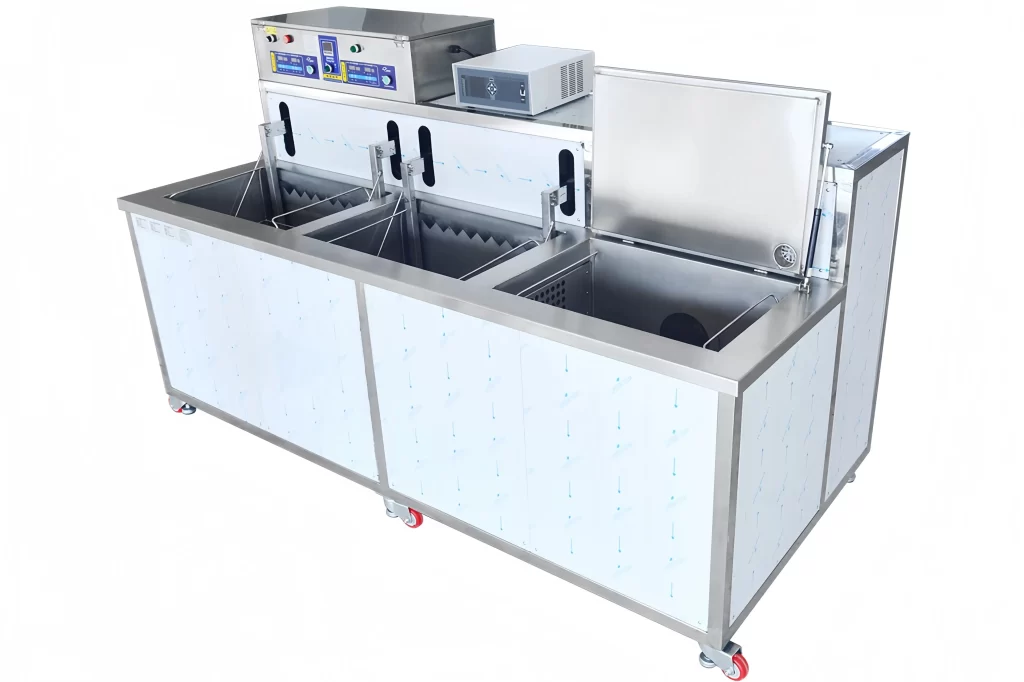
Solvent cleaning equipment safety regulations are not just paperwork — they are the blueprint for the machine’s design, from the vessel walls to the control logic. Having spent twenty years engineering automated solvent cleaning systems at GTKCLEAN, I see a gap: many buyers treat compliance as a checklist to be satisfied after selecting a machine, when in reality the safest systems embed regulatory requirements into their hardware and software from the start. This article connects the regulations that govern solvent cleaning equipment to the specific design features that meet them, so you can evaluate machines that are compliant by construction, not by retrofit.
Regulatory Requirements for Solvent Cleaning Equipment Safety
Understanding which regulations apply is the first step, but the real value for a buyer is knowing how those rules translate into machine specifications. We start with the three regulatory pillars that affect solvent cleaning equipment most: occupational safety, hazardous area classification, and environmental emissions. Each drives a different set of design decisions.
OSHA Standards for Solvent Degreasing Operations
In the United States, OSHA 1910.107 outlines requirements for dip tanks containing flammable or combustible liquids, while 1910.94 covers ventilation for open-surface degreasing. The key takeaway for equipment selection: the standard demands that vapor concentrations remain below 25% of the lower explosive limit (LEL) in normal operation. This is not a suggestion — it is the engineering constraint that defines exhaust rates, sensor placement, and interlock logic inside a compliant machine. I have seen systems where the exhaust was sized properly on paper but the ductwork created dead zones. That gap only becomes visible during commissioning.
ATEX and IECEx Hazardous Area Classification
Most global solvent cleaning installations must address ATEX Directive 2014/34/EU or the equivalent IECEx scheme. The machine interior is typically classified as Zone 1 or Zone 2 (gas) depending on the solvent and ventilation, which determines the type of electrical components allowed inside. Equipment that uses hydrocarbon or modified alcohol solvents operates near the boundary: a vacuum enclosure can pull the interior into a safer classification, but only if it is structurally leak-tight and the vacuum is interlocked with the process. We require all electrical components inside GTKCLEAN solvent machines to carry ATEX or IECEx certification, and we design the enclosure so that pressure differentials are monitored continuously — if the vacuum drops, the heating and ultrasonics are cut within milliseconds.
VOC Emission Limits and Solvent Selection
Environmentally, solvent cleaning equipment must operate within local volatile organic compound (VOC) emission limits. In China, the GB 37822-2019 standard sets fugitive emission thresholds; in the EU, the Solvent Emissions Directive applies. Equipment design addresses this through two paths: closed-loop vapor management with condensation recovery, and distillation-based solvent recycling. When we configure a multi-tank hydrocarbon system for a customer, the recovery rate typically exceeds 95%, meaning the solvent loss is low enough to stay within emission limits without external abatement. That is a design choice, not an afterthought — the distillation unit is integrated into the machine frame, not bolted on later.
| Region | Key Regulation | Main Focus | Equipment Implication |
|---|---|---|---|
| USA | OSHA 1910.107, NFPA 33 | LEL control, ventilation, fire protection | Explosion-proof construction, vapor monitoring |
| EU | ATEX 2014/34/EU, IED | Hazardous area classification, ignition source control | Certified components, pressure monitoring |
| China | GB 3836, GB 37822 | Explosion protection, VOC limits | Gas detection, solvent recovery integration |
| International | IECEx | Unified hazardous area framework | Globally accepted certification path |
Built-In Safety Features That Ensure Compliance
Regulations describe what a safe system looks like; hardware makes it real. The three features that matter most in solvent cleaning equipment are vacuum enclosures, gas monitoring, and interlock logic. These are not optional add-ons — they are the mechanism by which the machine keeps itself within the operating envelope defined by the regulations above.
Vacuum Enclosures and Inerting Systems
A vacuum enclosure solves two problems at once: it prevents solvent vapor from escaping into the plant, and it can lower the oxygen concentration enough to move the interior classification from Zone 1 to a non-hazardous condition. In our hydrocarbon solvent ultrasonic vacuum cleaners, the vessel operates under a vacuum of approximately -0.08 MPa during the cleaning cycle, with a leak rate held below 50 Pa per minute. That is tight enough to contain the vapor and safe enough that the electrical heating elements inside do not need individual ATEX certification if the vacuum integrity is proven. The system includes a nitrogen purge option for additional inerting when required by the process.
Gas Monitoring and LEL Detection
LEL sensors provide real-time confirmation that the vacuum system is working. I require at least one infrared LEL detector inside every solvent machine chamber, positioned at the vapor collection point where concentration is highest. The sensor signal feeds directly into the safety PLC: at 15% LEL, an alarm triggers; at 25% LEL, the process halts, the solvent drain opens, and the fire suppression system arms. What many buyers miss is that the sensor itself needs periodic calibration and the calibration schedule must be part of the machine documentation — otherwise the safety function degrades silently.
Interlock Logic and Emergency Shutdown
The interlock chain is the final safety layer. On our machines, the following conditions must all be satisfied for the heating and ultrasonic systems to power on: enclosure door closed and locked, vacuum or ventilation flow above setpoint, LEL below threshold, solvent temperature below flash point minus a safety margin, and emergency stop circuit intact. If any single condition breaks, the system trips into a safe state — power is removed from ignition-capable circuits, the automatic fire suppression valve opens, and an alarm is sent to the facility control system. This logic is programmed in the Siemens or Mitsubishi PLC and is verified during factory acceptance testing with simulated fault injection.
Steps to Verify Solvent Cleaning Equipment Regulatory Compliance
A certificate on the wall is not enough. The buyer must verify that the machine, as installed, meets the applicable regulations under real operating conditions. I break verification into three stages: document review, factory testing, and field inspection.
Reviewing Certification Documentation
Before the machine ships, request the equipment’s Declaration of Conformity, the ATEX or IECEx component certificates for all electrical parts installed in hazardous zones, the gas monitoring calibration certificate, and the functional safety documentation for the safety PLC. At GTKCLEAN, we compile a compliance package for each machine that includes these documents plus the factory test report. A supplier that cannot produce this package promptly is a red flag.
Conducting Factory Acceptance Testing
The FAT is the single most important step for safety verification. During the test, the machine should run a full process cycle with solvent while you observe: LEL readings, vacuum stability, interlock response to simulated faults, and the solvent recovery rate. I have seen customers ask for a static inspection only, which misses everything — the gas monitoring only proves itself when vapor is actually present. If your supplier cannot host a FAT with solvent, find a different supplier.
Field Inspection Checklists Before Startup
After installation, a final walkdown checklist should cover: ventilation exhaust routing, spill containment, fire suppression tie-in, emergency stop circuit verification, and the LEL sensor calibration verification. Our commissioning engineers work through a 40-point safety checklist before signing off on any solvent system. This includes measuring the airflow at every extraction point with a calibrated anemometer — the design CFM is meaningless if it does not exist where it matters.
What to Look for in a Compliance-Focused Solvent Cleaning Equipment Manufacturer
Not every equipment builder understands safety regulations at the design level. When you are sourcing solvent cleaning machines, look for two things beyond the specification sheet: engineering depth in solvent safety and post-sales support that keeps you compliant as regulations change.
Engineering Expertise in Solvent Safety
Ask the supplier to explain how their machine achieves the required LEL margin under worst-case conditions. If the answer is “our exhaust fan meets the standard,” push harder. A competent engineer will talk about the vapor density of the solvent, the extraction point locations relative to the vapor source, the door interlock timing, and the pressure differential across the vessel. Over twenty years, I have found that the depth of this answer separates equipment companies that design machines from those that assemble them.
Post-Sales Support for Regulatory Changes
Regulations evolve. The ATEX directive was updated in 2016, and the IEC 60079 series is revised periodically. A responsible manufacturer will advise you when a regulatory change affects your installed equipment and offer upgrade paths — for example, retrofitting an updated gas sensor if the calibration gas standard changes. Before purchasing, ask for an example of a recent regulatory update that triggered a customer communication. If they do not have one, consider what that says about their long-term engagement.
Safe Integration of Solvent Cleaning Systems into Your Operation
The machine is only one part of the safety picture. Integration into the facility — ventilation, spill handling, and operator training — is where compliance either holds or breaks.
Ventilation and Exhaust System Requirements
The machine exhaust must connect to a dedicated duct that terminates outside the building, away from air intakes and occupied areas. The duct must be explosion-proof if it carries solvent vapor, and it needs a fire damper at the wall penetration. I have seen a well-designed machine undermined by a shared exhaust riser that back-drafted solvent into a neighboring workstation. That incident ended with a near-miss and a complete mechanical redesign. The lesson: the exhaust path is part of the safety system, and it deserves the same engineering rigor as the machine interior.
Spill Containment and Solvent Waste Handling
Solvent spills inside the machine are contained by the tank construction, but external spills during filling or waste removal must be planned for. The installation area should have a containment curb and a solvent-resistant floor coating. Waste solvent from the distillation system should be collected in an approved container and disposed according to local hazardous waste regulations. In our installations, we include a drip tray under the distillation unit outlet, even though the piping is closed — it is a cheap insurance that has caught leaks during commissioning more often than we would like to admit.
Operator Training and Personal Protective Equipment
A fully automated machine still needs trained operators who understand the safety logic. Training should cover: the meaning of every alarm on the HMI, the location and operation of the emergency stops, the procedure for solvent loading and waste removal, and the specific PPE required (chemical-resistant gloves, eye protection, and where applicable, respiratory protection if the exhaust fails). We provide a half-day training session as part of every solvent machine delivery, and we insist that the facility’s safety officer attend.
Practical Considerations When Selecting Compliant Solvent Cleaning Equipment
Compliance alone is not the full picture. The machine must also perform its cleaning function reliably. The solvent type, part geometry, and production volume all interact with the safety features. For example, a vacuum drying cycle that is too short leaves solvent residue on parts, which then off-gas into the plant — defeating the purpose of the enclosure. In our application engineering process, we balance cycle time, safety margin, and cleanliness by testing with the customer’s actual parts before finalizing the design. If your program involves parts with deep blind holes or complex internal cavities, it is worth confirming the drying and vapor extraction capacity with your supplier early in the specification process. Reach out at [email protected] with your part drawings and throughput requirements, and we can confirm which solvent configuration will meet both your safety and cleanliness targets.
Common Questions About Solvent Cleaning Equipment Safety
What certifications must a solvent cleaning machine carry before it can be installed in a plant?
The machine itself should carry a CE mark (for EU) or the equivalent national compliance mark, and the electrical components inside hazardous zones must have individual ATEX or IECEx certificates. Additionally, the machine builder should provide a Declaration of Conformity that references the specific directives and standards applied, including the harmonized standards for the safety PLC and gas detection system.
Can older solvent cleaning machines be retrofitted to meet current safety regulations?
It depends on the machine’s original construction. If the tank and enclosure are structurally sound and can hold a vacuum or maintain a pressure differential, a retrofit adding modern gas monitoring, interlock logic, and a vacuum pump is often feasible. Machines with unsealed electrical enclosures or thin-walled construction typically cannot be economically upgraded. We have retrofitted several legacy hydrocarbon machines by replacing the control system and adding LEL sensing, but each case requires an engineering assessment to determine whether the base structure can support the safety upgrade.
How often should the gas detection system be calibrated?
LEL sensors should be calibrated every six months at minimum, and more frequently if the sensor is exposed to high vapor concentrations regularly. The calibration must use a known concentration of the actual solvent vapor, not a generic test gas. We include a calibration reminder in the machine’s HMI and provide an annual calibration service as part of our maintenance contracts.
Is a vacuum solvent cleaning machine always safer than an open-top system?
In terms of vapor containment, yes — a vacuum enclosure contains the vapor within the vessel, while an open-top system relies on ventilation capture. However, a vacuum machine introduces additional hazards: the pressure vessel itself must be designed to a recognized pressure vessel code, and the vacuum pump exhaust must still be safely managed. A properly engineered open-top system with adequate ventilation and LEL monitoring can be safe for many applications. The risk profile changes with the solvent, the process temperature, and the part geometry.
How do I know if my facility’s exhaust system is adequate for a solvent cleaning machine?
Have an industrial ventilation engineer measure the capture velocity at all points where vapor could escape from the machine during normal operation and during the door-open loading sequence. The ASHRAE Industrial Ventilation Manual recommends a capture velocity of 100–150 feet per minute for solvent vapors. If your readings fall below that, the exhaust system needs upgrading before the machine can be commissioned. Share your facility layout and exhaust specifications with our team at [email protected] and we can help you assess whether your infrastructure supports the machine you are considering.
If you're interested, check out these related articles:
Ultrasonic Cleaning Energy Costs Minimizing Strategies
Industrial Cleaning Basket Design: Optimizing Performance & Durability
Implement Solvent Recovery Systems: A Factory Efficiency Guide
How to Choose Cleaning Equipment for Medical Device Manufacturing
Reduce Energy Costs in Industrial Ultrasonic Cleaning
 English
  German
  Spanish
  French
  Russian
  Portuguese