
Standard ultrasonic cleaning equipment handles a wide range of parts, but production managers quickly hit a wall when workpiece dimensions, throughput targets, or cleanliness levels push past what off‑the‑shelf machines can deliver. I’ve spent two decades designing automated cleaning lines, and the trigger for a custom build is rarely one dramatic problem. It is a cluster of small mismatches — a tank too shallow for a housing, a dwell time that cannot meet the cycle rate, or a blind hole that stays dirty after every pass through a standard system. This article walks through the engineering signals that make custom industrial cleaning systems the correct investment, not an upsell, so you can base a purchasing decision on production data instead of guesswork.
Recognizing When Standard Equipment Falls Short
Most standard ultrasonic cleaners are built around common part envelopes and cleaning durations. They work reliably until a specific production requirement forces a trade‑off the machine cannot resolve. The first warning is physical fit. A basket rated for general hardware may not secure a tall, off‑balance casting, and pushing the part into a smaller tank creates shadow zones where cavitation drops away. The second is cycle time. Standard systems often assume a relaxed process window, but when a machining cell demands a clean part every 45 seconds, a machine designed for a 5‑minute ultrasonic phase becomes the bottleneck. The third signal is contamination that standard chemistry or cavitation intensity cannot strip—heavy stamping compounds in deep threads, for example, that need a higher‑power ultrasonic stage or a solvent‑based pre‑wash that a standard aqueous system does not include.
Recognizing a physical mismatch early is cheaper than retrofitting later. <Choosing the Right Ultrasonic Cleaning System for Industrial Success> explains how evaluating part geometry and production volume together, rather than sequentially, prevents most equipment mis‑purchases.
When two or more of these signals appear together, the cost of workarounds—manual pre‑cleaning, reduced throughput, elevated rework—typically exceeds the premium of a custom‑engineered solution within the first year.
Part Characteristics That Override Standard Designs
The shape of the workpiece dictates whether off‑the‑shelf cleaning can ever be repeatable. Parts with blind holes deeper than twice their diameter, intersecting bores, or narrow‑slit assemblies trap fluid and resist cavitation in predictable ways. A standard tank with fixed transducer placement may simply not develop enough energy density at the positions those features occupy. Similarly, material sensitivity changes the calculation. Thin‑walled aluminum castings that resonate at 20 kHz can suffer erosion, while heavy steel components need that same frequency to dislodge baked‑on carbon. Standard machines offer limited frequency options—often one fixed transducer set—so a mixed‑material production basket forces a compromise that shows up in scrap rates.
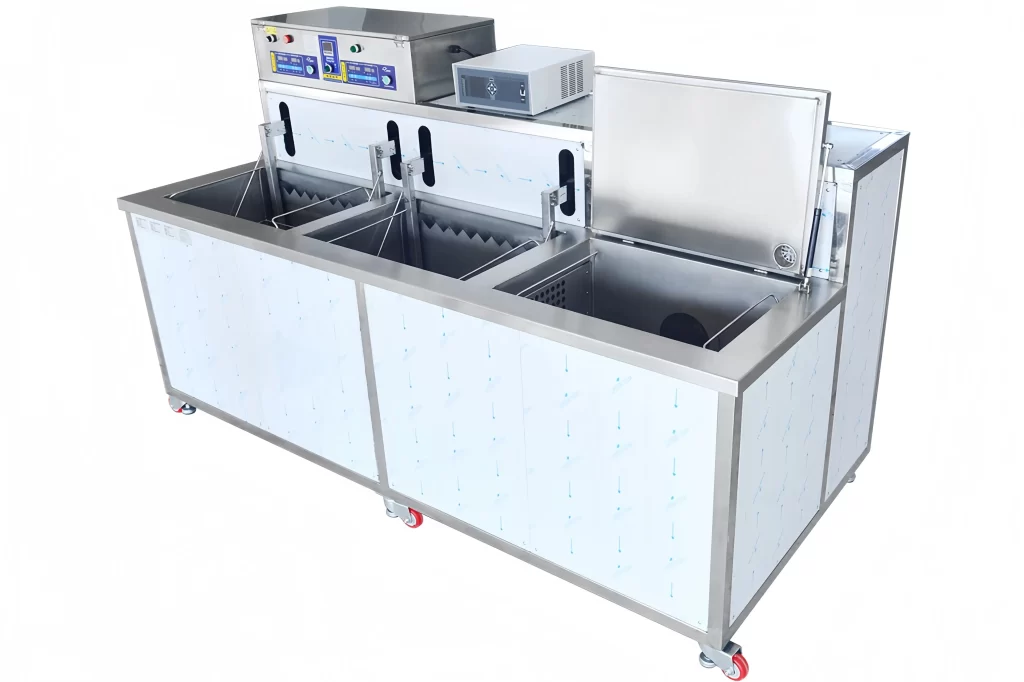
Throughput compounds the geometry problem. A standard unit sized for batch loads of 80 kg may need to process 200 kg per cycle to keep up with a forging press. Increasing the load without enlarging the tank crowds the basket, kills cavitation uniformity, and extends drying time. At that point, the cleaning system becomes the line’s pacing constraint, and a custom‑designed multi‑tank line with dedicated ultrasonic, rinse, and drying stations that match the press output is the only way to restore flow.
The Engineering Assessment That Precedes Any Custom Order
Before approaching a supplier, I recommend walking through a disciplined checklist that the standard product data sheets cannot answer. Start with the part envelope: the longest, widest, and tallest dimension in the orientation required for effective cleaning, plus clearance for baskets and transducers. That yields a minimum tank size, and if no standard tank of that capacity exists, the system is already custom. Next, define the cleanliness specification in measurable terms—particle count per ISO level, non‑volatile residue weight, or a particular dyne level for pre‑coating. Then match the contaminant to a cleaning chemistry and process sequence. This step alone often reveals that a standard three‑tank system cannot deliver the required rinse purity, pushing the design toward four or five stages with cascading DI water.
For parts that demand a specific cleanliness standard, the supporting data seldom fits a generic machine’s process recipe. <Precision Parts Cleaning Standards: An Expert Guide to Industrial Cleanliness> details the test protocols and documentation tiers that buyers should request before accepting a standard cleaning system’s performance claims.
Finally, validate the drying requirement. Complex geometries with internal pockets may need vacuum drying or a high‑velocity air‑knife sequence that standard hot‑air tunnels cannot substitute. When these engineering parameters force a divergence from catalog specifications at three or more points, a custom build stops being optional and becomes the only engineering‑sound path.
Specifying a Custom System Without Losing Control of the Budget
A custom specification works best when it is written as a performance outcome, not a machine description. I tell customers to list the required outcomes—for example: “remove all forming oil from 400 steel brackets per hour with <1 mg residue per bracket” — and let the equipment builder propose the tank configuration, ultrasonic power, filtration stages, and automation level that achieve it. This shifts the design risk to the supplier and keeps the conversation focused on verifiable results rather than component line items.
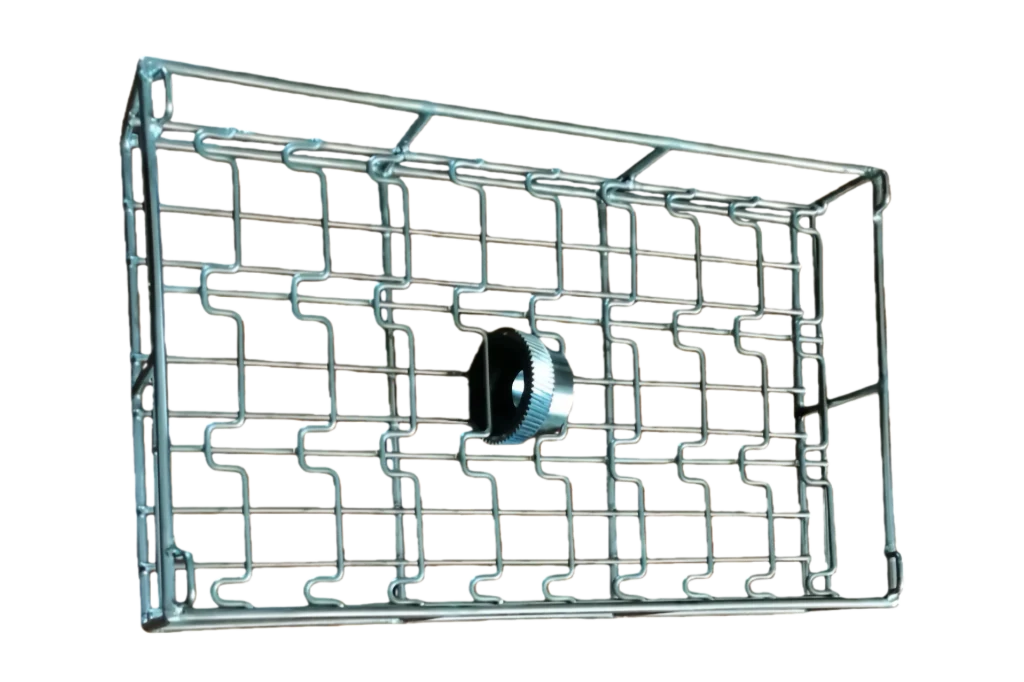
The core parameters to lock early are the cleaning media (aqueous vs. solvent), the number of process tanks, the ultrasonic frequency or frequencies, and the automation tier—manual load/unload, semi‑automatic transfer, or fully inline with conveyor synchronization. A multi‑tank ultrasonic line with a rotary basket may solve the blind‑hole problem, while a single‑station hydrocarbon vacuum machine can collapse floor‑space requirements for a lower‑volume cell. At GTKCLEAN, our engineering team typically starts with a 3D model of the customer’s worst‑case part and runs flow simulations to confirm cavitation coverage before cutting metal; that step eliminates surprises that would otherwise surface during commissioning.
Selecting the right builder is as critical as the specification itself. <Industrial Cleaning Equipment Suppliers: A Strategic Buyer’s Guide> covers the audit questions, certification checks, and after‑sales support benchmarks that separate engineering‑led manufacturers from general machine shops.
The Real Cost of Custom vs. Staying Standard
Procurement teams often compare the purchase price of a standard machine against a custom quote and stop there. The gap narrows significantly when you factor in the operational costs that a standard system incurs when it is the wrong tool. Manual pre‑cleaning labor, elevated reject rates from inconsistent cleanliness, extra QC inspection time, and slower throughput that starves downstream assembly can add 40–60% to the true annual cost of a “cheaper” standard machine within two years. A custom system designed to hit the exact takt time with no rework often achieves full payback inside 18 months, especially in high‑mix automotive or aerospace lines where part value is high and a single contaminated batch can trigger a full lot rejection.
Beyond direct savings, custom systems usually strip out process steps that existed only to compensate for the standard machine’s gaps. Removing a manual wiping station or a separate external drying stage lowers handling cost and reduces the footprint. When we model total cost of ownership for a production manager, the moment the cleanliness‑failure risk exceeds the cost difference between custom and standard, the capital request justifies itself.
Getting Help Without a Blind Commitment
If you are at the point where scrap or rework traceable to cleaning is visible on the quality board, the engineering signals are already there. The next step is not to request a quote. It is to send the worst‑case part, the target cycle rate, and the cleanliness specification to an engineer who will confirm whether a standard catalog machine can genuinely meet those numbers. At GTKCLEAN, we run that assessment at no charge and return a technical note that either validates a standard build or outlines the specific performance gaps that a custom design must close. That way, your next purchase is a solution, not another experiment.
Send your part data and production numbers to [email protected] or call +86 17768507147 to get an engineering assessment before you lock in an equipment specification.
Commonly Overlooked Questions About Custom Cleaning Systems
A custom system sounds over‑engineered for a simple washing task. When does it stop being worth it?
If the part has a simple external surface with no blind features and the cleanliness spec is a general degrease, a standard machine will almost always work and cost less. The threshold for custom appears when three or more of the following are true: a dimension that won’t fit a standard basket, a cleanliness requirement tighter than a visual check, a throughput gap of more than 30% versus line speed, or a material that demands a specific frequency range. One factor alone may not force a custom build, but the combination usually makes a catalog machine a compromise that erodes margin over time.
Do I have to become a cleaning expert to get a good custom quote?
No, but you need to supply the right production data. Provide a dimensioned drawing or a physical sample, specify the contaminant and the required cleanliness level, and state the parts per hour. A competent builder uses that information to propose the tank layout, chemistry, and process time. You do not have to decide on transducer placement or basket material. In our experience, the projects that stay on budget are the ones where the buyer acts as a performance auditor, not a co‑designer, and insists on a process guarantee tied to measurable criteria.
How do I know a supplier can actually deliver a working custom system?
Look for documented installations that match your part family. Ask for a process validation report for a similar geometry, not just a machine photo. Request a factory acceptance test plan before signing, and visit a running line if possible. A builder that resists sharing cleaning‑performance data before the order should raise a flag. At a minimum, confirm they use numerical simulation or physical coupon testing to verify ultrasonic coverage on your actual part—this step separates integrators from genuine design teams.
What if the custom machine is over‑budget after the first design?
That is common. The initial scope often includes every possible feature. The next step is to prioritize the cleaning stages that directly affect the failure mode you are solving and strip out nice‑to‑have additions that do not change the cleanliness result. For example, a fully automatic load/unload may be deferred if a manual operator can handle the throughput for the first year. We regularly help customers pare back a specification to a core system that meets the measurable spec, with the understanding that automation modules can be added later when volumes rise.
Does a custom order mean I am locked into one supplier for consumables and service?
Not necessarily. Specify that tanks, transducers, and plumbing must use industry‑standard fittings and that the control software must be open enough for third‑party diagnostics. Own the process recipe documents and request a full spare‑parts list with standard OEM alternatives where possible. A reputable supplier will provide these without hesitation because their value is in the design and commissioning, not in locking down after‑sale consumable sales. Share your requirements and we’ll confirm which components can stay vendor‑neutral while keeping the performance guarantee intact — reach out at [email protected].
If you're interested, check out these related articles:
Selecting Conveyor Cleaning Systems for Continuous Production
Parts Washer Selection: A Manufacturer’s Definitive Guide
Choosing a Reliable Ultrasonic Equipment Manufacturer: A Strategic Guide
Industrial Cleaning Basket Design: Optimizing Performance & Durability
What’s the Best Pre-Coating Cleaning Machine for PVD, DLC & CVD Coating Factories?
 English
  German
  Spanish
  French
  Russian
  Portuguese