Passivation is often treated as a standalone chemical bath, but in a production line it only works after the right metal preparation sequence. Without effective cleaning, free iron, heat tint, machining residues, and rinse contamination stay on the surface and interfere with the formation of a passive oxide layer. This article explains how passivation works, where it fits in metal preparation, and which process controls determine whether parts leave the line protected and coating-ready.
What Metal Preparation Includes Before Passivation
Metal preparation is the complete sequence that makes a component chemically and physically ready for the next operation. For stainless steel and other corrosion-resistant alloys, preparation usually includes:
Removal of machining oils, cutting fluids, chips, and shop dust
Removal of oxide scale, weld tint, and heat-treatment discoloration
Removal of iron contamination smeared onto the surface by tools, fixtures, or handling
Rinsing to remove cleaning chemistry and dissolved contamination
Final drying that prevents water spots and flash rust
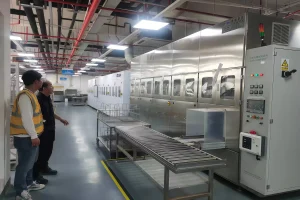
Cleaning and passivation are not interchangeable. Cleaning removes external soil; passivation removes or neutralizes surface iron and establishes a corrosion-resistant chromium oxide film. If cleaning is incomplete, the acid bath must work through oil films and heavy soil before it can reach the base metal, which produces uneven results. Effective preparation usually uses staged equipment such as spray prewash, ultrasonic cleaning, rinse tanks, and drying modules. Multi-tank systems are common because they separate each chemistry and prevent cross-contamination between cleaning, rinsing, and passivation.
What Passivation Actually Does
Passivation improves the natural corrosion resistance of stainless steel. Stainless alloys resist corrosion because chromium in the metal reacts with oxygen to form a thin, adherent, chromium-rich oxide layer. However, manufacturing operations can leave free iron on the surface. That free iron corrodes quickly and creates initiation points for pitting, staining, or coating failure. The passivation bath dissolves surface iron and other tramp contaminants while allowing the chromium oxide film to form uniformly. The acid does not remove heavy scale or weld tint; that is the role of pickling. Passivation is a relatively mild chemical treatment intended for clean parts that still carry invisible surface iron and process residues [1]. This distinction matters for metal preparation. A part with weld scale or heat tint should be pickled or mechanically descaled first. A part that is already dimensionally finished and clean can go directly to passivation.
Passivation vs Pickling vs Cleaning
The table below separates three processes that are frequently confused in surface preparation.
Process
Main target
Chemical action
Surface result
Cleaning
Chips, oil, grease, particulate, light residues
Detergents, solvents, spray, ultrasonic action
Visible surface free of gross soil
Pickling
Weld tint, heat scale, heavy oxides
Strong acid, often nitric plus hydrofluoric acid
Scale removed; surface lightly etched
Passivation
Free iron, trace contamination, passive film formation
Nitric or citric acid treatment
Corrosion-resistant chromium oxide layer
Passivation is normally not a substitute for pickling. Sending scaled parts directly into a passivation bath can leave scale behind and consume acid without forming a uniform passive layer [1][3].
Nitric Acid vs Citric Acid Passivation
ASTM A967 recognizes both nitric acid and citric acid methods for passivating stainless steel [1]. Aerospace and industrial specifications such as AMS 2700 also govern many applications [2].
Variable
Nitric acid method [1][2]
Citric acid method [1][2]
Typical chemistry
20–50% nitric acid by volume
4–10% citric acid by weight
Temperature range
Ambient to about 60°C
Often 60–70°C
Immersion time
Typically 20–60 minutes
Typically 10–30 minutes
Main strength
Strong oxidizing action, long industry history
Safer handling, chelation of iron, easier waste treatment
Watch points
Fumes, acid handling, NOx generation
Bath loading, temperature control, iron saturation
Citric acid has become more common for precision parts because it is safer to handle and less aggressive to dimensional tolerances. The correct choice depends on alloy, final application, customer specification, and production-safety review. Do not change from nitric to citric acid simply to match a bath temperature; the entire process must be validated against the applicable standard [1][2].
Passivation Process and Critical Control Points
A typical passivation sequence is:
Alkaline or detergent precleaning
Initial rinse
Acid passivation bath
Cascade or overflow rinse
Deionized-water final rinse
Drying
Stage
Purpose
Key control
Preclean
Remove oils, chips, drawing compound, particulate
Time, temperature, detergent concentration, mechanical action
Initial rinse
Remove cleaning chemistry
Flow rate, pH, water quality
Passivation bath
Dissolve free iron, promote passive oxide
Acid concentration, temperature, immersion time, agitation
Cascade rinse
Dilute and remove acid
Overflow rate, number of stages
Final DI rinse
Prevent mineral deposits and chloride residues
Conductivity or resistivity, pH, rinse time
Drying
Prevent flash rust and water spots
Part temperature, air cleanliness, drainage
Water quality is one of the most underrated variables. A final rinse with hard water or chloride-containing water can leave spots and corrosion cells on a passivated surface. ASTM A380 addresses cleaning and passivation of stainless steel parts and systems, including the importance of clean, low-chloride rinse water [3]. In precision applications, the final rinse should be dbuy deionized water with controlled conductivity and adequate overflow. Passivation verification is part of the process, not an afterthought. ASTM A967 lists tests such as water immersion, high-humidity exposure, salt spray, copper sulfate, and ferroxyl testing [1]. The appropriate test depends on the part risk level, material grade, and customer requirement.
Common Passivation Failures and Preventive Measures
Most passivation problems are not caused by the acid bath alone. They trace back to preparation, rinsing, or handling.
Failure
Typical cause
Preventive action
Flash rust after passivation
Poor rinsing, contaminated final rinse, wet storage
Use clean DI rinse, dry immediately, protect parts from humid air
Etching or pitting
Excess acid concentration, high temperature, long immersion
Control bath parameters, verify grade and part condition
Water spots
Hard water or mineral-laden final rinse
Use deionized water, overflow rinsing, controlled drying
Uneven passivation
Oil or residue on part, trapped air in blind holes
Improve precleaning, use agitation or fixturing
Copper sulfate test failure
Free iron not fully removed
Check bath life, temperature, time, and surface cleanliness
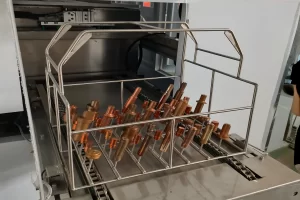
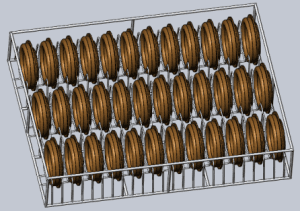
Blind holes, threads, and narrow gaps require particular attention. These features trap cleaning chemistry, acid, or rinse water, and they can carry contamination into the passivation bath. Basket design and part orientation should promote drainage at every stage. A washing basket that holds parts too tightly or blocks internal features can create isolated areas that never see proper flow.
How Cleaning Equipment Supports Repeatable Passivation
Passivation is highly sensitive to surface consistency. Manual cleaning may be acceptable for low-volume or simple parts, but production lines with mixed part numbers benefit from automated multi-stage equipment. Automation controls soak time, rinse time, temperature, and transfer, reducing the variation that causes lot-to-lot passivation failures. A pre-coating ultrasonic cleaning line, for example, may combine spray prewash, ultrasonic degreasing, multi-stage ultrapure water rinsing, and hot-air or vacuum drying. In one GTKCLEAN pre-PVD system design, the ultrapure water system targets conductivity of 0.06 µS/cm or less to prevent water spots and secondary contamination before coating. That same control logic applies to passivation lines: the cleaner the surface before chemical treatment, the more uniform the passive film.
If you are specifying a passivation stage or updating a manual wash line, send your substrate, part geometry, contaminants, and required cleanliness standard to [email protected]. Engineering can review the sequence and recommend where ultrasonic cleaning, DI-water rinsing, and passivation should sit in the line.
Engineering Support for Passivation and Metal Preparation
A reliable passivation process starts with a cleaning line that delivers the same surface condition batch after batch. For an engineering review, contact GTKCLEAN with the following information:
Part material and grade, such as 304, 316L, or 17-4 PH
Contamination present before cleaning: oil, chips, scale, rust, fingerprints, or polishing compound
Part geometry, including blind holes, threads, and internal cavities
Required throughput, basket load, and part weight
Next process after cleaning: coating, welding, assembly, or storage
Cleanliness or passivation specification to meet
Email [email protected] or call +86 17768507147 to request a process sequence or line configuration review. The goal is not only to select a passivation chemistry, but to engineer the full preparation chain so the passive layer forms consistently on every part.
FAQ
Is passivation the same as pickling?
No. Passivation removes free iron and promotes a passive chromium oxide film on stainless steel. Pickling removes heat tint, weld scale, and heavy oxides using stronger acid and may lightly etch the surface.
Can carbon steel be passivated?
Carbon steel does not form the same self-protecting chromium oxide film as stainless steel. It can be cleaned and protected with rust preventives or coatings, but the process should not be described as passivation in the stainless-steel sense.
Does passivation remove machining oil?
No. Passivation is not a degreasing step. Parts must be cleaned before passivation. Leaving oil or cutting fluid on the surface can produce uneven treatment and contaminate the bath.
What final rinse water quality is needed?
The final rinse should use clean, low-chloride water, preferably deionized water with controlled conductivity. Hard water or chloride-bearing tap water can leave mineral residues and corrosion cells on passivated parts.
How is passivation verified?
ASTM A967 lists several verification tests, including water immersion, high-humidity exposure, salt spray, copper sulfate, and ferroxyl testing. The selected method depends on material grade, part risk, and customer requirements.


 English
 German
 Spanish
 French
 Russian
 Portuguese