Ultrasonic cleaning accessories determine how much of the generator output actually reaches the part surface. A well-designed basket, a correctly placed vibration plate, matched cleaning chemistry, and effective filtration often separate a stable 60-second process from a line that still shows residue after five minutes. We treat these components as an acoustic and chemical package, not optional add-ons. In the systems we develop, the difference between passing and failing cleanliness verification is usually an accessory specification that was never engineered for the specific part.
Ultrasonic Cleaning Accessories Start With the Basket
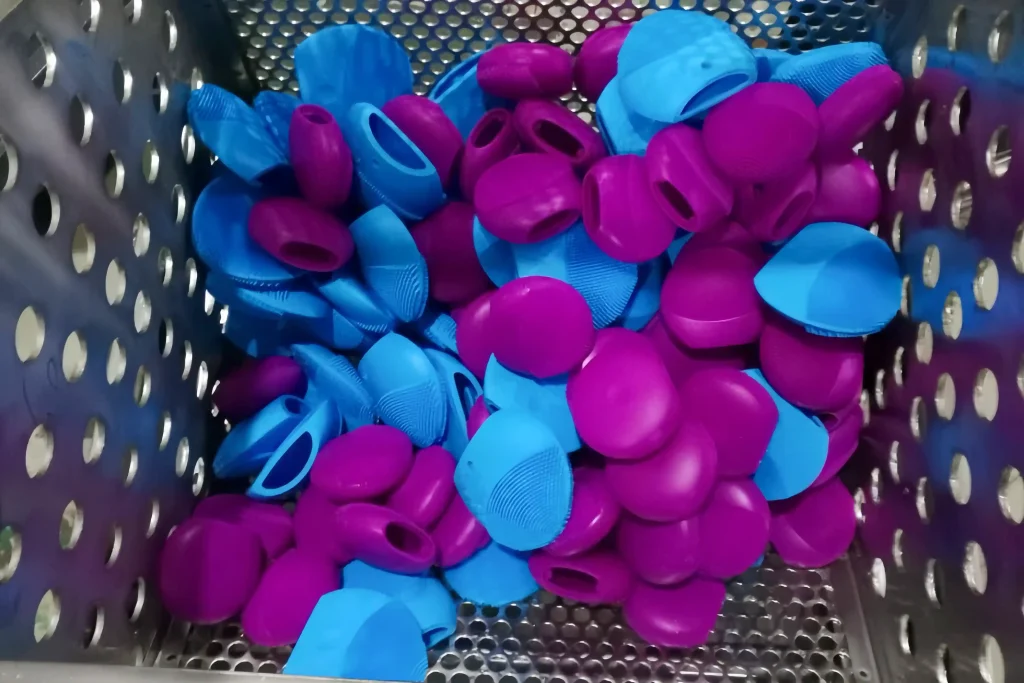
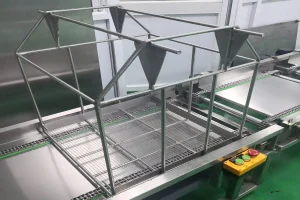
A cleaning basket is part of the acoustic load. Heavy gauge wire, small mesh openings, or solid plates can shield the workpiece from cavitation and create shadowed areas that never reach cleanliness. Round rotating baskets in our automated systems are specified for blind holes and recesses because rotation changes fluid drainage and exposes multiple faces to the transducer field. The basket material also matters. Stainless steel holds up in hot alkaline baths, while PP and PVDF fit aggressive chemical conditions and PTFE protects soft or polished surfaces.
Basket Design
Primary Benefit
Common Efficiency Loss
Round rotating basket
Exposes blind holes and recesses
Dense side walls block acoustic energy
Sheet-like basket
Prevents contact marks
Solid base can shield the underside
Heavy-load basket
Supports components up to 2000 kg
Overbuilt frame reduces cavitation transfer
Plastic or PTFE basket
Chemical compatibility and surface protection
Thick or closed structures can damp vibration
Basket open area should be as high as the part permits. For mixed production, we prefer interchangeable baskets designed around the largest workpiece family, with drainage channels sized so rinsing fluid carries loosened soil away instead of pooling under the part.
Basket selection is also a process control decision. <Ultrasonic Cleaning System Components Explained> covers how tank geometry, transducer placement, and basket design together establish the zone where cavitation remains strong enough to clean.
Generators and Vibration Plates Set the Cavitation Pattern
The generator must match the transducer load. A 28 kHz vibration plate powered by a generator tuned for a different resonant point produces weak cavitation and wastes input power as heat. We specify piezoelectric ceramic transducers at 20 kHz, 28 kHz, 40 kHz, or 80 kHz according to the contaminant and part mass. Lower frequencies generate larger, more aggressive cavitation bubbles for heavy drawing oils and stamping soils. Higher frequencies create finer scrubbing in narrow threads and polished surfaces without as much risk of substrate damage. A vibration plate is not a generic add-on. Its position in the tank, orientation relative to the basket, and power density all change how evenly cavitation reaches the load. When a system is retrofitted with an accessory plate that does not match the existing generator, we send the transducer model and load configuration back to engineering before approving installation.
Frequency choice also changes what happens at the part surface. <Optimize Ultrasonic Frequency for Diverse Materials> covers why the same basket and detergent behave differently at 28 kHz and 68 kHz, and when a frequency change is cheaper than rebuilding the cleaning line.
Cleaning Chemistry Is an Ultrasonic Cleaning Accessory Decision
Detergent is not an afterthought. It has to wet the contaminant, suspend it, and keep solids from reattaching. The wrong surfactant can create foam that damps cavitation or leave a film that a rinse stage cannot remove. In water-based ultrasonic systems, we commonly run cleaning at 45 to 65 degrees C and keep rinsing at a lower temperature so the part exits without thermal staining. Hydrocarbon systems are different again, with heating set between 40 and 60 degrees C to match stamping oil solubility. Aqueous cleaning chemistry also has to work with filtration and water treatment. If DI water quality drops, the final rinse can deposit minerals after drying. We integrate reverse osmosis or DI water treatment with the rinse stage for that reason, rather than treating water quality as a utility issue.
The medium changes accessory selection. <How to Choose Between Aqueous and Solvent Cleaning Systems> explains why basket materials, filtration, and drying strategy must be chosen differently for water-based and solvent-based ultrasonic cleaning.
If your part combines deep blind holes, fine threads, and heavy stamping oil, confirm the detergent and basket together before you lock the accessory package. Send your part drawing and contaminant description to [email protected], because a frequency or chemistry change can void a basket compatibility assumption.
Filtration and Drying Accessories Preserve Efficiency
Filtration is a hidden efficiency lever. Once oil loading rises, the bath becomes less effective because suspended soil absorbs acoustic energy and can redeposit on parts. Circulation filtration extends cleaning solution life and keeps the ultrasonic field stable. We size filters to the tank volume and soil type, not just to the pump flow rate. Cartridge or bag filters catch larger chips, while fine filtration protects the rinse and prevents particles from becoming a drying problem. Drying accessories matter just as much as wet cleaning. Air knives remove bulk water quickly but can miss trapped water in blind holes. Vacuum drying pulls residual solvent or water from internal cavities. Hot air drying suits large flat surfaces. The right choice depends on the part geometry and the next process, especially before coating or assembly.
Accessory Mistakes That Quietly Cut Cleaning Efficiency
Most efficiency problems we investigate fall into a short list. A dense basket is placing too much metal between the transducer and the part. A generator is running at the wrong frequency for the changed batch. The detergent concentration is controlled only by eye. The rinse tank has not been changed often enough, and drying is now redistributing soil rather than removing it. One failure we see on 80 kHz precision lines is a stainless basket with very small mesh openings. Operators report particles remaining on the upward face the next shift, even though the bath runs longer. The cause is acoustic shadowing: the part is shielded from the transducer field and only reachable when the basket rotates. The correction is usually a more open basket design or a different vibration plate position, not a bigger generator. Another common mistake is adding parts beyond the basket's engineered load. Cavitation still forms but cannot reach the center of the stack, so the outer surfaces pass inspection and the inner surfaces fail later at coating or assembly. We prefer leaving enough open channel for fluid movement rather than using every available square centimeter of basket volume.
Matching Ultrasonic Cleaning Accessories to Your Production Requirements
When a cleaning system misses its cycle time, the accessory set is often the highest-leverage fix. Our engineers review the part drawing, contaminant, required cleanliness, and parts per hour before specifying the basket, generator, vibration plate, detergent, filtration, and drying package as one matched system. That avoids selling a part washer and then leaving the buyer to source mismatched consumables. Send your part number, quantity, contaminant type, and current process to [email protected]. We will specify the accessory package around the part and confirm the cleaning stage sequence before you issue the PO. You can also call +86 17768507147 to review the technical details.
Common Questions About Ultrasonic Cleaning Accessories
Which basket design improves cleaning for blind holes?
A round rotating basket is the first choice for blind holes. The rotation changes the fluid path and lets cavitation bubbles enter recesses from multiple angles. If the part is flat and scratch-sensitive, a sheet-like basket with spaced supports works better. The wrong basket is usually worse than the wrong basket material. Our design rule is to expose the difficult surface to the transducer field, not to pack the basket for maximum load.
Can a heavier basket lower ultrasonic cleaning efficiency?
The concern is not weight by itself. A thick stainless frame can carry 2,000 kg without lowering efficiency as long as the part remains open to the transducer field. Efficiency drops when the basket walls are dense or solid enough to block acoustics. We reinforce load points while cutting out unnecessary metal. This keeps the mechanical load high and the acoustic interference low.
When should we switch from stainless steel to plastic or PTFE baskets?
It depends on the chemistry and surface sensitivity. Stainless steel is the default for hot alkaline and most water-based lines. PP or PVDF is worth specifying when chlorides or aggressive solvents attack metal baskets. PTFE suits parts that cannot tolerate metal contact marks. The tradeoff is that plastic baskets may clamp less rigidly in high-temperature cycles, so we confirm the operating temperature before changing the basket material.
Can we improve cleaning efficiency without replacing the whole ultrasonic system?


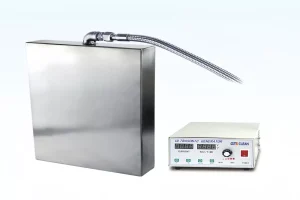 A vibration plate is not a generic add-on. Its position in the tank, orientation relative to the basket, and power density all change how evenly cavitation reaches the load. When a system is retrofitted with an accessory plate that does not match the existing generator, we send the transducer model and load configuration back to engineering before approving installation.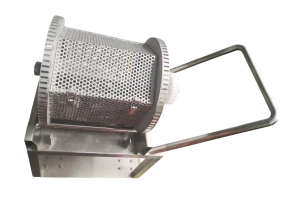
 English
  German
  Spanish
  French
  Russian
  Portuguese