Most precision part cleaning failures show up as a narrow blind hole that still carries stamping oil, coolant residue, or solvent. Hydrocarbon ultrasonic cleaning systems address that problem when the solvent, vacuum drying, and basket orientation are specified as one process instead of separate components. In my experience at GTKCLEAN, a hydrocarbon system is not automatically right for every part; it becomes the right call when water-based cleaning risks surface staining, residual moisture, or slow drying in tight features. This article lays out the checks I use when matching these systems to precision parts.
Hydrocarbon Ultrasonic Cleaning Systems and Where They Fit in Precision Manufacturing
Precision shops live with parts that cannot be wiped dry. Threads, cross holes, sintered surfaces, and small-diameter blind holes trap cleaning fluid. Once a solvent evaporates without vacuum assistance, the dissolved oil stays behind. A hydrocarbon ultrasonic cleaning system pulls those contaminants into a low-surface-tension solvent, applies cavitation inside the holes, and vacuum dries the part before the solvent can redeposit. This is why we specify hydrocarbon equipment differently from general aqueous lines. Temperature control, solvent recovery, and vapor containment are part of the cleaning sequence, not add-ons. A single-station hydrocarbon vacuum machine we build runs a two-stage cleaning cycle of 12 to 15 minutes, with an option for an 8 to 9 minute single-stage cycle on less demanding parts. The machine is built around a basket size of 670 × 480 × 400 millimeters and a maximum load of up to 200 kilograms. Water-based cleaning still has a place in high-volume chip removal and general shop soil. The difference appears when liquid retention or surface staining becomes the dominant source of rejects. That is the condition where a hydrocarbon line should be evaluated against your actual worst part, not against a generic cleaning benchmark.
Water-based lines handle loose chips and general shop soil well, but hydrocarbon systems earn their place when liquid retention or surface staining becomes the dominant problem. <How to Choose Between Aqueous and Solvent Cleaning Systems> covers how to separate those two cleaning problems before tank count and cycle time are set.
Solvent, Vacuum, and Drying Behavior in Hydrocarbon Ultrasonic Cleaning
Hydrocarbon solvents dissolve stamping oil and similar soils without the aggressive surface attack that some aqueous chemistries can cause on polished or coated substrates. The tradeoff is that residual solvent must be removed under vacuum. We normally operate solvent heating between 40 and 60 °C when the contaminant is stamping oil. Heat raises solubility, shortens cycle time, and keeps viscosity low enough for drainage. Vacuum ultrasonic cleaning pulls air from the solvent so cavitation reaches concave surfaces without trapped air pockets. That step is more useful than adding generator power. An air pocket acts as a cushion; if the cavity keeps air, cavitation energy works at the wrong location. Once the air is gone, the same power does more useful cleaning inside the hole.
What Makes Vacuum Drying Different
Vacuum vapor drying boils the product and any residual solvent together under reduced pressure. The result is dry internal surfaces without the long hot air path that can oxidize sensitive metals or leave an evaporative film. On blind-hole parts we inspect after qualification, this step is usually the difference between a clean part and a part that only passes at the surface. If your program involves parts with deep blind holes or fine threads, it is worth confirming vacuum drying behavior and solvent recovery capacity together before finalizing the equipment list. Send your part drawing and cleanliness target to [email protected].
A 40 kHz ultrasonic field is gentle enough for polished surfaces and fine features, while 28 kHz suits heavier stamping oil and tougher soils. <Optimize Ultrasonic Frequency for Diverse Materials> explains how material hardness and surface finish should guide frequency selection before cleaning time is set.
Basket Design and Part Orientation for Blind Holes and Fine Features
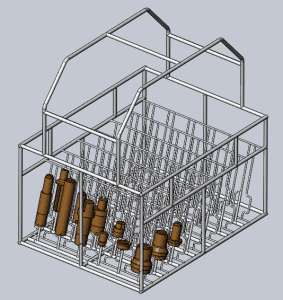
The best transducer field cannot clean a blind hole if the fixture traps solvent or keeps air in the cavity. That is why we spend as much design time on the basket as on the ultrasonic tank. For small-diameter holes, the part must sit so that the opening drains downward or aligns with the cavitation field. Rotary baskets rotate the part through the solvent, but rotation alone does not fix a bad orientation. For delicate parts, a square basket that holds the part in one stable position may prevent contact marks. For plate-type parts, we keep them separated so they do not stack and shield one another. Basket material matters in solvent service. Stainless steel is common for hydrocarbon lines because it resists heat and solvent exposure. Plastic materials are only used where chemical compatibility is confirmed. [caption id="attachment_449" align="aligncenter" width="300"] Vacuum pumping device[/caption]
Part orientation is often more important than additional power. A basket that traps solvent or stops drainage will create exactly the residue issue the system is being specified to avoid. <Industrial Cleaning Basket Design: Optimizing Performance & Durability> explains fixture geometry, drainage, and handling in automated cleaning lines.
Matching Hydrocarbon Ultrasonic Cleaning Systems to Cleanliness Specs and Throughput
Cleanliness spec is the first thing I ask for. A part that only needs stamping oil removal before assembly can run through a compact single-station machine. A part that must meet a stricter coating or plating requirement will usually need multiple stages or an additional rinsing step. The machine should not be sized around the best case, because the worst-case part defines whether the line hits throughput.
Selection factor
What to specify
Why it matters
Solvent temperature
40 to 60 °C for stamping oil; lower for heat sensitive parts
Solubility improves without damaging fine features
Cleaning cycle
8 to 9 minutes single stage; 12 to 15 minutes two stage
Controls blind-hole penetration and line speed
Drying method
Vacuum vapor drying
Removes solvent from threads, blind holes, and mating faces
Filtration
Multi-stage precision filtration
Prevents removed particles from redepositing
Solvent recovery
Distillation based recovery
Keeps monthly solvent consumption low
Workpiece load
Not more than the specified basket load limit
Protects part finish and basket life
For reference, the single-station hydrocarbon vacuum machine in our line has an initial solvent capacity up to 1,800 liters and a specified fluid consumption at or below 200 liters per month. The installed power is 75 kW. Those numbers only make sense when the vapor condensation and vacuum distillation recovery system is included in the evaluation. When blind components also carry water-soluble cutting fluid or heavy chip load, a multi-tank hydrocarbon system gives us pre-cleaning, ultrasonic cleaning, rinsing, and drying in one automated line. It costs more floor space and adds transfer points, so we only recommend it when the simpler machine cannot meet the cleanliness spec. [caption id="attachment_432" align="aligncenter" width="300"] Copper-Parts-Ultrasonic-Cleaning-Machine-scaled.webp[/caption]
For higher volume programs with stamped parts and recessed pockets, a rotary basket multi-tank machine provides 360 degree cleaning and vacuum vapor drying in one sequence. <How to Choose Multi-Tank Ultrasonic Systems for High Volume> covers tank configuration decisions that affect throughput and operator handling.
Specifying Hydrocarbon Ultrasonic Cleaning Without Guesswork
Most missed specifications come from adding a cleaning machine to a drawing without confirming the part's worst blind hole, surface finish, and throughput. If your program has multiple part numbers, one basket design may not serve all of them. Before locking the equipment list, send the part drawing, material, production rate, and current rejection mode to [email protected] or call +86 17768507147. We will confirm basket orientation, solvent heating, vacuum drying, and recovery capacity together so the line matches the worst part, not only the easiest one. This is not about selling a bigger machine; it is about avoiding a line that passes pilot testing and fails at production rate.
Common Questions About Hydrocarbon Ultrasonic Cleaning for Precision Parts
Does hydrocarbon ultrasonic cleaning leave residue on precision parts?
It can if the drying stage is not specified correctly. Hydrocarbon solvent dissolves oil quickly, but without vacuum vapor drying the solvent can linger in blind holes and leave a thin film once it evaporates. In systems we build, the product and residual solvent are boiled together under vacuum so internal surfaces dry completely. If you see oil-like residue after cleaning, check the vacuum level, basket orientation, and filtration before increasing cycle time or ultrasonic power. The problem usually sits in fluid removal, not cavitation strength.
Should we use more ultrasonic power for blind holes?
A common assumption is that more ultrasonic power solves blind-hole cleaning. That is rarely the case. Blind holes fail because air stays trapped or the basket does not let solvent reach the cavity. Vacuum ultrasonic cleaning removes air from the solvent so cavitation gets into concave surfaces. We often reduce cycle time once the basket orientation and vacuum step are corrected. Power is only useful when the transducer field actually reaches the contaminant.
Which is better for a small parts line, single station or multi tank?
It depends on the contaminant and the downstream process. A single-station machine suits parts that need hydrocarbon degreasing and drying, with a typical two-stage cycle of 12 to 15 minutes on our equipment. If parts carry heavy chip load or require rinsing and rust prevention, a multi-tank line makes more sense. Go back to the worst part, the required cleanliness test, and the production rate before choosing. Selection should follow the part, not the other way around.
How do we confirm a hydrocarbon system will meet our part cleanliness spec before purchase?


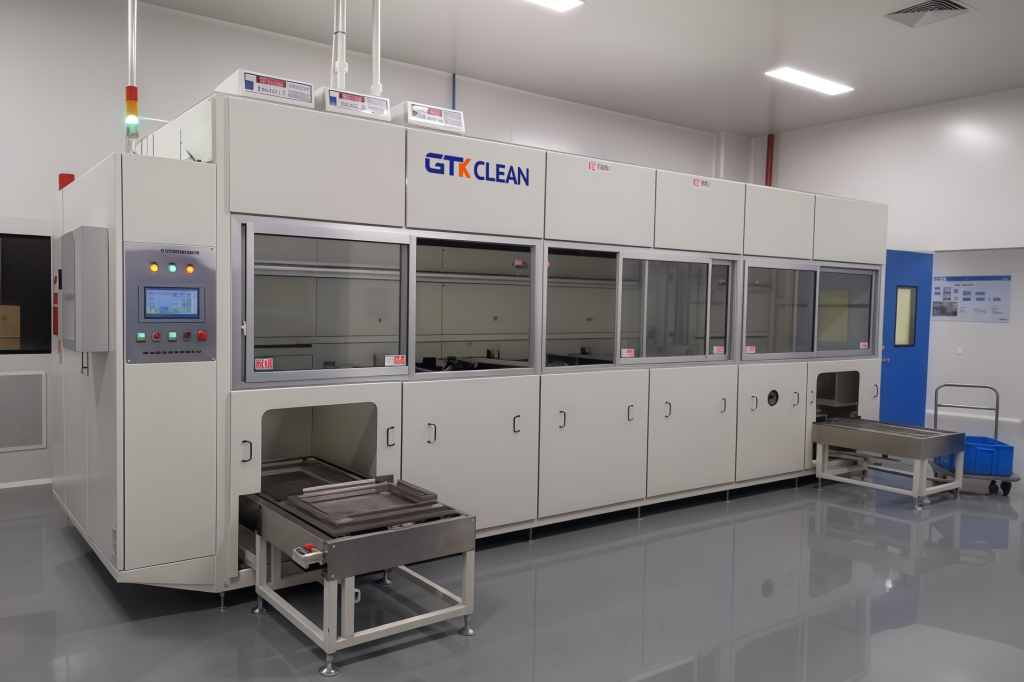
 This is why we specify hydrocarbon equipment differently from general aqueous lines. Temperature control, solvent recovery, and vapor containment are part of the cleaning sequence, not add-ons. A single-station hydrocarbon vacuum machine we build runs a two-stage cleaning cycle of 12 to 15 minutes, with an option for an 8 to 9 minute single-stage cycle on less demanding parts. The machine is built around a basket size of 670 × 480 × 400 millimeters and a maximum load of up to 200 kilograms. Water-based cleaning still has a place in high-volume chip removal and general shop soil. The difference appears when liquid retention or surface staining becomes the dominant source of rejects. That is the condition where a hydrocarbon line should be evaluated against your actual worst part, not against a generic cleaning benchmark.
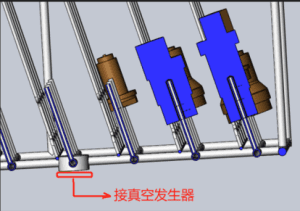 Vacuum pumping device[/caption]
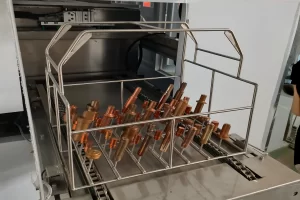 Copper-Parts-Ultrasonic-Cleaning-Machine-scaled.webp[/caption]
 English
  German
  Spanish
  French
  Russian
  Portuguese